
Dive! Tutukaka
Google 4.8/5 (623 reviews)
New Zealand · Pacific
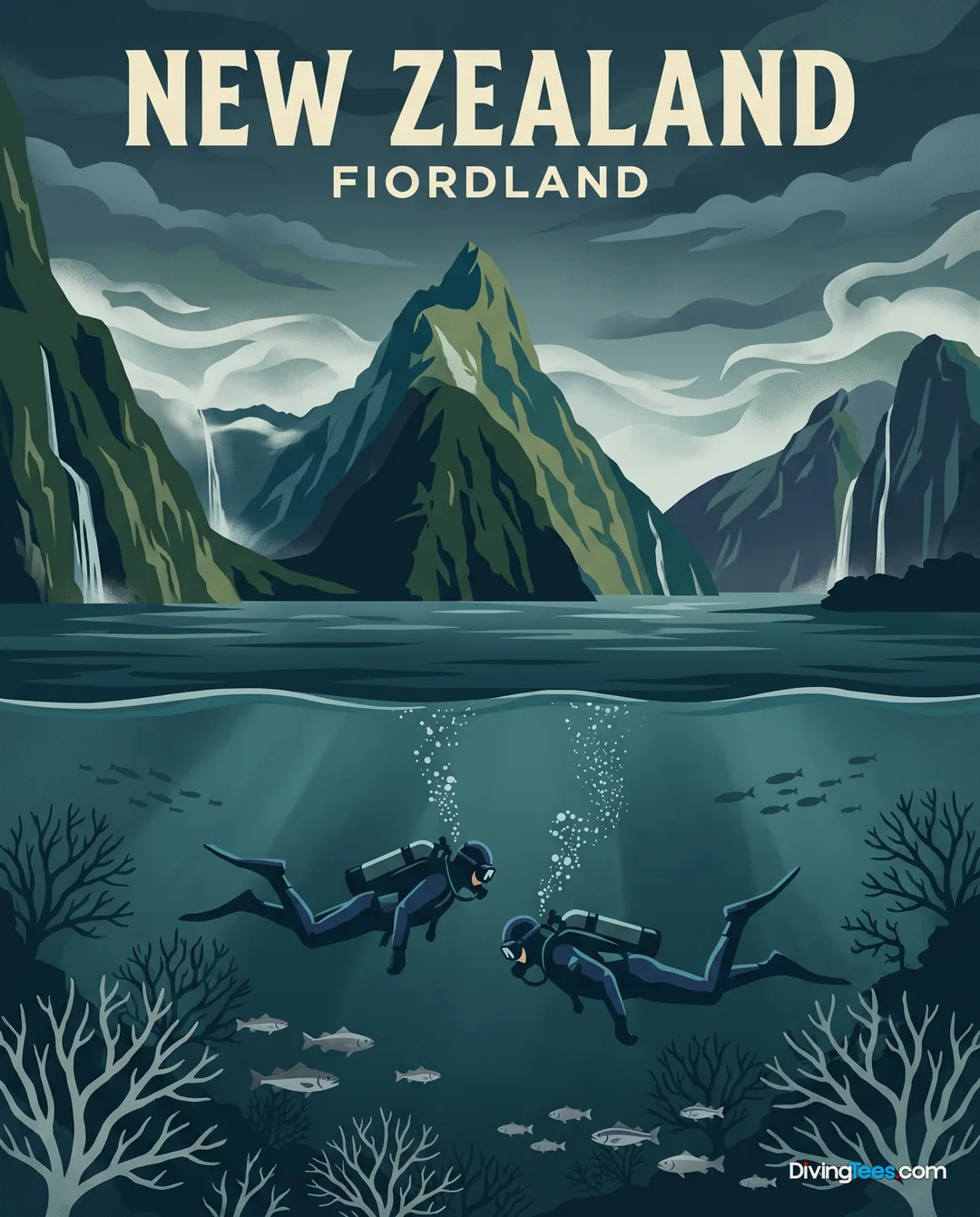
Arches, caves and the 35-metre Tui wreck sit within reach of Tutukaka, with boat diving centred on the protected Poor Knights Islands.
For subtitles in English: start the video firstthen click the gearat the top right of the video, select “Subtitles/CC”, then “Auto-translate” and choose “English”.
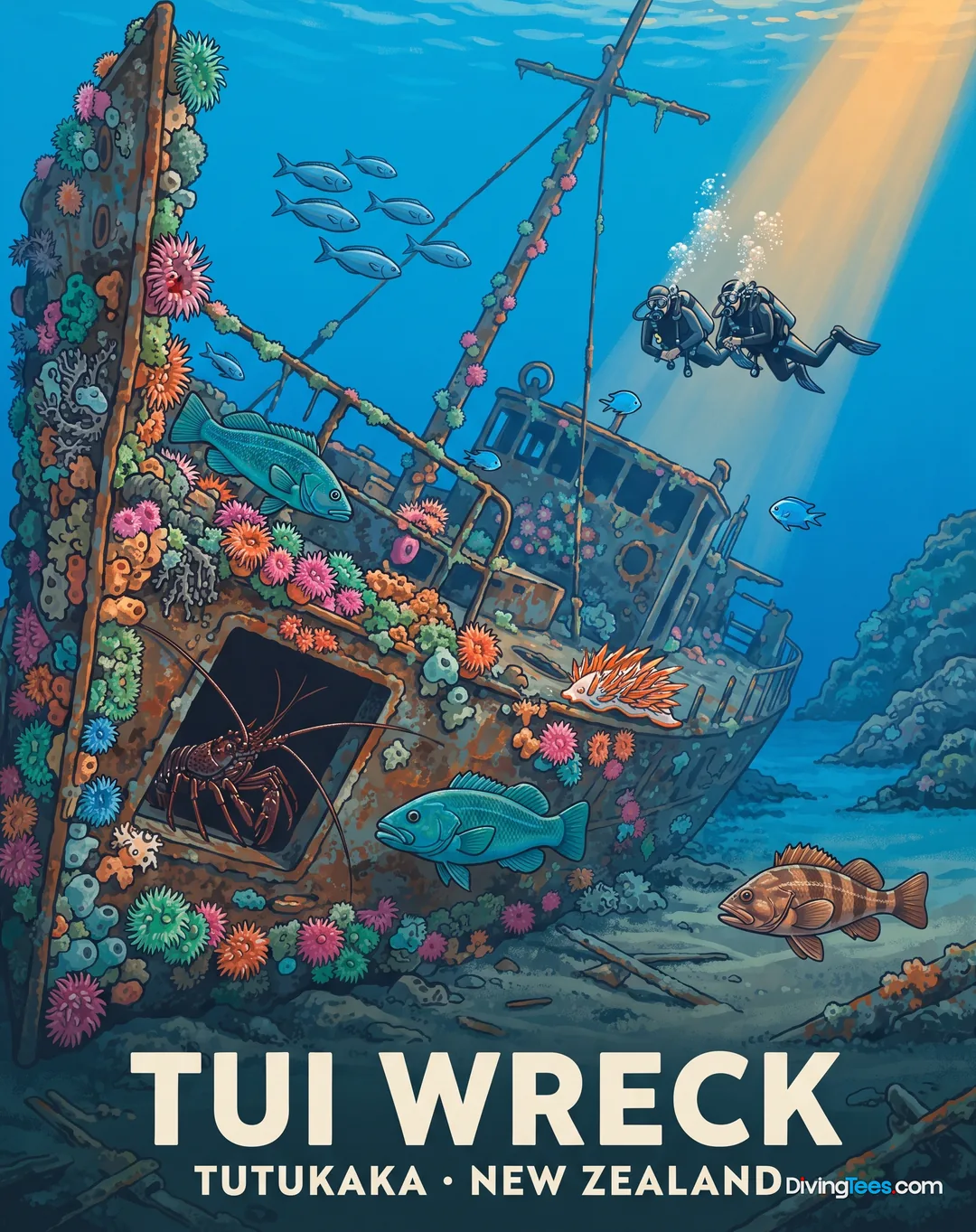
The Épave du Tui gives Tutukaka an immediate sense of place: a deliberately scuttled warship lying at 35 metres, now developing into an artificial reef. From the coastal harbour, dive boats head out to the Poor Knights Islands Marine Reserve, where arches, caves, rocky walls and wrecks shape the day. This is a shore-based holiday rather than a liveaboard trip, with several boat outings planned around the reserve and enough time left for Northland above the water.
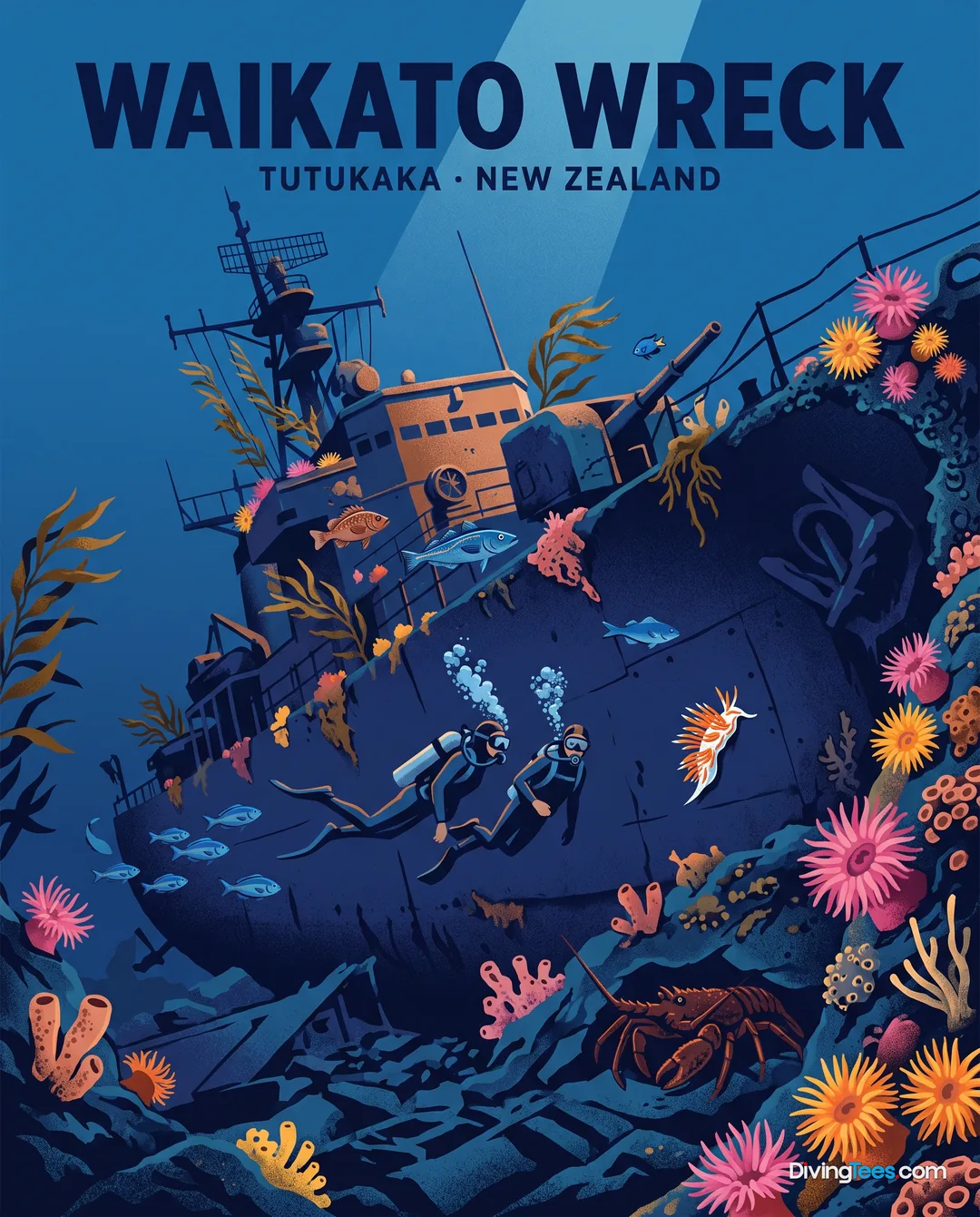
Tutukaka diving is built around boat access to the Poor Knights, not a string of shore dives. The underwater landscape is hard volcanic-looking relief in practical terms: rocky walls, arches and caves, with the reserve's protected setting making the structure itself the main attraction. Currents are variable, so the same site can demand calm, efficient positioning rather than a leisurely straight-line tour. Visibility is not fixed; it can fluctuate during a dive, particularly on the Épave du Waikato, where the wreck may appear and disappear as divers approach and move through it. The Épave du Tui reaches 35 metres and is explored as a guided wreck dive. The Épave du Waikato runs from 14 to 40 metres, with its command post and lower sections reserved for suitably qualified advanced divers. Expect a proper boat-diving routine, with navigation, buoyancy and reserve rules part of every outing.
Marine life is most tangible where the wrecks have begun to provide a surface for growth. On the Épave du Tui, a voluntarily sunk warship has become an artificial reef, with marine life building around the structure rather than leaving the diver with a bare piece of history. The Épave du Waikato offers the same combination of steel, shadow and changing visibility, particularly around the command post and deeper sections. Around the Poor Knights, the reserve's no-take status protects the wider marine community and is central to what divers come to see. There is no named seasonal animal encounter to build a trip around here; timing is better chosen for water conditions and visibility, while the wrecks and rocky relief provide the visual focus.
The clearest practical split is between late January and early April, when the Épave du Tui is identified as the better window for water temperature, and May to September, when visibility there is expected to be at its strongest. Those periods suit different priorities: the first favours a more comfortable temperature, while the second favours seeing the wreck emerge clearly as divers approach it. A three- to five-day stay leaves some room around the boat schedule, since access to the Poor Knights depends on the sea state. The destination does not need to be planned around a single seasonal species or a fixed wildlife event.
Tutukaka can suit all levels, provided the chosen site matches the diver's training and recent experience. The reserve's arches, caves and rocky relief are not automatically technical, but variable current and boat procedures reward settled buoyancy and confident navigation. Nitrox is useful for repetitive diving, while an Advanced qualification is important for the deeper wreck work. The Épave du Tui is reserved for experienced divers at 35 metres, and the Épave du Waikato reaches 40 metres, with its lower decks requiring advanced certification. BSAC, PADI and SSI divers should check that their qualification matches the planned profile.
From London Heathrow, Gatwick or Manchester, the journey is organised around reaching New Zealand's regional airport connections and then continuing by road to Tutukaka or nearby Whangārei. Tutukaka itself is reached by road from Auckland or Whangārei; no ferry is needed to reach the village. The unavoidable part of the dive plan comes afterwards: the Poor Knights are offshore, so every dive depends on a boat transfer and a workable sea state. That makes connection planning important, especially if an international arrival is followed by a road journey. Once in Tutukaka, accommodation in the local area is generally close enough to the harbour or dive centre to manage on foot or by a short drive. There is no standard shuttle arrangement to rely on.
Treat Tutukaka as a boat-diving base, not as a shore-diving town with an optional island trip. Keep spare space in the itinerary for a rough sea state: losing one departure should not remove the only chance to dive the Poor Knights. Plan around the reserve as a whole rather than fixing the holiday to one named site; conditions may determine whether the day favours rocky relief, the Épave du Tui or the Épave du Waikato. For the Tui, expect guided exploration and the discipline that comes with a 35-metre wreck. For the Waikato, do not assume that a general wreck qualification makes the lower decks appropriate; the deeper sections and command post are for advanced divers. The reserve is no-take: nothing is collected, touched or removed, and anchoring is controlled where moorings are used. Those rules are not background administration but part of how the Poor Knights remain worth the boat journey.
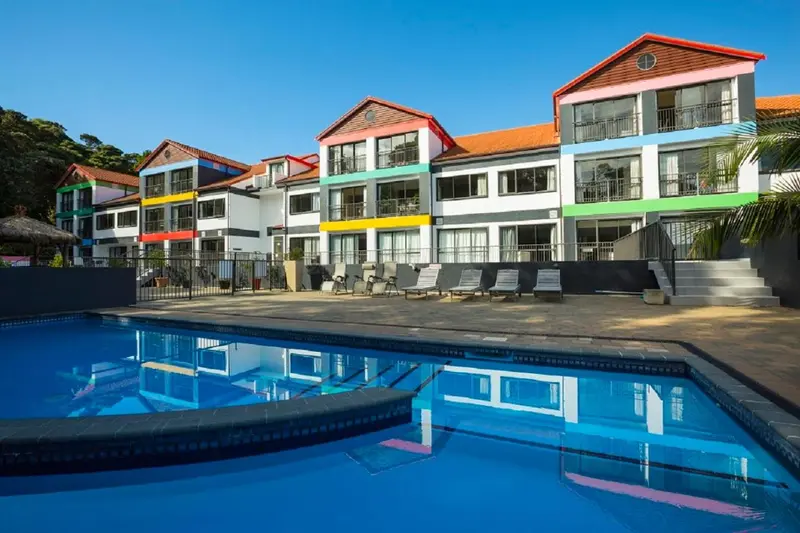
A sensible visit lasts three to five days, with Tutukaka accommodation as the fixed base and daytime boat departures to the Poor Knights. That allows several attempts at the reserve without making the entire trip depend on one weather window. A liveaboard is not the normal format here. Non-diving days can be spent on coastal and maritime activities around Tutukaka, or exploring the Northland coast and Whangārei area. The arrangement also works for a non-diving companion who prefers a quiet coastal base.
Hello, I'm Marina, DivingDeal.com's AI assistant. I guide you through destinations, areas and countries.
Thinking about the whole trip and the flights? Talk it over with Edith →
Marina is an AI. Some links are affiliate links: DivingDeal may earn a commission, at no extra cost to you. Bookings are made with the partner.
Your last day stays dry: no diving in the 18-24 hours before a flight, the perfect window to see the destination from another angle.
Choose late January to early April if warmer water matters for diving the Épave du Tui. Choose May to September if clearer visibility is more important, as the wreck is expected to emerge more clearly during approaches. There is no seasonal species or fixed wildlife event around which you need to plan.
Tutukaka can suit different experience levels when you match each site to your training and recent experience. Variable currents, boat procedures and rocky relief reward confident navigation and settled buoyancy. The Épave du Tui is for experienced divers at 35 metres, while deeper Épave du Waikato sections require advanced certification.
Tutukaka offers boat diving around the Poor Knights Islands, with arches, caves, rocky walls and wrecks shaping the dives. The Épave du Tui lies at 35 metres and is developing into an artificial reef. The Épave du Waikato combines steel, shadow and changing visibility, reaching 40 metres in places.
Use Tutukaka as a shore-based boat-diving base, with accommodation near the harbour or dive centre and daytime departures to the Poor Knights. Allow three to five days and spare time around the boat schedule because sea state can affect access. Plan road connections from Auckland or Whangārei, and do not rely on a standard shuttle.