Pacific
New Zealand: a country of changing dive seasons
New Zealand links the Poor Knights near Whangarei with Auckland’s Hauraki Gulf and Wellington’s seasonal diving window across three distinct calendar openings.
What makes this country unique
- Poor Knights boat diving from Tutukaka
- Whangarei in September, October, November and December
- Auckland’s February and March window
- Wellington diving from December through April
- Variable currents around New Zealand’s coasts
- Northland reserve diving shaped by sea conditions
For subtitles in English: start the video firstthen click the gearat the top right of the video, select “Subtitles/CC”, then “Auto-translate” and choose “English”.
This country for a diver
New Zealand is a country where the calendar matters as much as the map. Its diving is spread between Whangarei, Auckland and Wellington, rather than concentrated in one continuous coastal holiday. The common thread is flexibility: currents are variable, all levels are catered for, and boat diving is central in the northern locations. This is not a liveaboard destination, so the trip is built around day outings and sensible surface logistics. For a European diver travelling once or twice a year, the appeal is the chance to choose the coast whose season fits the departure date, rather than forcing one itinerary through unsuitable conditions.
How the country divides
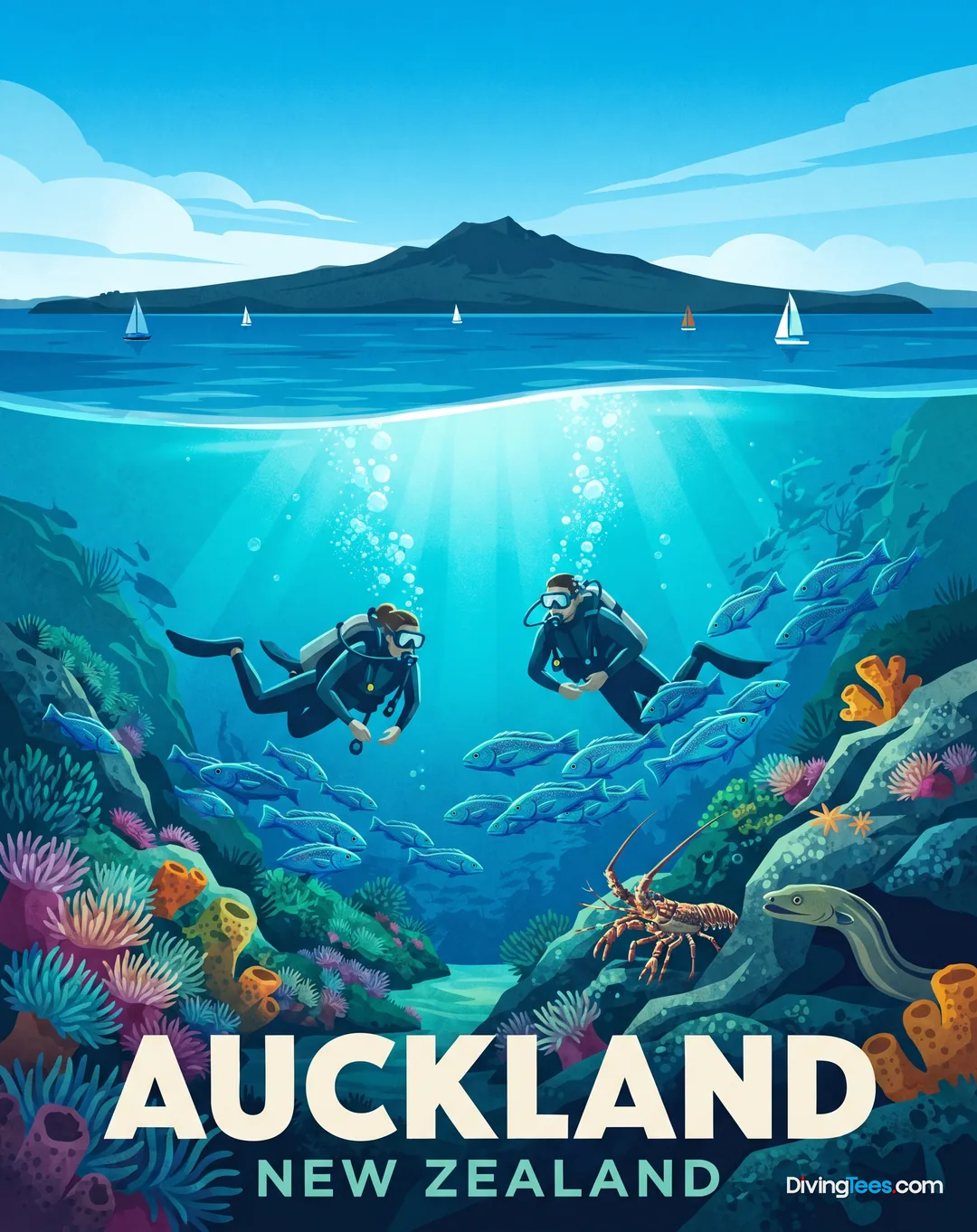
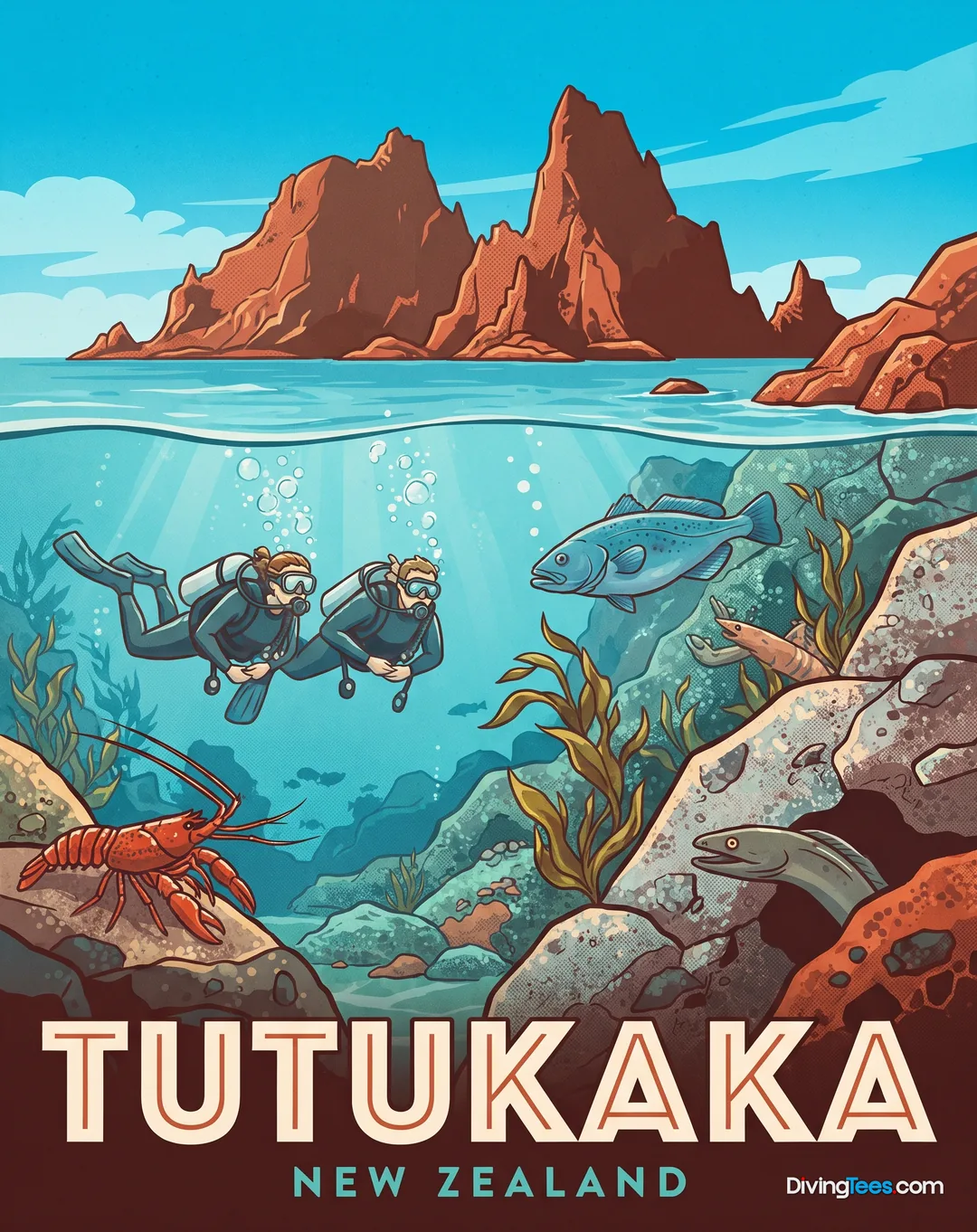
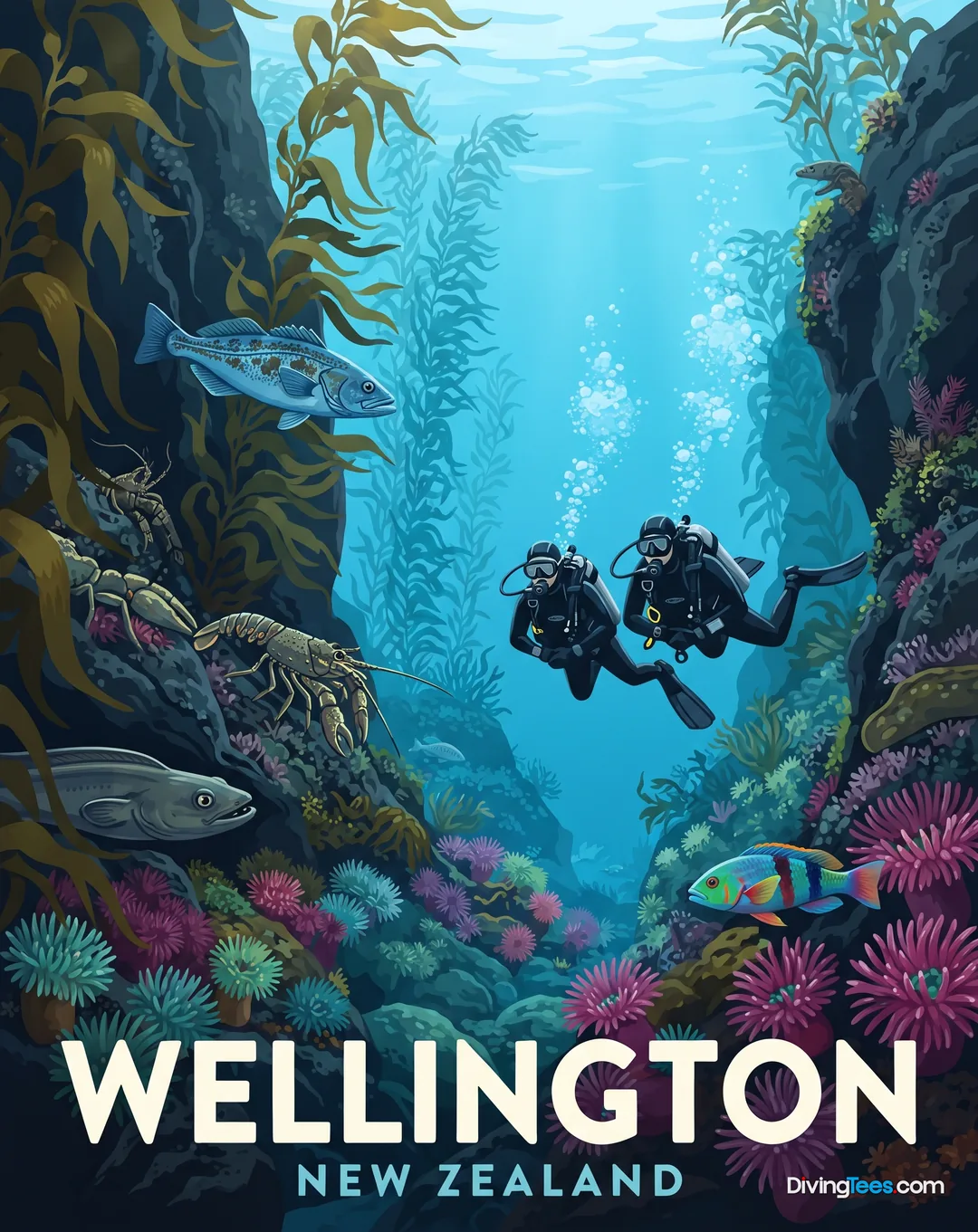
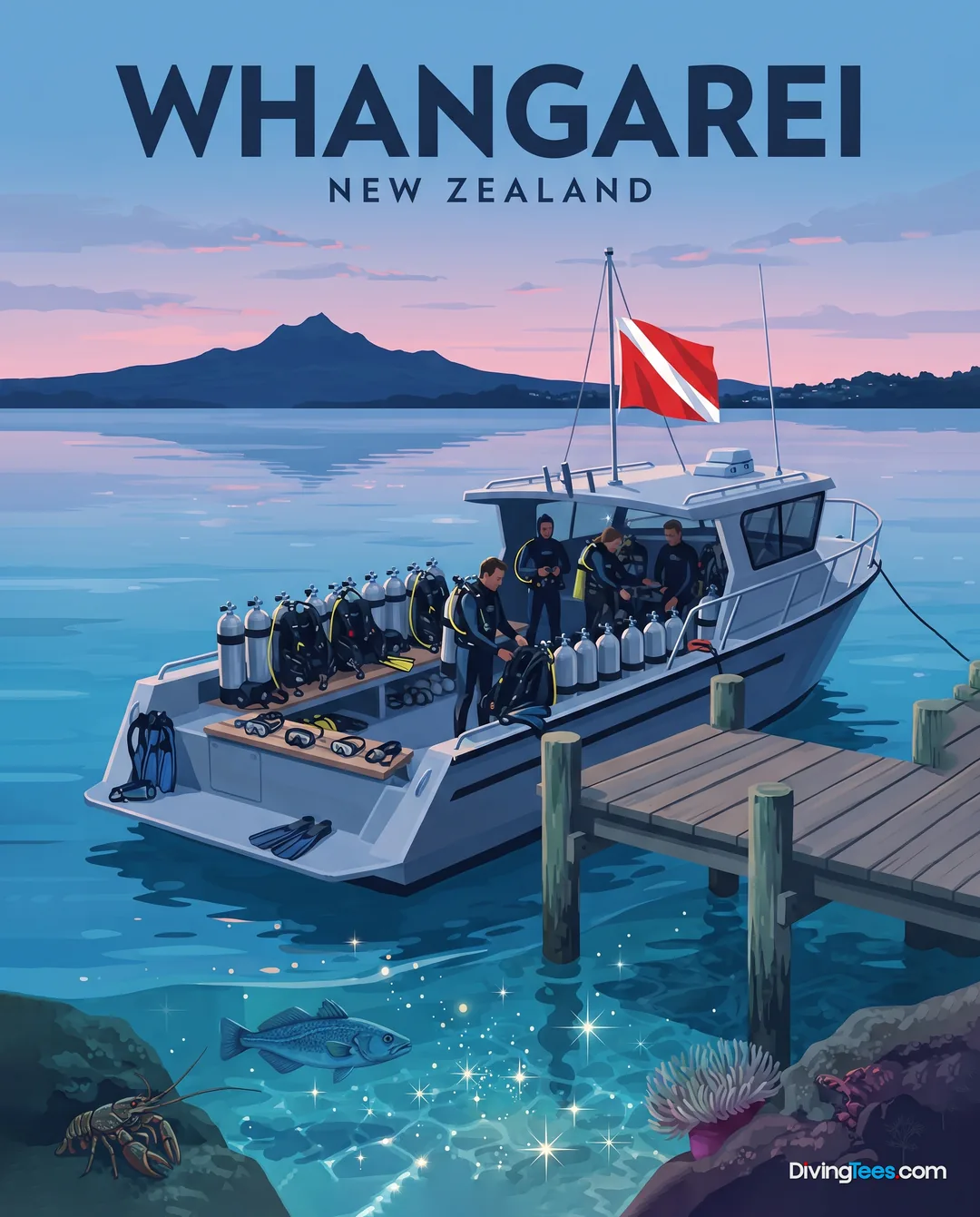
The northern picture divides into two quite different choices. Whangarei, with Tutukaka as its boat-diving base, is a Northland trip organised around the Poor Knights reserve. It suits divers who want the reserve to shape the holiday, with the operator selecting from the wider island group rather than promising one signature site. Auckland is a more expensive, mixed-style option, with its useful diving window falling in February and March. Wellington forms the southern part of this seasonal map, open from December to April and therefore offering the longest stated window. These are not interchangeable coastal stops. Whangarei and Tutukaka are strongly maritime, with the reserve reached by boat; Auckland offers a different urban and coastal framework; Wellington is the practical choice when the calendar has moved into January, April or late December. The zone pages are best read as separate trip choices, not as chapters of one compact circuit.
Diving destinations
Dive centres



Hotels

When to go, and where by month
January belongs to Wellington, while February and March open both Auckland and Wellington. April returns the choice to Wellington alone. From May through August, none of these areas is in its stated season, so this is not the part of the year to build a New Zealand diving itinerary around these zones. September, October and November belong to Whangarei, with its Northland boat programme, and December is the useful overlap: both Whangarei and Wellington are open. The important contrast is between Auckland and Whangarei, whose seasons do not overlap at all. Wellington offers the bridge between them, but only in December do its season and Whangarei’s meet. In practical terms, February or March favours a choice between Auckland and Wellington; September to November points north to Whangarei. December is the only month that allows a considered choice between the Northland and Wellington sides without leaving the stated seasonal windows.
Marine life, coast by coast
There is no named country-wide animal pattern that can sensibly anchor a New Zealand itinerary here, and no side-specific species distinction to build into the route. That matters for planning: the country should not be approached as though moving from Whangarei to Auckland or Wellington automatically adds a predictable wildlife chapter. The useful national distinction is instead geographical and operational. Whangarei and Tutukaka work through boat access to the Poor Knights, while Auckland and Wellington represent separate coastal choices with their own seasonal calendars. Divers who normally choose a destination around a particular shark, ray or grouper should treat New Zealand differently: select the coast and month first, then discuss realistic encounters with the operator, rather than crossing the country in pursuit of an assumed animal sequence.
Getting between the areas
These areas do not form a neat, low-effort diving circuit. Auckland and Whangarei are 177 km apart, close enough to appear combinable on a map but still requiring a deliberate overland move between separate coastal bases. Auckland and Wellington are 485 km apart, while Wellington and Whangarei are 659 km apart; either pairing turns a diving holiday into a broader New Zealand itinerary, not a simple transfer. There are no naturally combinable zone groups in the stated plan. Allow roughly a day of travel whenever an overland link is added, and do not place a Poor Knights outing against a tight onward schedule: Tutukaka depends on a boat transfer to the reserve. A rough sea can remove a full outing, so Northland deserves a spare day rather than a timetable with no slack.
Take off your mask
New Zealand above water cannot be responsibly reduced here to a named sightseeing route, a regional food trail or a list of local experiences. No specific places to visit, dishes to seek, or patterns of everyday life are established for this page, so it would be misleading to fill the space with familiar but interchangeable travel language. What can be said plainly is that the country rewards a trip designed around geography rather than a rushed chain of stops. Whangarei, Auckland and Wellington are separated by enough distance to make each one a meaningful base, not a quick excursion from the next. That gives the non-diving days a practical role: they are part of choosing where to stay and how much time to leave between regions. A costly long-haul journey deserves that restraint. New Zealand is better treated as several distinct coastal stays than as one compressed holiday with every empty day assigned to another transfer.
What holds true everywhere here
Across New Zealand, the practical issue is not simply finding a boat; it is finding an operator who works sensibly with changing sea conditions. Around the Hauraki Gulf, ask whether the programme can change site or cancel when swell makes the planned outing poor, rather than treating a site list as a guarantee. Around Tutukaka and the Poor Knights, the reserve rules make controlled anchoring and no-touch, no-take behaviour part of the experience, not optional etiquette. Good buoyancy matters because responsible diving is explicitly tied to protected areas. Build a weather buffer into Northland, where a missed boat means a missed dive. Finally, keep the final diving day separate from a long-haul flight home: a New Zealand itinerary has enough moving parts without making surface safety compete with the departure timetable.
Frequently asked questions about New Zealand
When should you go diving in New Zealand?
Choose your timing by coast. Poor Knights boat diving from Tutukaka near Whangarei is listed for September, October, November and December. Auckland has a February and March window, while Wellington is available from December through April. Your preferred coast should guide the calendar rather than an assumed nationwide diving season.
What diving experience do you need for New Zealand?
New Zealand has variable currents around its coasts, and Northland reserve diving is shaped by sea conditions. Choose a coast and discuss realistic conditions with the operator before booking. Your comfort with changing conditions matters when considering Poor Knights, Auckland or Wellington, because the page does not define one general experience level.
What might you see while diving in New Zealand?
New Zealand should not be planned around a named country-wide animal pattern. Moving between Whangarei, Auckland and Wellington does not automatically create a predictable wildlife sequence. Choose the coast and month first, then discuss realistic encounters with the operator rather than travelling in pursuit of an assumed shark, ray or grouper route.
How should you plan a diving stay in New Zealand?
Plan by coast and calendar rather than treating New Zealand as one continuous diving route. Whangarei and Tutukaka use boat access to the Poor Knights, Auckland has a separate February and March window, and Wellington offers diving from December through April. Allow sea conditions and variable currents to shape your choice.