

Paihia Dive
Google 5/5 (391 reviews)
New Zealand · Pacific
Whangārei opens onto Poor Knights arches, deep caves, swim-throughs and the 36-metre Mikhail Lermontov, with boat diving shaped by temperate coastal conditions.
For subtitles in English: start the video firstthen click the gearat the top right of the video, select “Subtitles/CC”, then “Auto-translate” and choose “English”.
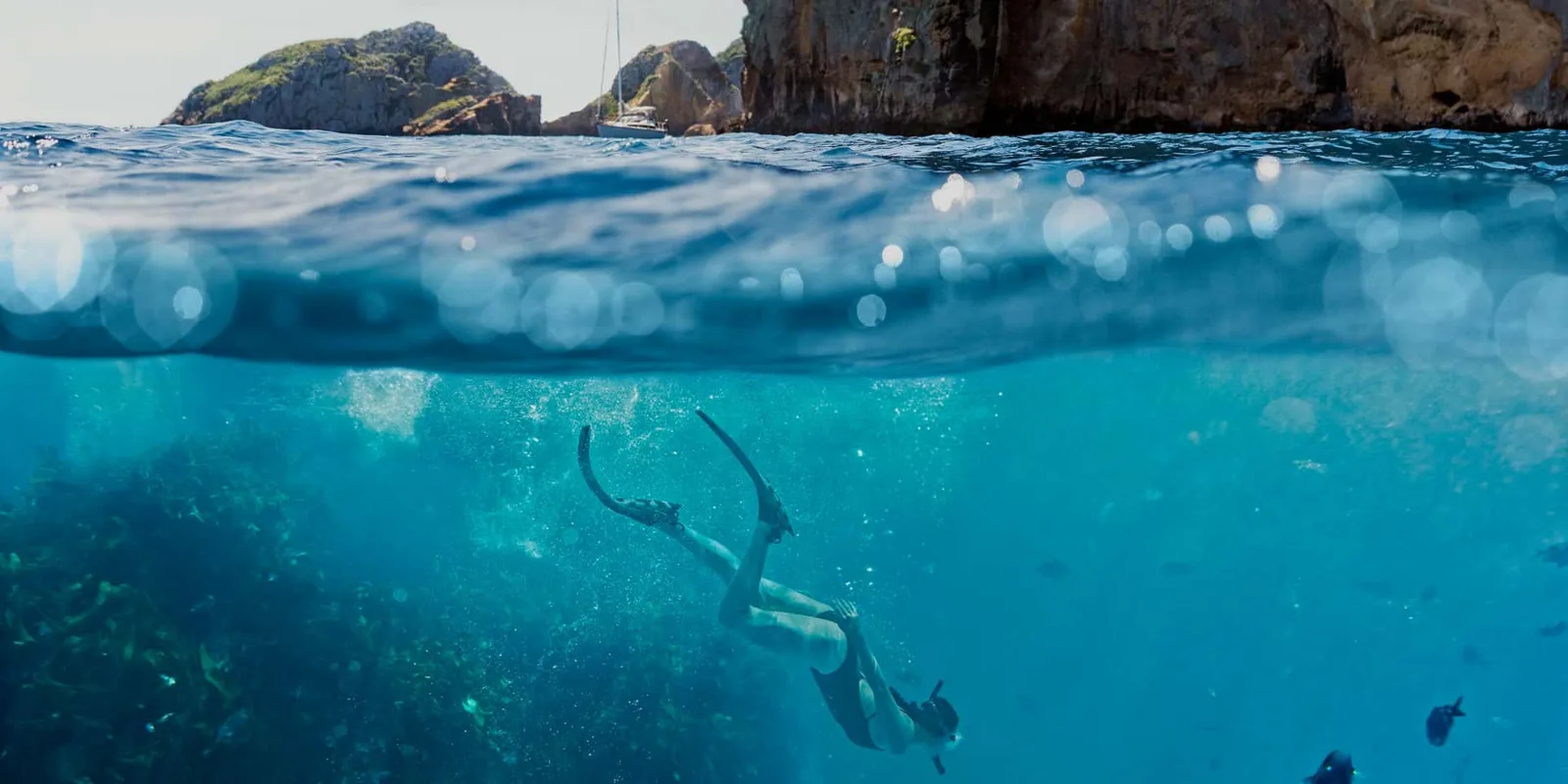
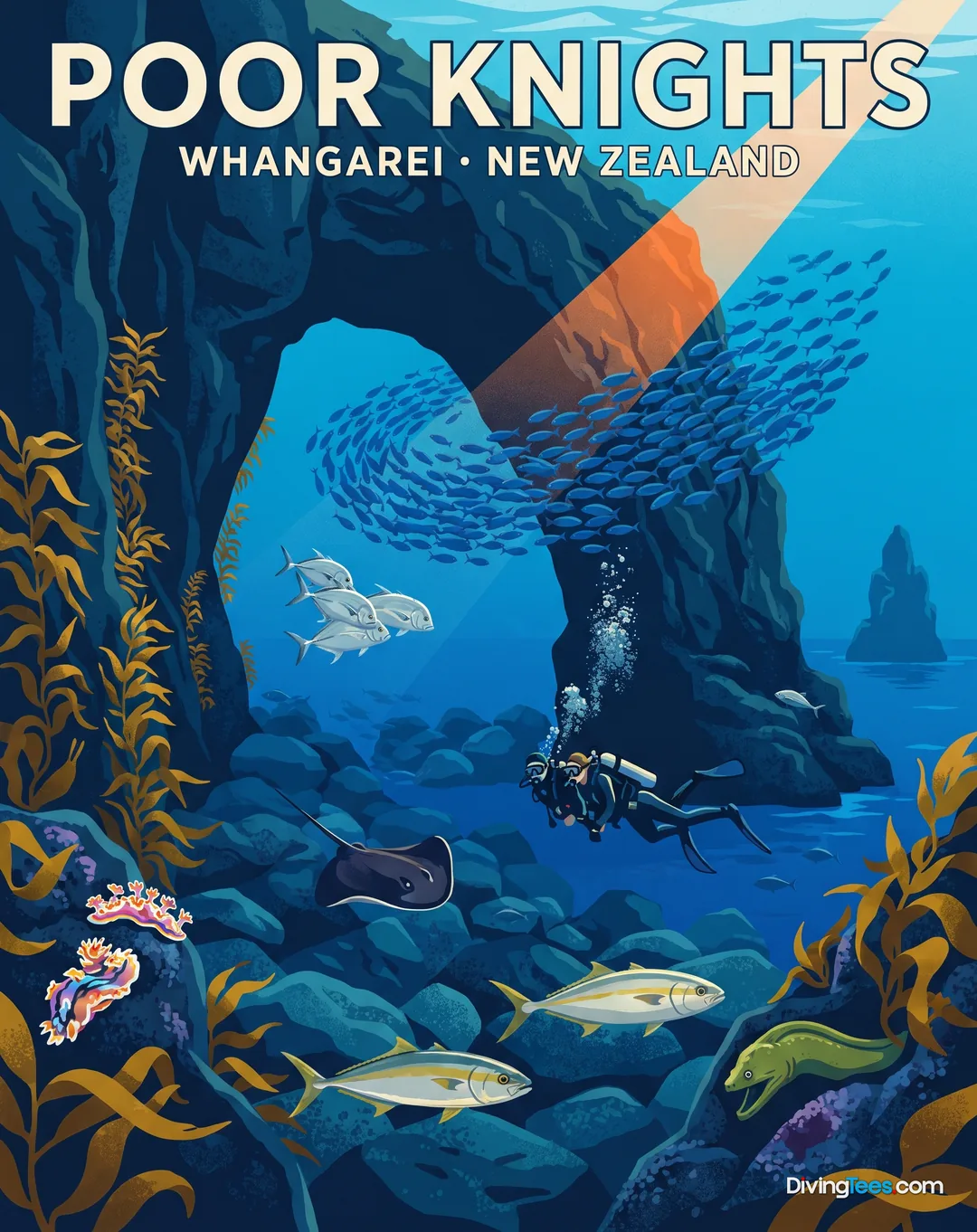
The Poor Knights Islands are the defining reason to base a diving trip around Whangārei. Their arches, caves and swim-throughs sit within a fully protected marine reserve, while the wider Northland coast adds sheltered boat outings and wreck exploration. Whangārei is therefore less about one shore dive or a single resort harbour, and more about using a practical coastal base for day trips whose character changes with the islands, exposure and weather.
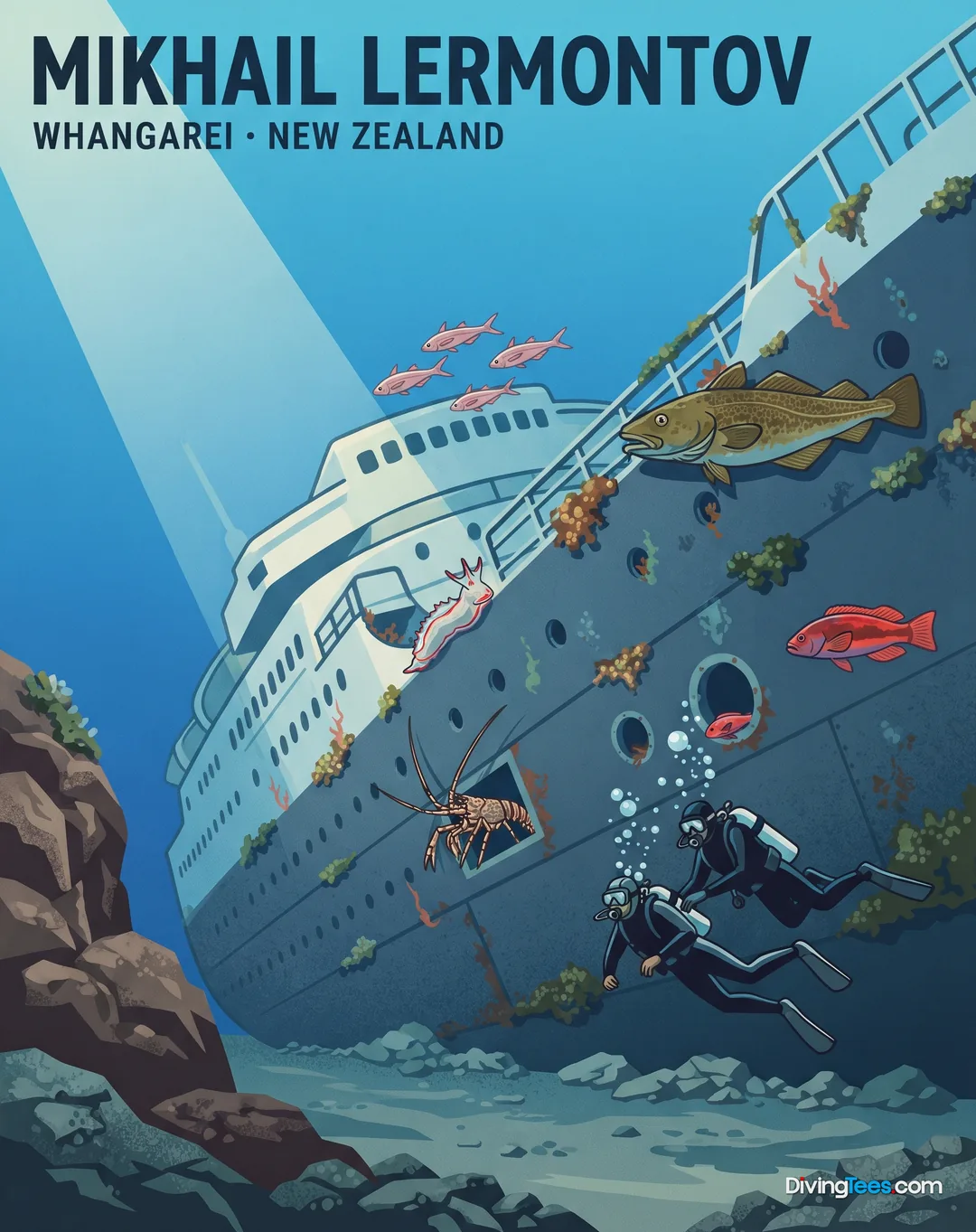
This is predominantly boat diving, with the day’s conditions helping determine which island or coastal site makes sense. Around the Poor Knights, the underwater landscape is built from arches, deep caves and swim-throughs, allowing divers to move between open rock scenery and enclosed passages rather than simply following a flat reef. Currents are variable, so a calm-looking plan still needs sensible assessment on the day. Visibility should not be treated as a fixed promise across the whole Whangārei area. The Mikhail Lermontov offers a contrasting wreck dive: the 176-metre liner has superstructure at 14 metres and reaches 36 metres, with shallower sections suitable for less experienced wreck divers and deeper penetration reserved for appropriately trained divers. Poor Knights also supports day and night dives, adding a different way to read the same protected island terrain.
The Poor Knights Marine Reserve is the main wildlife draw, with fully protected water supporting rich subtropical biodiversity and strong marine-life abundance. Divers come to look into arches, caves and swim-throughs while life occupies the rock around them, rather than treating the reserve as a place to collect sightings or handle the scenery. The wreck provides a different setting: its superstructure and multiple entry points turn a large artificial reef into a structured exploration. No particular seasonal species pattern is established for Whangārei, so the sensible expectation is a productive temperate encounter shaped more by the reserve and the day’s conditions than by a promised animal checklist. Night diving at the Poor Knights changes the pace again, revealing the island walls and marine life under torchlight.
September to December is the measured period when the sea is generally at its calmest and the diving window is most dependable. That matters here because the principal outings leave the coast by boat; a rougher spell can remove a whole day’s diving rather than merely make a shore entry less comfortable. The calmer months also make it easier to schedule the more exposed island trips early in the stay, while keeping room to adapt if conditions change. A short visit outside this window is still possible, but it should not be built around a tightly packed sequence of boat departures.
Whangārei can suit all levels, but the most rewarding outings are easier for divers who are comfortable on boats, holding position and managing changing conditions. Advanced Open Water is useful, particularly for deeper sections around the Poor Knights. The Mikhail Lermontov’s shallower areas can suit qualified wreck divers at Open Water level, whereas deeper penetration requires advanced wreck training. Experience matters alongside the card, especially when currents or exposure make a site less forgiving.
For a reader leaving from London Heathrow, London Gatwick or Manchester, the journey is planned around reaching Auckland first. From Auckland, Whangārei is reached either by road or by a domestic flight to the local airport; the choice depends on the wider Northland itinerary and how much equipment is being carried. Once in the region, the diving itself starts from the coast and moves offshore by boat, so the final practical link is the operator’s departure point rather than a shore entry beside city accommodation. Allow time between the long-haul arrival, the onward Auckland connection and the first boat departure. A rushed arrival leaves little room for delays before an outing that cannot simply be replaced by a nearby shore dive.
Keep a spare day in the Northland schedule. Here, a weather cancellation can remove an entire boat outing, and a tightly arranged itinerary may leave no way to recover it. Put the more exposed island dives near the beginning of the stay, leaving time to move them if wind or swell intervenes. Do not come expecting a shore-diving holiday: Whangārei is the base, while the main experience lies offshore around the islands and reserves. Pack the small pieces of personal kit that matter to a multi-day boat programme, particularly if diving arrangements change between outings. Good buoyancy is especially practical at the Poor Knights, where touching the rock or wildlife is inappropriate and anchoring on reefs is prohibited. The reserve is no-take: marine life stays in the water, and divers should observe rather than collect. If deeper island sections or wreck penetration are on the plan, the relevant Advanced Open Water or advanced wreck experience should be in place before arrival, not treated as an upgrade to improvise locally.
Allow three to five days on land, giving enough space for several boat outings and one weather buffer. Whangārei works well for a mixed coastal holiday: a companion can spend non-diving days on Northland walks, viewpoints, reserves or boat trips, while the diver keeps flexibility for the Poor Knights. A quiet final day is useful before the long journey home, particularly after a run of early boat departures.
Hello, I'm Marina, DivingDeal.com's AI assistant. I guide you through destinations, areas and countries.
Thinking about the whole trip and the flights? Talk it over with Edith →
Marina is an AI. Some links are affiliate links: DivingDeal may earn a commission, at no extra cost to you. Bookings are made with the partner.
September to December is generally Whangarei’s calmest period, which helps when your key outings depart by boat for offshore islands. Plan flexibility even then, because changing wind or swell can cancel a full trip. Schedule exposed Poor Knights dives early in your stay and leave spare time to move them if conditions change.
Whangarei can suit divers at different levels, but comfort on boats, good buoyancy and confidence managing changing conditions are important. Advanced Open Water experience is useful for deeper Poor Knights sections. Shallower areas of the Mikhail Lermontov may suit qualified Open Water wreck divers, while deeper penetration requires advanced wreck training.
Whangarei offers boat diving around Poor Knights arches, deep caves and swim-throughs in a protected marine reserve, with rich subtropical biodiversity and marine life around the rock. You can also explore the Mikhail Lermontov, whose superstructure begins at fourteen metres and extends to thirty-six metres, plus day and night island dives.
Treat Whangarei as a coastal base for offshore boat trips rather than a shore-diving holiday. Allow three to five days on land, include a weather buffer, and place exposed island outings early. Reach Auckland first, then continue by road or domestic flight, allowing time between connections and your first boat departure.