
Scuba Sensation
Google 4.9/5 (309 reviews)
Belize · Americas
Coral gardens, sheer walls, nurse sharks and stingrays make Caye Caulker a practical base for Belize’s nearby reserves and longer atoll excursions.
For subtitles in English: start the video firstthen click the gearat the top right of the video, select “Subtitles/CC”, then “Auto-translate” and choose “English”.
At Hol Chan, coral gardens give way to protected channels where divers share the water with nurse sharks and stingrays. That combination sums up Caye Caulker’s appeal: stay on a small, walkable island and reach nearby reefs, reserves and Shark Ray Alley by boat, while keeping the option of longer days towards Turneffe or Lighthouse Reef. It works for a first tropical trip, but also gives experienced divers walls, deeper water and changing conditions to explore.
Diving is almost entirely from boats, with sites reached quickly from the quays and a useful spread of terrain beneath the surface. Expect coral gardens and easier inner sectors, then walls, canyons, tunnels and wrecks as the outings become more ambitious. Currents are variable rather than a constant feature, but the outer walls, Turneffe and Lighthouse Reef are more exposed to current and sea conditions than the sheltered-looking island setting suggests. Hol Chan and Shark Ray Alley bring a different rhythm, with marine-life encounters and more boats around the recognised sites. Longer excursions take more time on the water and may occupy a full day. Visibility is generally most dependable from March to June, although swell, wind, suspended sediment and weather can alter the picture from one outing to the next.
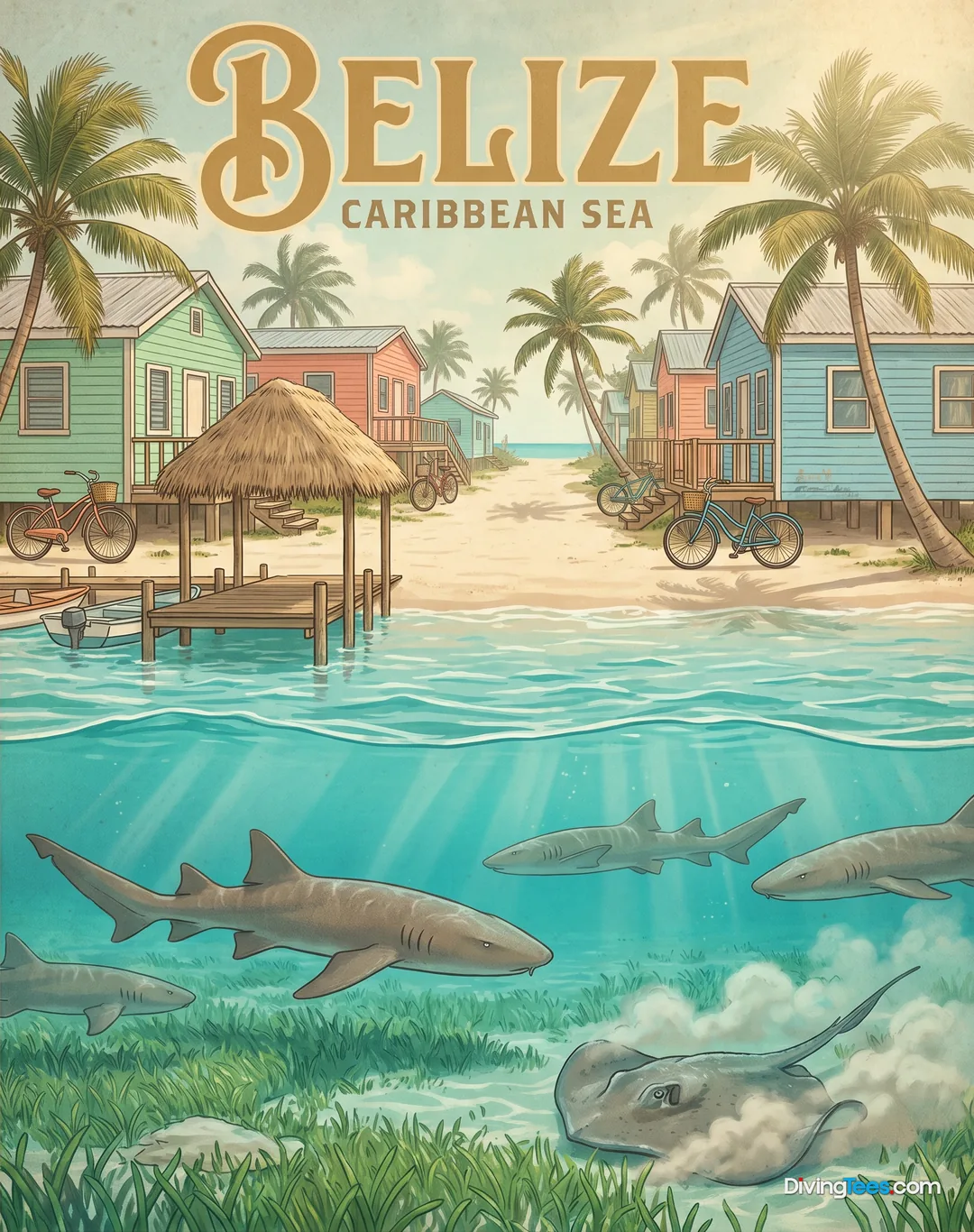
Nurse sharks and stingrays are the dependable draw at Shark Ray Alley, where the encounter is built into the character of the excursion rather than left to chance. Sea turtles may appear anywhere around the reefs through the year, while eagle rays are an occasional reward when conditions suit. Hol Chan’s protected waters add coral gardens and reef life to the day, rather than reducing the experience to a single animal stop. The same applies around Caye Caulker’s local sites, where the interest lies in moving through gardens, walls, canyons and tunnels. Wildlife is possible year-round, but calmer water and better visibility between March and June make it easier to watch animals without the scene being broken up by swell or suspended sediment.
March to June is the most reliable window for a comfortable run of diving, because the sea is generally calmer and visibility tends to be better. That matters most when the plan includes outer walls, Turneffe or Lighthouse Reef, where wind and swell can make a long boat day less pleasant than a local outing. Diving remains possible throughout the year, but tropical disturbances and periods of stronger wind can change the balance between sheltered reefs and exposed excursions. The busiest tourist periods also concentrate boats at Hol Chan and Shark Ray Alley, so early departures and travel outside school holidays usually make those visits less crowded.
Caye Caulker suits beginners on the inner reefs and several guided reserve dives, provided the first outing is kept straightforward. A diver who is new to tropical conditions need not begin with a wall or a long crossing. Advanced Open Water is useful for deeper dives and outer drop-offs, while experience with current and boat diving pays off on Turneffe and Lighthouse Reef. BSAC, PADI and SSI divers should match the planned outing to recent experience, not simply to the destination’s easy island access.
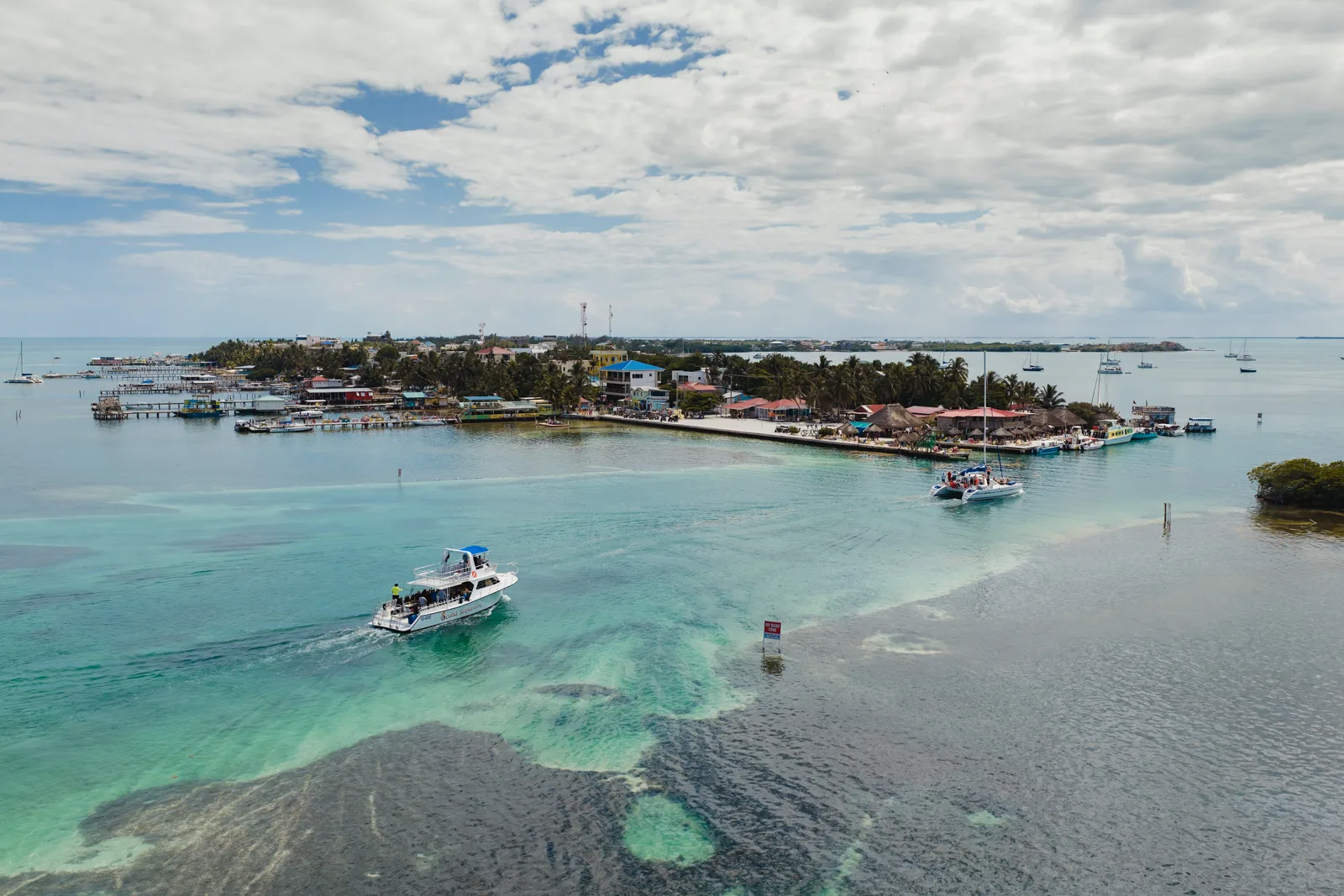
From London Heathrow, Gatwick or Manchester, allow roughly fifteen to twenty-two hours overall, depending on the international connection and the wait in Belize City. The final move to Caye Caulker is normally by water taxi, taking about forty-five to sixty minutes, or by a domestic flight of around fifteen to twenty minutes from Belize City. The water taxi is the structural constraint: a late international arrival can miss the last crossing, so an overnight stop in Belize City may be necessary. Once on the island, the village, dive quays and most accommodation are close enough to reach on foot. Bicycles and golf carts cover the longer local moves, while any accommodation outside the village may need its own transfer arrangement.
Ask exactly where the boat is going before treating a booking as a local dive day. Hol Chan and Shark Ray Alley are not interchangeable with Turneffe, Lighthouse Reef or the Blue Hole, and the travelling time changes the whole shape of the day. Start with an inner or shallow site if this is your first outing here, especially after a long journey. Keep one day free for weather: outer reefs and atolls are more dependent on the sea than sites close to the island. Early departures help avoid the boat concentration at the famous reserve sites. Hol Chan is regulated, with zoned areas where diving, boats and extraction are prohibited, so do not enter a preservation zone or expect to anchor there. Finally, leave a proper gap between the last dive and the return flight, because getting off the island still involves a boat or small aircraft.
A five- to seven-day stay gives the island time to show its different sides without turning every day into a long boat trip. Mix local reef diving with a Hol Chan or Shark Ray Alley outing, then reserve a day for Turneffe, Lighthouse Reef or another longer excursion if the sea allows. Caye Caulker itself is easy to explore on foot or by bicycle, with kayaking, sailing, swimming, fishing and sunset walks for non-divers or rest days. The compact village also makes it practical for couples where only one person dives.
Hello, I'm Marina, DivingDeal.com's AI assistant. I guide you through destinations, areas and countries.
Thinking about the whole trip and the flights? Talk it over with Edith →
Marina is an AI. Some links are affiliate links: DivingDeal may earn a commission, at no extra cost to you. Bookings are made with the partner.
March through June brings calmer water and generally more dependable visibility around Caye Caulker. Diving remains possible throughout the year, but wind, swell, suspended sediment and tropical disturbances can affect conditions. Outer walls, Turneffe and Lighthouse Reef are more exposed, so keep weather flexibility when planning longer boat excursions.
Caye Caulker suits beginners on inner reefs and straightforward guided reserve dives. Start with an easier site if tropical conditions or boat diving are new to you. Advanced Open Water is useful for deeper dives and outer drop-offs, while experience with currents and boat diving helps on Turneffe and Lighthouse Reef.
Caye Caulker offers coral gardens, walls, canyons, tunnels and wrecks across its local and nearby sites. Hol Chan combines protected coral gardens with reef life, while Shark Ray Alley brings nurse sharks and stingrays. Sea turtles may appear year-round, and eagle rays are an occasional sight when conditions suit.
Plan a mixture of local reef dives, a Hol Chan or Shark Ray Alley outing, and a longer excursion towards Turneffe or Lighthouse Reef if the sea allows. Keep a weather day available, confirm each boat’s destination, and consider early departures. The walkable island also offers cycling, kayaking, sailing, swimming, fishing and sunset walks.