
Scuba School and Family Dive Center Belize
Google 4.8/5 (405 reviews)
Belize · Americas
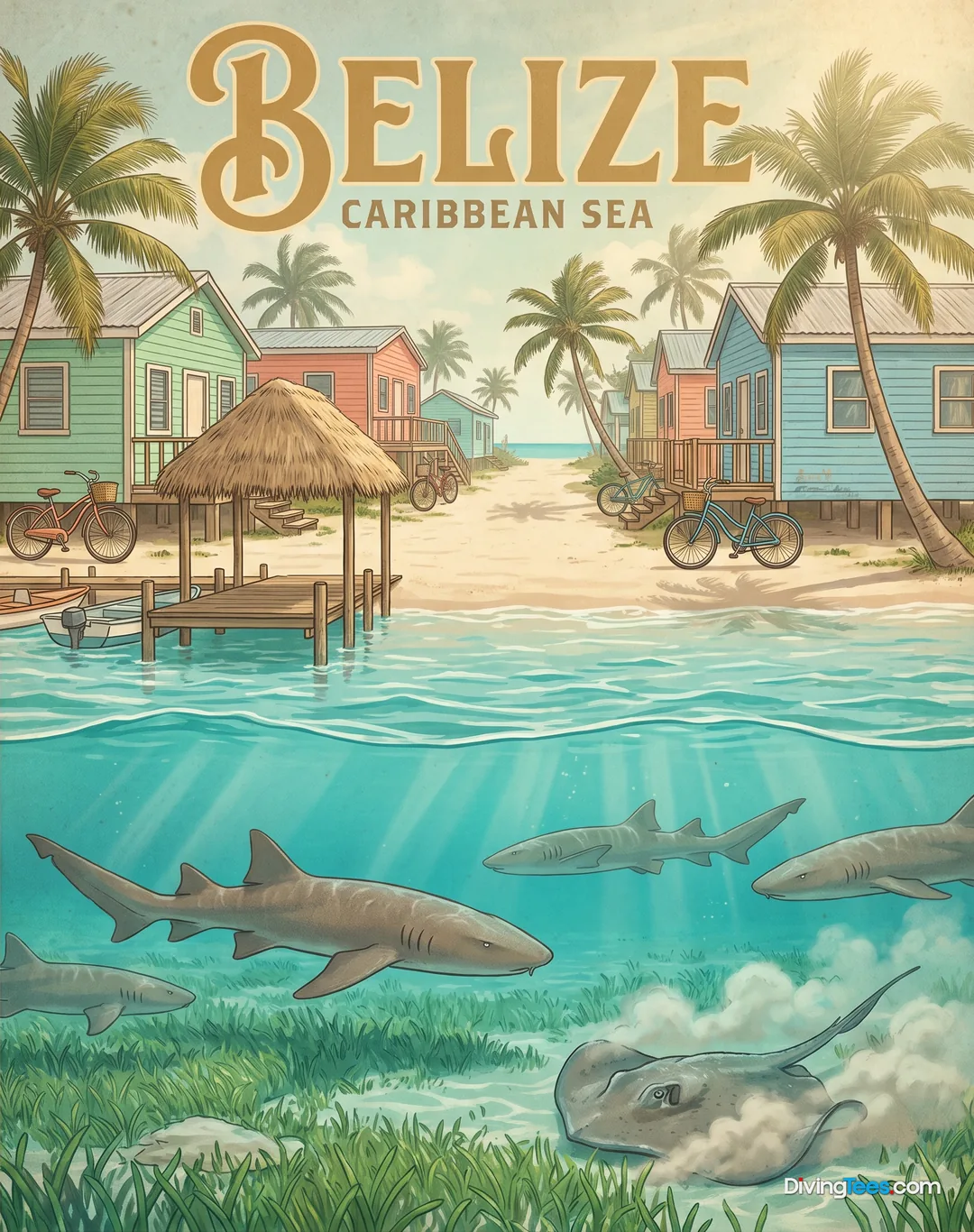
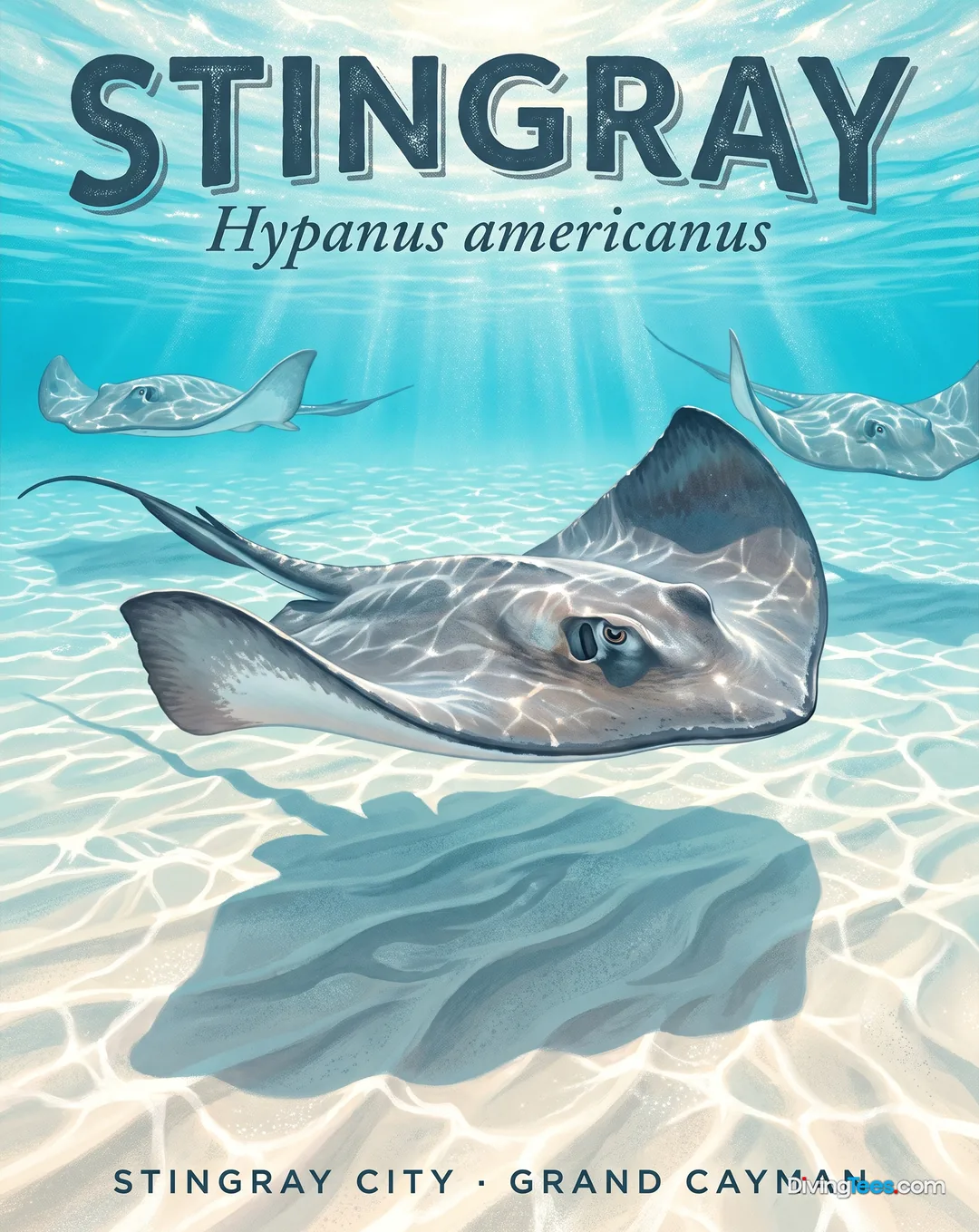
Southern stingrays and nurse sharks are encountered in San Pedro’s three-metre shallows, with crystalline water making each close approach easy to follow.
For subtitles in English: start the video firstthen click the gearat the top right of the video, select “Subtitles/CC”, then “Auto-translate” and choose “English”.
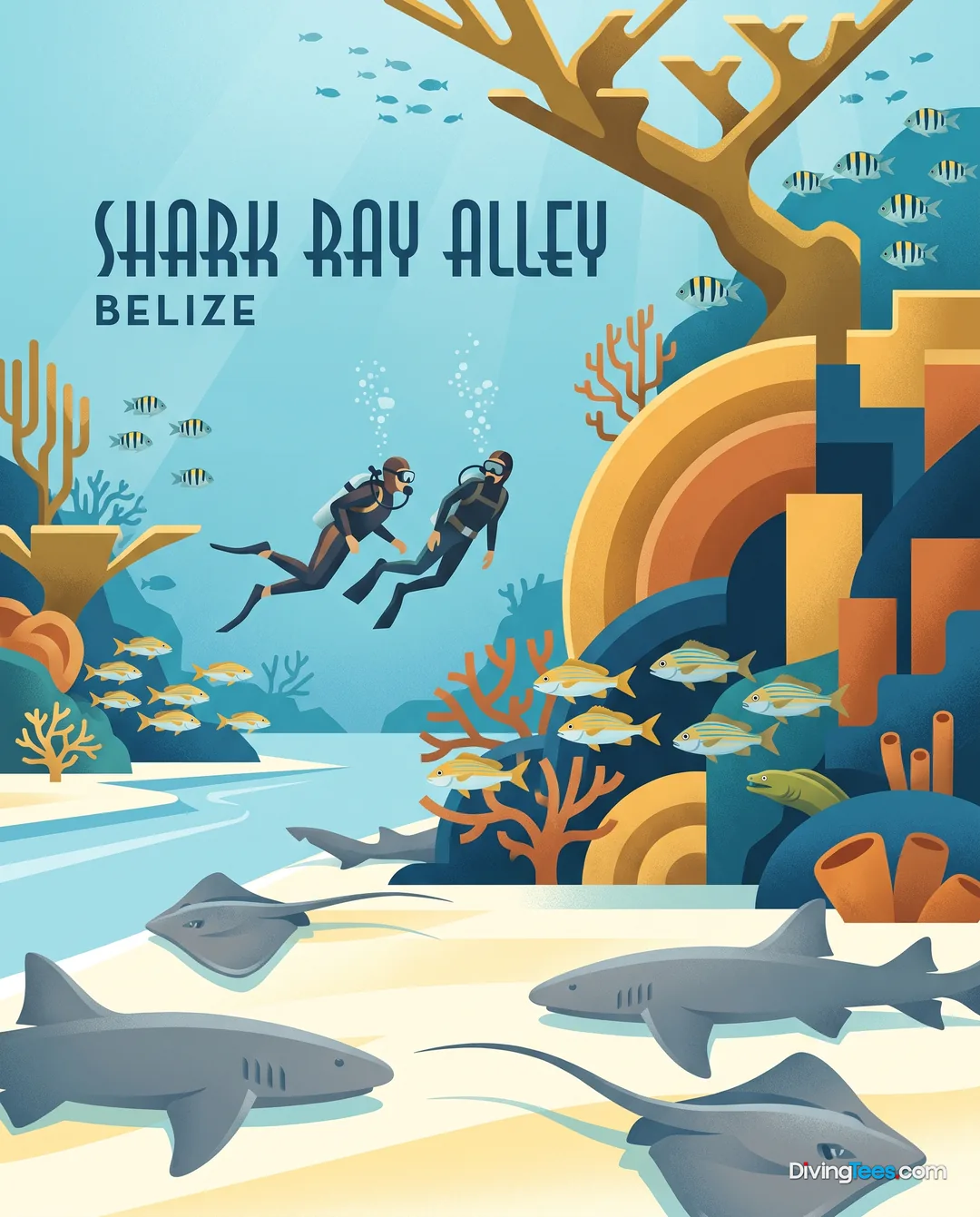
San Pedro’s clearest calling card is Shark Ray Alley, where southern stingrays and nurse sharks are encountered in only two to three metres of water. The site lies within the Hol Chan Marine Reserve and suits divers who enjoy close observation rather than depth, wrecks or demanding underwater navigation. It is an unusually straightforward introduction to the area: calm conditions, very shallow reef surroundings and animals that are predictably present. For experienced divers, the attraction is the quality of the encounter, not a challenging profile.
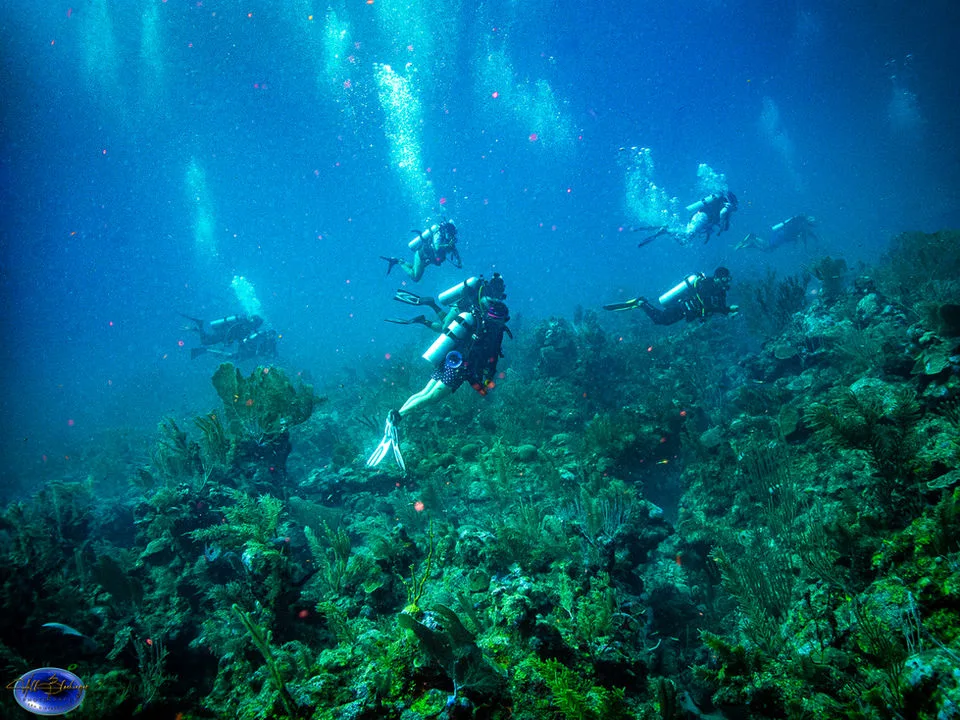
Shark Ray Alley is an extremely shallow dive, with the bottom lying between two and three metres. The setting is a reef environment rather than a deep-wall or wreck dive, and the main underwater activity is moving slowly through clear water while watching southern stingrays and nurse sharks at close range. Conditions are typically calm, making the site manageable for divers who are still building confidence in open water. Visibility is generally excellent and can exceed thirty metres, particularly during the dry season from December through May. Its appeal lies in the combination of minimal depth, crystalline water and reliable animal encounters.
The animals here are the reason to enter the water. Southern stingrays occupy the very shallow reef environment, while nurse sharks provide the larger, more distinctive presence. At Shark Ray Alley, both can be approached closely enough for careful observation without needing a deep profile. Their presence is described as predictable, which makes the site more dependable for anyone planning around a particular wildlife encounter. The main seasonal difference concerns the conditions in which they are seen: visibility is especially strong during the drier months, while the site is reported to be calmest from August through November.
San Pedro offers two useful seasonal windows, depending on what matters most. August through November is the measured period for the calmest water, which favours an easy, unhurried visit to the shallow site. January through May brings the lowest rainfall, while visibility is particularly good during the dry season from December through May and can often exceed thirty metres. The choice is therefore practical rather than absolute: choose the later-year period for calmer conditions, or the drier months when clear water and reduced rainfall take priority. The supplied information gives no separate seasonal wildlife pattern to plan around.
This coast is exposed to sargassum strandings, whose intensity varies greatly from year to year. To find out more, see the “Sargassum alert” panel on this page.
This is a notably forgiving dive for beginners and for divers returning to the water after a long break. Shark Ray Alley is suitable for all certification levels, including people whose experience has so far been limited to a pool. PADI, SSI and BSAC divers should find the profile technically undemanding, provided they are comfortable in open water. Experienced divers should come for the animals and visibility, not for depth, current or complex navigation.
For readers leaving from London Heathrow, London Gatwick or Manchester, San Pedro needs to be treated as the destination at the end of a connection-led journey. Exact routing and connection points are not established in the supplied material, so the onward itinerary should be checked before dive days are fixed. Leave a sensible margin between transport legs rather than relying on a tight same-day schedule. The final local transfer should also be arranged in advance, with accommodation and the dive departure treated as separate points to connect. In practical terms, build the journey around reaching San Pedro comfortably, then organise the diving locally; do not assume that the last transport leg will place a diver directly beside the day’s departure point.
Set expectations correctly before booking: Shark Ray Alley is about close encounters in two to three metres, not depth or elaborate reef scenery. That shallow profile makes it worth carrying a little extra attention to exposure and buoyancy, because there is very little water column in which to correct a mistake. Bring a camera setting that works in bright, clear water; visibility can exceed thirty metres, and the animals may be easier to watch than to frame at close range. If calm water is the priority, keep the August-to-November window in mind. If reduced rainfall and the strongest visibility are more important, January-to-May is the more logical choice. Do not build the trip around a separate seasonal animal migration: the attraction here is the stated, predictable presence of southern stingrays and nurse sharks.
A sensible San Pedro stay is built around the shallow wildlife encounter rather than a demanding sequence of dives. Allow the arrival and local transfer to settle before fixing the first underwater outing, particularly when travelling on a connection-led itinerary. The seasonal choice can then shape the plan: calmer water from August through November, or drier conditions and strong visibility from December through May. Shark Ray Alley works for mixed-experience companions because the profile is so shallow and the animal encounters are easy to appreciate.
Hello, I'm Marina, DivingDeal.com's AI assistant. I guide you through destinations, areas and countries.
Thinking about the whole trip and the flights? Talk it over with Edith →
Marina is an AI. Some links are affiliate links: DivingDeal may earn a commission, at no extra cost to you. Bookings are made with the partner.
Your last day stays dry: no diving in the 18-24 hours before a flight, the perfect window to see the destination from another angle.
 Culture
⏱ 2 h · ★ 5.0 (120 reviews)
from £34$46€41
see on Viator ↗
 Culture
⏱ 2 h · ★ 5.0 (13 reviews)
from £19$25€23
see on Viator ↗
 Nature
⏱ 3 h · ★ 5.0 (1 reviews)
from £530$709€633
see on Viator ↗

⏱ 1 h
from £76$102€91
see on Viator ↗
Ratings and reviews collected by Viator and Tripadvisor.
Choose San Pedro from August through November if calm water matters most. January through May brings lower rainfall, while December through May is the dry season, when visibility is particularly good and can often exceed thirty metres. The best window depends on whether you prioritise calmer conditions, reduced rainfall, or clear water.
San Pedro suits all certification levels, including divers whose experience has been limited to pool sessions. The shallow profile and typically calm conditions make Shark Ray Alley manageable while you build confidence in open water. Experienced divers can enjoy the animals and visibility without needing depth, demanding navigation, or a challenging profile.
San Pedro offers close encounters with southern stingrays and nurse sharks at Shark Ray Alley, within the Hol Chan Marine Reserve. The reef environment lies in shallow water, with crystalline conditions that make careful observation easy. The attraction is watching these predictably present animals at close range rather than exploring wrecks or deep walls.
Plan your San Pedro stay around reaching the destination comfortably before arranging the diving locally. Build in space between connection-led transport legs, and arrange the final local transfer, accommodation, and dive departure separately. Allow time to settle before the first outing, then choose calmer or drier conditions according to your priorities and coordinate the shallow wildlife dive.