Liveaboards · Belize
Belize Aggressor IV — A Purpose-Built Dive Yacht for Reef Walls and Blue Holes
What makes this boat unique
- The Belize Aggressor IV carries up to 20 divers in 10 air-conditioned cabins, with private bathrooms and a choice of main- and lower-deck accommodation.
- Its Belize Exploration itinerary visits Lighthouse Reef, Half Moon Caye and Turneffe Reef on 8-day/7-night or 11-day/10-night trips.
- Diving is supported by shaded work areas, rinse tanks, diver tenders, camera facilities and outdoor showers.
- Full-board dining, non-alcoholic drinks, alcoholic drinks and wine with dinner are included; nitrox is available as an optional extra.
For subtitles in English: start the video firstthen click the gearat the top right of the video, select “Subtitles/CC”, then “Auto-translate” and choose “English”.
The invitation
The Belize Aggressor IV is built around the part of a Belize trip that matters: getting divers to walls, shallow coral gardens and the Blue Hole without turning the boat into an afterthought. It suits divers who want a full-service liveaboard with the practical comforts of a larger yacht: private bathrooms, air conditioning, a shaded dive area, camera facilities and room for up to 20 passengers. The route combines recognised sites around Lighthouse Reef, Half Moon Caye and Turneffe Reef, with both 8-day/7-night and 11-day/10-night departures. The strongest argument is the balance. The boat score is 8.8, while crew, food and diving score 9.4, 9.8 and 9.1 respectively. The hull is part of the experience, but the people, meals and access to the reefs are what make this boat worth choosing.
Boarding
From the dock, the Belize Aggressor IV makes the impression of a proper working dive yacht rather than a small charter boat dressed up for a week. Once aboard, the layout is easy to read: cabins occupy the main and lower decks, the dive operation has its own working area, and the indoor salon gives the group somewhere to regroup between dives. Main-deck cabins sit around the middle of the boat and have large picture windows, so the sea stays part of the cabin rather than disappearing behind a small portlight. The yacht is large enough to spread people across several areas without making the dive operation feel detached from the rest of the boat. It is a vessel designed first for repeated diving, then arranged so that meals, rest and conversation can happen without competing for the same few square metres.
The atmosphere on board
The atmosphere is shaped less by formal luxury than by the crew's ability to keep a compact group moving smoothly through a dive-heavy week. English is the working language. Staff give comprehensive briefings before dives, help with the practical parts of the operation and may be in the water for support, photography, videography and critter spotting when diving directly from the yacht. Evenings can include audio and video entertainment and an adventure video of the week. With a maximum of 20 passengers, the group is large enough to bring different diving habits aboard but small enough for the crew to learn who needs what on the dive deck. That crew score of 9.4, higher than the boat score, tells the useful story: the people are a significant part of what guests take home.
The sites you’ll dive
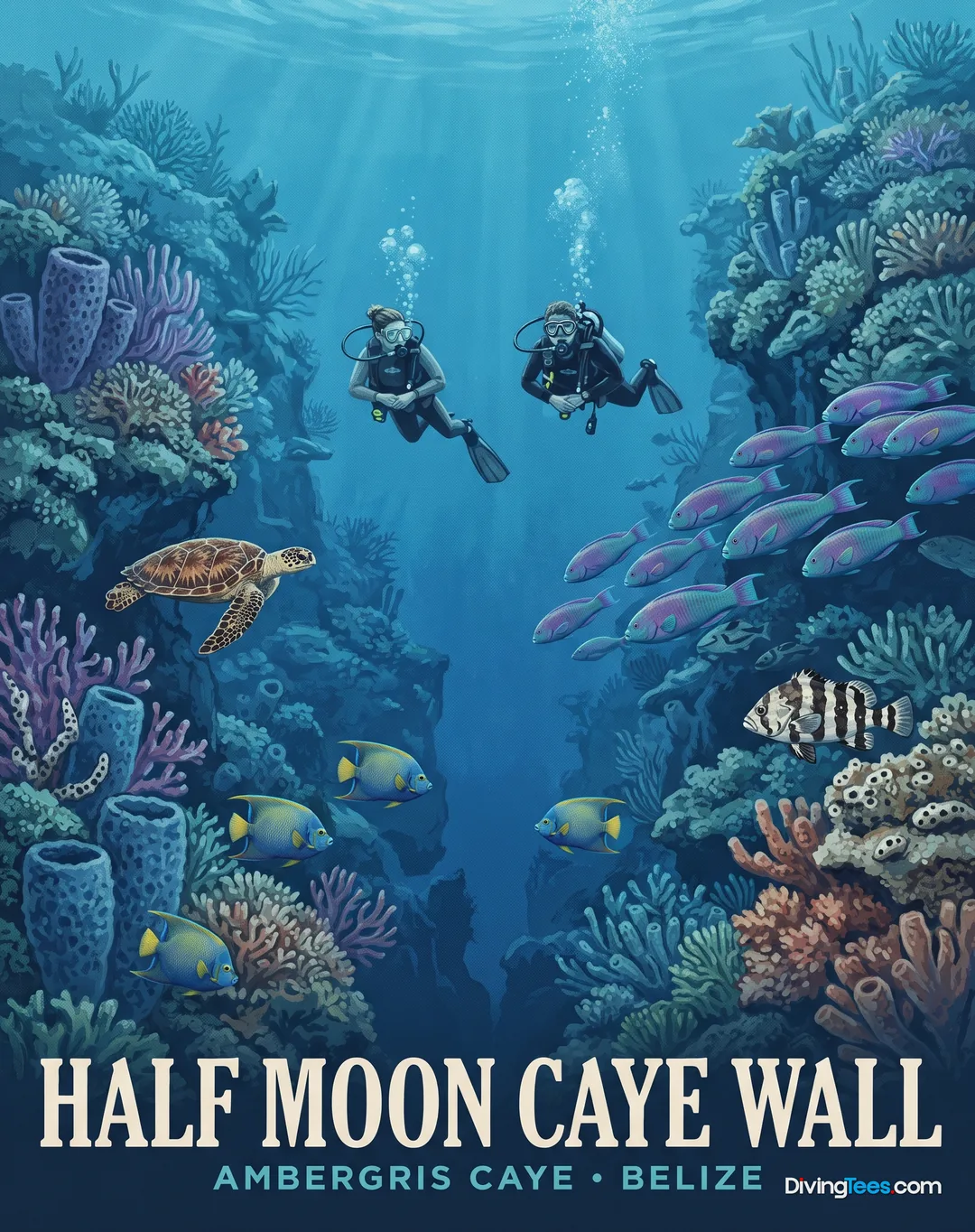
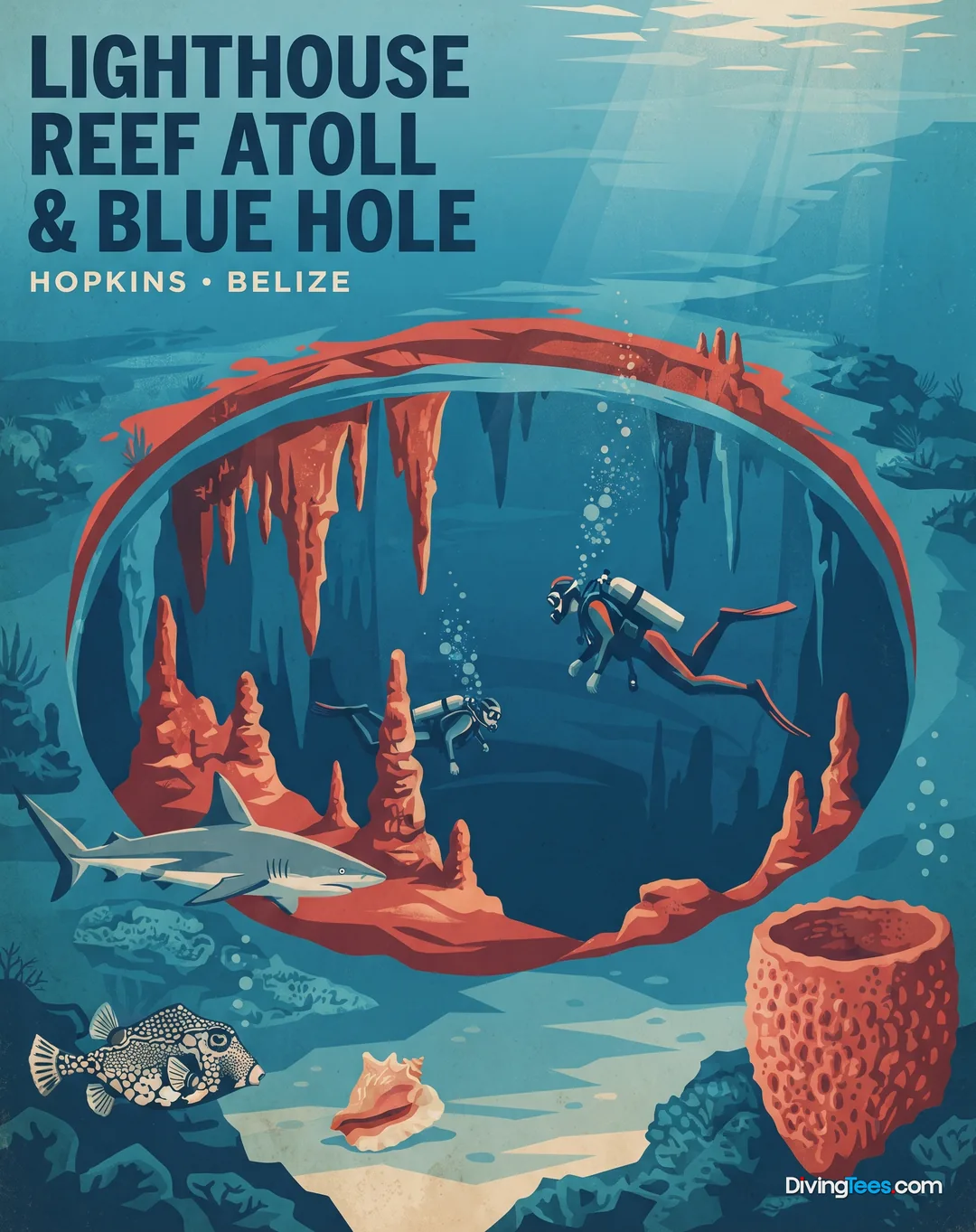
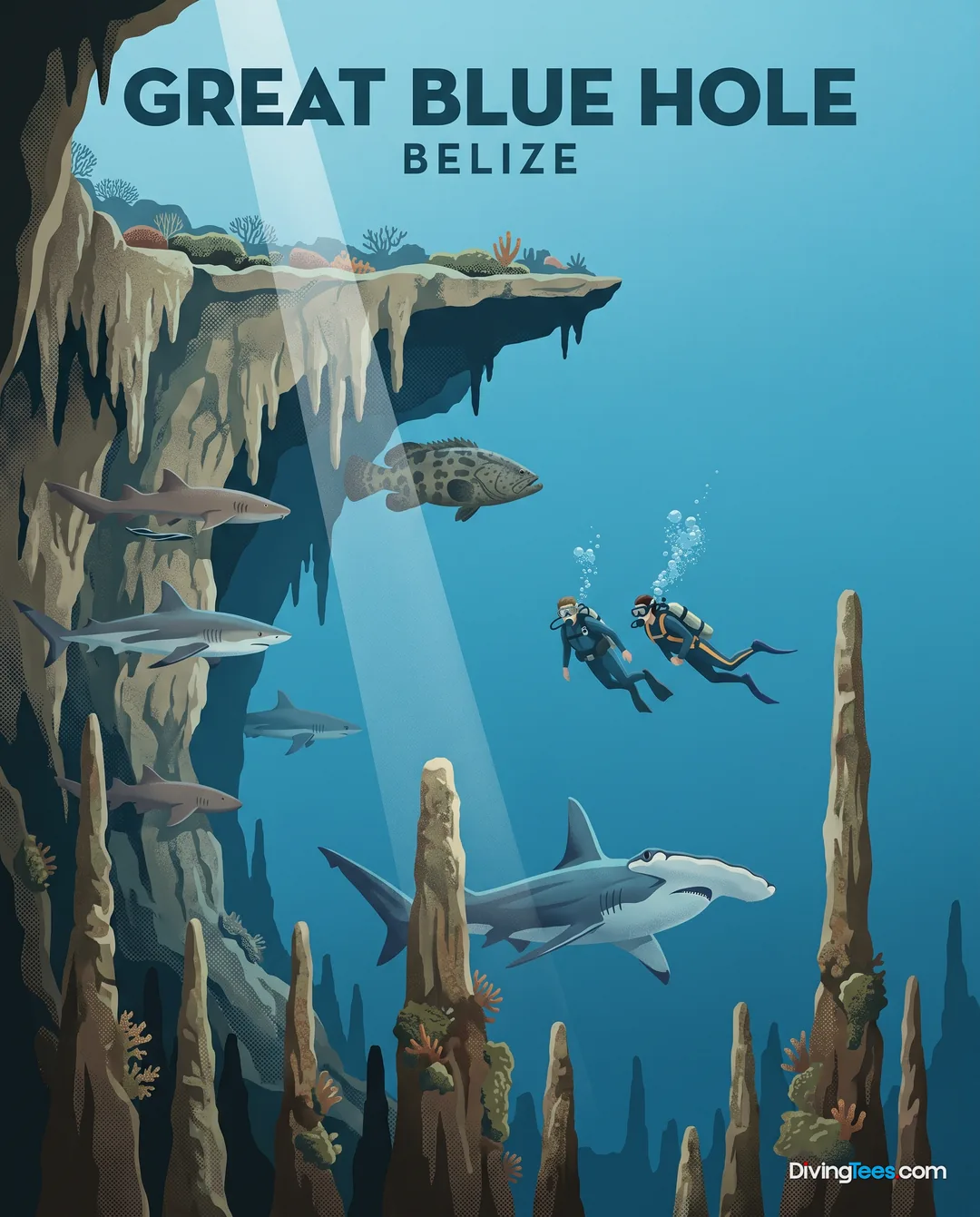
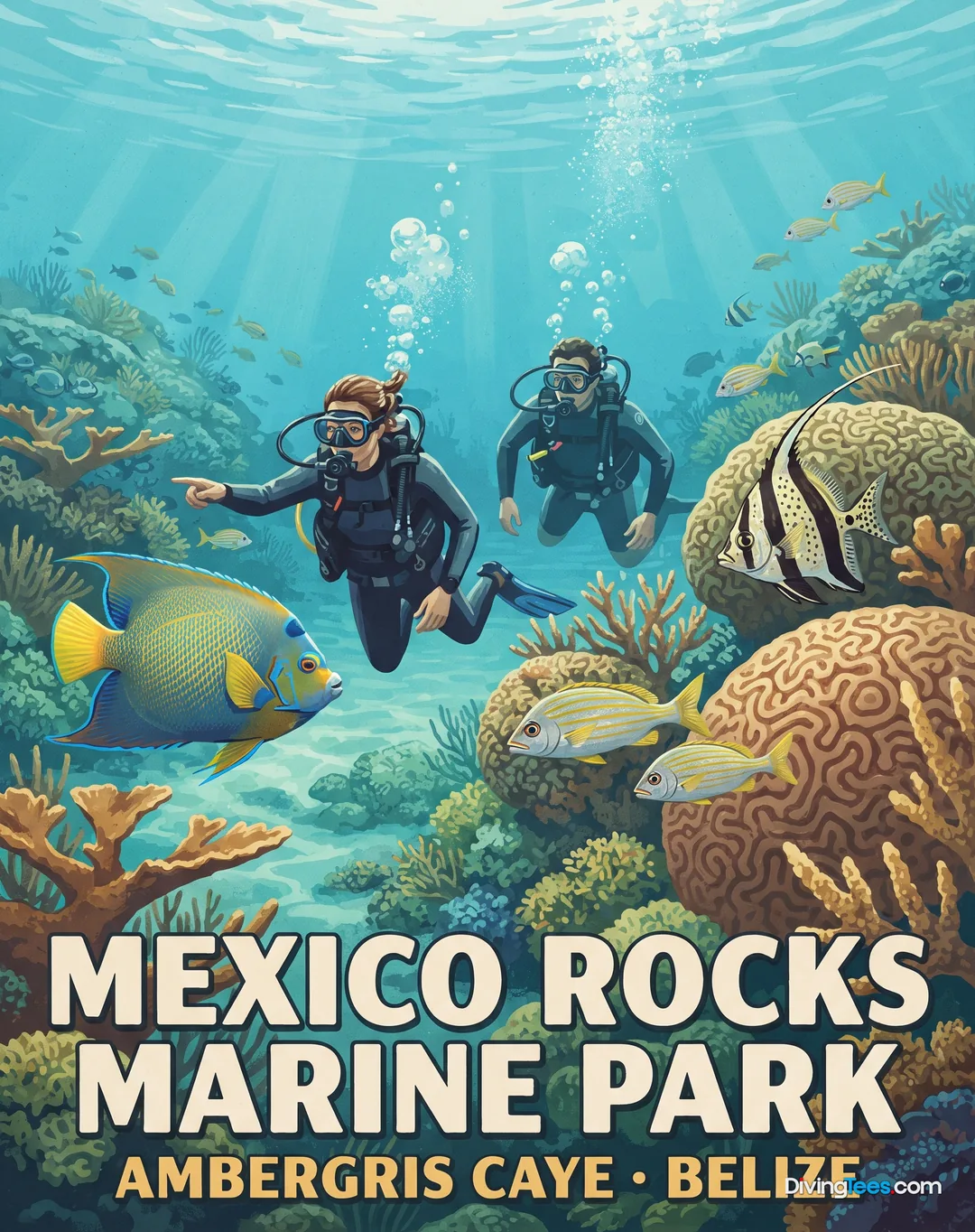
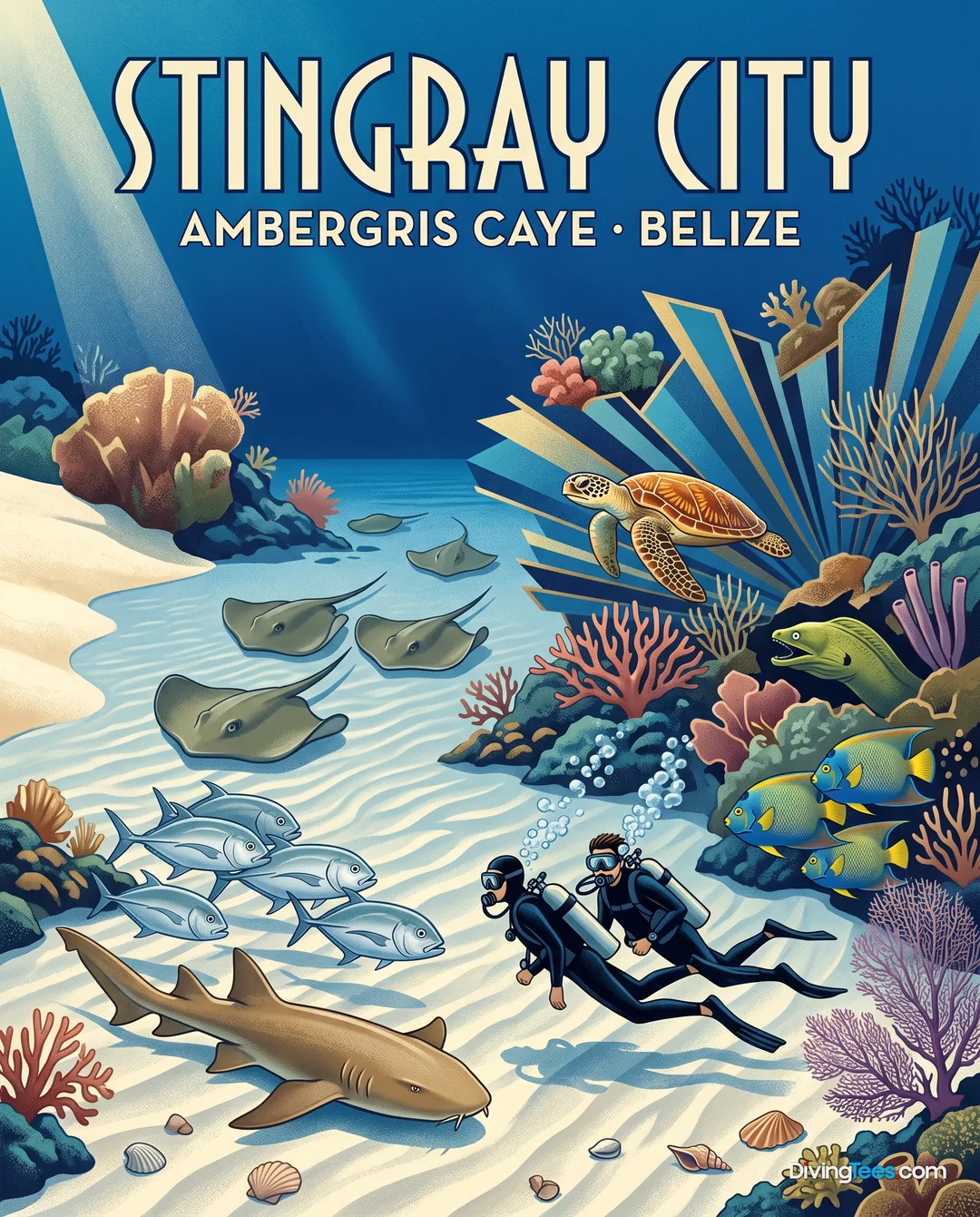
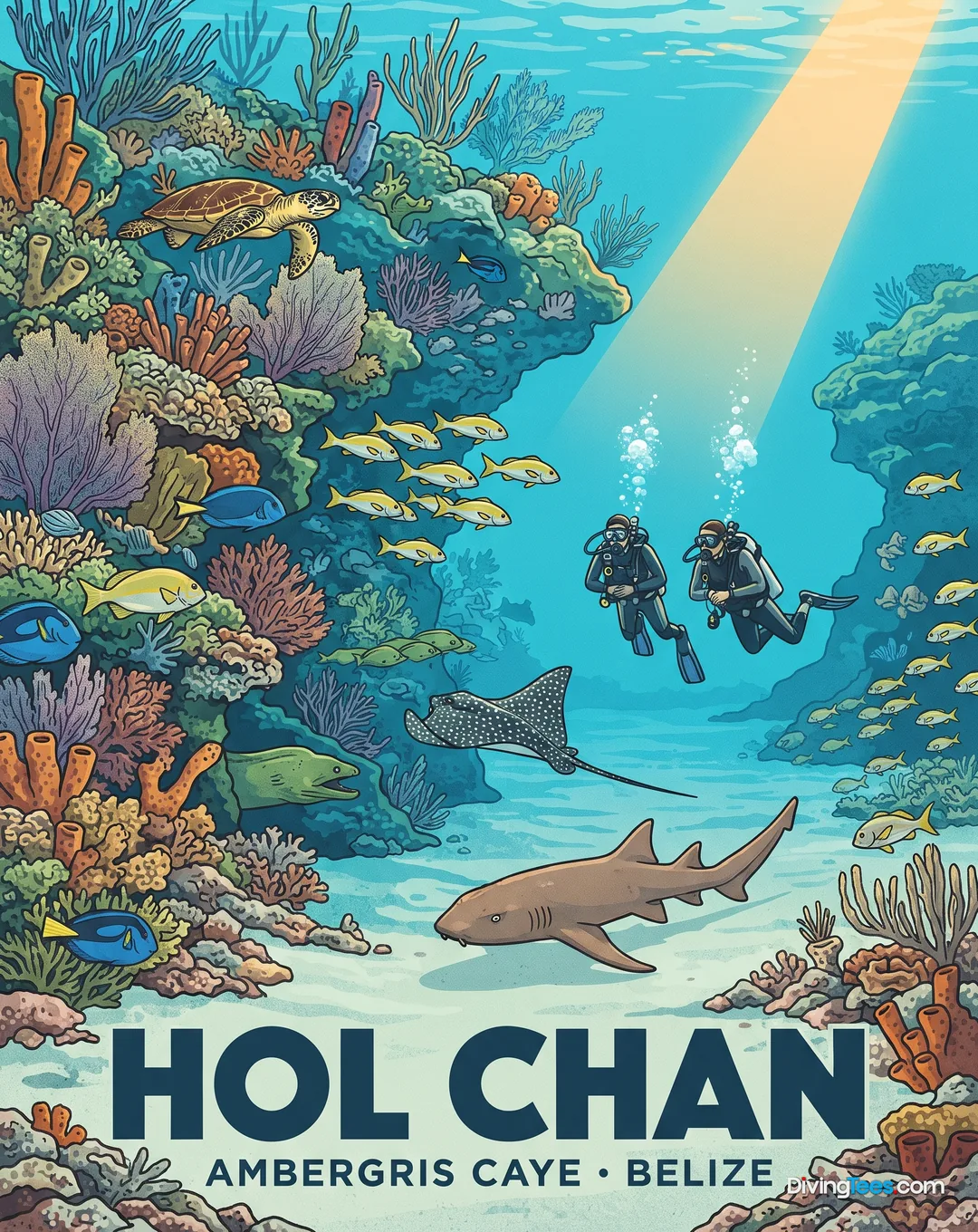
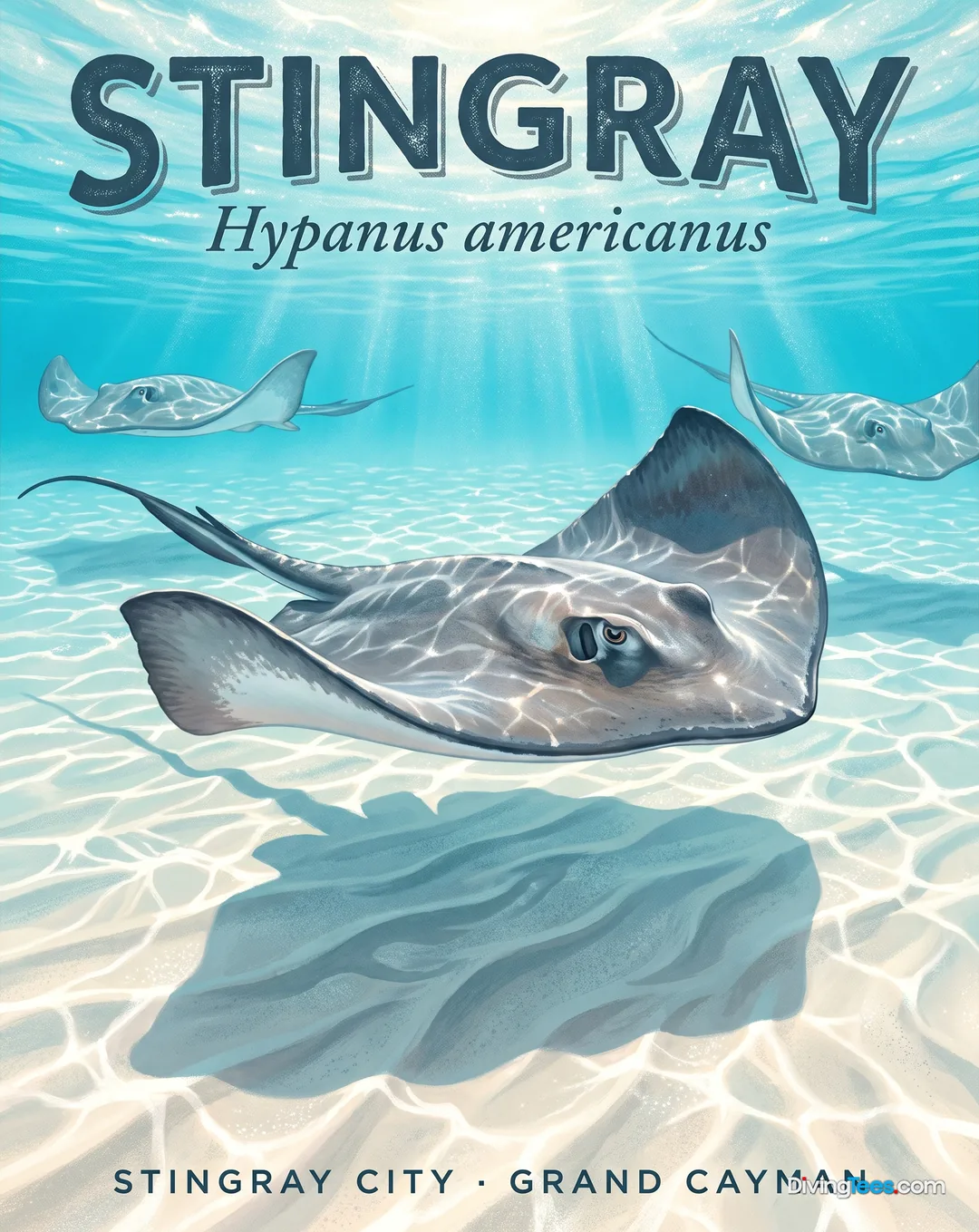
Half Moon Caye Wall is the cleanest wall-dive image on the route: a shallow reef ends at a vertical drop, with garden eels, rays, turtles, barracuda, jacks, snappers and groupers along the reef and wall. Its maximum depth is -24m. Lighthouse Reef Atoll & Blue Hole is the geological outlier, descending into the Great Blue Hole to a maximum of -40m, where ancient stalactites shape the deeper sections and pelagic encounters are possible; reef sharks, bull sharks and hammerheads are among the animals recorded there. Mexico Rocks Marine Park stays calm and shallow, with coral formations rising from water no deeper than -4m. Stingray City reaches only -3m and is visited for southern stingrays. Blue Hole, in the Ambergris Caye zone, descends to -39m and may bring giant groupers, nurse sharks and blacktip reef sharks. Hol Chan Marine Reserve reaches -8m, with sharks and rays over a vibrant reef. Recorded departures run for either 8 days/7 nights or 11 days/10 nights on the Belize Exploration route covering Lighthouse Reef, Half Moon Caye and Turneffe Reef.
What you’ll meet underwater
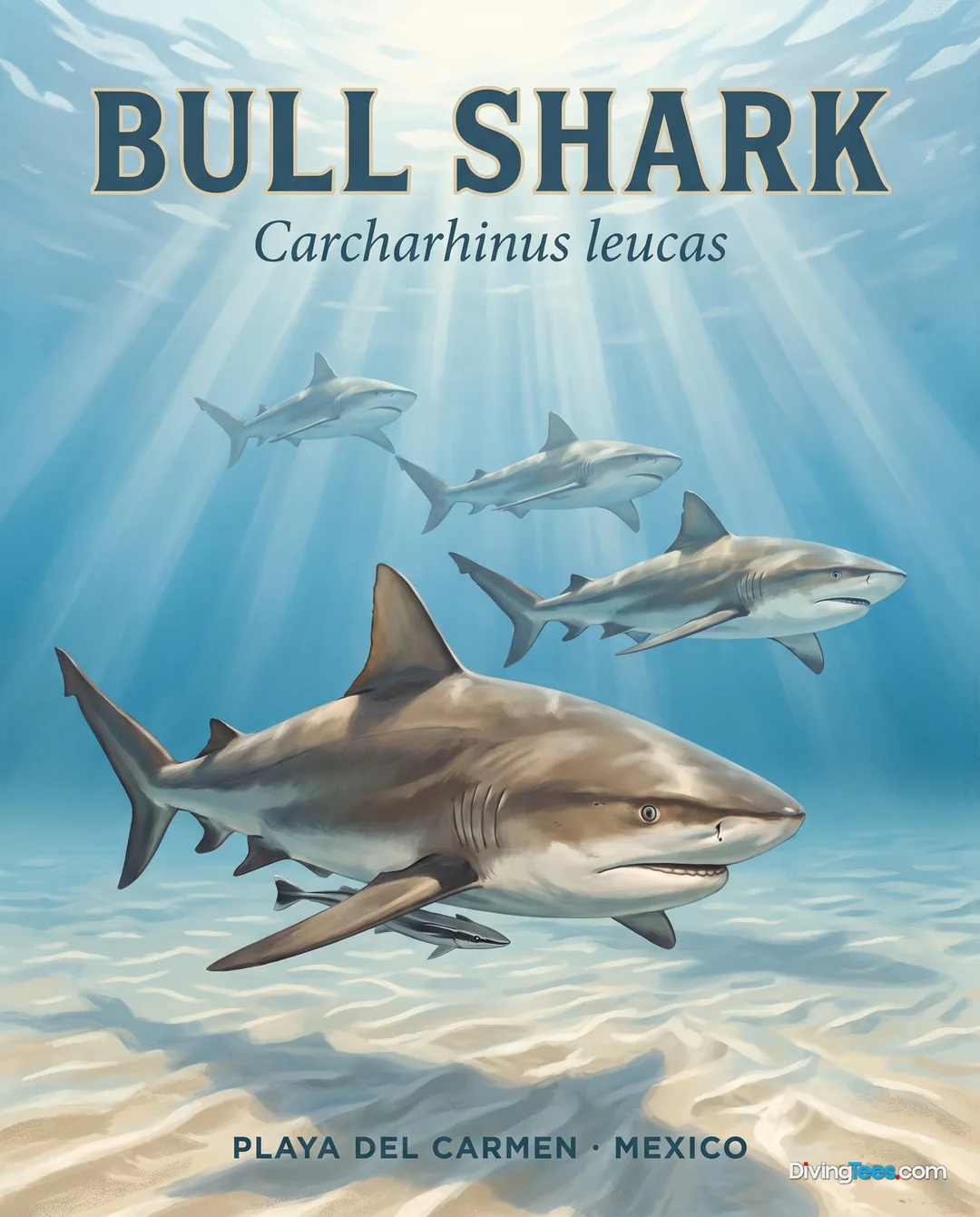
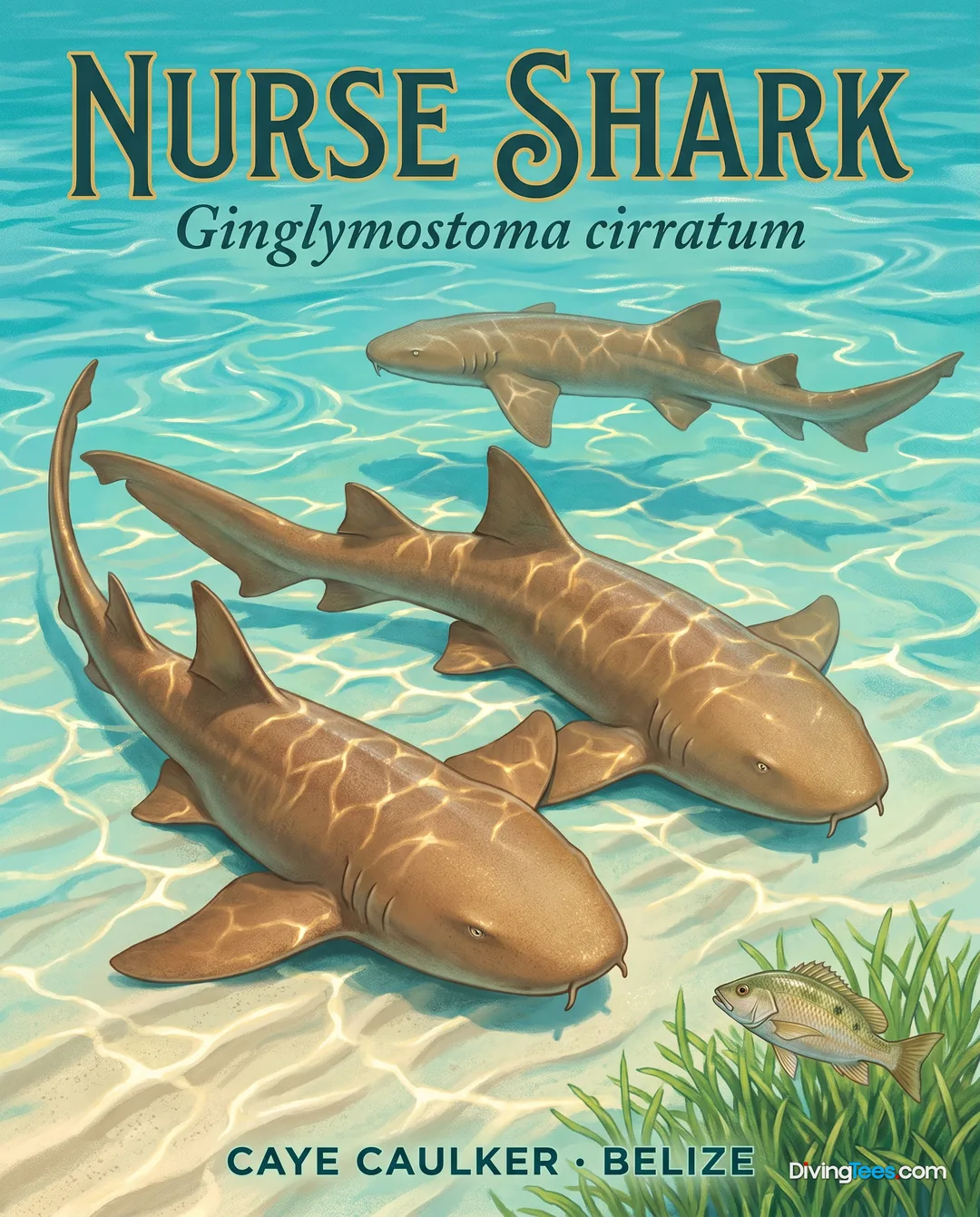
Reef sharks are the recurring large-animal presence on three sites along this route, but the individual sites give the week its sharper moments. Half Moon Caye Wall is the place for a possible barracuda crossing, a green turtle above the reef, or a jack moving along the drop; gorgonians and angelfish add detail when the wall is not holding the eye. The Great Blue Hole at Lighthouse Reef Atoll & Blue Hole can produce bull sharks or hammerheads in its deeper sections, while Blue Hole around Ambergris Caye is where giant groupers and blacktip reef sharks are recorded. Hol Chan Marine Reserve is the named site for rays and sharks on a shallower reef, and Stingray City is the specific encounter for southern stingrays. None of these animals is guaranteed. The attraction is the contrast between open wall, deep geological sinkhole, shallow coral and a site where stingrays gather in clear water.
Who puts you in the water
The crew speaks English and begins every dive with a comprehensive briefing covering the site and the information needed for the dive. Buddy teams consist of two or three people; a dive staff member is not treated as a buddy unless that staff member and one guest are the only people making the dive. Staff may enter the water to support divers, spot subjects or assist with photography, but they do not directly supervise every diver and guests are not required to follow them. Advanced Open Water training and the Enriched Air Nitrox course can be arranged aboard, with the course confirmed after arrival and paid for onboard. The vessel carries first-aid kits, trained first-aid crew, fire alarms and extinguishers, emergency beacons, radios, life jackets, flares, radar, sonar and GPS. The dive group still operates on each diver's own certification and buddy procedures.
The dive deck and the gear
The dive setup is made for repeated recreational diving rather than elaborate technical configurations. The standard equipment package uses 80-cubic-foot tanks filled with air and fitted with K valves; DIN users should bring an adapter, and larger 100-cubic-foot or 15-litre tanks can be requested as paid extras but are not guaranteed. Nitrox is available at 32% for certified Nitrox divers as an optional extra. Sidemount is accepted only with a single-cylinder configuration, while rebreather diving is not supported. The deck provides shaded work space, rinse tanks, diver tenders, outdoor showers and a separate rinse area for cameras, with charging stations and dedicated photo space inside. Rental equipment is available. Diving is by buddy team, not solo, and underwater scooters are not permitted.
Between dives
Between dives, the shaded dive area is the practical refuge from the Belize sun. The air-conditioned salon gives cameras, laptops and tired divers a cooler place to settle, while the terrace and outdoor showers keep wet gear and saltwater outside the living spaces. The boat has a separate camera rinse area, a camera room and charging stations, so photographers do not have to improvise around the dining table. When there is no reason to stay near the dive deck, the jacuzzi, bar and relaxation areas provide a change of posture rather than another screen. Snorkeling equipment is available, and the boat accepts non-divers, making the quiet hours workable for people whose day is not measured in scuba cylinders.
A day on board
The day begins with the dive operation rather than a sightseeing schedule: divers wake, eat, attend the briefing and prepare the same equipment for another descent. Dives and meals alternate through the day, with the shaded deck and salon taking over during the surface intervals. The route allows the boat to move between the recognised areas of Lighthouse Reef, Half Moon Caye and Turneffe Reef while divers are out of the water, then settle again for the next briefing. A shallow site such as Mexico Rocks or Stingray City changes the pace from a wall or Blue Hole dive, and the camera area gives photographers somewhere to work before returning to the water. When a night dive is scheduled, it becomes the final underwater chapter of the day; afterward, dinner, a drink and the quiet of the salon replace the dive deck until the next briefing.
What you eat aboard
The galley serves full-board meals, with buffet service, Western cooking and local dishes, plus a stated emphasis on gourmet food. Breakfast, lunch and dinner matter on this route because the table is where the body catches up after repeated dives: a proper meal replaces the calories lost in the water, while snacks bridge the shorter gaps. Non-alcoholic drinks, water, tea, coffee and alcoholic drinks are included, as is wine with dinner. Beer is available. The food score of 9.8 is the clearest part of the boat's feedback, and that matters more than a menu promising variety. On a liveaboard, good food is not decoration; it is what keeps the next dive from feeling like an obligation.
Nights at sea
The cabins are air-conditioned and each has a private bathroom with a hot shower. Main-deck Deluxe Staterooms and Master Staterooms offer large picture windows; lower-deck Deluxe Staterooms trade that view for a more sheltered position below. The main-deck cabins are located amidships, which is the sensible place to be when the sea is moving and a diver wants less motion between dives. The point is not boutique decoration. It is returning from the water, rinsing off, closing the cabin door and having a private space that is cool, clean and separate from the working deck. Cabins are non-smoking, and television is available in the rooms, though after several dives the more useful feature may be the air conditioning and the private shower. The boat also welcomes non-divers and snorkelers, so a partner does not have to follow the scuba schedule to have a place aboard.
Deluxe Staterooms Main Deck
Deluxe Stateroom Lower Deck
Master Staterooms
What to know before boarding
The Belize Aggressor IV departs from and returns to Belize, on the Belize Exploration route. An airport transfer is included, while hotel transfer is an optional extra. Arriving in Belize the night before departure is the sensible choice, leaving room for travel delays before boarding.
Deck plan
- Length
- 42.1 m
- Beam
- 7.9 m
- Maximum number of passengers
- 20
- Number of cabins
- 10
- Number of bathrooms
- 13
- Cruising speed
- 12 knots
- Website
- aggressor.com ↗
Hello, I'm Marina, DivingDeal.com's AI assistant. I answer in detail about hotels, dive centres and liveaboards.

Thinking about the whole trip and the flights? Talk it over with Edith →
Marina is an AI. Some links are affiliate links: DivingDeal may earn a commission, at no extra cost to you. Bookings are made with the partner.