The Craft House
★★★★
Google 5/5 (194 reviews)
76 km away as the crow flies
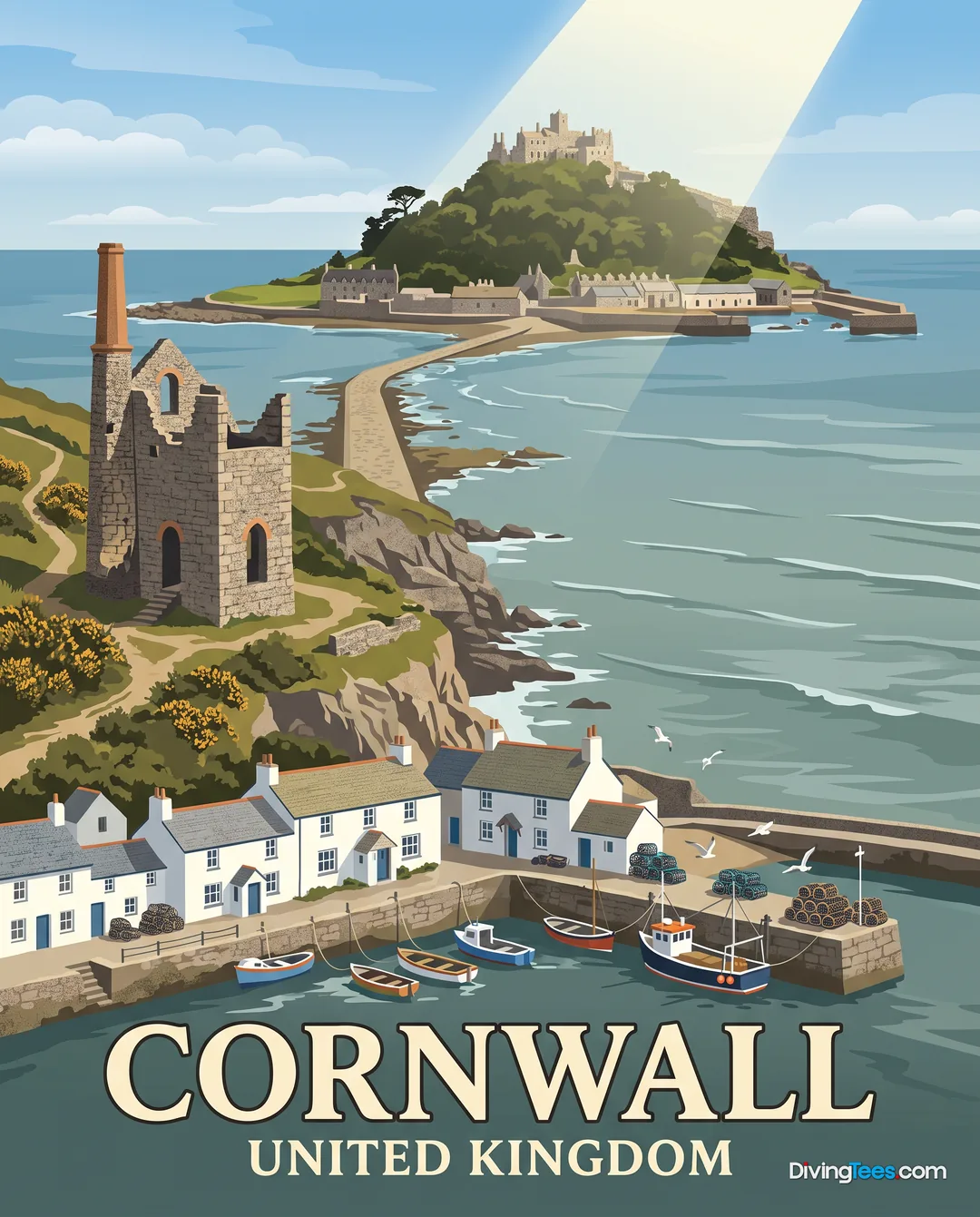
Cornwall · United Kingdom · Atlantic
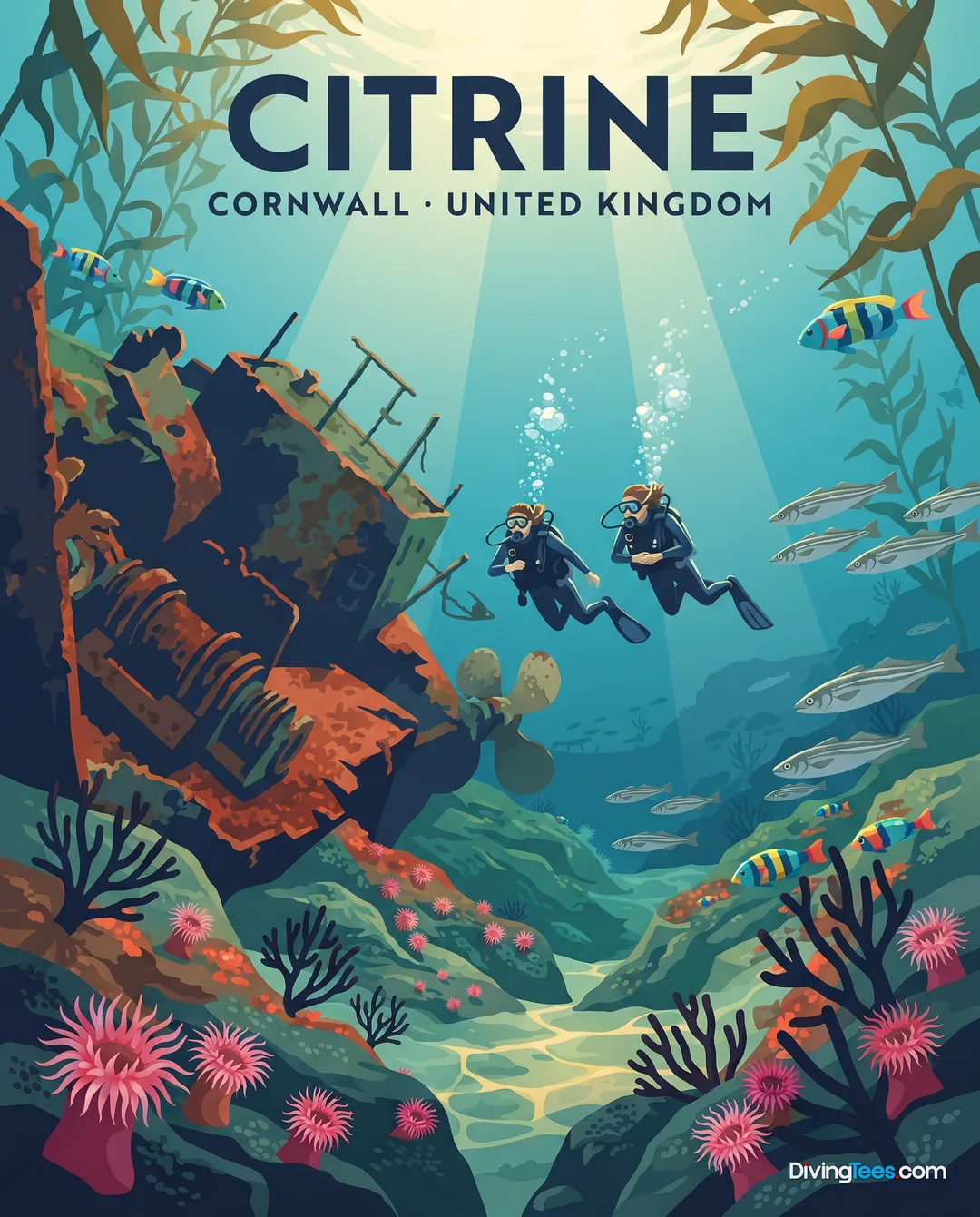
Max. depth · 45 mAn upside-down 1907 steamer lies on the sand and shingle seabed at depths of up to 45 metres.
For subtitles in English: start the video firstthen click the gearat the top right of the video, select “Subtitles/CC”, then “Auto-translate” and choose “English”.
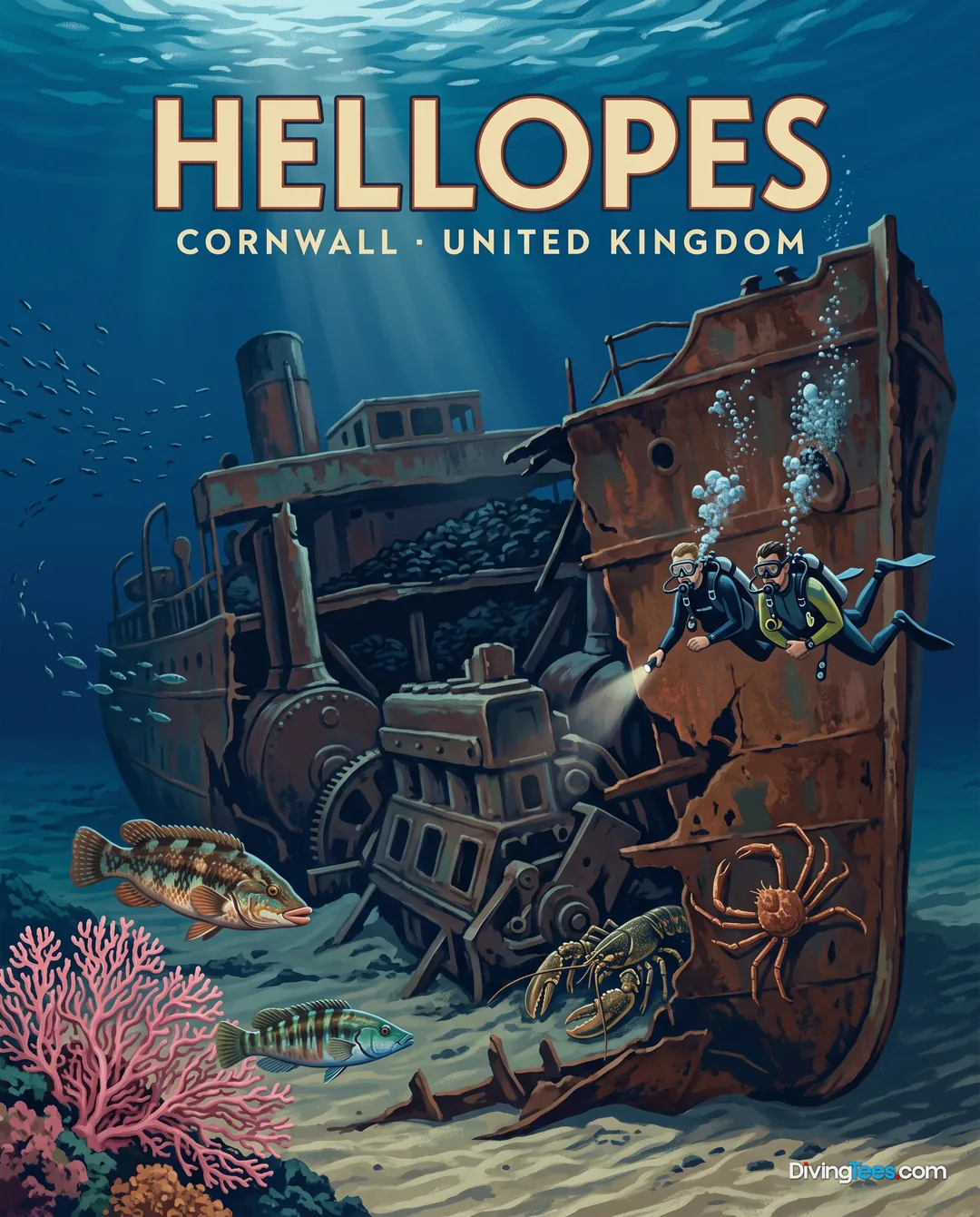
The Veritas is a 1907 Norwegian steamer that lies in a non-traditional orientation on the seabed off the Lizard Peninsula. Unlike many wrecks that settle upright, the Veritas rests upside down on a substrate of sand and shingle. The bow points north, while the remains of the structure are scattered seaward, creating a site defined by low relief metal structures rather than a single towering superstructure. This layout requires you to navigate across a wider area of the bottom to appreciate the full extent of the wreckage.
As you descend toward the 35 to 45 metre range, the primary features of the wreck become visible against the seabed. Two large boilers stand clear of the main debris, providing significant points of interest for inspection. You will also find parts of the stern and an intact iron propeller, which remain identifiable despite the vessel's inverted state. The broken hull sections are spread across the bottom, offering a complex landscape of metal through which you can navigate, provided you maintain good buoyancy and trim.
The topography of the site is dictated by the relationship between the wreck and the sand and shingle bottom. Because the wreckage is not concentrated in one vertical mass, you are effectively diving a debris field that traces the original outline of the ship. This spread of material provides various small niches and crevices within the wreckage. These areas are ideal for observing smaller resident species that seek shelter from the open water, making the site interesting for both structural inspection and biological observation.
The marine life at the Veritas is characteristic of deep wrecks in the Cornwall region. You can expect to encounter cod and pollock moving through the water column or hovering near the wreckage. The complex metal structures and the surrounding seabed provide habitat for conger eels, which often inhabit the deeper recesses. Smaller invertebrates, such as crabs and lobsters, are frequently found scavenging or hiding within the debris field, particularly around the more sheltered sections of the hull.
Substrate-dwelling organisms also populate the site, particularly where the metal meets the shingle. You may observe dahlia anemone and dead man's fingers attached to the wreckage or nearby surfaces. These organisms contribute to the local ecosystem, turning the sunken steamer into a functional reef. Observing the interaction between these sessile species and the passing fish can be a rewarding part of the dive, provided the visibility allows for a clear view of the finer details.
The environmental conditions at the Veritas are a defining factor for any dive plan. The site is subject to strong tidal streams that can significantly impact your ability to maintain position and manage your air consumption. Because the wreck is located in an area with notable tidal movement, your ability to stay close to the debris field depends heavily on your current management skills. Precise timing is required to ensure you are not fighting a heavy flow while attempting to inspect the boilers or the propeller.
Approaching the site requires careful logistical planning, typically involving a boat trip from Porthkerris, Porthoustock, or Falmouth. Local dive charters or club RIBs are the standard method of access. Given the depth and the nature of the wreckage, the dive is best approached with a clear understanding of the site's layout and the tidal constraints. Successful dives here are characterized by controlled ascents and efficient navigation through the scattered components of the ship.
The Veritas is a deep site with depths ranging from 35 to 45 metres. It requires an Advanced level of certification and is recommended for divers with significant deep wreck experience. Strong currents are a constant factor at this site. It is essential to plan your dive around slack water, which typically occurs roughly one to two hours after high or low water at Falmouth. Diving outside of these tidal windows can result in demanding conditions that may exceed the comfort level of even experienced divers.
Plan your dive around slack water, which typically occurs roughly one to two hours after high or low water at Falmouth. Strong tidal streams are a constant factor at Veritas, and diving outside these windows can create demanding conditions, making it harder to maintain position and manage your air consumption.
Veritas requires an Advanced level of certification and is recommended for divers with significant deep wreck experience. You should also be comfortable navigating scattered wreckage, maintaining good buoyancy and trim, and completing controlled ascents while moving between the site's separated boilers, propeller, stern, and debris field.
Veritas lies between 35 and 45 metres, making it a deep wreck dive. The site requires careful planning, efficient navigation, and controlled ascents. Its inverted hull and spread-out wreckage mean you need to cover a wider area of sand and shingle to appreciate the full outline of the steamer.
You can see the upside-down 1907 Norwegian steamer, two large boilers, parts of the stern, and an intact iron propeller. The scattered debris field shelters conger eels, cod, pollock, crabs, and lobsters, while dahlia anemones and dead man's fingers grow where the wreck meets the shingle.