The Craft House
★★★★
Google 5/5 (194 reviews)
103 km away as the crow flies
Cornwall · United Kingdom · Atlantic
Max. depth · 37 mExplore the remains of a 2,774-ton iron steamship lying upright on the sandy seabed of Mounts Bay.
For subtitles in English: start the video firstthen click the gearat the top right of the video, select “Subtitles/CC”, then “Auto-translate” and choose “English”.
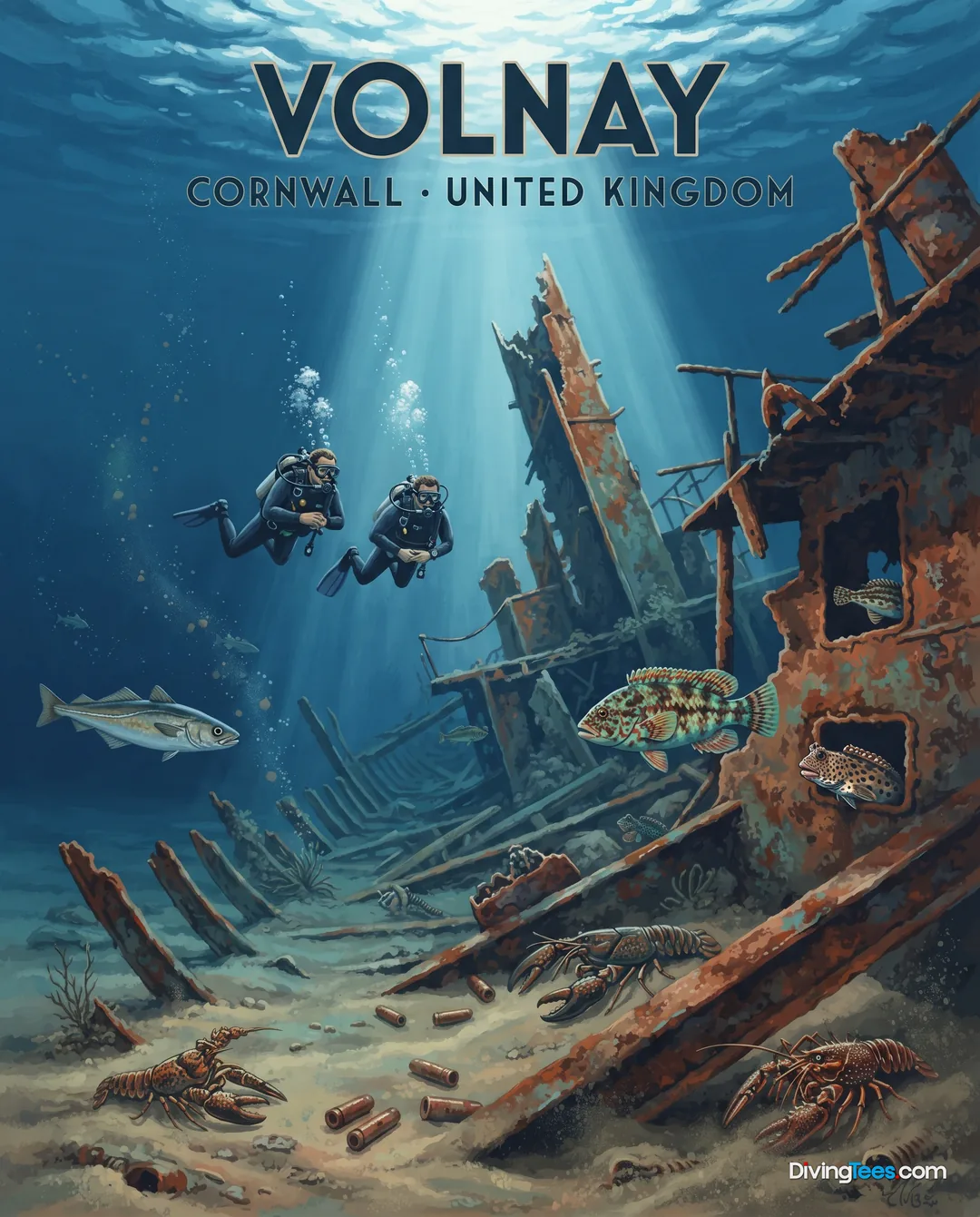
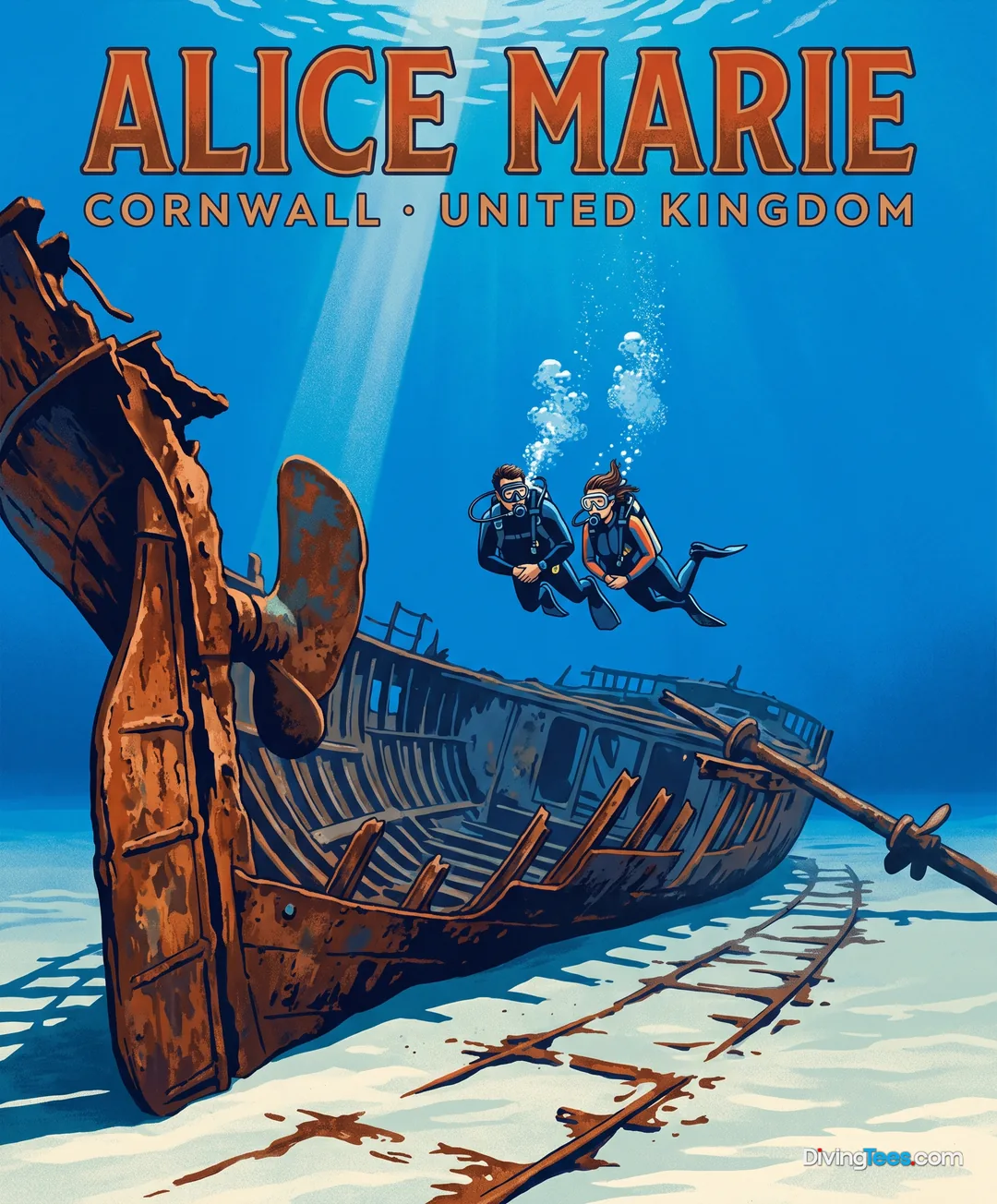
The SS Hellopes lies in the open waters of Mounts Bay, a few miles off the coast of Penzance. This late 19th-century iron steamship, weighing approximately 2,774 tons, remains largely upright on a seabed composed of sand and mixed substrate. While the vessel has undergone salvage and some structural breaking, its massive scale is still clearly evident upon arrival. The wreck provides significant relief against the generally flat bottom of the bay, offering a complex environment for exploration. You will find the stern section particularly well-defined, with upstanding structures that create a vertical profile in the water column.
Descending onto the wreck, you will immediately notice the density of the heavy machinery still in situ. The engine room and the massive boilers are clearly identifiable, serving as central landmarks for your navigation. Despite the age of the vessel, the structural outlines of the holds are preserved, and some still contain the original coal cargo. These internal sections offer a look into the industrial nature of the ship's former life. Moving through the debris field, you can trace the various compartments that once defined this large iron steamer.
The topography of the wreck is defined by these large, broken-up sections that rise from the sandy floor. The stern area is one of the most interesting zones due to the way the ironwork stands up, creating pockets and overhangs. These vertical elements provide a change in depth and structure that is useful for orienting yourself during the dive. The surrounding sandy bottom is typical of the Mounts Bay area, providing a neutral backdrop to the dark iron of the hull. This contrast makes it relatively easy to spot structural details even as light levels begin to drop.
Marine life at Hellopes is heavily concentrated around the man-made structures. You will frequently encounter Ballan wrasse and Cuckoo wrasse darting between the wreckage and the surrounding sand. The crevices and engine components provide ideal habitats for more secretive species like the Conger eel and the Tompot blenny. Crustaceans are also common, with Spider crabs and Velvet swimming crabs moving across the deck or hiding in the shadows of the holds. Observing these species in their natural habitat within the confines of the wreck offers a distinct perspective on local biodiversity.
The wreck also acts as a substrate for various sessile organisms that have claimed the iron surfaces. You can find colonies of Fan coral and Dead man's fingers clinging to the upright sections of the hull. These biological growths soften the industrial lines of the ship and add texture to the dive. Lobsters are known to inhabit the more protected areas of the wreck, often tucked away in the deeper, darker recesses. The presence of these organisms indicates a healthy, established ecosystem surrounding the site.
Large fish species, such as Pollack, are often seen patrolling the perimeter of the wreck. They tend to move along the edges of the structure, utilizing the relief for cover. The presence of these predators is a regular occurrence, adding movement to the scene as they cruise through the water column. As you navigate the different depth zones, you will notice how the fish distribution changes from the more open areas to the sheltered interior of the boilers. This movement is a key part of the experience when diving such a large wreck.
Conditions at Hellopes are heavily influenced by the tidal cycle of Mounts Bay. The site is best accessed during periods of slack water, as tidal streams can become significant during the spring tides. Local knowledge suggests that the current is most manageable around the windows before and after high water. It is important to plan your descent and ascent around these predictable tidal shifts to maintain control. This site is a classic example of how tidal energy dictates the accessibility of Cornish wreck diving.
Navigating the site requires a clear understanding of your position relative to the wreck's main axis. Because the ship is quite large, it is easy to lose orientation if you stray too far into the debris field without a reference point. Using the boilers or the engine as a central hub is a common practice for maintaining situational awareness. The combination of the iron structure and the sandy seabed makes for a predictable but rewarding navigation exercise. This site remains a favourite for local clubs due to its size and the clear historical features it preserves.
The wreck lies at a depth between 25 and 37 metres. This site requires an Advanced level of certification, as divers must be comfortable navigating a large wreck in tidal currents. It is recommended that divers have significant experience in similar environments, ideally at least 50 logged dives, to account for the tidal variability of Mounts Bay.
You should plan Hellopes around slack water in Mounts Bay, with the most manageable current windows occurring before and after high water. Tidal streams can become significant during spring tides, so your descent and ascent need to follow the predictable tidal shifts for better control.
Hellopes requires an Advanced level of certification because you will navigate a large wreck in tidal currents. You should also be comfortable in similar environments and have significant experience with wreck diving, including maintaining orientation around the boilers, engine, and broken sections of the vessel.
Hellopes lies between twenty-five and thirty-seven metres deep on a sandy seabed with mixed substrate. The wreck rises clearly from the flatter bottom, and its upright sections, stern structures, boilers, and engine components create changing depth zones for you to explore while keeping the wreck as a navigation reference.
At Hellopes, tidal currents are influenced by Mounts Bay and may become significant during spring tides, making slack water important. Around the largely upright wreck, you can see boilers, coal-filled holds, fan coral, dead man's fingers, wrasse, conger eels, blennies, crabs, lobsters, and pollack.