Liveaboards · Bahamas
Phoenix — a small sailing catamaran for remote Bahamas diving
The invitation
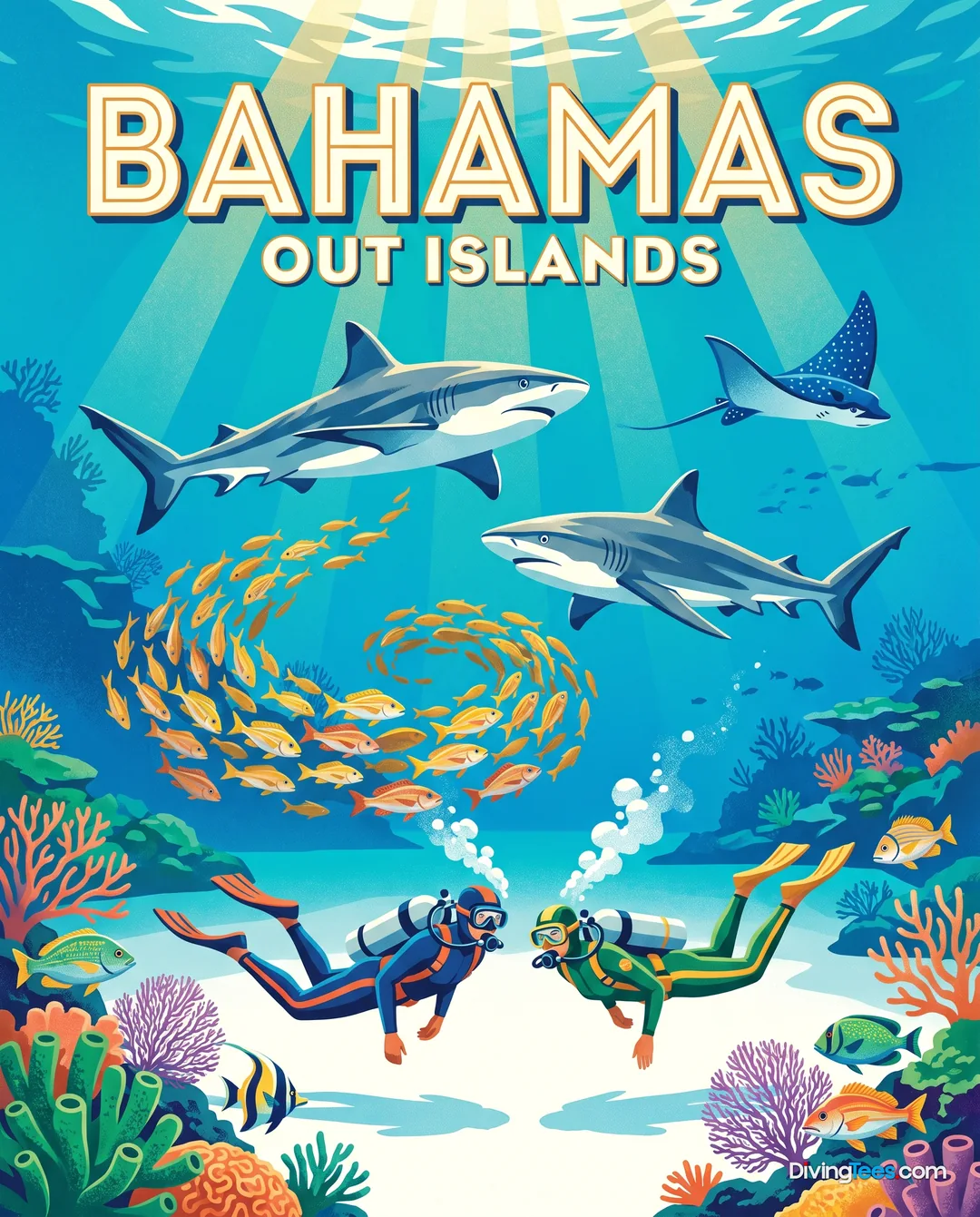
Phoenix is for divers who want the Bahamas from the water rather than from a resort: a small group, a sailing catamaran, and a dinghy that can leave the main boat to reach less accessible sites. The route brings together reef, wall, wreck, cave and blue-hole diving around the Exumas and Eleuthera. Caribbean reef sharks, nurse sharks and colourful coral are part of the draw, but the appeal is also practical. With space for eight passengers and a four-to-one guide ratio, the boat keeps the operation personal without turning the trip into a private charter. It suits divers who want time under sail between dives and a compact liveaboard base for exploring the Bahamas.
Boarding
Phoenix makes the impression of a compact sailing boat built around outdoor life. The glass-reinforced-plastic catamaran has an open-air area with cushioned beds, so the first view of the boat is as much about the space outside as the cabins inside. Once aboard, the layout keeps the group close: there are four cabins for eight passengers, an indoor saloon and an air-conditioned saloon for retreating from the heat. The diving dinghy is part of the boat's character rather than an afterthought; it is what allows Phoenix to leave the main anchorage and reach remote sites. This is a small-company boat, where the limited passenger count shapes the whole experience.
The atmosphere on board
With room for eight passengers, Phoenix creates a small group rather than a crowd. The crew speaks English and French, and the boat's sailing time gives the group a shared focus between dives instead of confining everyone to a saloon. The open-air cushioned beds are where the Bahamas is most present: sun, wind and the boat moving under sail. The crew's role is practical—supporting the diving from the dinghy, keeping the day moving and making a compact boat work comfortably for divers and snorkelers. In the evening, the atmosphere belongs more to the small group and the water around the catamaran than to onboard entertainment.
Who puts you in the water
Phoenix works with a guide-to-diver ratio of 4:1, keeping each dive group small enough for clear supervision. The crew speaks English and French. The boat is aimed at recreational divers; it does not offer technical diving or nitrox. Details about instructor qualifications, minimum logged dives, courses, briefing procedures, oxygen, defibrillator and recall systems are not stated, so the page does not add them.
The dive deck and the gear
The dive deck is built around a diving dinghy and an onboard compressor. Divers leave Phoenix in the dinghy for remote sites, then return to the tender after surfacing rather than expecting the catamaran to sit directly above every dive. The boat offers gear rental for an additional charge. Nitrox is not available, and Phoenix is not set up for technical diving. Tank volume and material, valve type, camera facilities, rinse arrangements, hot-water facilities and the exact boarding method for the dinghy are not stated. What is clear is the operating model: a small group, one diving tender, onboard air filling and access to sites that would be less practical from the main boat alone.
Between dives
Between dives, Phoenix gives passengers two different places to settle: the air-conditioned saloon and the open-air area with cushioned beds. The boat's sailing character is central here. Warm sun, moving air and time spent under sail replace the usual liveaboard routine of staying at anchor between every dive. When a remote site is the objective, the diving dinghy takes the group away from the catamaran and collects divers back from the water. The quieter hours are therefore not just downtime; they are part of moving through the Exumas and Eleuthera.
What you eat aboard
Meals combine Western and local food, with dietary restrictions accommodated. Hot and cold soft drinks and snacks are available throughout the day, which matters on a boat organised around repeated dives rather than long restaurant-style meals. The galley details are not the reason to choose Phoenix, but the food service is designed to keep divers going between entries into the water. What reaches the table is therefore part of the dive rhythm: eat, hydrate, dive, then return for something simple before the next briefing.
Nights at sea
The four Standard Cabins are on the lower deck, each with a double bed, air conditioning and an en-suite bathroom. That gives every passenger a private place to cool down and sleep after diving, while the indoor saloon and open-air cushioned beds provide the shared spaces above. The cabins are functional rather than presented as hotel rooms: the reason to choose Phoenix is the access to the Bahamas outside, not elaborate accommodation inside. A catamaran also gives the group more than one place to settle between dives, whether that means shade in the saloon or air on deck. The boat carries eight passengers, so the nights remain on an intimate scale.
Standard Cabin
- Year built
- 2012
- Length
- 13.9 m
- Beam
- 7.8 m
- Maximum number of passengers
- 8
- Number of cabins
- 4
- Engines
- 2 × YANMAR 4JH5CE engines, HP: 2 × 54 hp
- Tenders
- Dinghy with outboard motor
- Website
- sailtomorrow.com ↗
Hello, I'm Marina, DivingDeal.com's AI assistant. I answer in detail about hotels, dive centres and liveaboards.

Thinking about the whole trip and the flights? Talk it over with Edith →
Marina is an AI. Some links are affiliate links: DivingDeal may earn a commission, at no extra cost to you. Bookings are made with the partner.