
Duiken in Curacao
Google 5/5 (480 reviews)
1.1 km away as the crow flies
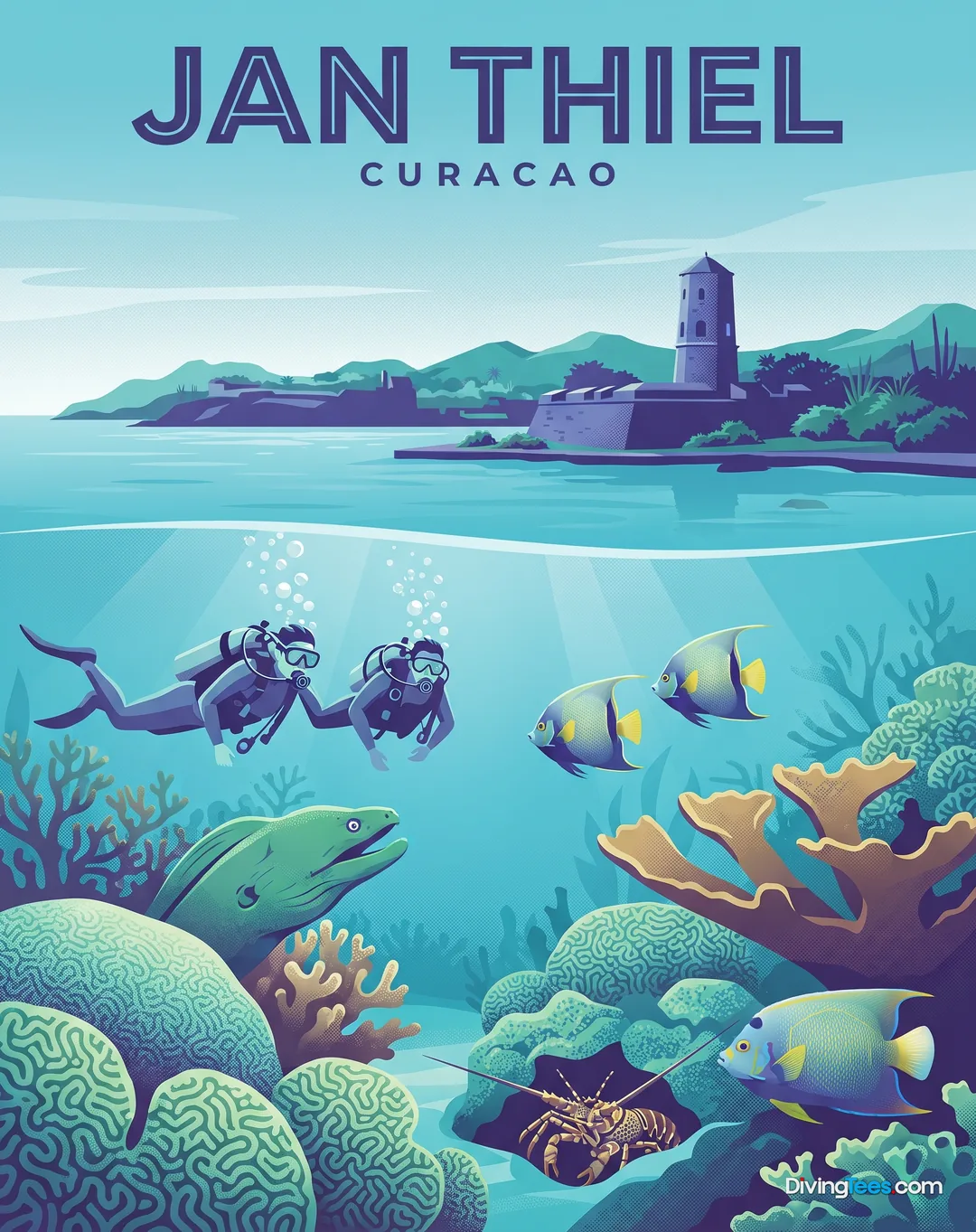
Jan Thiel · Curaçao · Caribbean
Directors Bay offers a dive along a vibrant vertical wall, characterized by its intricate structure and rich coral growth.
For subtitles in English: start the video firstthen click the gearat the top right of the video, select “Subtitles/CC”, then “Auto-translate” and choose “English”.
Directors Bay, near Jan Thiel, Curaçao, presents a captivating dive along a vertical reef wall. This site is easily accessible and transitions quickly from a shallow entry point directly onto the main structure. As you descend, the wall drops away, revealing a diverse topography that runs parallel to the shore, offering an immediate sense of exposure to the open water whilst remaining conveniently close to the protected bay area.
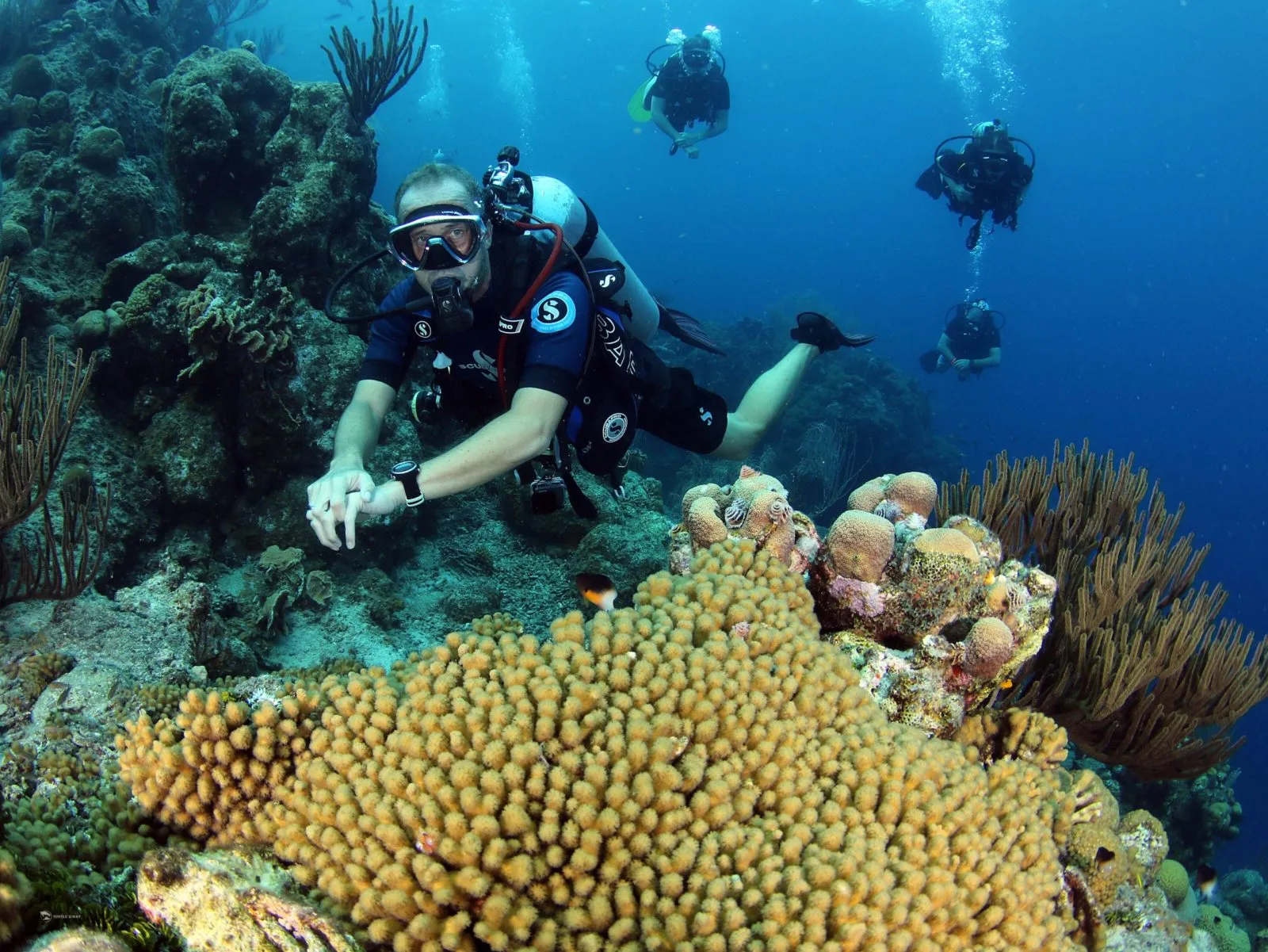
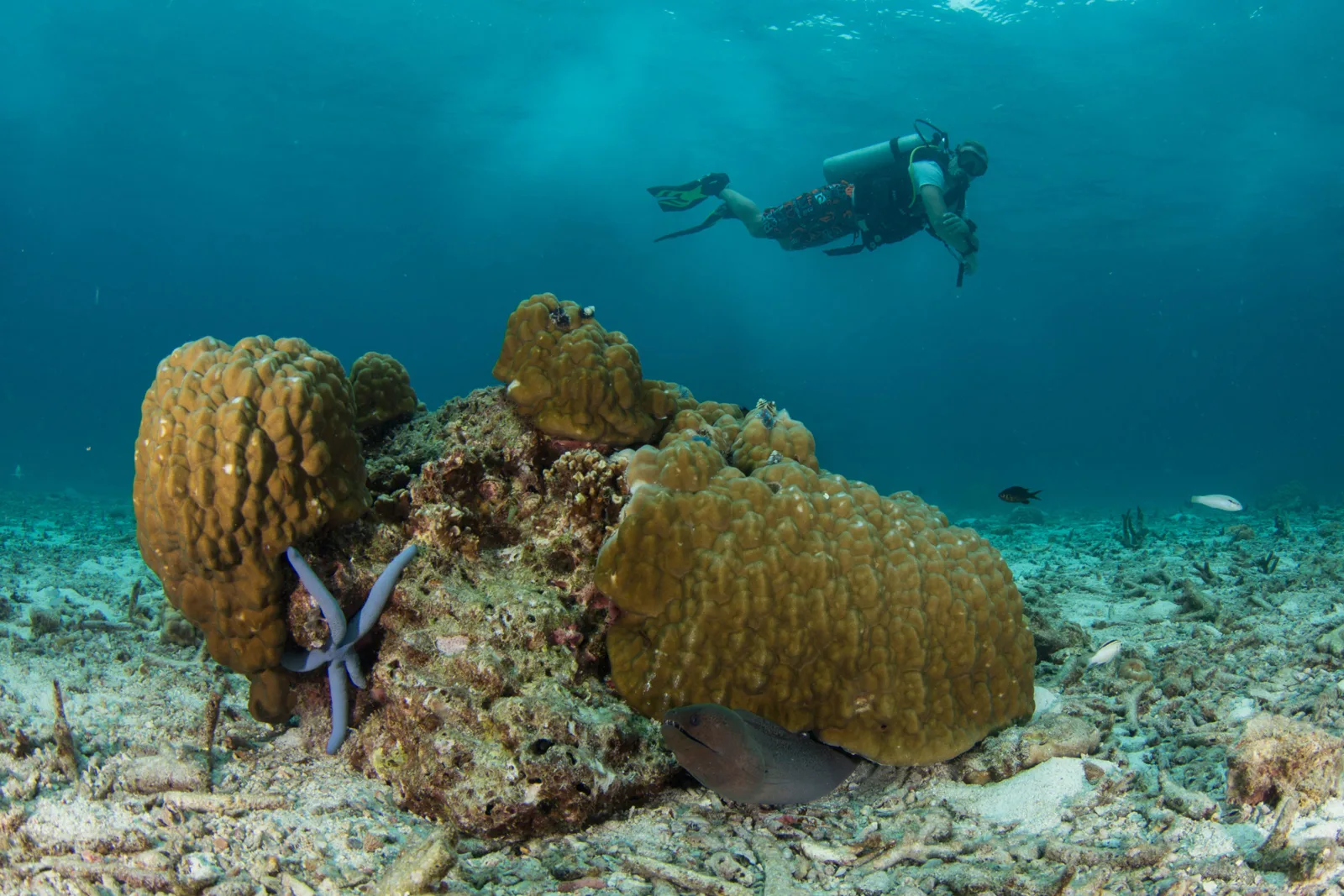
The core of the Directors Bay experience lies in its extensive coral formations that cling to the vertical face. You'll find a healthy variety of hard and soft corals thriving here, creating a colorful and dynamic habitat. The reef isn't just a flat expanse; it's sculpted with grooves, overhangs, and small caves where light filters in, highlighting the textures and the marine life integrated into the structure.
Much of the wall is riddled with fissures and intricate small openings. These natural features serve as ideal hiding spots for smaller reef inhabitants, from crustaceans to juvenile fish. Taking the time to explore these nooks and crannies will reveal the site's rich biodiversity. The light plays an interesting role here, as the sun's rays can penetrate some of these crevices, selectively illuminating certain areas and creating dramatic contrasts against the deeper shadows.
The site carries a historical atmosphere both above and below the surface, rooted in its past as a private beach. While the history adds a layer to the experience for those who know it, underwater, the focus shifts entirely to the thriving ecosystem. The sheer number of hiding places within the wall's structure means that even on multiple dives, you're likely to discover new details and inhabitants previously overlooked. It's a continuous exploration rather than a single observation.
Directors Bay is accessible from Open Water Diver level. The dive depth primarily explores a vertical wall structure. The conditions here are typically mild, making it suitable for divers with foundational training.
Directors Bay is accessible to Open Water Divers and suits you if you have foundational training. The conditions are typically mild, making the site approachable for divers who want to explore a vertical reef wall while staying close to the protected bay area and beginning from a shallow entry.
Directors Bay typically has mild conditions, so you can explore the site without the description indicating challenging current conditions. The dive remains close to the protected bay area, while the vertical wall runs parallel to shore and creates an open-water setting shortly after the shallow entry.
At Directors Bay, you can see healthy hard and soft corals covering a vertical reef wall shaped by grooves, overhangs, and small caves. Fissures and openings provide hiding places for crustaceans and juvenile fish, while filtered sunlight illuminates parts of the structure and creates contrasting shadows.
Directors Bay begins with a shallow entry that transitions quickly onto a vertical reef wall running parallel to shore. As you descend, the wall drops away and exposes open water, while grooves, overhangs, caves, fissures, and small openings create varied spaces to explore along the structure.