
Dive Center van de Ven
Google 4.9/5 (230 reviews)
1.7 km away as the crow flies
Jan Thiel · Curaçao · Caribbean
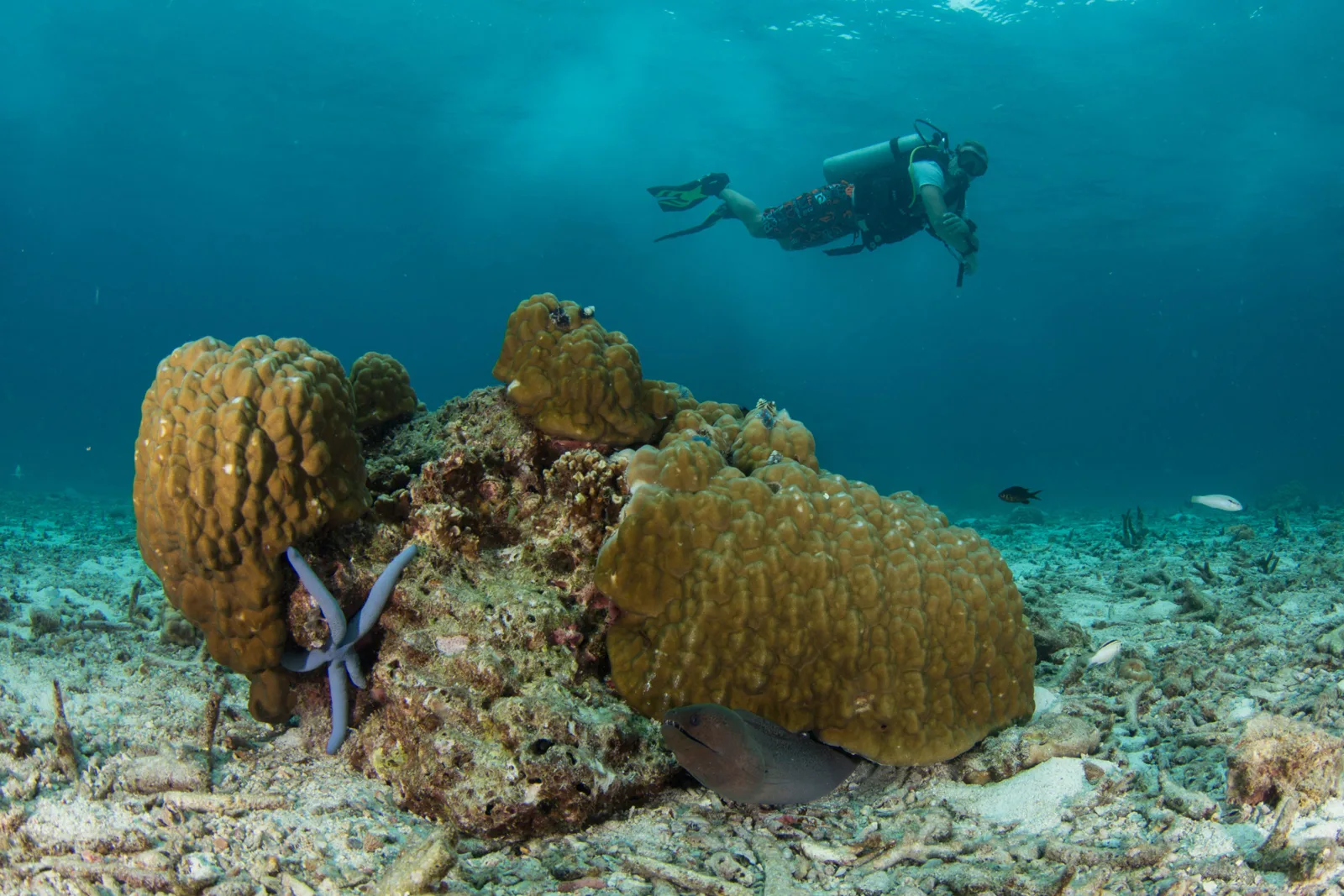
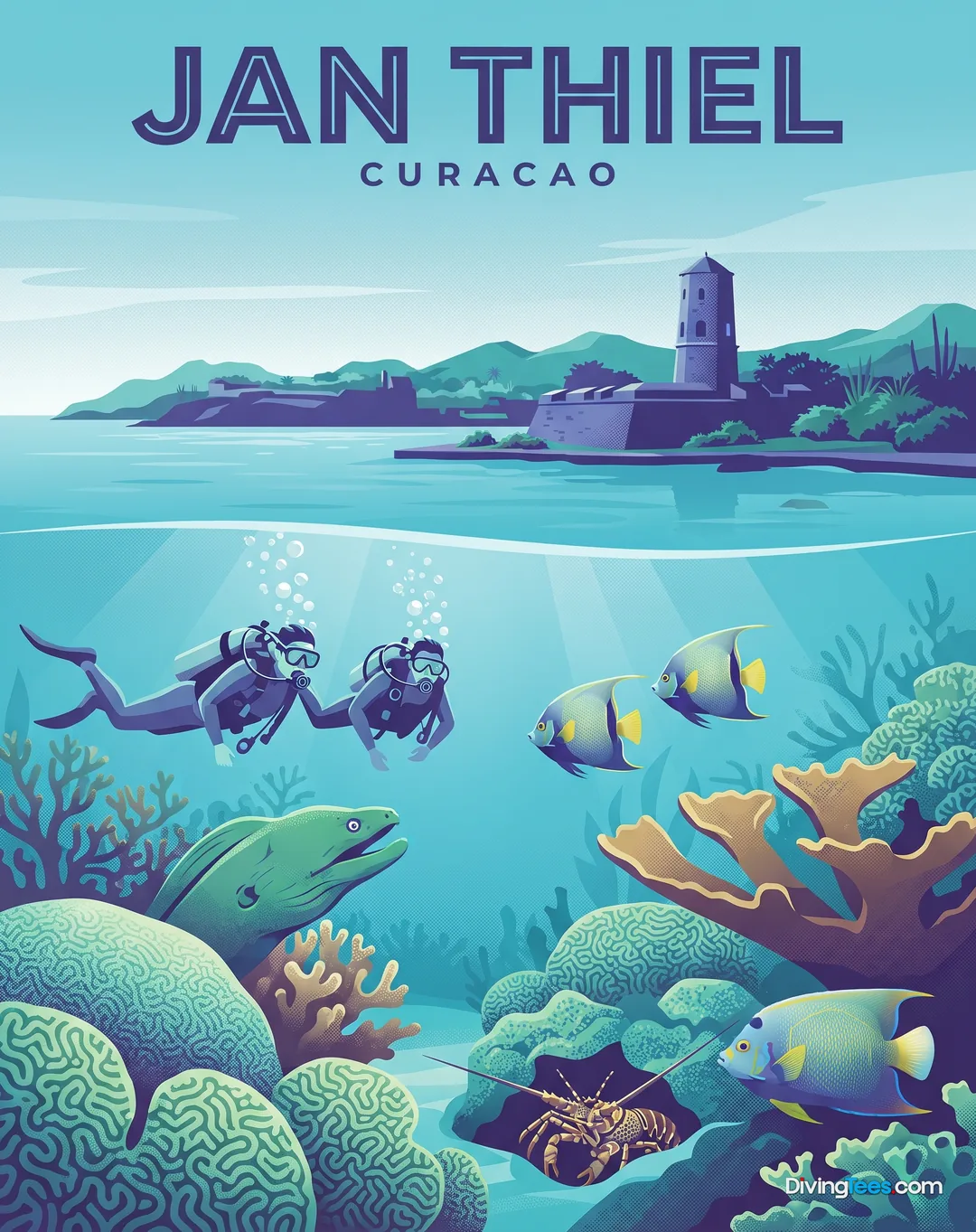
Descend beyond the sandy plateau to discover the hard and soft coral formations of the second, deeper reef, home to a variety of moray eels and large brain corals.
For subtitles in English: start the video firstthen click the gearat the top right of the video, select “Subtitles/CC”, then “Auto-translate” and choose “English”.
Double Reef is situated within Jan Thiel, accessible from the shore near the Water Factory dive site in Otrabanda, or by boat. The site is aptly named for its two distinct reef systems, separated by a wide sandy plateau. The journey to the site from the parking area involves a short walk, passing significant monuments that commemorate the island's history and its struggle for freedom. Once in the water, you'll begin your exploration by swimming some distance offshore to reach the initial reef formation.
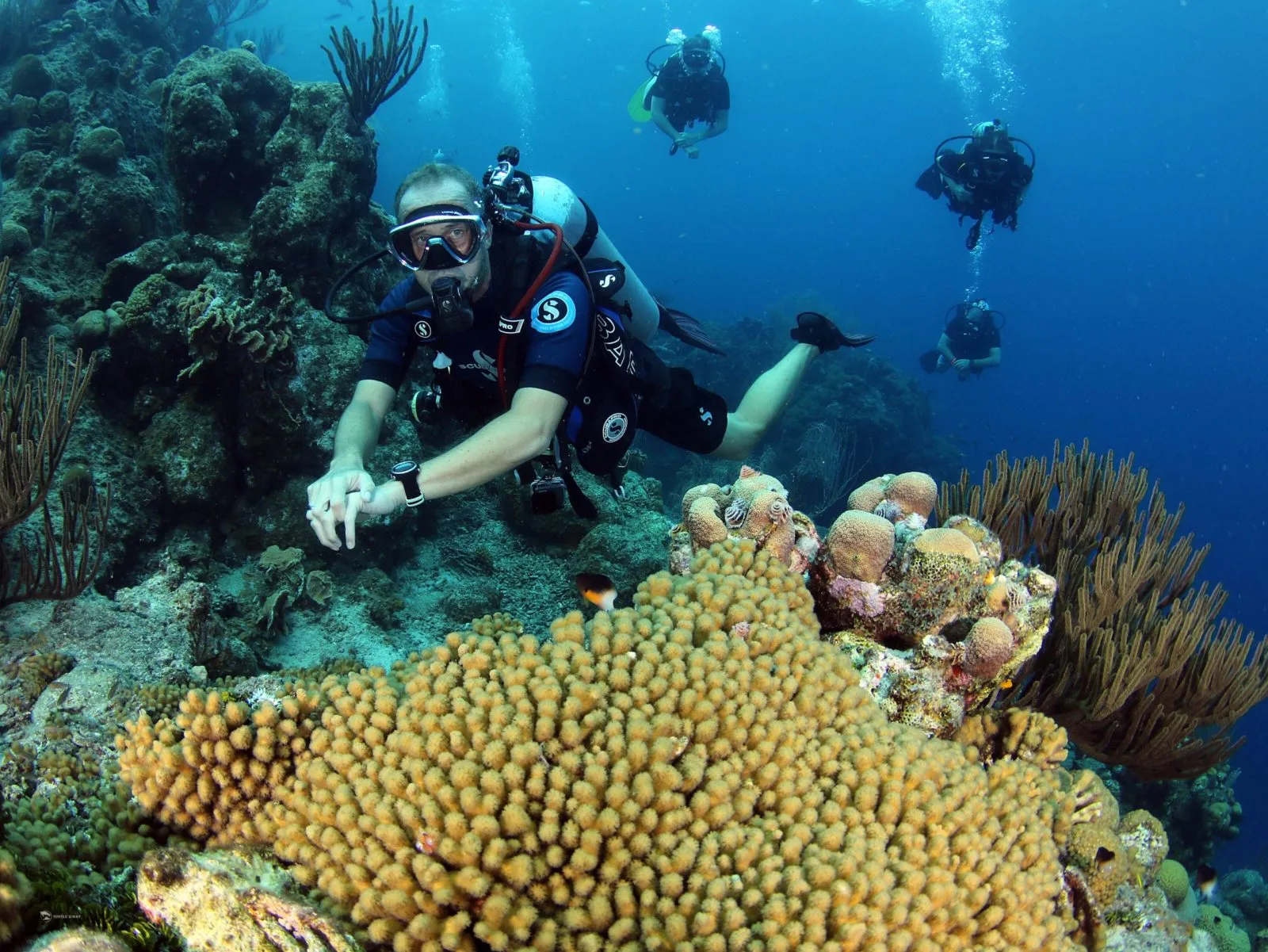
The first reef begins approximately 30 metres from the coast, requiring a brief surface swim. This initial section features diverse coral structures, including fan corals, finger corals, and various brain coral formations. While crossing the sandy expanse towards the second reef, keep an eye out for green and spotted moray eels (Gymnothorax funebris and Gymnothorax moringa), as well as schools of snapper. This transition zone often holds turtles, which are a regular sight here.
Once you reach the second reef, you'll encounter a more expansive and vibrant ecosystem. This section is characterized by a significant presence of hard corals, notably large brain corals, alongside star corals and other soft coral varieties. This area supports a higher concentration of marine life, thriving due to less frequent diving pressure compared to some other sites. The structure here provides numerous hiding spots and feeding grounds for resident species.
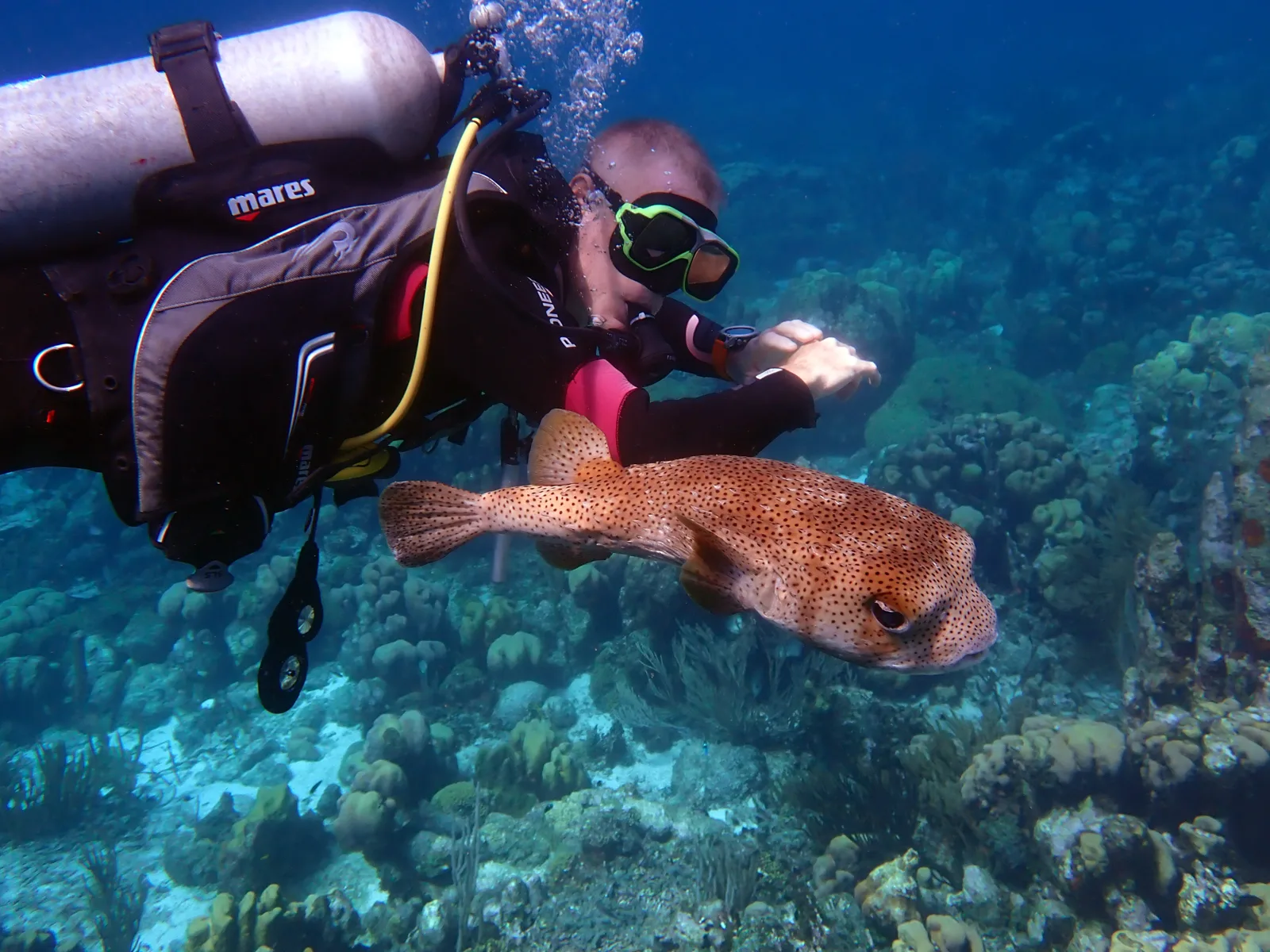
The coral gardens of Double Reef host a wide array of benthic life. You'll find knobby anemones and giant anemones, which are often home to various species of cleaner shrimp. Look for unique inhabitants like cowfish (Acanthostracion quadricornis), angelfish, tangs, and the occasional burrfish. Parrotfish are also abundant, grazing on the corals and contributing to the reef's health.
For experienced divers, Double Reef offers the potential for a drift dive. If conditions permit, you can let the current carry you past a broken pier and along a steep wall, eventually ending at Small Harbour. This allows for an extended exploration of the deeper sections and the various transitions between the reef formations and the sand channels. Always assess the current before committing to a drift profile, as conditions can be variable.
The access to Double Reef can be challenging due to the rocky beach and potential for higher waves near the entry point. However, the effort is typically rewarded by the comparatively pristine condition of the second reef, which benefits from its slightly more demanding approach. The dual nature of the site, with its shallower and deeper reef components, offers distinct opportunities for observation and exploration at different depths.
Beyond the prominent coral structures, the site teems with smaller creatures. You will find cleaner shrimp tucked into anemones and small crevices within the reef structure. Urchins are also present, adding to the diversity of invertebrate life. Keep an eye out for barracudas and tarpons (Megalops atlanticus) patrolling the edges of the reef, particularly where the reef drops off or near the broken pier structure.
Double Reef is accessible for certified divers, with some sections better suited for advanced divers due to potential variable currents and the more exposed entry. While Open Water certified divers can explore the shallower reef systems, the full extent of the second reef and the option for a drift dive requires an Advanced Open Water certification and comfort with moderate current. Entry from shore can be difficult with higher waves due to a rocky beach, so assess conditions carefully before entering.
Double Reef is accessible to certified divers. Open Water divers can explore the shallower reef systems, while the full second reef and drift-dive option require Advanced Open Water certification and comfort with moderate current. The exposed entry, rocky beach, and possible higher waves also call for careful assessment before entering.
Double Reef has distinct shallower and deeper reef components separated by a wide sandy plateau. The first reef lies offshore beyond a brief surface swim, while the second reef includes deeper sections, sand channels, and a steep wall. The site description does not provide a specific maximum depth.
Currents at Double Reef can be variable, with moderate current possible around the reef systems. Experienced divers may consider a drift dive if conditions permit, following the current past a broken pier and along a steep wall toward Small Harbour. Assess the current before committing to a drift profile.
You can explore two reef systems with fan, finger, hard, soft, star, and large brain corals. Regular sightings include turtles and green or spotted moray eels, while anemones may shelter cleaner shrimp. You may also encounter snapper, cowfish, angelfish, tangs, parrotfish, barracudas, tarpons, burrfish, and urchins.