

Adriatic Diving Center
★ 4.8/5 (160 reviews)
Istria · Croatia · Mediterranean
Max. depth · 42 mDescend to 41 metres to explore the Varese, an Italian merchant steamship that met its end on a minefield in 1915.
For subtitles in English: start the video firstthen click the gearat the top right of the video, select “Subtitles/CC”, then “Auto-translate” and choose “English”.
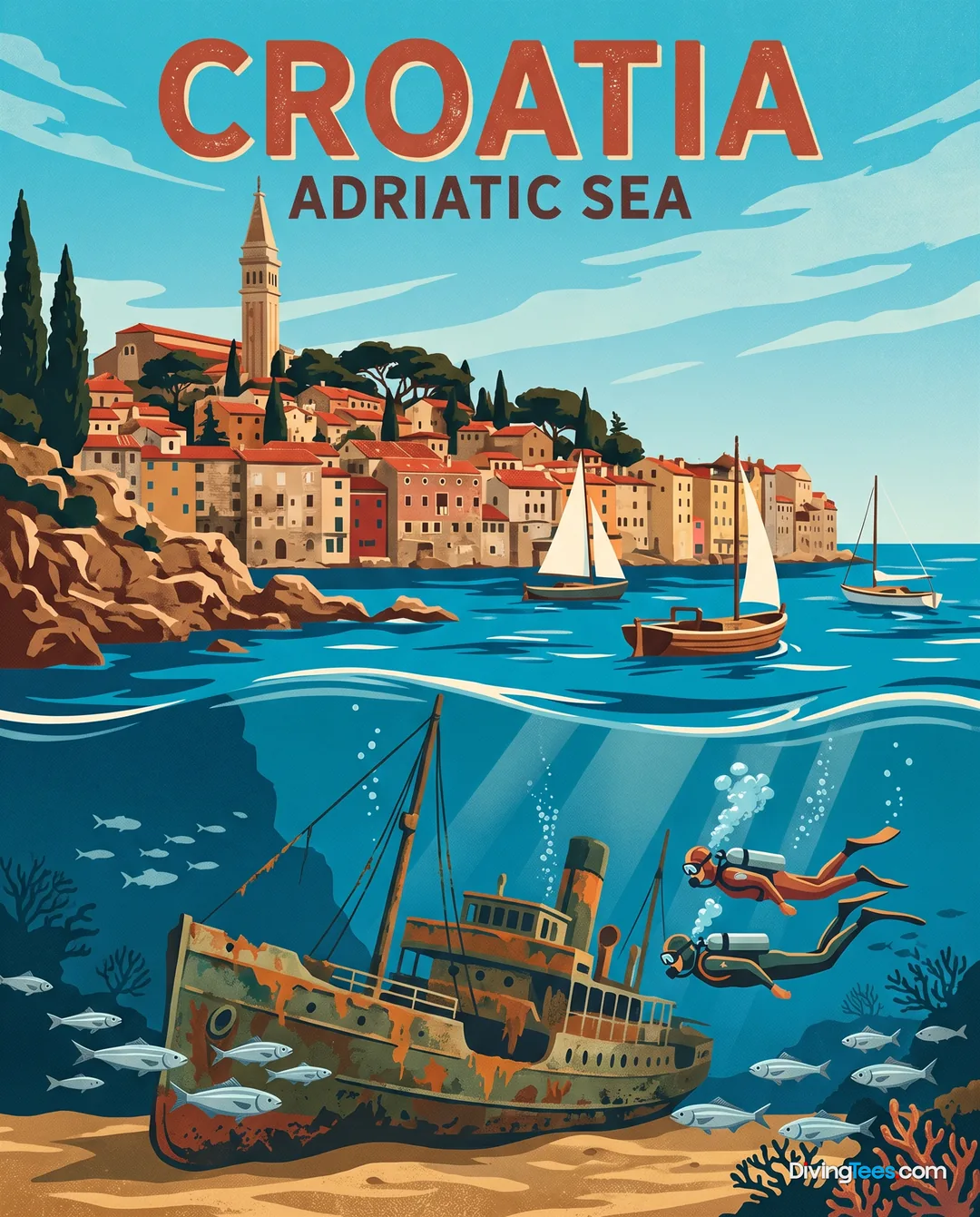
The dive on the Varese takes you down to a historical Italian merchant steamer, a two-masted vessel that sank in 1915. It was navigating between Venice and Tunis, carrying cargo when a storm forced it to seek shelter near Pula. While making for the harbour, the vessel struck a mine, tearing open its bow and sending it to the seabed. The Varese now lies upright on a muddy bottom, mostly intact, an echo of its final journey rather than a casualty of war, as Italy had not yet entered the conflict.
Upon reaching the wreck at 41 metres, you'll find the Varese resting in a vertical position. The bow section, significantly damaged by the mine explosion, is still discernible, with fishing nets often entangled around the forward remnants. The structure extends about 60 to 70 metres in length and nearly 9 metres across, making it a substantial wreck to explore. The main decks and the weather deck remnants offer clear visual references as you navigate around the exterior.
As you approach the main structure, the opportunities for internal exploration become evident. The Varese is known for its relatively wide and safe internal spaces, allowing qualified divers to penetrate the wreck along its length. You can follow the opening of the forward and aft sections below the main deck, observing the internal framework. This penetration offers a different perspective, sheltered from external currents and revealing parts of the ship often less exposed to the elements.
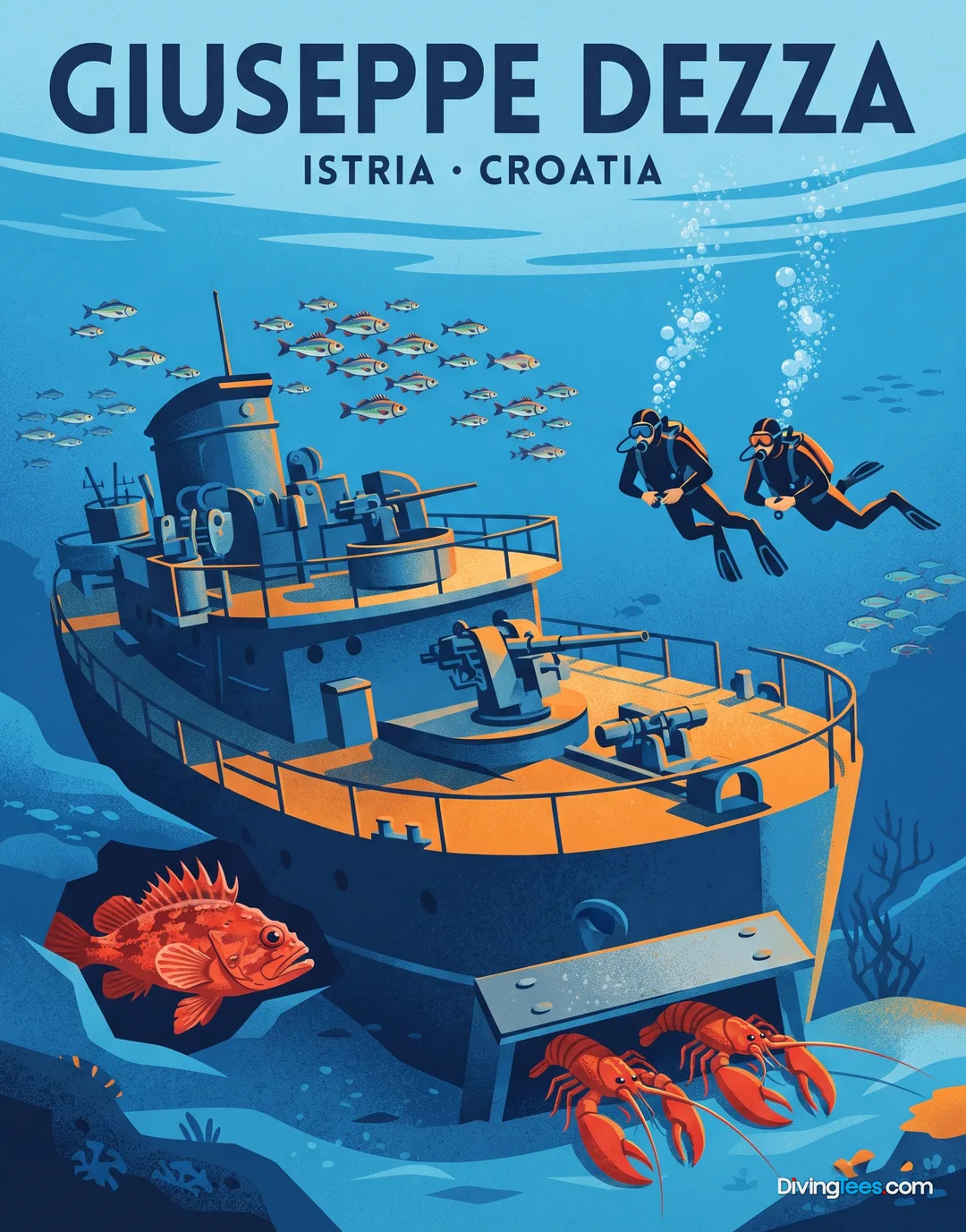
The Varese provides shelter and habitat for local marine species adapted to deeper water and wreck environments. While navigating the wreck, look for resident conger eels (Conger conger) within the darker recesses and scorpionfish (Scorpaenidae) camouflaged against the ship's structure. Lobsters (Nephropidae) are also frequently found on the seabed around the wreck, often tucked into debris or under larger plates of metal.
The overall profile of the dive requires careful attention to depth and decompression protocols due to the maximum depth of 41 metres. Throughout the dive, focus on your gas management and bottom times, especially if planning any internal penetration. The Varese is a deep wreck, so conservative recreational limits or technical diving approaches are recommended to fully appreciate the site safely and without undue rush.
What sets the Varese apart is its narrative of an accident rather than battle, combined with its accessibility for internal exploration. The stories of its final journey, seeking refuge in a storm only to hit a mine, add a layer of historical context to the dive. The combination of its size, depth, and the safe penetration options make it a distinct wreck in the Istrian Adriatic, offering more than just an external overview of a sunken vessel.
The typical visibility at the Varese allows for a clear view of the wreck from a fair distance, assisting with orientation on descent. The nature of the silty bottom means care needs to be taken with fin kicks, especially inside the wreck, to avoid disturbing the sediment. Maintaining good buoyancy control is key here, not only for safety but also to preserve visibility for yourself and any other divers on the site.
This dive site reaches a maximum depth of 41 metres, with the minimum depth of the wreck at 32 metres, making it suitable for advanced level divers. Due to the deep profile and potential for internal penetration, a minimum of 50 logged dives is a practical recommendation. The best period for diving the Varese is generally from April to September, when sea conditions tend to be more favourable for deeper wreck dives. There are no consistent strong currents reported at the wreck site, but divers should always be prepared for variations.