
Diving Rovinj, Rovinj Diving News
★ 4.8/5 (136 reviews)
7.7 km away as the crow flies
Istria · Croatia · Mediterranean
Max. depth · 43 mDescend to the split remains of the Hans Schmidt, a cargo steamer sitting on the seabed in two distinct sections, revealing its wartime past.
For subtitles in English: start the video firstthen click the gearat the top right of the video, select “Subtitles/CC”, then “Auto-translate” and choose “English”.
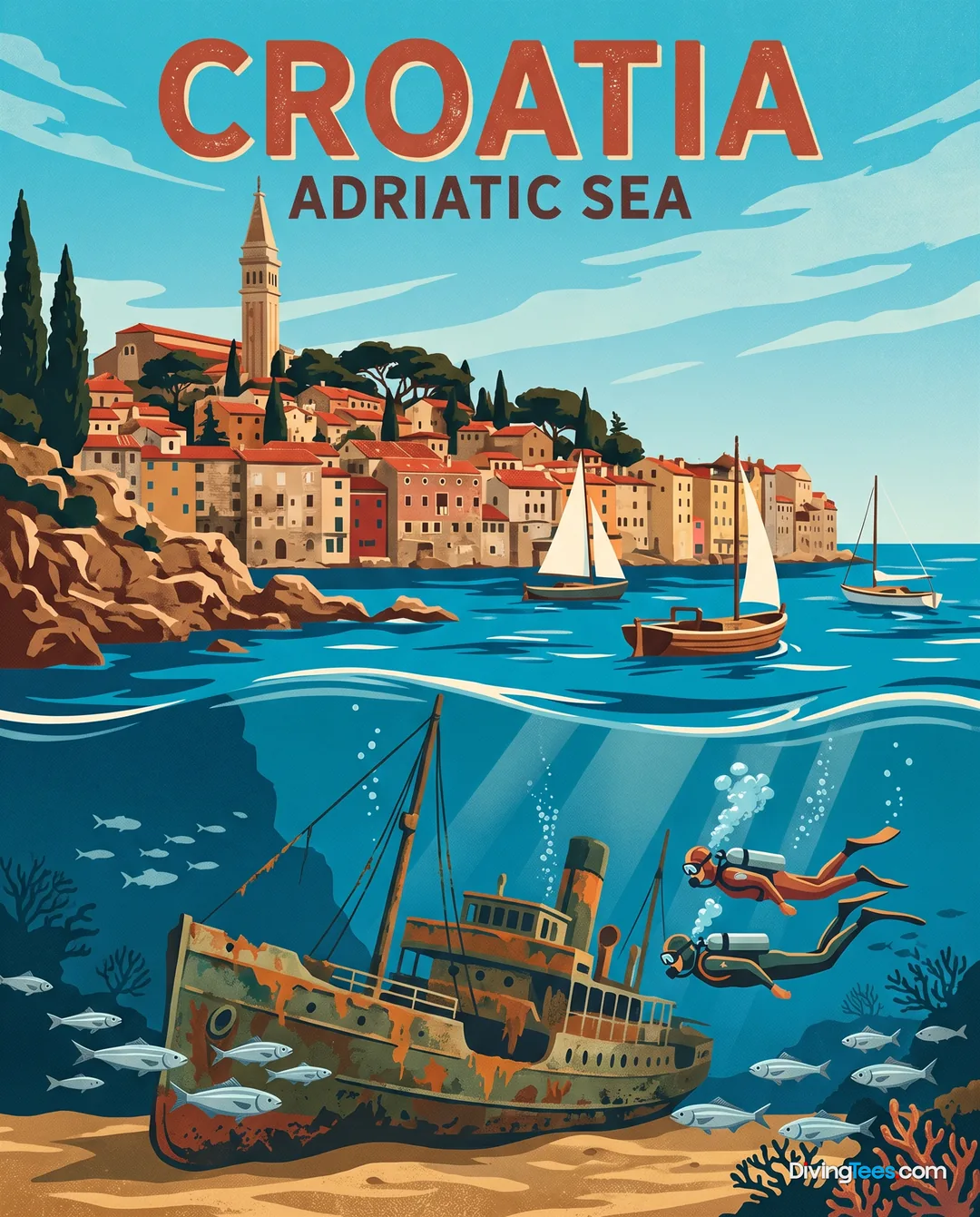
The Hans Schmidt, known for a time as the Istria, lies in two main sections, a testament to the mine explosion that sank it in January 1943. Built in the Netherlands in 1920 under the name Albireo, it was a German-owned cargo steamer carrying armaments and munitions on its final voyage. The bow section and main hull rest separately on the seabed, offering distinct exploration opportunities. The dive starts as you approach the upper decks, which sit at around 28 to 35 meters, inviting you to trace the vessel's outline.
This wreck provides a clear example of wartime maritime destruction. The explosion, reportedly caused by a naval mine, tore the vessel apart at the height of its forward holds where its explosive cargo was stored. As you descend, you'll observe how the two large sections are now separated, with the stern portion including a somewhat preserved command bridge. The bow itself, around 10 meters long, lies a bit apart, hinting at the force of the blast. The overall length of the vessel was 99 meters, with a beam of 11.5 meters, giving you a sense of its original scale.
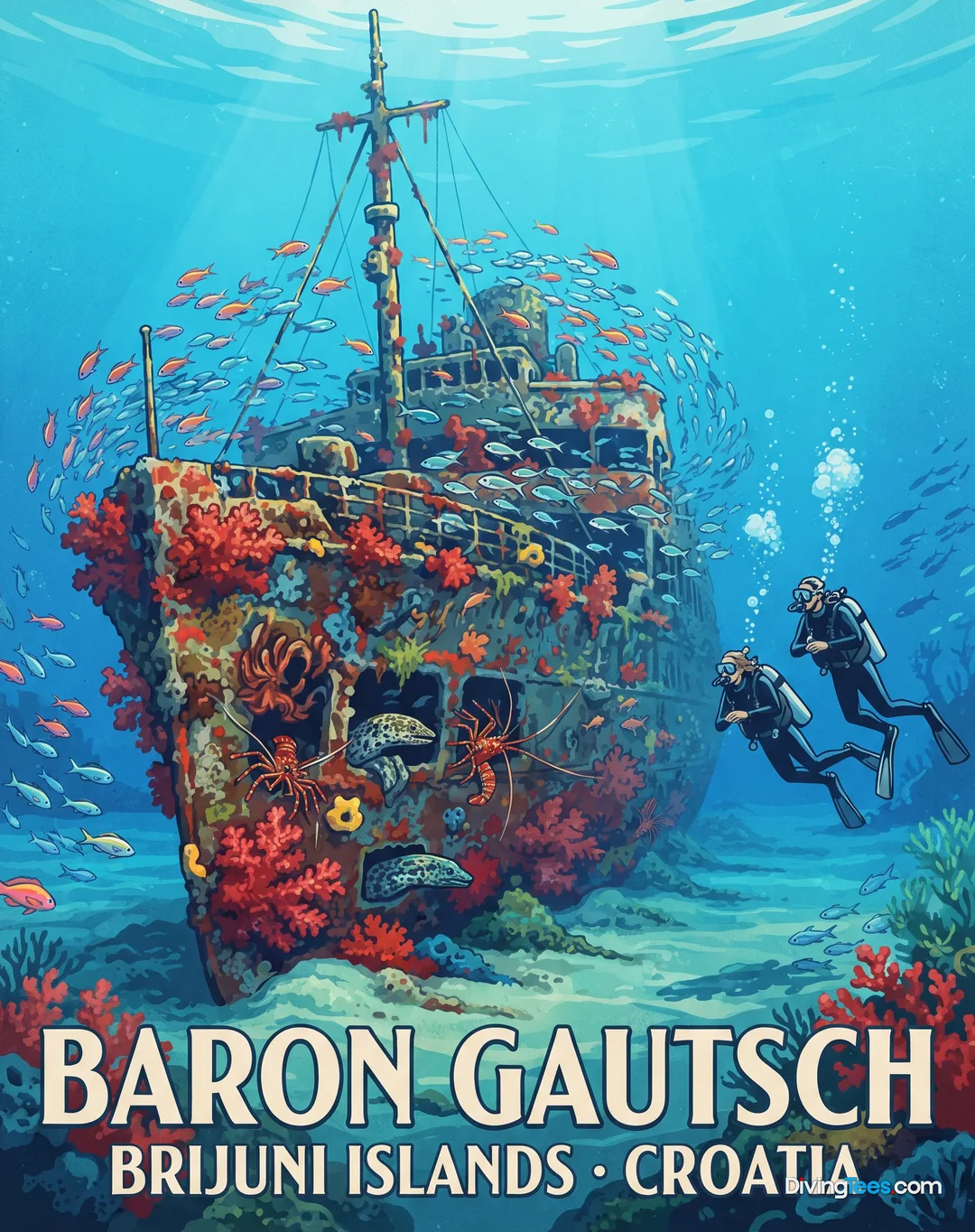
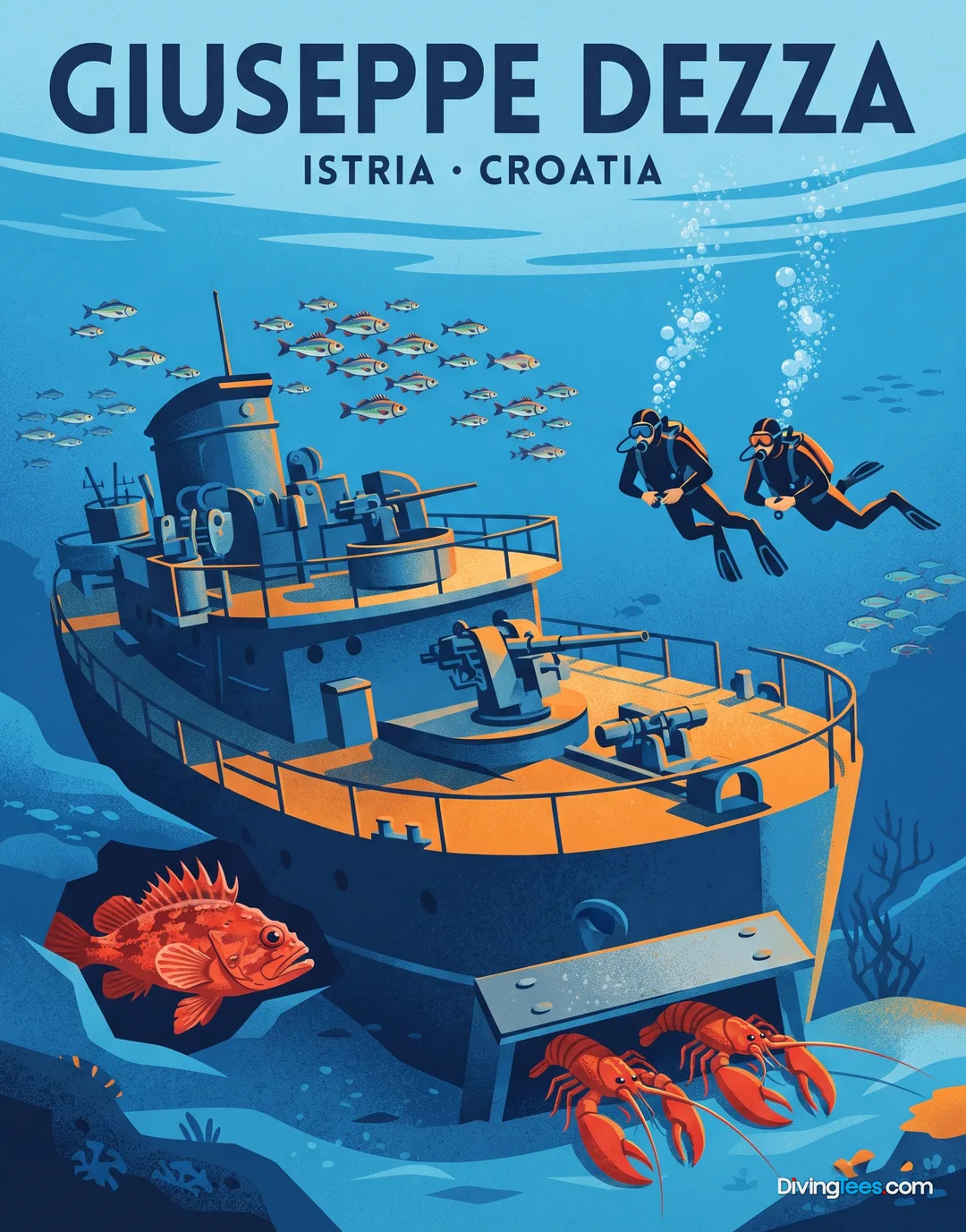
Around the wreck, fishing nets are entangled, and the structure is adorned with various marine life, including colorful sponges. While swimming along the exterior and between the two main pieces, you'll commonly encounter schools of fish, often seeking refuge in the wreck's structure. Lobsters and conger eels are resident inhabitants, frequently found in crevices or under debris. Scattered around the wreck site are remnants of masts, various cargo items, and even some anti-aircraft bombs, adding to the historical context.
One particular feature of the Hans Schmidt is an anchor system that is notable for its age and design. This special type of anchor has not been produced for over a century, offering a unique historical detail that sets the wreck apart. As you explore, pay attention to the remaining engine parts and what’s left of the captain's bridge, offering glimpses into the ship's operational past. However, due to the presence of old fishing nets, penetration into certain areas is not advisable, emphasizing careful buoyancy control and awareness of your surroundings near the wreck's interior sections.
The Hans Schmidt is a deep wreck dive, with the shallowest parts of the superstructure beginning at 28 meters and the seabed reaching 43 meters. This profile requires an Advanced Open Water certification minimum, and due to the depth and potential for entanglement, divers should have demonstrable experience in deep wreck diving. The best season for diving in this region, generally offering the most favourable conditions, runs from April through September.
★ 4.8/5 (136 reviews)
7.7 km away as the crow flies
★ 4.7/5 (287 reviews)
11 km away as the crow flies

★ 4.7/5 (203 reviews)
17 km away as the crow flies


★ 4.8/5 (160 reviews)
19 km away as the crow flies

★★★★★
★ 8.7/10 (2,029 reviews)
6.8 km away as the crow flies
★★★★
★ 8.6/10 (3,054 reviews)
7.9 km away as the crow flies

★★★
★ 9.1/10 (2,026 reviews)
20 km away as the crow flies

★★★
★ 8.8/10 (1,016 reviews)
18 km away as the crow flies