
Sea Star Diving
Google 5/5 (137 reviews)
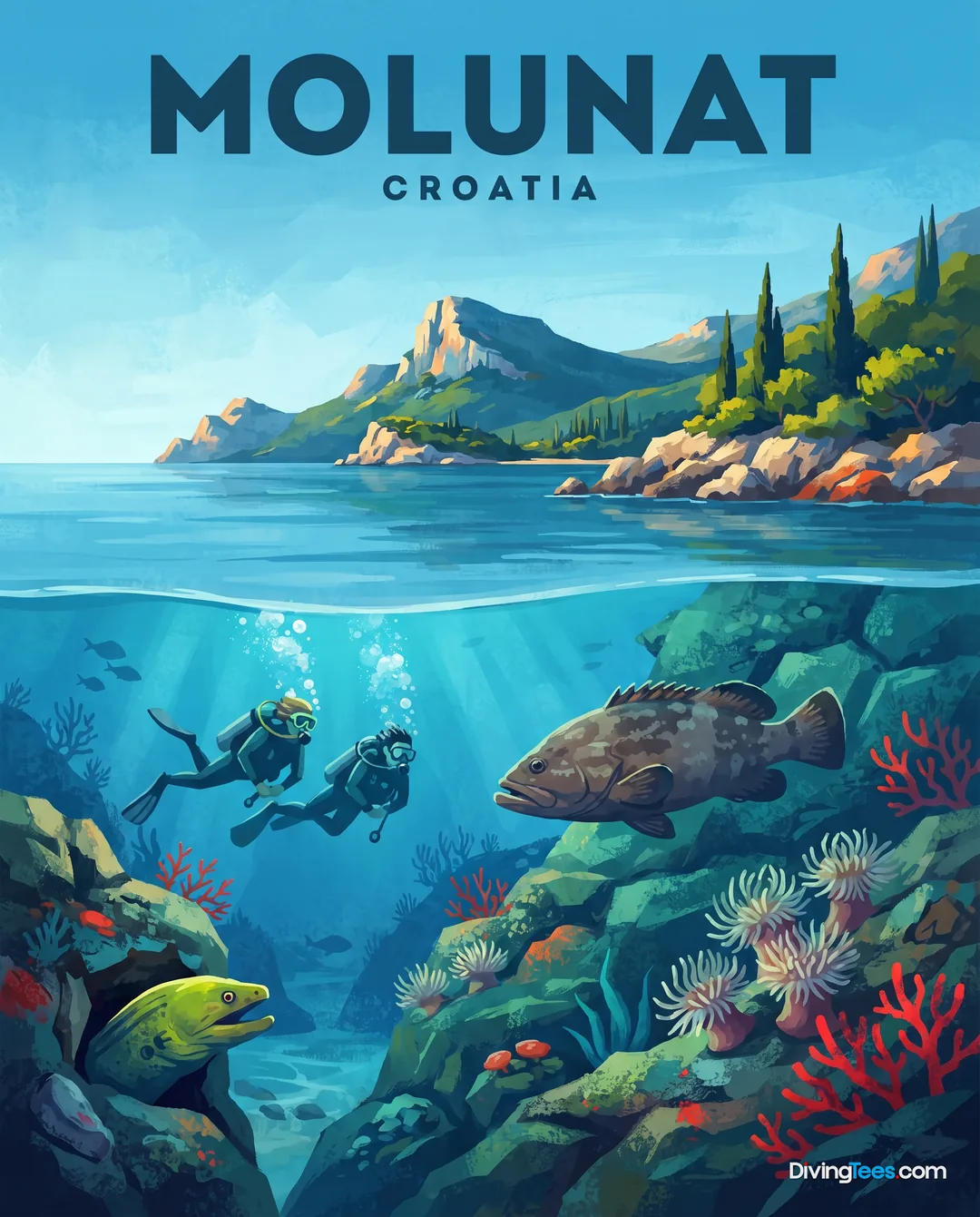
Molunat · Croatia · Mediterranean
Max. depth · 40 mBeneath the surface at Vranine, a dramatic rockfall gives way to a sloping shelf, inviting you to explore a landscape shaped by nature's power and the mysteries of the deep.
Diving Vranine, you begin with a compelling entry over a significant rockfall, an initial underwater landscape that sets the tone for the journey ahead. This geological chaos of boulders and crevices provides immediate hiding places and shelter for a variety of marine life, demanding your attention from the first few meters as you navigate its intricate contours. The transition from the shallow, sunlit jumble of rocks to the deeper, more organized structure of the site is an experience in itself, offering both shelter and exciting points of exploration.
As you move beyond the rockfall, the site opens onto a sloping shelf, a gradual descent that unfurls a different aspect of this underwater world. This shelf serves as a natural pathway, inviting you to extend your exploration deeper whilst maintaining a sense of orientation through its steady gradient. You'll find yourself gliding along, observing how the marine ecosystem subtly changes with increasing depth, with light levels diminishing to reveal a quieter, more profound environment.
The topography of Vranine quickly evolves from the sloping shelf into an impressive wall, a vertical drop that plunges into the deeper reaches of the Croatian seabed. This wall dive presents a different challenge and exhilaration, allowing you to drift effortlessly alongside its face, observing the life that clings to its vertical vastness. The sensation of holding a wall in a gentle current, with the vastness of the blue beside you, is a prime experience offered by this particular feature of Vranine.
Beyond the wall's direct face, Vranine also incorporates elements of a drift dive, where the water’s movement guides your path along the expansive underwater structure. This allows for an immersive experience, covering more ground with less effort as you become one with the current, observing the panoramic views of the site unfolding around you. Such conditions often bring different species into view, making each drift a unique encounter with the marine currents that shape this environment.
For those seeking further exploration, Vranine presents the allure of a cavern dive, adding another dimension to its already varied profile. The opportunity to venture into the serene, shadowed spaces of an underwater cavern offers a distinct feeling of discovery and intimacy with the ocean's hidden architecture. These sheltered areas often host unique communities of organisms, adapted to the lower light and more stable conditions within, providing a contrast to the open water sections of the dive site.
This dive site is accessible with depths ranging from 6 meters down to 40 meters. The optimal time to explore Vranine is between May 5th and October 25th, when conditions are generally most favorable.
You can explore Vranine between May 5th and October 25th, when conditions are generally most favorable. During this period, the site offers access to its varied underwater landscape, including the opening rockfall, sloping shelf, wall sections, drift-diving features, and underwater caverns.
Vranine offers depths from 6 meters down to 40 meters. Your dive can begin over the shallow rockfall, continue along a gradually descending shelf, and reach deeper wall sections. This range provides different underwater environments as light levels diminish and the site transitions from sheltered rocks to open blue water.
Vranine includes opportunities for drift diving along its main underwater features. Water movement can guide you beside the wall and across the wider structure, allowing you to cover more ground with less effort. The description also refers to holding the wall in a gentle current while observing the surrounding blue.
At Vranine, you can explore a major rockfall with boulders, crevices, hiding places, and shelter for marine life. The site continues through a sloping shelf and wall, then adds underwater caverns with lower light and stable conditions. You can also observe organisms along the vertical wall and during a drift.