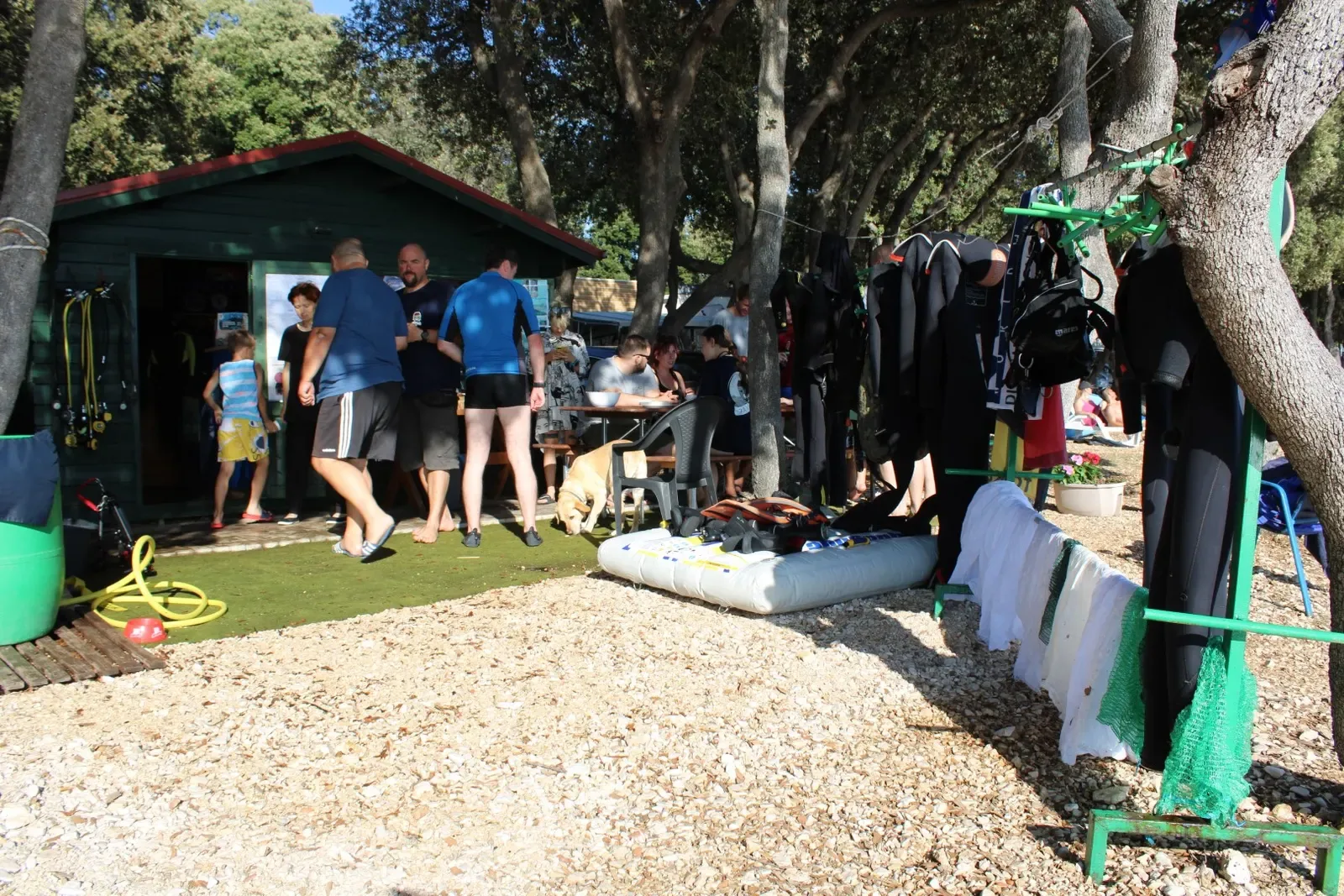

Foka Diving Center
Google 4.8/5 (255 reviews)
Croatia · Mediterranean
Pag puts pale karst rock, sheltered coves, sheer walls and historic wrecks within reach of a road-based Croatian island stay.
For subtitles in English: start the video firstthen click the gearat the top right of the video, select “Subtitles/CC”, then “Auto-translate” and choose “English”.
The cargo wreck Golija gives Pag an immediate sense of purpose: this is an island for divers who want to alternate easy shore entries with boat trips along bare, rocky coast. Around Novalja and Šimuni, sheltered coves suit a first dip or a relaxed macro dive, while walls, small cavities and wrecks add more demanding days. It works particularly well as a five-to-seven-day land-based holiday, with beaches, villages and karst roads giving non-divers a proper reason to come along.
Pag’s underwater character follows its rocky shoreline. Sheltered coves offer gradual entries and close exploration of rock, small cavities and macro subjects, while exposed sectors bring walls, boat diving and the possibility of more variable currents. Visibility is often good, commonly around 13 to 30 metres, but it can drop after rough water or during plankton blooms. The difference between a calm, clear morning and a cancelled boat trip can therefore be considerable. Boat itineraries may include the cargo wreck Golija, the Rose and Tabinj wrecks, or the archaeological wreck in Vlaška Mala. Ask about depth and conditions rather than treating every wreck as an identical dive. Pag is not a drift-dive destination by default, and a downcurrent should never be assumed, but current conditions remain part of the briefing. Shore dives provide a useful alternative when the bora affects exposed coastlines.
Pag’s marine life is best approached at close range. Rocky walls, crevices and small cavities give you surfaces to search slowly, while sheltered coves around the island are suited to macro diving rather than a quick scenic circuit. Wrecks add another kind of habitat, with metal surfaces and openings changing the shape of the dive and rewarding careful observation. The Golija, Rose, Tabinj and Vlaška Mala sites each bring that mixture of structure and concealment, although the experience depends on depth and sea conditions. Spring and early autumn are attractive for unhurried underwater observation, when the island is generally less busy and clear water is more likely. After rough weather or a plankton bloom, expect less definition and plan your dive around the clearest available conditions.
The practical diving season runs from May into October, with May, June, September and October offering the most appealing balance of operating centres, manageable visitor numbers and generally favourable conditions. April and May can produce particularly clear water, although visibility still depends on the sea settling and on plankton. July and August bring the fullest activity, both above and below the surface. In autumn and winter, the bora can make exposed coastlines and boat departures unreliable, so November through March is a poor choice for a dive-led visit. Spring and September to October are the sensible compromise for divers who want room on the roads and a little flexibility in the coves.
Pag suits all levels, provided the site is matched to the diver. Sheltered bays and progressive shore entries work for beginners, including those on introductory courses with BSAC, PADI or SSI. The walls and deeper wrecks are better suited to experienced divers with an Advanced-level qualification or equivalent judgement. Wreck certification is useful for the Golija, Rose and Tabinj, and for any dive involving penetration or greater depth. Experience with changing wind conditions is valuable, particularly when moving from a protected cove to an exposed boat site.
From London or Manchester, plan to reach Pag through a continental Croatian airport such as Zadar or Rijeka, then continue by road. There is no need to rely on an island flight. Driving from the south uses the A1 and the Posedarje exit, followed by the bridge onto Pag. From the north, the Prizna to Žigljen ferry is an alternative, with a crossing of roughly 10 to 15 minutes, but waiting and boarding conditions can change during busy periods. Once on the island, a car is the most practical way to connect Novalja, Šimuni, Pag and the more scattered bays. Walking may work within a resort, while taxis can cover individual transfers, but do not assume a general shuttle between every accommodation and every diving departure.
Treat the bora as part of the itinerary, not as an inconvenience to be ignored. Keep a flexible day for a cancelled boat trip, and have a sheltered shore dive ready rather than losing the day altogether. In July and August, reserve boat places ahead and leave extra time for busy roads and harbours. Ask specifically about the depth, exposure and conditions of each wreck: the easy feel of a cove does not carry over to Golija, Rose, Tabinj or the archaeological wreck in Vlaška Mala. Do not base the whole holiday in Novalja without checking what is running from Šimuni and other coastal sectors. A car makes that choice much easier. Finally, avoid stacking boat dives on every day in the programme. Pag’s exposed sites can be curtailed by wind, while calm conditions may leave the water exceptionally clear, so a little slack produces a better week than a rigid schedule.
Pag is primarily a land-based diving holiday, with centres around Novalja and Šimuni arranging shore entries and day boats. Five to seven days allows time to mix sheltered coves, wrecks and walls without turning one poor-weather day into a crisis. Accommodation may be walkable from a centre in a resort, but elsewhere a car or taxi is more realistic. Between dives, use the island’s beaches, villages, karst roads and sheltered bays, while Pag town offers its salt and cheese traditions.
Hello, I'm Marina, DivingDeal.com's AI assistant. I guide you through destinations, areas and countries.
Thinking about the whole trip and the flights? Talk it over with Edith →
Marina is an AI. Some links are affiliate links: DivingDeal may earn a commission, at no extra cost to you. Bookings are made with the partner.
Plan a dive-led visit to Pag between May and October. May, June, September and October balance operating centres, visitor numbers and conditions, while April and May can bring clear water after the sea settles. July and August are busier. Bora can disrupt exposed coasts and boats, especially from November through March.
Pag can suit you whether you are a beginner or an experienced diver, provided the site matches your ability. Sheltered bays and progressive shore entries support introductory courses. Walls and deeper wrecks require Advanced-level qualification or equivalent judgement, while wreck certification is useful for Golija, Rose, Tabinj and dives involving penetration or greater depth.
Expect rocky walls, crevices, small cavities and macro subjects in sheltered coves, with wrecks adding metal surfaces and openings to explore carefully. Golija, Rose, Tabinj and the archaeological wreck in Vlaška Mala offer different structured habitats. Visibility commonly reaches 13 to 30 metres, but rough water or plankton can reduce definition.
Build a five-to-seven-day land-based stay around Novalja or Šimuni, using a car to reach centres, coves and boat departures. Mix shore dives with wreck and wall trips, keep a sheltered shore option for bora-affected days, and leave flexibility for weather. In July and August, reserve boat places ahead and allow extra road time.