
H20 Diving Nomads Paros
Google 5/5 (741 reviews)
Paros & Antiparos · Greece · Mediterranean
Max. depth · 30 mNavigate through a submerged rock formation that connects a large cavern to a narrow tunnel system.
For subtitles in English: start the video firstthen click the gearat the top right of the video, select “Subtitles/CC”, then “Auto-translate” and choose “English”.
The Panteronisi site is centered around a rocky islet situated in the waters between Paros and Antiparos. The topography is defined by a combination of a vertical rock wall and a substantial underwater cavern system. As you approach the islet by boat, you will follow the wall to locate the main entrance of the cavern. This entrance sits at a depth ranging between 3.5 and 12 metres, providing a manageable entry point for many divers. The transition from the open sea into the cave structure marks the beginning of a more technical environment.
Once inside the cavern, the architecture changes from open water to a space defined by rock formations and geological concretions. The first section of the cave remains in the light zone, allowing you to observe the structure of the ceiling and the walls without immediate reliance on artificial light. This illuminated area provides a sense of orientation before moving into deeper or more enclosed sections. The light filtering through the entrance creates a different atmosphere here compared to the surrounding open water. You can use this zone to check your buoyancy and trim before proceeding further.
A distinct feature of this site is the ability to navigate through a secondary passage that forms a tunnel. This tunnel starts at a depth of approximately 16 metres and gradually rises back up towards 8 metres. Moving through this passage requires careful attention to your surroundings and precise movement to avoid contact with the rock. It offers a completely different perspective of the islet's structure compared to the main cavern. This tunnel acts as a secondary exit or a way to explore the internal layout of the rock formation.
The dive profile can vary depending on the route you choose, with the maximum depth reaching 30 metres on the outer walls. For those following the cave and tunnel system, the depth remains more moderate, typically staying between 8 and 16 metres. This allows for a diverse experience where you can combine cavern exploration with deeper wall observations. Planning your route is essential to ensure you manage your air supply correctly, especially if you intend to transit through the tunnel. The connection between the cavern and the tunnel provides a sense of continuity throughout the dive.
One of the most interesting aspects of the site's geometry is the existence of air pockets within the cavern. Some parts of the cave structure allow you to ascend into pockets where air is trapped against the ceiling. While these are not areas for breathing, they can serve as points of orientation and change the way light interacts with the water. Navigating near these areas requires a steady hand and good buoyancy control to stay within the safe, submerged zones. These geological features are what give Panteronisi its specific character compared to simple wall dives.
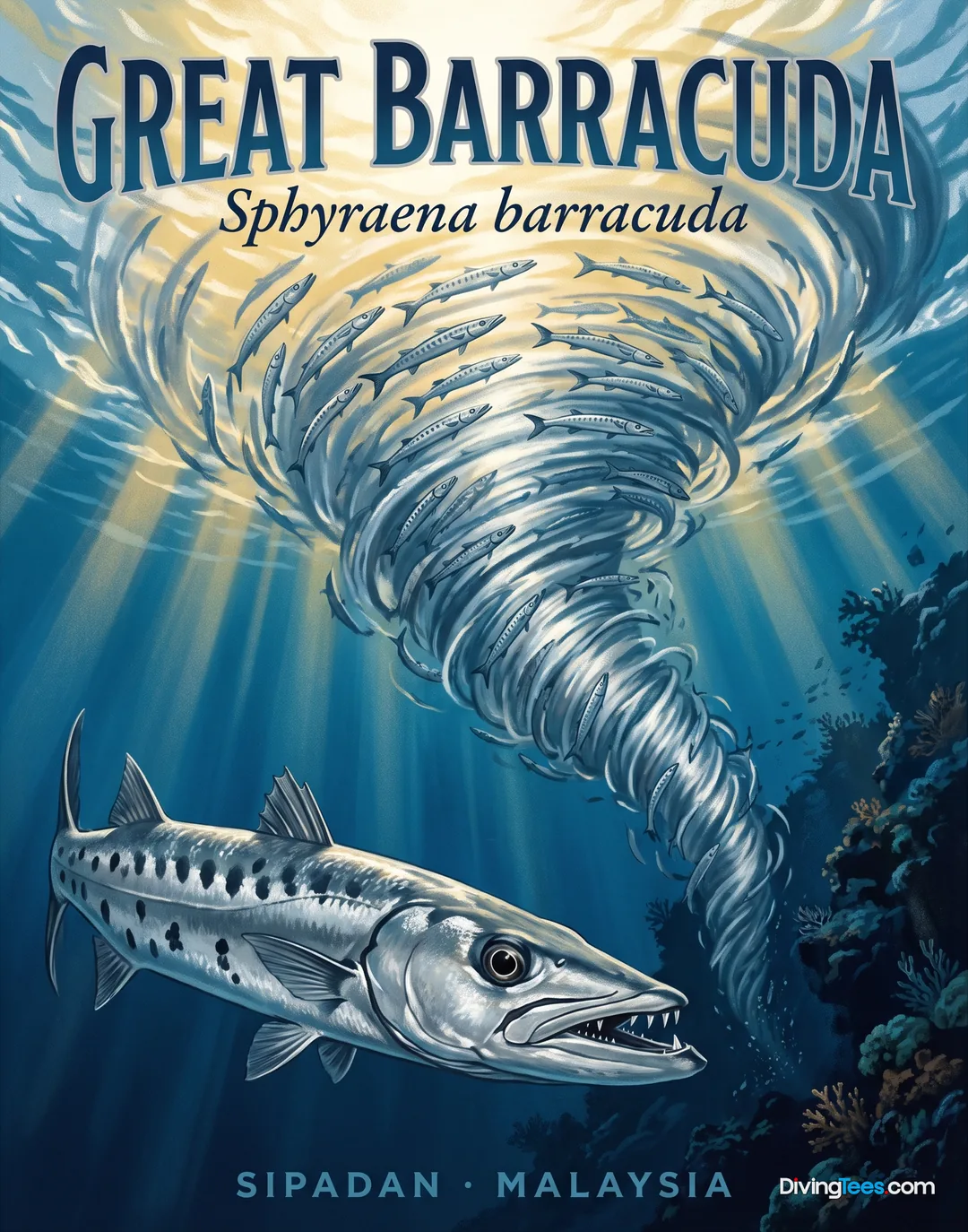
The marine life at Panteronisi is focused around the crevices and the edges of the rock formations. You will frequently encounter moray eels (Muraena helena) sheltering within the holes and cracks of the cave walls. These predators are often well-camouflaged and require a patient eye to spot. In the more open areas near the entrance and along the wall, barracuda (Sphyraena) are also common. They often hover in the water column or patrol the edges of the structure, adding to the sense of movement in the environment.
Light management is a key factor when diving this site, particularly as you transition from the entrance into the darker sections. Even within the illuminated parts of the cavern, the shadows cast by the rock formations can be deep. It is important to maintain a clear view of your buddy and your exit route at all times. The way the light shifts as you move through the tunnel and back out into the cavern creates a changing visual landscape. This interplay of light and shadow is a defining characteristic of the Panteronisi experience.
The site has a maximum depth of 30 metres. While accessible to Open Water divers for the shallower sections, an Advanced Open Water certification and experience are recommended for the tunnel and deeper passages. Currents are variable and can change based on local conditions.
Panteronisi Cave is accessible to Open Water divers in its shallower sections. For the tunnel and deeper passages, an Advanced Open Water certification and experience are recommended. You also need careful movement, good buoyancy control, and awareness of your exit route while exploring the cavern and rock passages.
Panteronisi Cave has an entrance between 3.5 and 12 metres, while the tunnel begins at approximately 16 metres and rises toward 8 metres. Routes through the cavern and tunnel typically remain between 8 and 16 metres, while the outer walls reach the site’s maximum depth of 30 metres.
Currents at Panteronisi Cave are variable and can change with local conditions. You should account for this when following the wall, entering the cavern, or moving through the tunnel. Careful route planning helps you manage your air supply, particularly when you intend to transit between the cavern and tunnel.
At Panteronisi Cave, you can explore a large cavern with an illuminated entrance, geological formations, rock concretions, and a connecting tunnel. Moray eels shelter in crevices, while barracuda patrol the entrance and wall. Air pockets, shifting light, and deep shadows add changing visual features throughout the submerged sections.