
Salty Descents
Google 5/5 (457 reviews)
Greece · Mediterranean
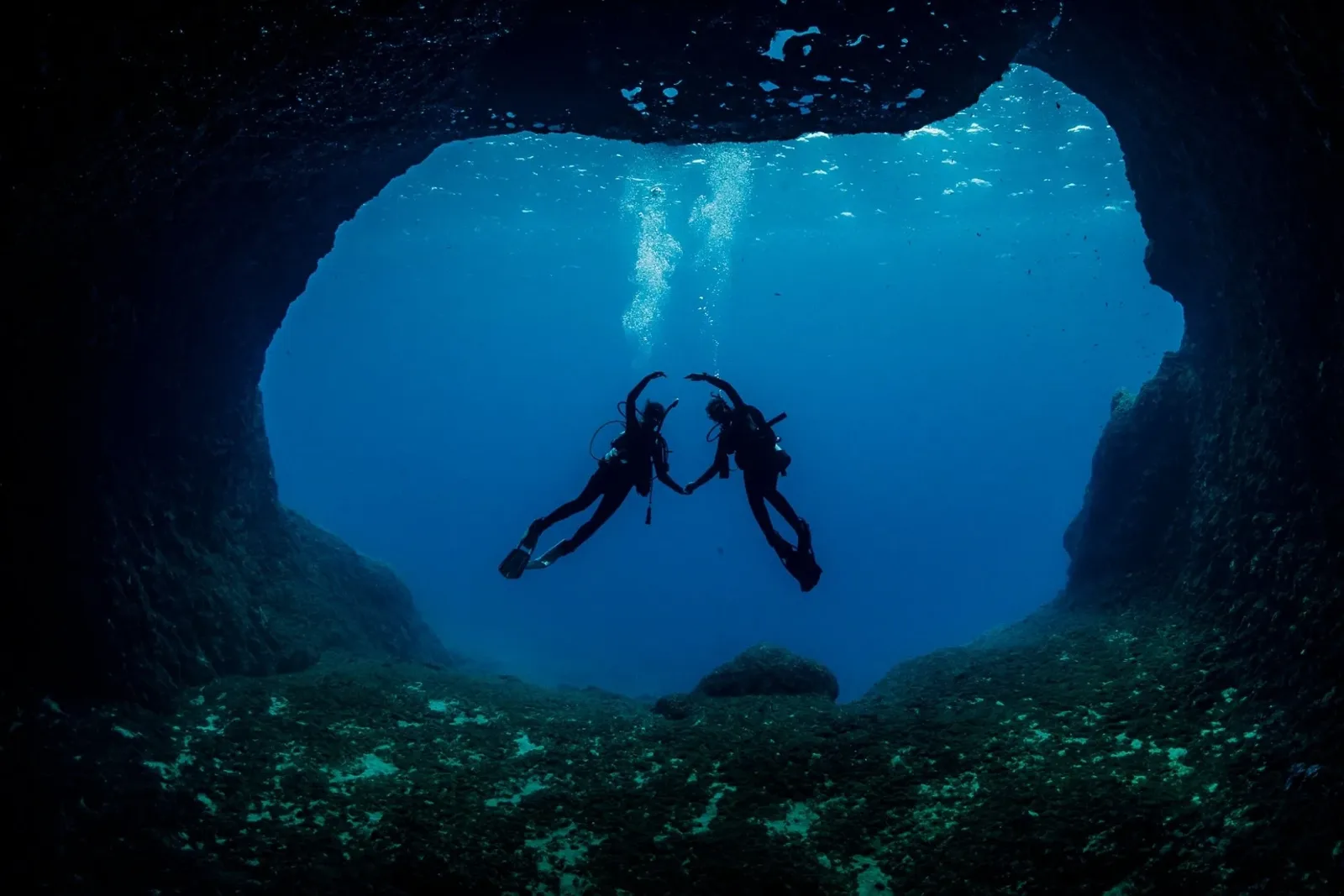
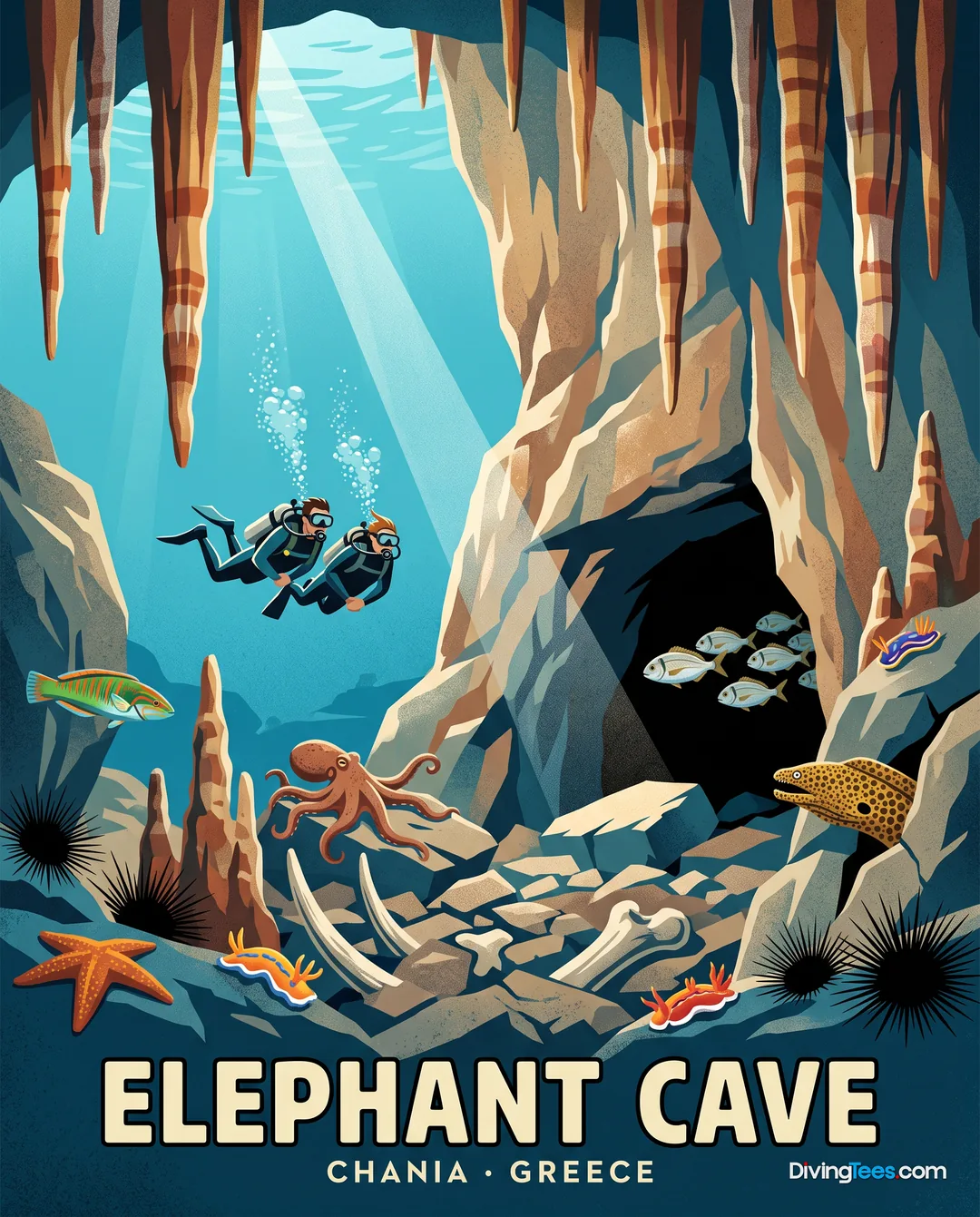
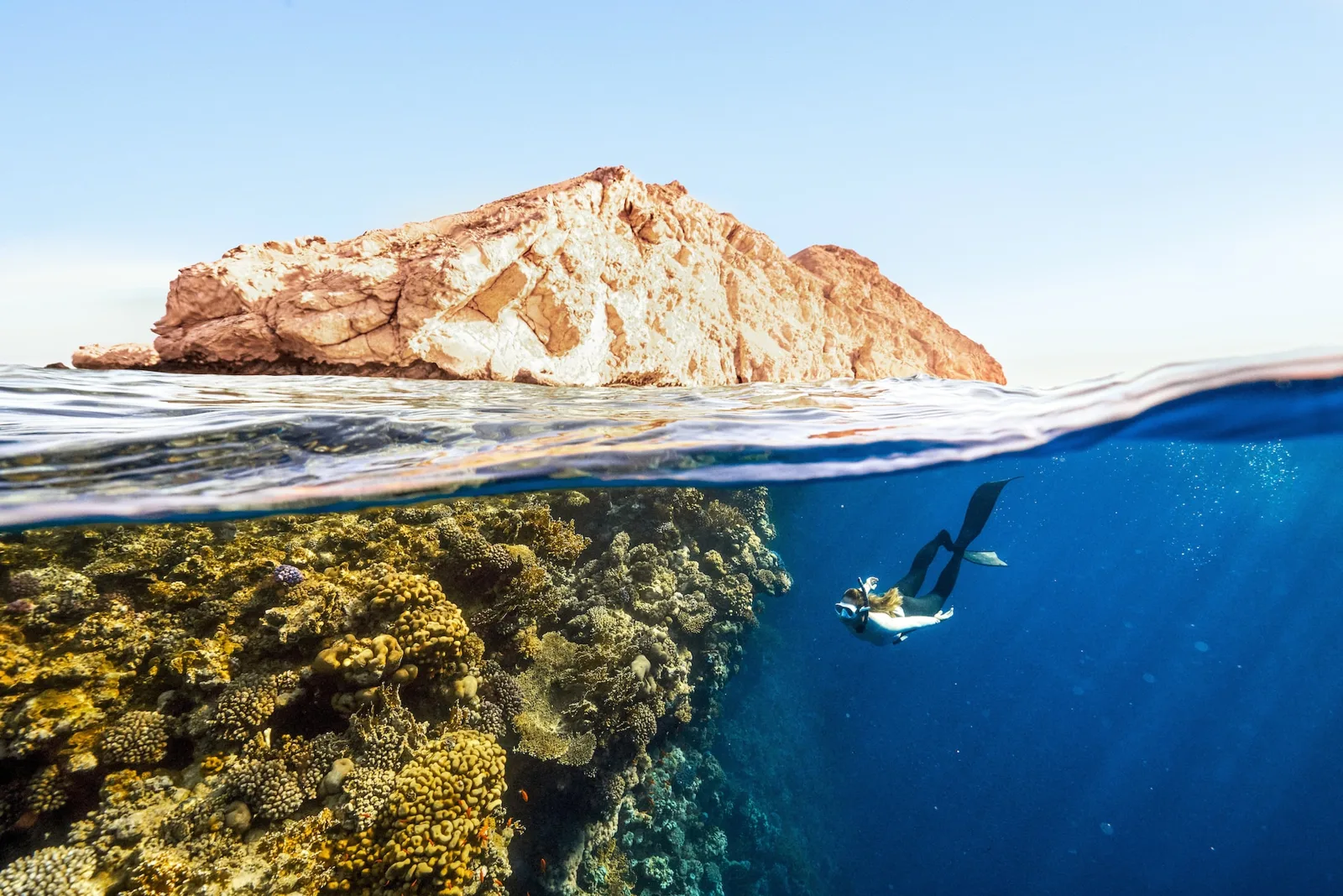
Elephant Cave's submerged chambers, 18-metre contours, rocky ledges and local wrecks give Chania its distinctly Mediterranean character.
For subtitles in English: start the video firstthen click the gearat the top right of the video, select “Subtitles/CC”, then “Auto-translate” and choose “English”.
Elephant Cave gives Chania an immediate sense of place: a shallow submerged cavern where geological formations and ancient palaeontological finds sit beneath clear water, with the dive reaching 18 metres. Beyond the cave, the coast offers Mediterranean rock, rubble, small cavities, drop-offs and local wrecks reached by day boat. This is a shore-based holiday rather than a liveaboard trip, pairing manageable diving with Chania’s Venetian harbour, beaches and inland Crete.
Chania is mainly about reading the shape of the seabed rather than following a strong drift. Rocky ground, broken rubble, small caverns, caves and drop-offs provide the focus, with local wrecks adding a different kind of exploration to the day-boat programme. Conditions are variable, but the area is generally suited to calm, controlled dives rather than sustained current work. Elephant Cave is the clearest example: much of the route is shallower than its 18-metre maximum, and current inside the cave is typically minimal or absent. Visibility there consistently exceeds 20 metres, making the formations and confined spaces easier to appreciate, although buoyancy matters more than depth. Depending on the site and weather, departures are by boat from the coast, with some dives possible from shore.
The appeal of Chania’s marine life lies in the Mediterranean setting: life among rock, rubble, ledges and cave entrances, where the diver’s attention shifts between the bottom and the shape of the terrain. Elephant Cave adds geological formations and the traces of ancient palaeontological finds rather than a conventional reef scene. The local diving material points towards Mediterranean fauna, but the destination is not presented as a regular meeting place for large pelagic animals. That makes the best encounters part of a slow search around the structure, not something to expect on schedule. May to October is the practical wildlife window simply because it is the main period for calmer diving and day-boat outings, rather than because a particular seasonal animal has been identified.
May to October is the clearest working season for Chania: the sea is measured as at its calmest during these months, while rainfall is lowest from June to October. That combination matters because the programme depends on local boats reaching exposed rocky sites, caves and wrecks. May and June can suit divers who want more flexibility around the diving schedule; July through October offers the longer run of drier conditions. Weather still deserves room in the itinerary, since a boat trip is more easily disrupted than a sheltered shore dive. For a short break, four to seven days gives enough time for diving, a weather reserve and time in Chania itself.
Chania works for all levels, provided the chosen site matches the diver’s qualification and recent experience. Elephant Cave is open to certified Open Water Divers, but its shallow confined passages demand reliable buoyancy and a calm approach. A recognised entry-level qualification through PADI, SSI or BSAC is a sensible starting point; experienced divers can focus on the cave, rock relief and wreck routes without needing a drift-diving profile. Divers should expect local assessment and site selection to matter more than collecting an additional specialist qualification.
From London Heathrow, London Gatwick or Manchester, the usual route is a flight to Chania Airport, followed by a road transfer to the coast around the city. An alternative is to fly to Heraklion and continue across Crete by road, which makes the onward journey the main extra piece of planning. The diving area is not one single harbour: outings may be arranged around Souda Bay and Chania’s western coast, with the final access depending on the site. Staying in the city-port area keeps the local connection simple. Divers can generally walk to a nearby base from central accommodation, while those staying farther out should allow for a taxi or hire car before the boat departure.
Use Chania itself or its immediate outskirts as the base. The diving is organised around day outings, so cutting unnecessary road transfers leaves more room for weather changes and boat timings. Reserve several diving days rather than building the whole holiday around one departure; high-season boats fill and local sea conditions can alter the programme. Keep a land-based day in reserve, especially if the trip is short. The city, harbour and western coast make that an easy fallback rather than a wasted day. Set expectations correctly: this is Mediterranean rock, cave and wreck diving, not a tropical coral-reef holiday. Elephant Cave rewards precise buoyancy and a steady pace, while the wider area suits exploration more than strong drift or planned pelagic encounters. A mixed group should stay in the city-port area, where a non-diver can reach the Venetian harbour, beaches and inland excursions without depending on the dive schedule. Chania is a shore-based destination, so a liveaboard itinerary is the wrong model.
A four- to seven-day land-based stay gives Chania time to breathe. Diving days begin with a boat departure from the coast and return to the same port, leaving evenings for the old town and Venetian harbour. Non-divers have beaches and coastal excursions, while days lost to weather can become walks or cultural trips inland. The arrangement suits couples or groups who want proper Mediterranean diving without making every day revolve around a boat.
Hello, I'm Marina, DivingDeal.com's AI assistant. I guide you through destinations, areas and countries.
Thinking about the whole trip and the flights? Talk it over with Edith →
Marina is an AI. Some links are affiliate links: DivingDeal may earn a commission, at no extra cost to you. Bookings are made with the partner.
Your last day stays dry: no diving in the 18-24 hours before a flight, the perfect window to see the destination from another angle.
 Culture
⏱ 4 h · ★ 5.0 (129 reviews)
from £81$109€97
see on Viator ↗
 Culture
⏱ 10 h · ★ 5.0 (88 reviews)
from £452$604€540
see on Viator ↗

⏱ 7 h · ★ 5.0 (76 reviews)
from £151$201€180
see on Viator ↗
 Nature
⏱ 6 h · ★ 5.0 (53 reviews)
from £105$140€125
see on Viator ↗
Ratings and reviews collected by Viator and Tripadvisor.
Plan diving in Chania from May to October, when the sea is generally calmer and rainfall is lowest from June to October. May and June can provide more flexibility around the schedule, while July through October brings a longer run of drier conditions. Leave room for weather-related changes to boat trips.
Chania suits divers of all levels when the site matches their qualification and recent experience. Elephant Cave is open to certified Open Water Divers, but its shallow confined passages require reliable buoyancy and a calm approach. Entry-level training through PADI, SSI or BSAC is a sensible starting point, while site selection remains important for experienced divers.
At Chania, you can explore Elephant Cave’s clear submerged chambers, geological formations and traces of ancient palaeontological finds. Elsewhere, expect Mediterranean rock, ledges, rubble, small cavities, drop-offs and local wrecks reached by day boat. Marine life is associated with this structure, while the destination is not presented as a regular place for large pelagic animals.
Plan a four- to seven-day, shore-based stay in Chania, using the city or immediate outskirts as your base. Reserve several diving days and keep a land-based day available for weather changes. Local outings may leave from Souda Bay or the western coast, while the old town, Venetian harbour, beaches and inland excursions fill non-diving time.