

H20 Diving Nomads Paros
Google 5/5 (741 reviews)
Greece · Mediterranean
Underwater caverns, rock tunnels, the Express Samina wreck and sheltered bays shape a flexible Greek island diving holiday between Paros, Antiparos and Despotiko.
For subtitles in English: start the video firstthen click the gearat the top right of the video, select “Subtitles/CC”, then “Auto-translate” and choose “English”.
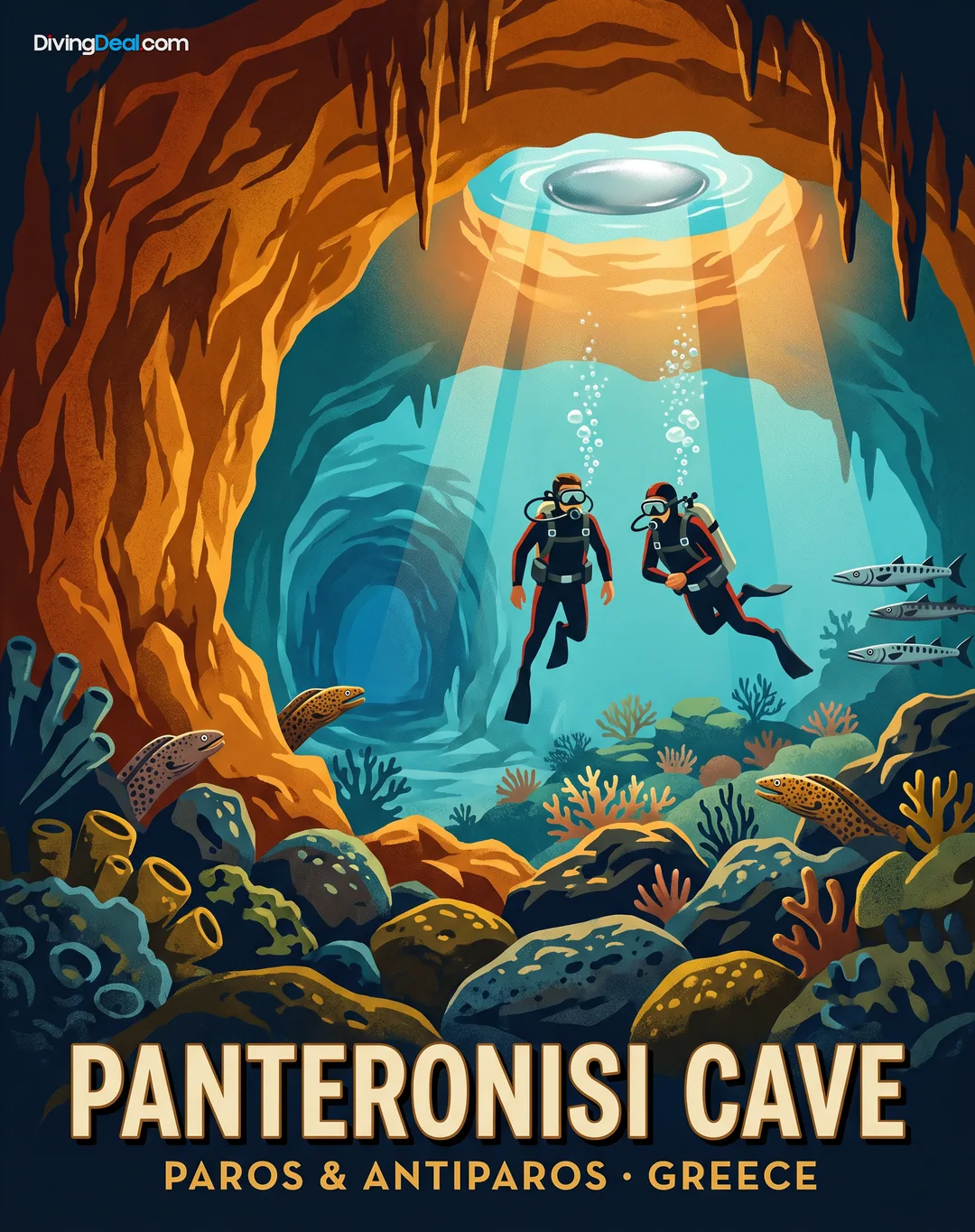
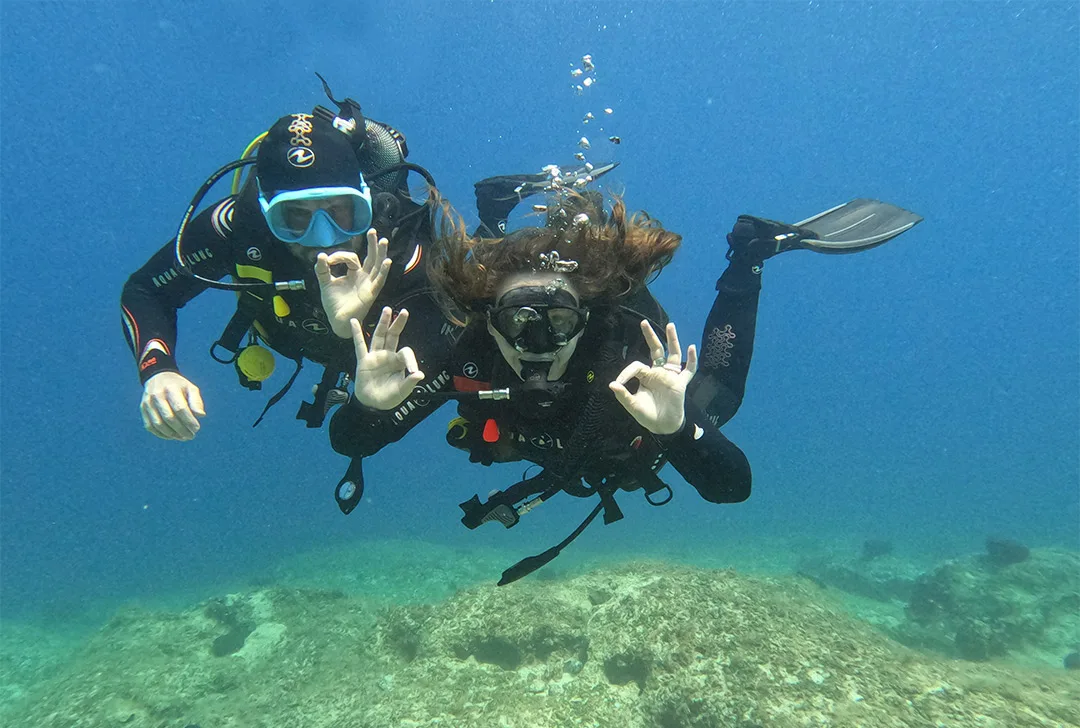
Panteronisi Cave puts an underwater cavern and rock tunnel at the centre of the experience, with illuminated formations descending to 30 metres. Around Paros, Antiparos and Despotiko, a day’s diving can mean a sheltered bay, a rocky drop-off, a swim-through or a boat trip to a wreck. Beginners have shallow options, while experienced divers can work towards deeper walls and the Express Samina. It is a shore-based holiday rather than a liveaboard, with plenty for non-divers above water.
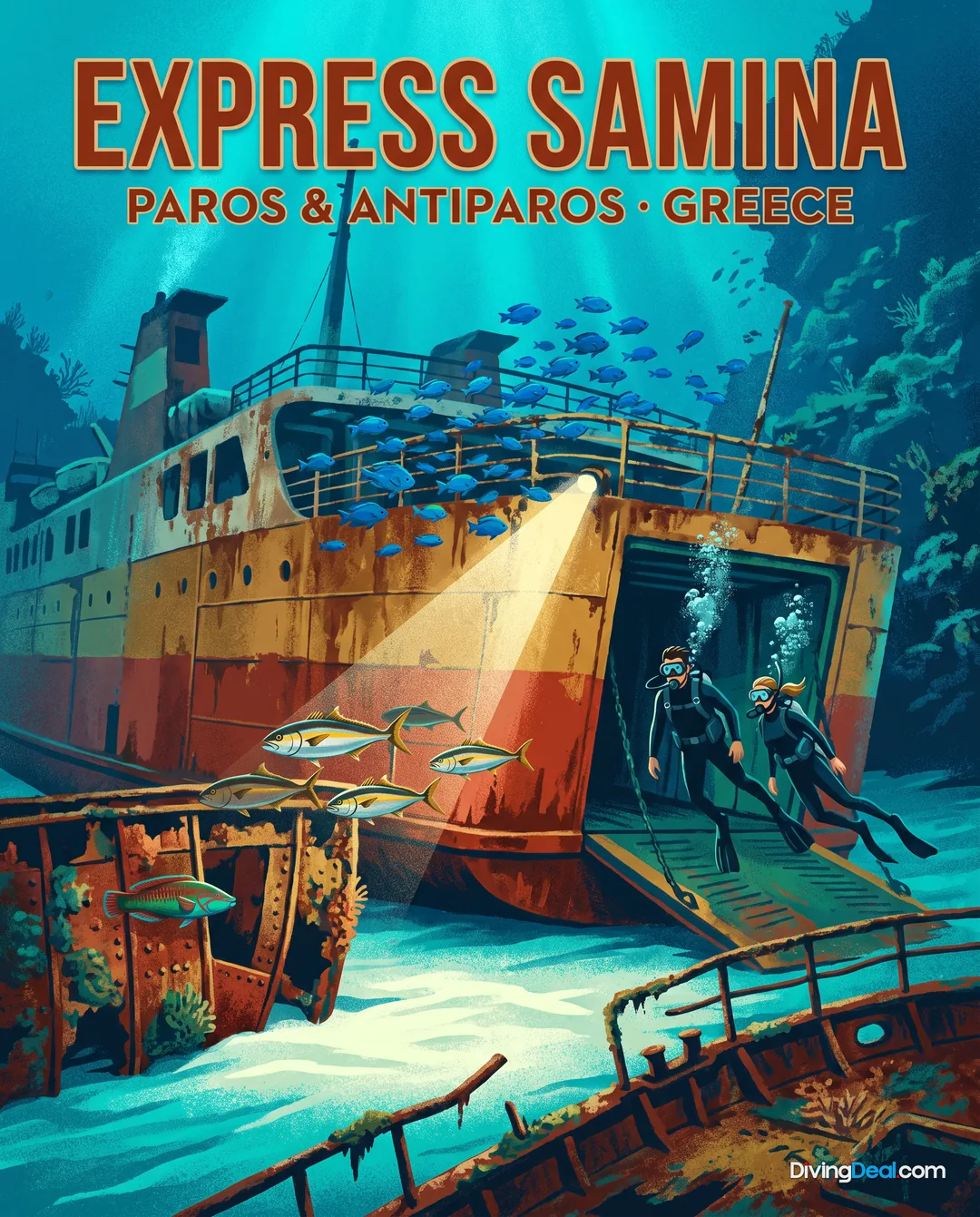
The diving moves between rocky reefs, drop-offs, caverns, passages beneath rock and wreck structure. Panteronisi Cave has a large cavern and a distinct tunnel, with different entrances and changing light down to 30 metres. The Express Samina rests on sand between 18 and 42 metres, where an external tour takes in the superstructure, garage and deck. Currents are variable, so a planned drift dive may become a different sort of outing when the wind changes. Sheltered bays suit quieter training dives, while exposed sites can be lost to chop and swell. Visibility is generally most rewarding in calm conditions; the wreck is associated with 20 to 25 metres, particularly in May and June, but that should not be treated as a promise for every site. Most diving is organised from centres on Paros or Antiparos, with boat trips across the short island passages.
Groupers, octopuses and morays are regular encounters from May to October, turning close inspection of the rocks into worthwhile diving even when the scenery is the main attraction. Nudibranchs appear occasionally for divers who slow down around shaded rock and cave entrances. Barracudas are also seen during the diving season, although they are an occasional rather than dependable feature. The same period suits the full mix of sites, from shallow bays to deeper wreck structure. Calm water helps both the wildlife watching and the visibility, while wind and surface movement can make exposed terrain less comfortable and can move the day towards a more sheltered reef.
The local season usually runs from May to October. May, June, September and October are the most comfortable choices for a quieter holiday, with less pressure on boats and popular coastal sites than in July and August. The meltemi is the reason to avoid building an inflexible summer plan: it can raise chop and make exposed sites unsuitable, even when sheltered water remains available elsewhere. Early and late season also leave more room around the diving day for villages, walking and boat trips, while October still sits within the normal operating season.
Paros and Antiparos work for beginners, particularly in sheltered, shallow bays and on uncomplicated rocky reefs. The more demanding end is different. Advanced Open Water, or an equivalent BSAC, PADI or SSI qualification, is useful for deeper drop-offs and Panteronisi’s tunnel. Wreck dives call for suitable wreck-diving training and experience, especially on the Express Samina. A drift-dive qualification or comparable experience is sensible where current work is offered.
From London Heathrow, London Gatwick or Manchester, the journey normally involves reaching Athens and then taking a domestic flight or continuing by ferry, with total travel commonly taking around six to twelve hours depending on the connection. Paros is the gateway for Antiparos. From Paros, travel by road or bus to Pounda, then allow about seven minutes for the ferry crossing. A Parikia to Antiparos service may also operate, depending on the season. Bad weather can suspend the crossing, so leave a proper margin before any onward flight or long ferry. On the islands, getting between accommodation and a centre may mean walking in coastal areas, a taxi, a transfer or a hire car.
Do not lock every diving day to an exposed site in July or August. Ask which coast is protected from the prevailing meltemi, and expect the plan to move when the wind gets up. Morning departures are useful in windy periods, before chop has built. When booking, ask specifically whether the outing is for a cave, a rock passage, a wreck, a drop-off or a drift dive. Those descriptions are not interchangeable, and the qualification or experience required may not be the same. Panteronisi and the channel between the islands can attract several boats, so ask about departure times that avoid the busiest arrivals. Spread the holiday across Paros, Antiparos and Despotiko rather than repeating the sites closest to the harbours in high season. If staying on Antiparos, build the ferry into every day involving Paros. Keep a generous gap before flying, particularly after a dive day followed by a sea crossing, because a delayed ferry can undo an otherwise sensible connection.
Plan Paros and Antiparos as a seven- to ten-day land-based stay, not a liveaboard trip. That gives enough time to move between the island sectors and Despotiko, keep reserve days for the meltemi and leave a non-diving day before flying. Paros offers the broader transport network, while Antiparos places you nearer some outings but makes the ferry part of the daily timetable. Non-divers can fill the gaps with beaches, villages, walking, the Antiparos cave, archaeology and boat trips.
Hello, I'm Marina, DivingDeal.com's AI assistant. I guide you through destinations, areas and countries.
Thinking about the whole trip and the flights? Talk it over with Edith →
Marina is an AI. Some links are affiliate links: DivingDeal may earn a commission, at no extra cost to you. Bookings are made with the partner.
Your last day stays dry: no diving in the 18-24 hours before a flight, the perfect window to see the destination from another angle.
 Culture
⏱ 2 h · ★ 5.0 (17 reviews)
from £38$50€45
see on Viator ↗
 City
⏱ 4 h · ★ 5.0 (11 reviews)
from £126$168€150
see on Viator ↗
 Culture
⏱ 3 h · ★ 5.0 (8 reviews)
from £199$266€238
see on Viator ↗

⏱ 3 h · ★ 5.0 (5 reviews)
from £50$67€60
see on Viator ↗
Ratings and reviews collected by Viator and Tripadvisor.