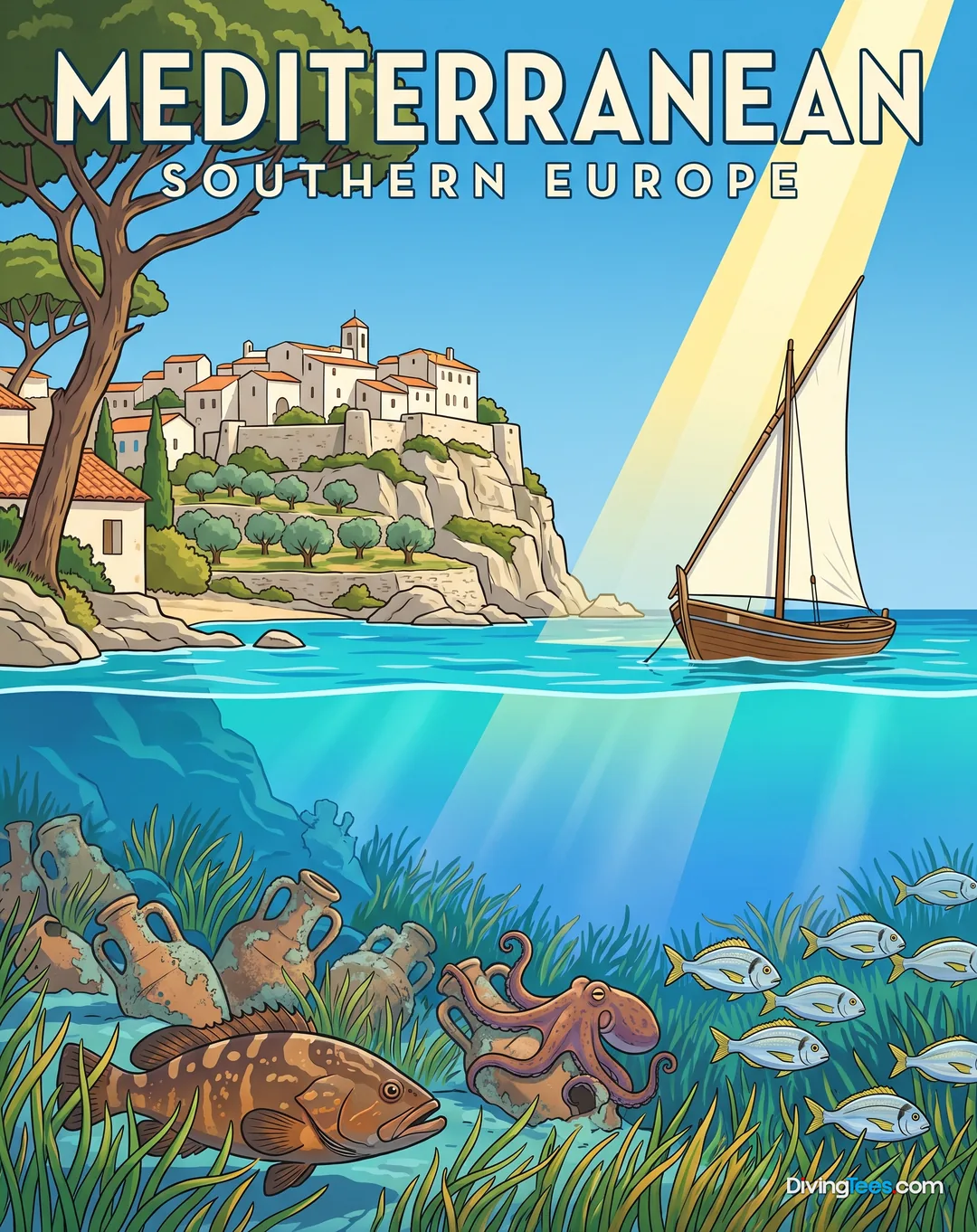
Mediterranean
Greece: islands, peninsulas and layered histories
From the theatre at Epidaure to the Venetian harbour of Chania, Greece joins archaeological journeys to diving in the Ionian and Mediterranean seas.
What makes this country unique
- Epidaure’s ancient theatre and Péloponnèse coastline
- Zakynthos and the Ionian Sea
- Chania’s Venetian harbour in Crete
- Barracuda and moray eels around Epidaure
- Octopus and gilthead bream at Zakynthos
- Moussaka, dakos and Cretan kalitsounia
- Thessaloniki’s Byzantine and Ottoman urban history
For subtitles in English: start the video firstthen click the gearat the top right of the video, select “Subtitles/CC”, then “Auto-translate” and choose “English”.
This country for a diver
Greece is a country of islands and peninsulas rather than one uniform dive coast. Its appeal lies in the contrast between Epidaure in the Péloponnèse, Zakynthos in the Ionian Islands, Chania in Crete and urban Thessaloniki. Across these areas, diving suits all levels, currents are variable, prices are moderate and liveaboard diving is not the format to expect. The shared character is flexibility: mixed shore and boat diving, followed by archaeological sites, markets, ports and regional food that change markedly from one base to the next.
How the country divides
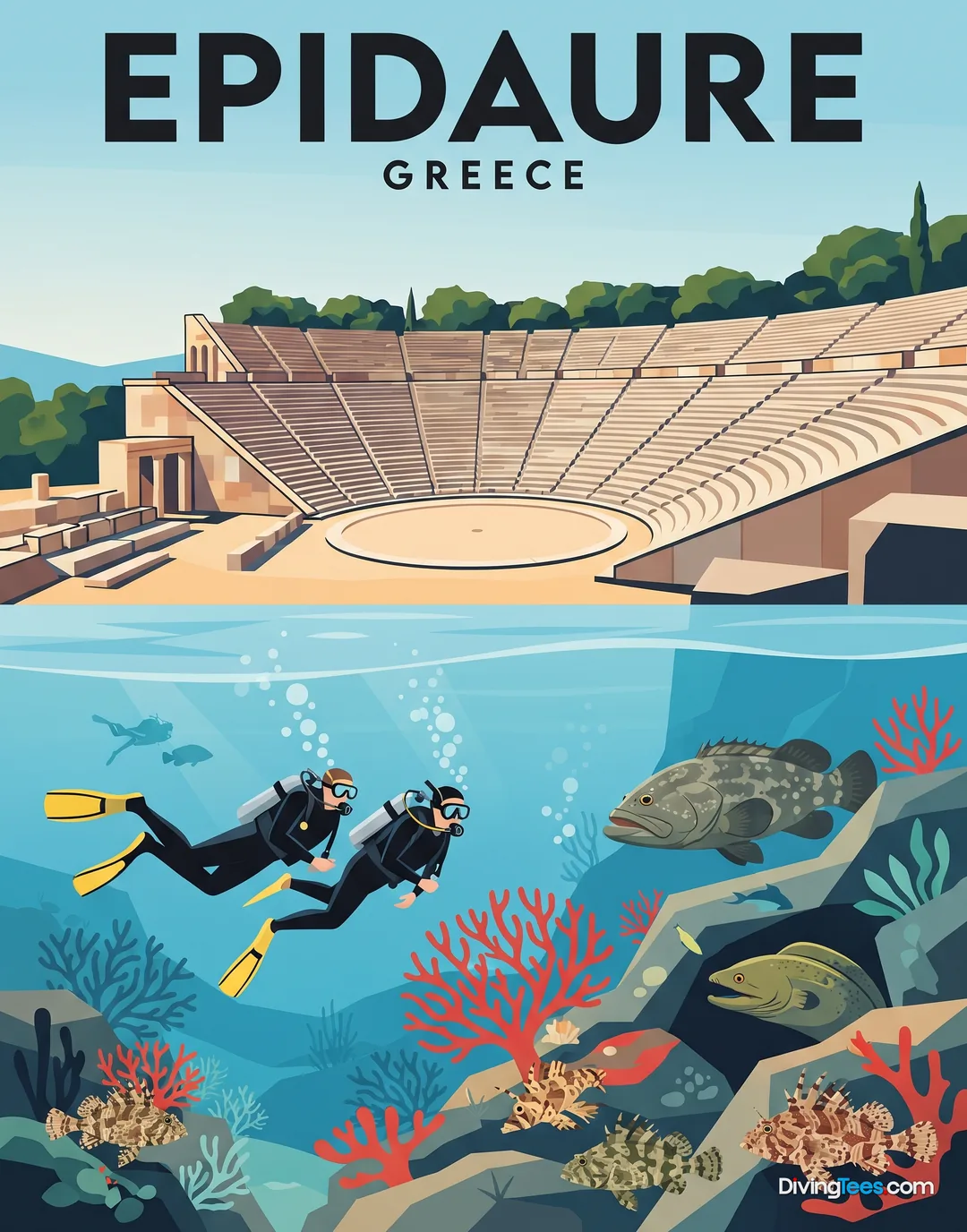
Epidaure belongs to the Péloponnèse: a mainland base for divers who want diving alongside the Theatre of Ancient Epidaurus and the Sanctuary of Asclepius. Its sites include Aspro Faro, but the stronger reason to choose this area is the way a land-based cultural itinerary fits around the coast. Zakynthos is the Ionian option, with boat diving forming its dominant pattern. Blue Caves sits within an island setting also shaped by the Zakynthos Marine Park, making this the natural choice for those drawn to protected marine landscapes and outings on the water. Chania offers a different Crete: mixed diving, Elephant Cave, a Venetian harbour and access to the island’s distinctive food culture. Thessaloniki is the urban outlier, with mixed diving and Avlaki set against museums, markets and a strongly Byzantine, Ottoman and Jewish history. Choose it for a city-and-sea journey rather than an island stay.
Diving destinations
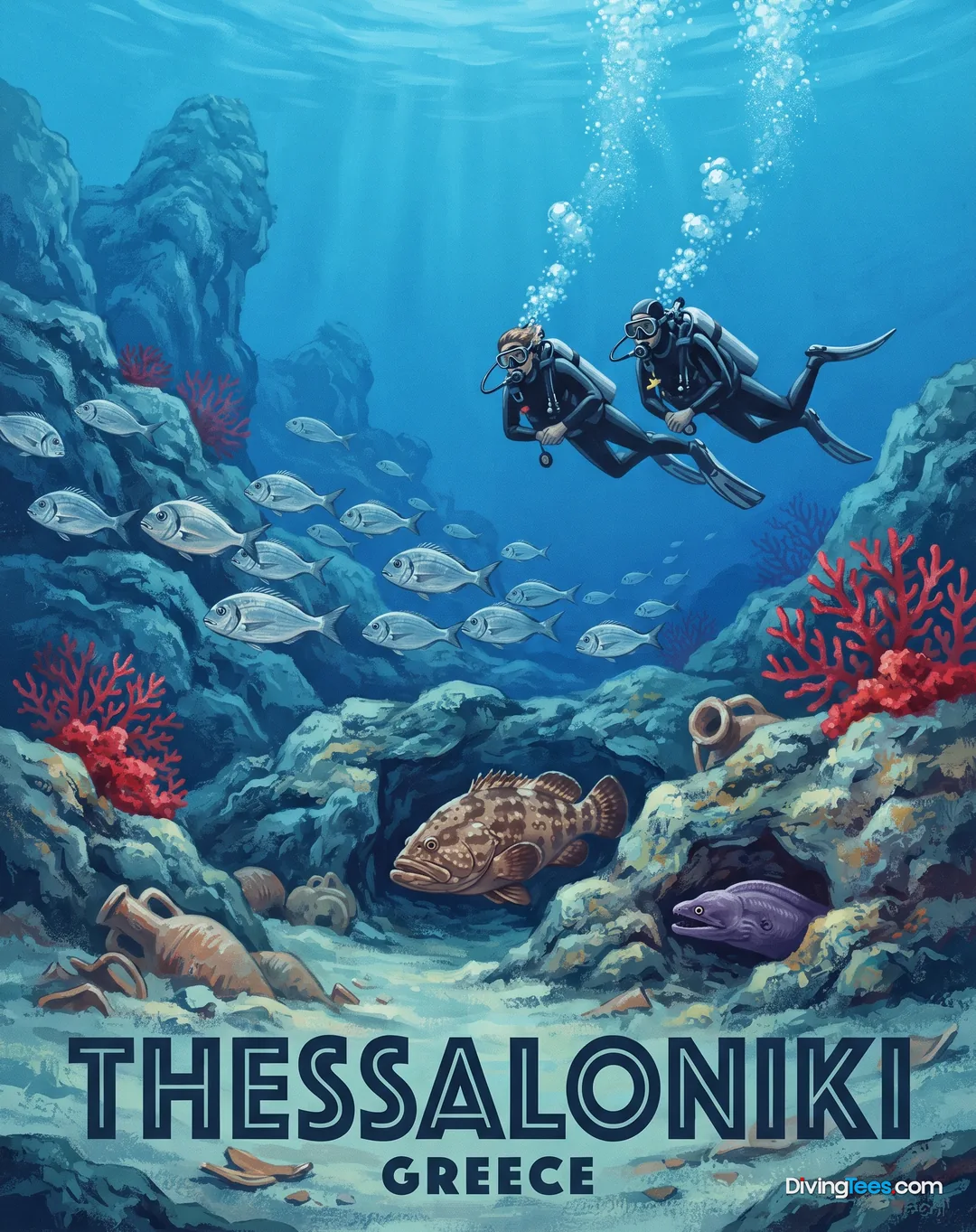
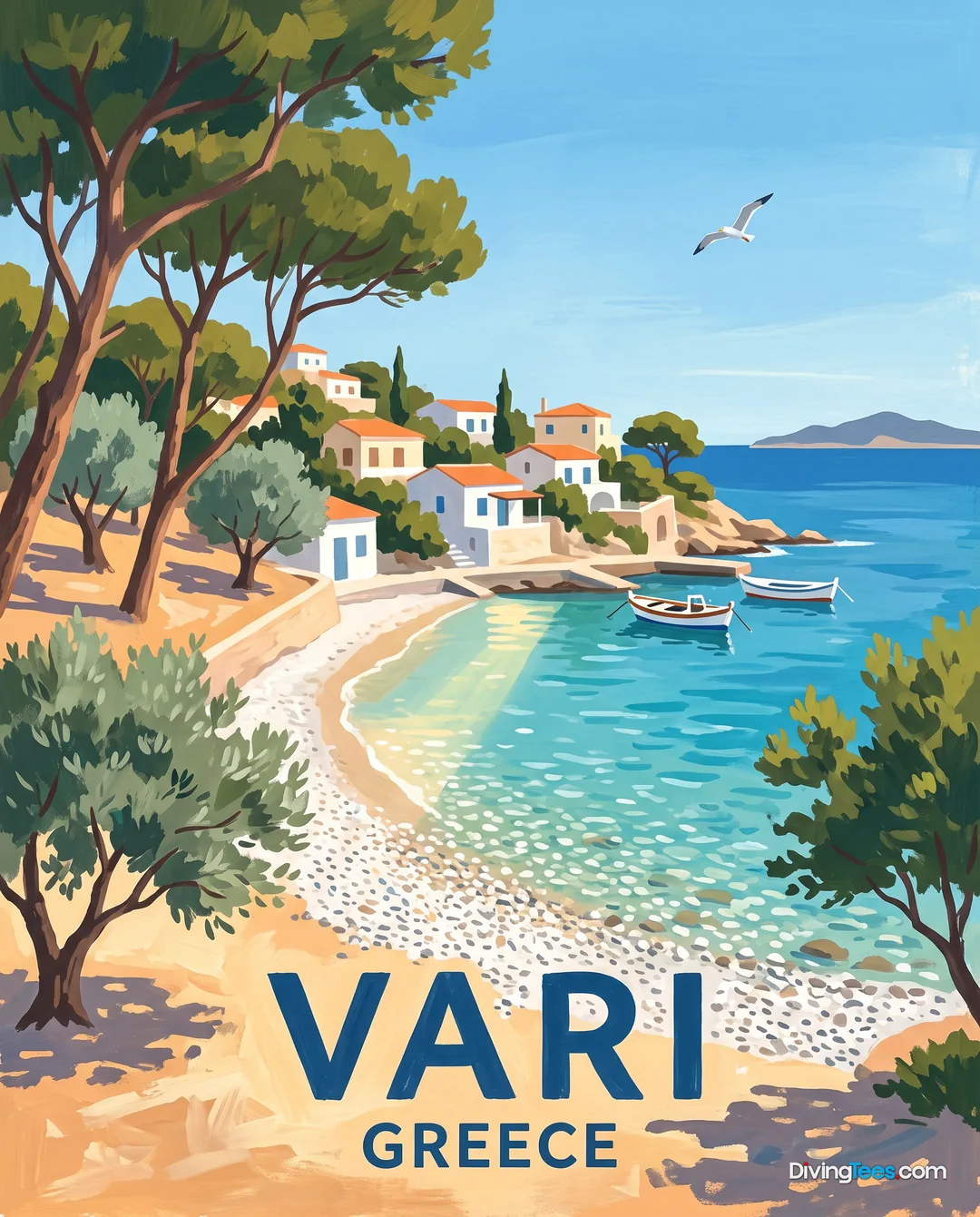
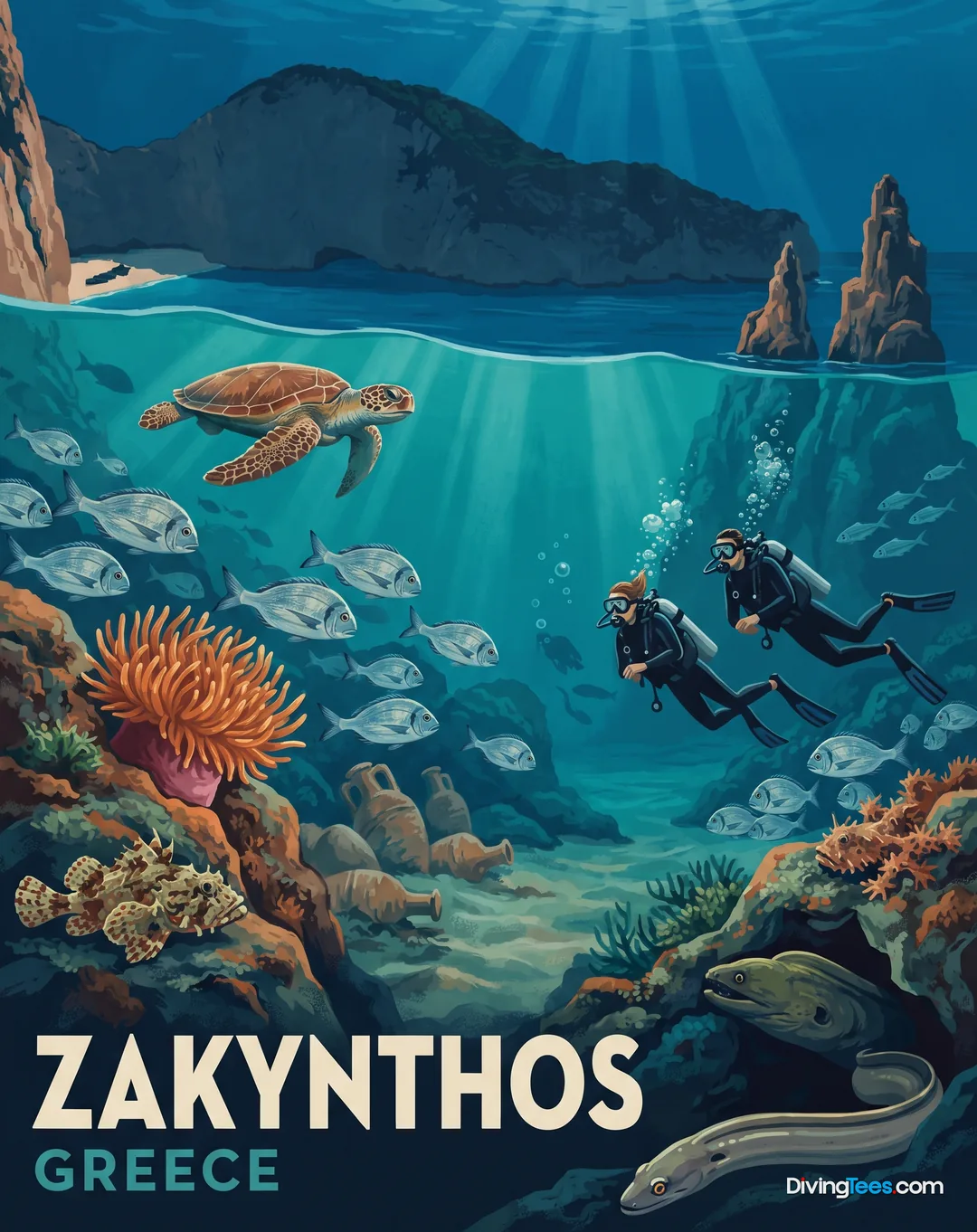
Dive centres
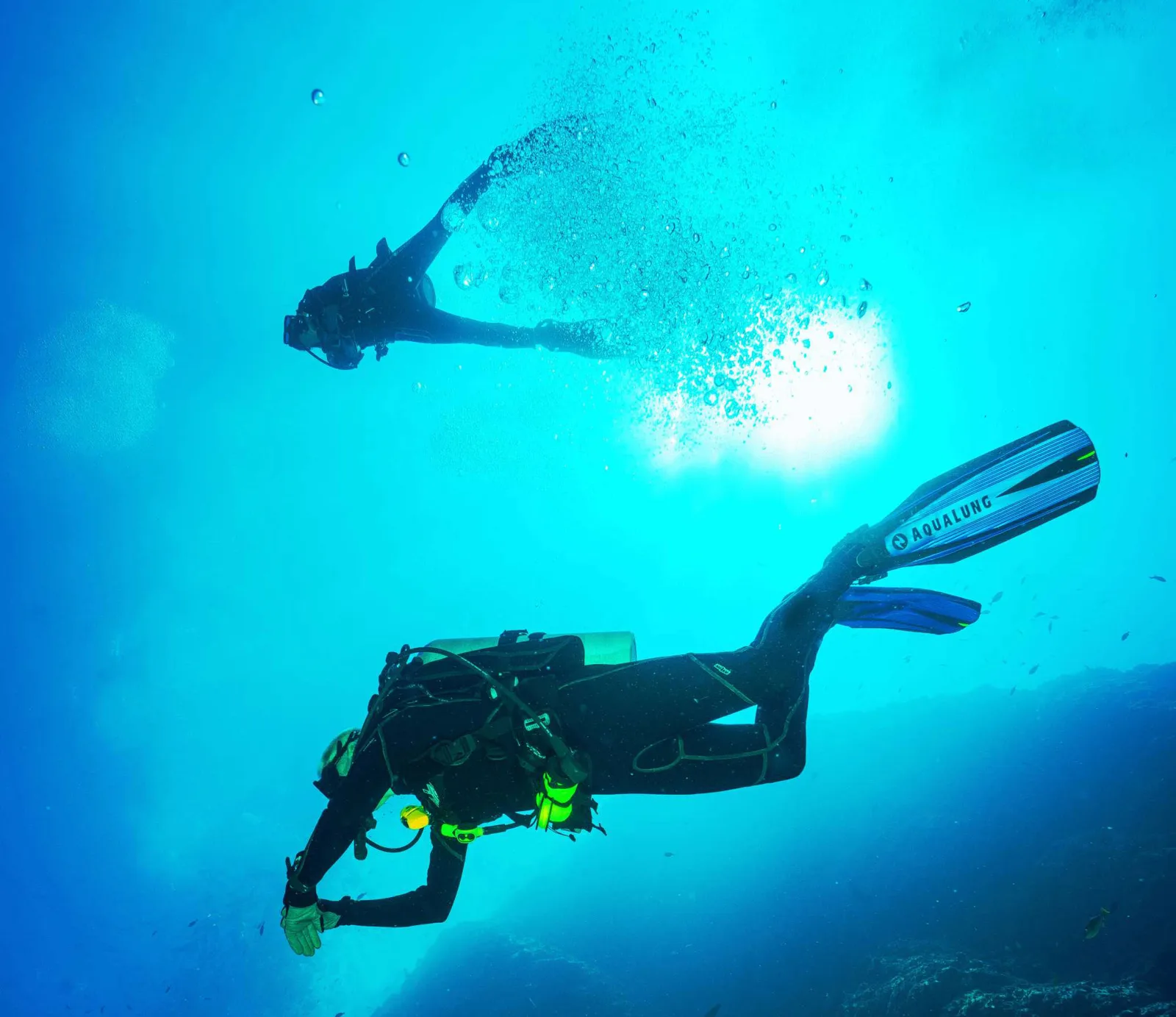

Hotels
When to go, and where by month
The useful diving window runs from April to October, but it does not open everywhere at once. April belongs to Epidaure and Zakynthos, making the Péloponnèse or the Ionian Islands the early-season choices. From May through October, Chania and Thessaloniki join them, so the country’s four diving bases share the same broad summer and early-autumn window. There is no opposing seasonal pattern in which one Greek coast closes as another opens. Instead, the practical difference is the delayed start for Crete and Thessaloniki. May, June, July, August, September and October therefore offer the broadest choice between island, mainland and city bases. April is narrower and more focused. For a trip built around several diving days, keep a weather margin: local outings depend on conditions, and high-season day boats can fill quickly. A longer itinerary is easiest when its diving base matches the month rather than trying to force every region into one journey.
Marine life, coast by coast
Greek wildlife is best understood through regional signatures rather than one uniform national encounter. Around Epidaure, the named character comes from barracuda, striped bonito, purple flabelline and moray eels. That combination gives the Péloponnèse coast a different natural emphasis from the Ionian waters of Zakynthos. At Zakynthos, gilthead bream and octopus are the species that define the area’s recorded character. The distinction matters when planning an itinerary: choosing Epidaure points towards a different set of encounters from choosing Zakynthos, even though both are available in the same April-to-October period. Chania and Thessaloniki belong to separate regional settings, so they should be selected for their wider island or urban context rather than folded into a single wildlife promise.
Getting between the areas
Greek geography looks compact until a ferry, port transfer or secondary airport enters the plan. The 202 km between Epidaure and Zakynthos is not a simple road journey, because the island link adds an embarkation and crossing to the transfer. Chania and Epidaure are 248 km apart, but Crete-to-mainland travel still means arranging a flight or ferry connection rather than driving directly. Epidaure with Thessaloniki is feasible over two weeks, although the 334 km between them makes it a deliberate change of region. Zakynthos and Thessaloniki are 372 km apart, while Chania and Zakynthos are 373 km apart; combining either pair quickly becomes a transport exercise. Chania and Thessaloniki are 577 km apart and work better as separate regional trips. A hire car is useful in Crete, the Péloponnèse and Zakynthos, but unnecessary in Thessaloniki itself.
Take off your mask
Greece’s history is unusually easy to place beside the modern townscape. Around Epidaure, the Theatre of Ancient Epidaurus and the Sanctuary of Asclepius make a coherent half-day archaeological visit. In Thessaloniki, the Archaeological Museum and the Museum of Byzantine Culture explain the city’s layers, while the White Tower anchors the seafront. Kapani Market and Modiano Market show the everyday food trade rather than a staged attraction. Chania offers the Archaeological Museum of Chania and its Venetian Old Harbour, where the waterfront, arsenal and town fabric remain closely connected. Zakynthos shifts the emphasis towards the Zakynthos Marine Park and the Strofádes islets. Food is regional as well as national. Across Greece, look for moussaka, pastitsio, horiatiki, souvlaki, spanakopita and taramosalata in tavernas, mezedopoleia and neighbourhood cafés. In Crete, dakos, kalitsounia, apaki and chochlioi boubouristi belong on the table. Ouzo, tsipouro, retsina, Greek coffee and mountain tea fit the late dinners and shared mezedes typical of local eating.
What holds true everywhere here
A Greek itinerary benefits from a weather margin, particularly when several days depend on local boats rather than a large specialised hub. High-season day boats can fill quickly, so the practical issue is matching a base to regular departures instead of assuming every site is reached daily. Zakynthos also requires attention to the rules of a marine park. Its protected setting is part of the island’s identity, not simply a backdrop to diving. On rocky sites, careful buoyancy matters because passages can run close to the substrate and its crevices; contact quickly damages the setting that makes the dive worthwhile. The country’s geography creates another recurring constraint: a short-looking link may become a full day once road travel, a port and a ferry are combined. Treating Epidaure, Zakynthos, Chania and Thessaloniki as interchangeable bases is the surest way to make a Greek journey feel longer than it needs to be.
Frequently asked questions about Greece
When should you go diving in Greece?
Greece offers diving around Epidaure and Zakynthos during the April-to-October period. This timing suits an itinerary combining underwater visits with regional discoveries, including Epidaure’s ancient theatre, the Péloponnèse coastline, Zakynthos and the Ionian Sea, Chania’s Venetian harbour, or Thessaloniki’s Byzantine and Ottoman urban history.
What marine life can you see while diving in Greece?
In Greece, the encounters vary by region. Around Epidaure, you may see barracuda, striped bonito, purple flabelline and moray eels. Zakynthos is associated with gilthead bream and octopus. Choosing between these areas therefore shapes the kind of underwater wildlife you are likely to encounter.
How should you plan a diving stay in Greece?
Plan your Greece stay around contrasting regional experiences rather than treating the country as one uniform diving destination. Epidaure pairs diving with archaeological discovery, while Zakynthos brings the Ionian setting and its own marine character. Chania and Thessaloniki suit plans focused on island or urban context.
What can you combine with diving in Greece?
A Greece diving trip can include archaeological and cultural visits alongside time underwater. Consider Epidaure’s ancient theatre, Chania’s Venetian harbour, or Thessaloniki’s Byzantine and Ottoman urban history. Regional food also adds variety, with moussaka, dakos and Cretan kalitsounia included among the destination’s culinary highlights.