
7R Diving
Google 4.8/5 (143 reviews)
Malta · Mediterranean
Historic wrecks, cave passages, rocky reefs and 20–40-metre visibility make St Julian a practical Maltese base for shore dives, boat outings and evenings ashore.
For subtitles in English: start the video firstthen click the gearat the top right of the video, select “Subtitles/CC”, then “Auto-translate” and choose “English”.
Rocky reefs, historic wrecks and sheltered shore sites make St Julian a useful base for exploring Malta rather than a self-contained resort reef. From the waterfront, a diver can make straightforward local dives, then use road transfers or boats for deeper wrecks, caves, drop-offs and sites farther around the island. It suits a five- to seven-day stay, with enough flexibility to mix diving, Malta’s historic towns and the ordinary pleasures of a coastal holiday.
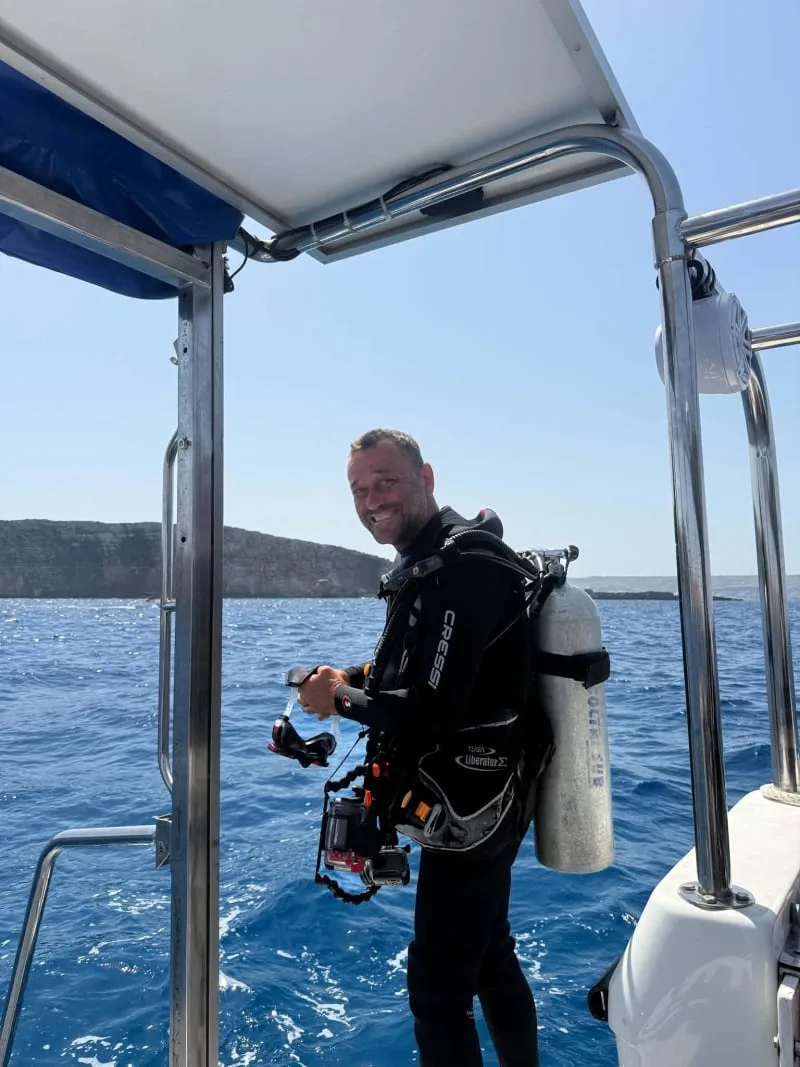
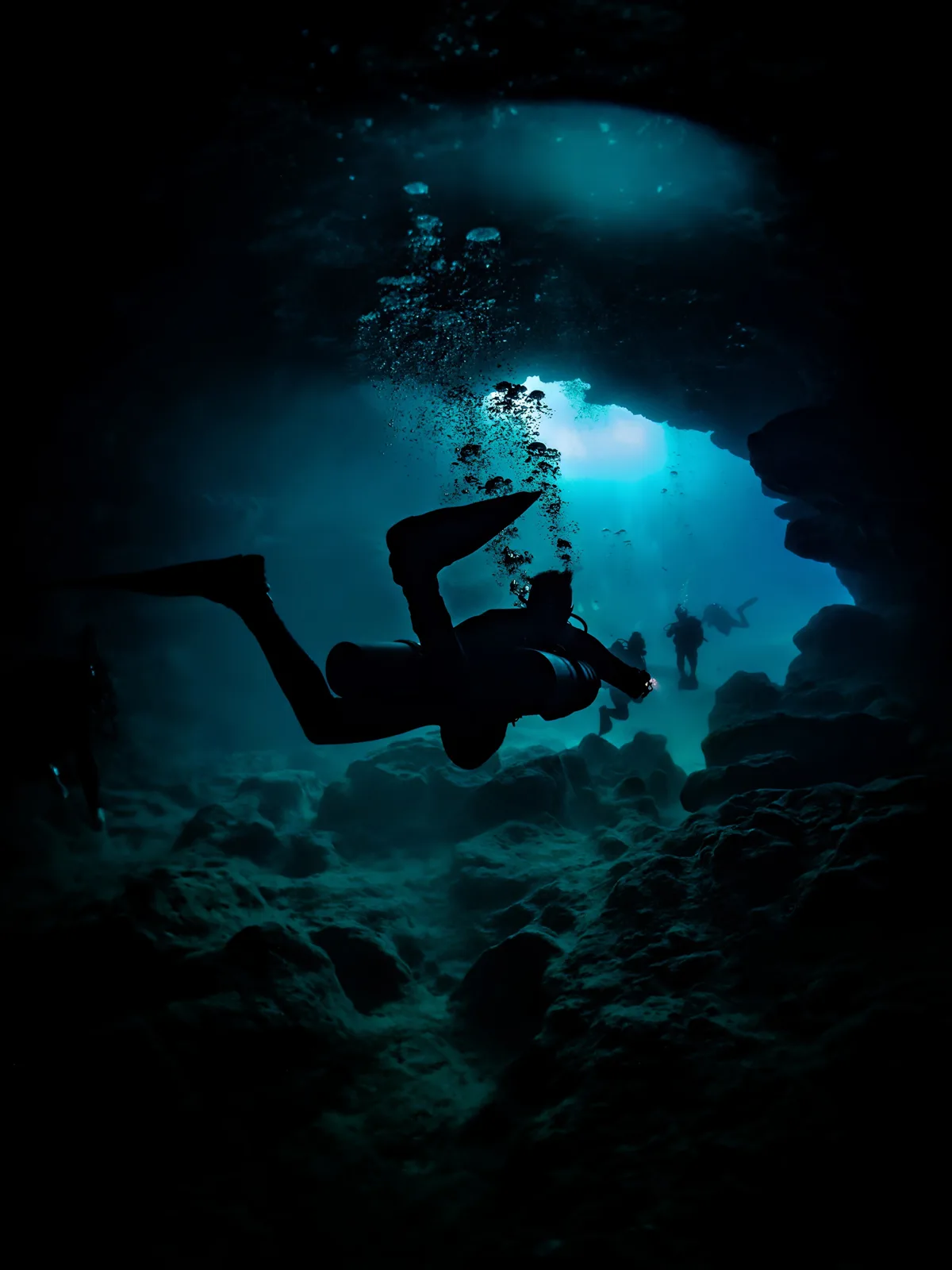
The diving around St Julian is built on Maltese rock, with reefs, walls, caves, wrecks and shore entries sharing the programme. Local sheltered areas around St George’s Bay are useful for training, a refresher or a night dive, while boat trips open up sites that are awkward to reach from the urban shoreline. Visibility is generally good, commonly around 20 to 40 metres, although swell and coastal turbidity can change the picture. Currents are variable rather than a defining feature, so the day’s site is selected around the sea, visibility and the group’s ability. Shore diving brings flexibility and avoids depending on a boat departure every day. Deeper wrecks and more demanding profiles call for more planning, and a boat is worthwhile for the northern, western, Gozo and Comino sectors.
The underwater interest at St Julian lies in the meeting of living rocky seabed, wreck structure and Maltese coastal terrain. On a reef dive, life is found around cracks, ledges and the shaded sides of rock, while wrecks provide additional surfaces to examine as the route moves through open water and shelter. Caves and drop-offs change the light and the shape of the dive, making the surroundings as important as any single encounter. Conditions, depth and the chosen site influence what appears on the day, and there is no particular seasonal animal event around which to build the trip. Divers who enjoy looking closely at Mediterranean rock and wreck habitat will get more from St Julian than those expecting a wildlife spectacle on every descent.
Diving is possible throughout the year, but May, June, September and October are the sensible months for a broad programme. Warmer-season conditions generally bring more boat departures and make it easier to combine local shore dives with excursions farther afield. High summer is busier on popular sites and boats, particularly during holiday periods, so early starts and smaller groups become more valuable. Winter remains workable, but centres may reduce some activities and the sea has more influence over the plan. The practical advantage of the shoulder months is a better balance between available outings, manageable pressure on popular sites and the flexibility to change the dive when conditions dictate.
St Julian works for all levels, provided the site matches the diver rather than the other way round. Sheltered, shallow areas support training, first dives and night diving, while experienced divers can use the town as a base for wrecks, caves and deeper profiles. Advanced Open Water is useful for the deeper sites, and a Wreck qualification is appropriate for proper wreck exploration. Nitrox can help on repetitive days when the centre and site permit it. BSAC, PADI and SSI divers should check the planned depth and experience requirement before booking.
From London Heathrow, London Gatwick or Manchester, fly to Malta International Airport and continue by road to St Julian. There is no ferry or internal flight needed to reach the town. Dive centres operate around Portomaso, St George’s Bay and the seafront, so accommodation nearby may put the first meeting point within walking distance. For dives outside St Julian, allow time for the road transfer arranged by the centre, or for the boat departure itself. Cirkewwa, Gozo, Comino and western sites are not quick local add-ons, and a day involving one of them can be longer than a shore-diving day. The useful planning question is therefore not just where to stay, but which days require transport beyond the town.
Do not build the week around one named wreck. Ask for the planned site each day, because St Julian’s centres adjust the programme to sea state, visibility and the group’s level. Keep the first dives local and sheltered, especially after arrival or when divers in the group have different experience. Use shore diving to preserve flexibility, then spend boat days on Gozo, Comino or the more distant Maltese sectors. If avoiding busy sites matters, ask for a small group and an early departure, accepting that availability varies. Before choosing a deep wreck, check both the required qualification and the profile against the least experienced diver’s gas consumption. A house reef or training site is particularly useful for a mixed group. Finally, allow a spare margin in the itinerary: a proposed sector can be replaced when the sea makes the original plan unattractive.
A five- to seven-day stay works well when shore dives are used alongside organised boat days. Stay near the waterfront if walking to a centre matters, and keep the distant sectors together rather than scattering long transfers through the week. St Julian also suits non-divers, with bathing, water activities, seafront walks and straightforward access to Sliema, Valletta, the Three Cities, Mdina, Gozo and Comino. The town is lively and urban, not a quiet rural diving base.
Hello, I'm Marina, DivingDeal.com's AI assistant. I guide you through destinations, areas and countries.
Thinking about the whole trip and the flights? Talk it over with Edith →
Marina is an AI. Some links are affiliate links: DivingDeal may earn a commission, at no extra cost to you. Bookings are made with the partner.
Choose St Julian in May, June, September or October for a broad programme and easier planning. Warmer-season conditions generally support more boat departures and make it easier to combine shore dives with excursions. High summer can be busier, while winter remains workable but centres may reduce activities and sea conditions influence plans.
St Julian suits all levels when the site matches your experience. Sheltered, shallow areas support training, first dives and night diving, while experienced divers can plan wrecks, caves and deeper profiles. Advanced Open Water is useful for deeper sites, and a Wreck qualification is appropriate for proper wreck exploration.
In St Julian, expect Maltese rocky reefs, walls, caves, drop-offs and historic wrecks, with visibility commonly around twenty to forty metres. Marine life gathers around cracks, ledges and shaded rock, while wrecks add surfaces to examine. Conditions, depth and the selected site influence what appears on the day.
Plan St Julian as a flexible base, combining local shore dives with organised boat outings. Staying near the waterfront can place dive centres within walking distance. Keep distant sectors together, allow time for road transfers or boat departures, and leave room to change plans when sea conditions affect the chosen site.