Deepist Kaş Dalış Merkezi / Dive Center
Google 5/5 (707 reviews)
1.6 km away as the crow flies
Kas · Türkiye · Mediterranean
Max. depth · 36 mDescend into Kas's Stonehenge to explore intricate rock formations and an in-situ archaeological display featuring a replica of the Uluburun wreck.
Stonehenge is not a single, monumental structure but rather a descriptive name for the intricate rock formations found within Hidayet Bay, specifically east of the main Archaeopark wreck area. This site offers a varied topography, starting with a shallow reef that gradually leads into deeper sections. As you descend, the terrain transitions, revealing distinct rock formations that give the site its unofficial name, providing shelter and structure for marine life.
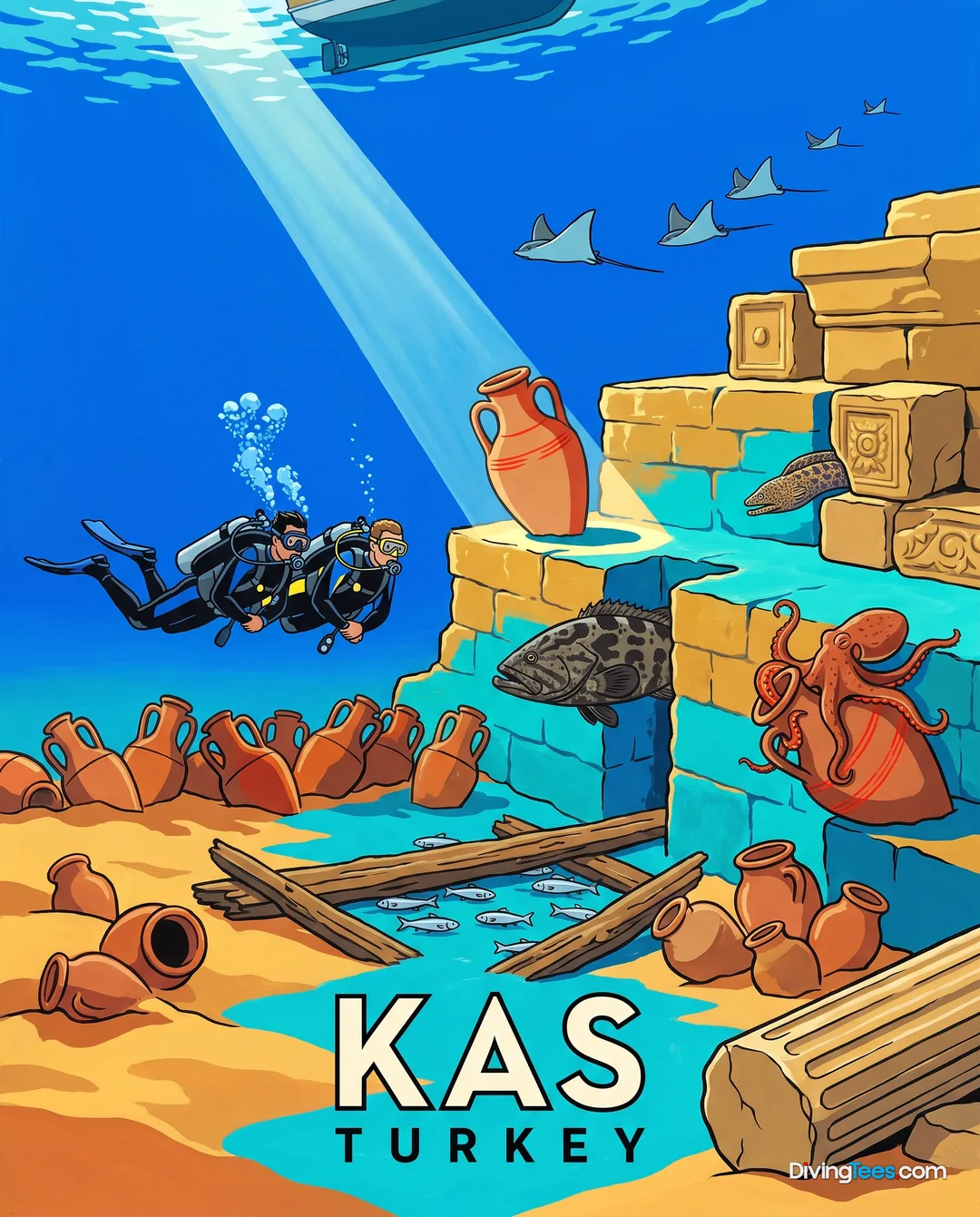
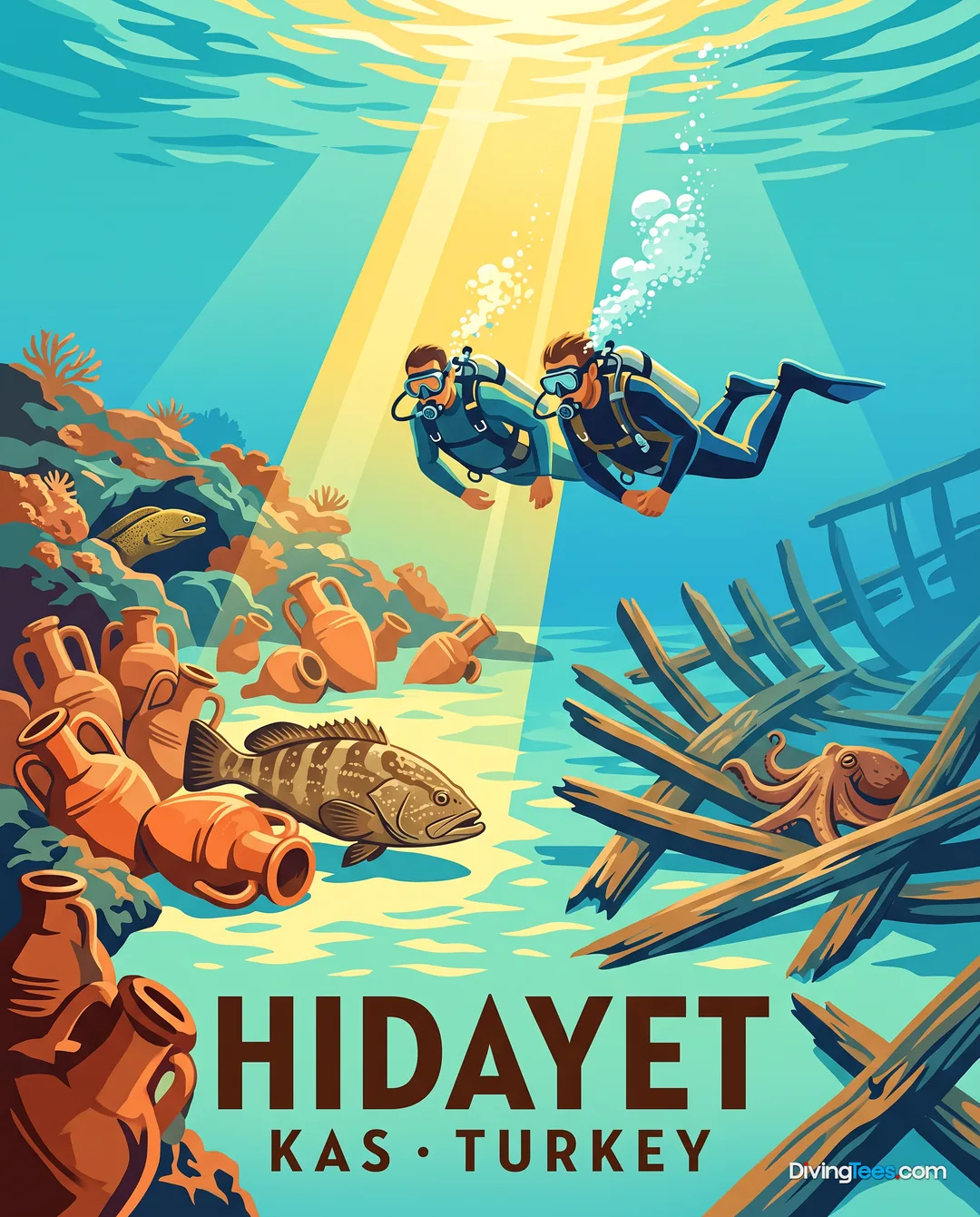
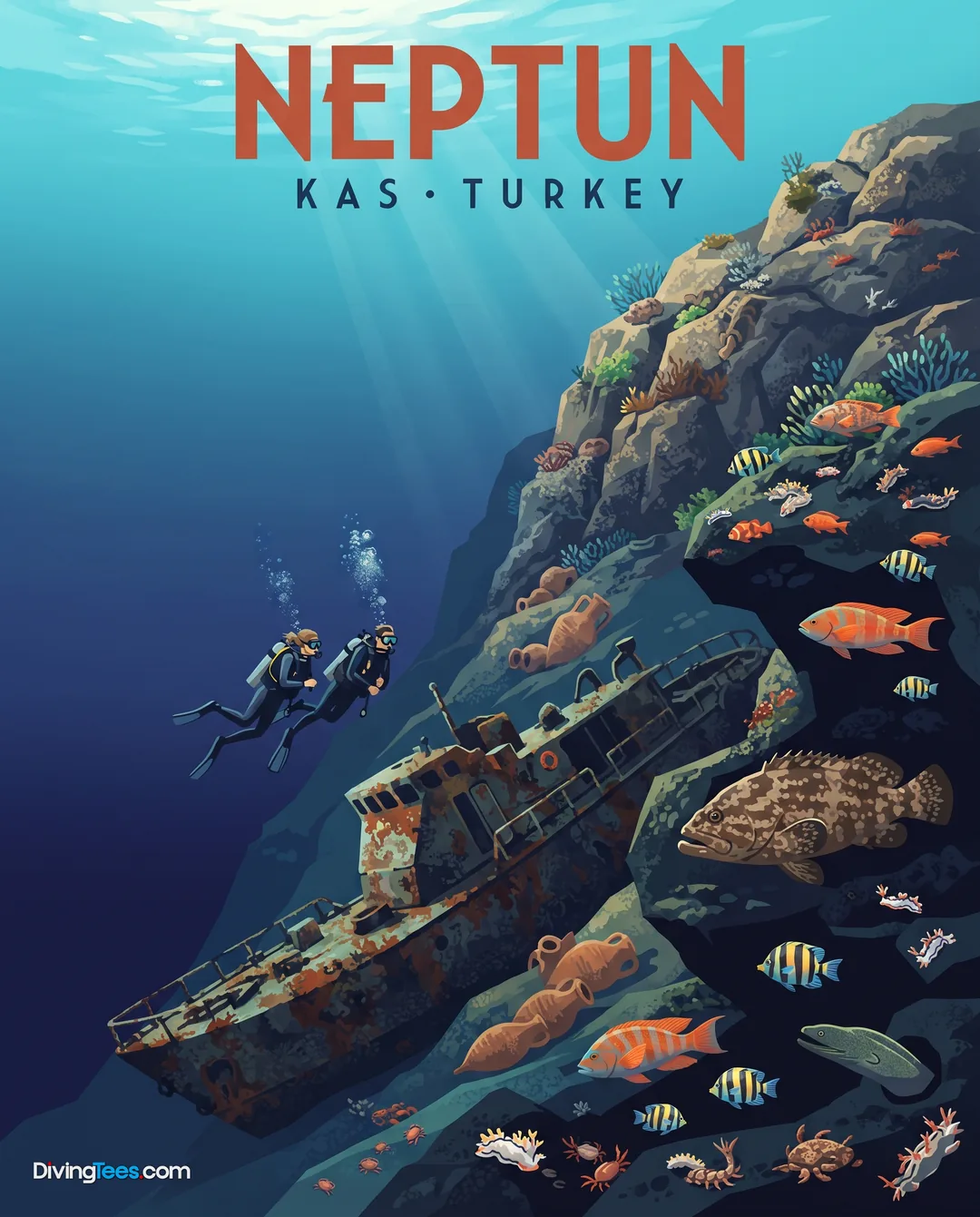
The primary draw at Stonehenge extends beyond its natural geology; it encompasses an in-situ archaeological display. Here, divers can explore a detailed replica of elements from the Uluburun shipwreck, intentionally scattered to create a sense of discovery. These carefully placed imitation artefacts, along with authentic amphorae and anchors found across the bay, blend the natural environment with an underwater museum experience, offering a unique dive profile.
Navigating the site, you'll encounter a shallow reef that gradually slopes, revealing sections rich in archaeological interest. The broader archaeological slope across the bay is particularly notable for its scattered amphorae and anchors, indicating historical maritime activity in the area. This blend of natural reef and human history provides a compelling narrative as you move through the different zones of the dive.
The conditions within Hidayet Bay are generally sheltered, but the site's exposure can lead to variability. While the immediate bay often remains calm, the more open parts and the reef edge can experience a southerly current, particularly influenced by weather patterns. This dynamic requires attention, especially when planning your return to the more protected sections of the bay.
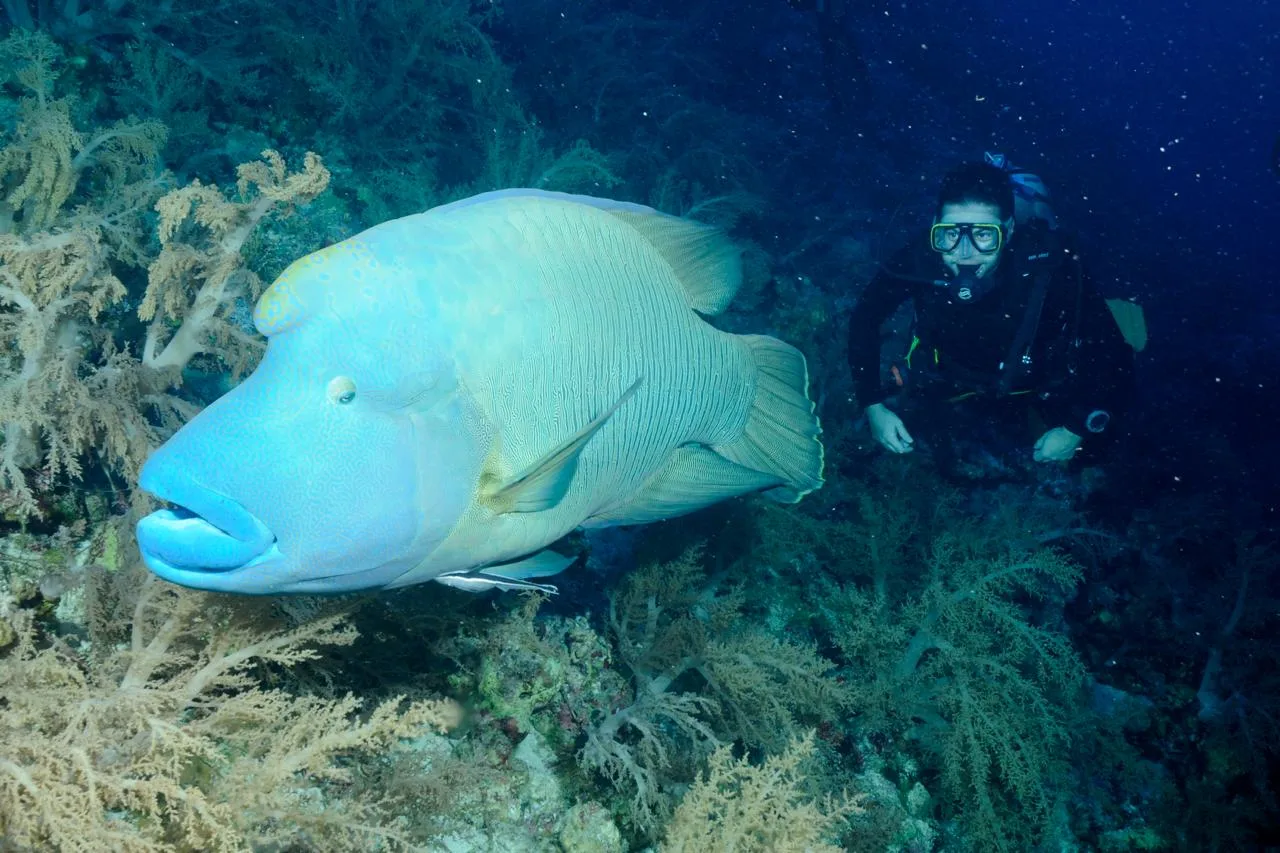
Throughout your dive, keep an eye out for resident marine life that benefits from the varied habitat. Grouper are commonly found seeking shelter amongst the rock formations and wreck replicas. Predator fish patrol the reef edges, while the occasional eagle ray might glide past in the more open water, adding a dynamic element to the archaeological exploration.
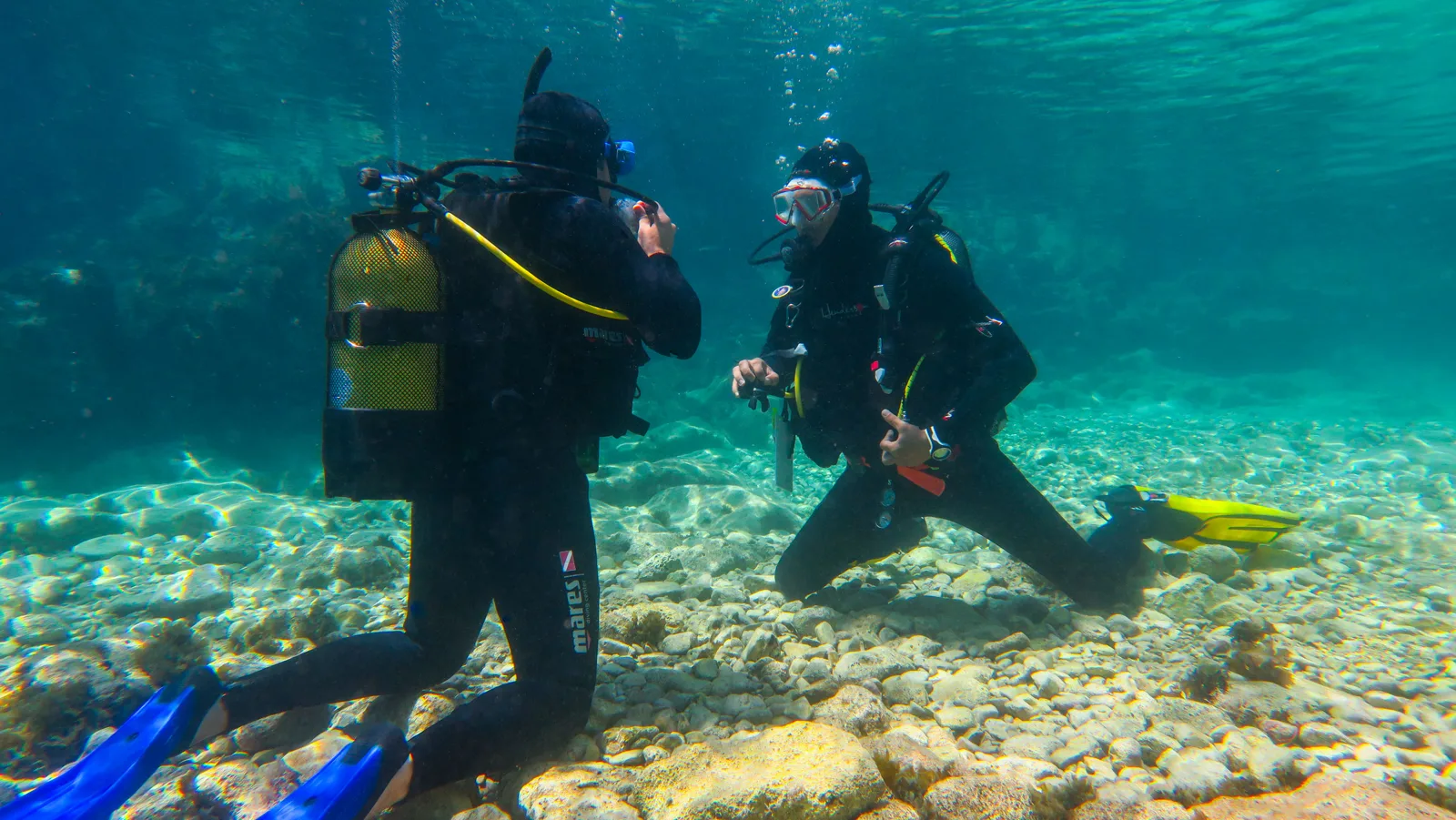
This site is accessible from Open Water Diver certification and provides sections suitable for all levels, particularly the shallower areas used for training. Depths range from 3 metres down to a maximum of 36 metres. Visibility at Stonehenge is typically good, holding between 20 to 30 metres. Current within the sheltered bay can be negligible, but can shift to strong southerly currents around the reef edge and more exposed parts, especially with weather changes. Diving is possible year-round, with peak season generally offering the best visibility.
You can dive Stonehenge year-round. Peak season generally offers the best visibility, which is typically between 20 and 30 metres. Conditions can vary around the site, however, because weather changes may influence the more exposed reef edge and open parts of Hidayet Bay, while the immediate bay is generally sheltered.
Stonehenge is accessible from Open Water Diver certification and includes sections suitable for all levels. Its shallow areas are used for training, while the profile gradually descends from a shallow reef to a maximum depth of 36 metres. This changing terrain lets you explore both easier sections and deeper zones during the dive.
At Stonehenge, current within the sheltered bay can be negligible, making the protected sections calmer to explore. Around the reef edge and more exposed parts, southerly currents can become strong, particularly when weather changes. Pay attention to these conditions when navigating the site and planning your return toward the bay.
At Stonehenge, you can explore intricate rock formations, replica elements from the Uluburun shipwreck, and scattered imitation artefacts arranged like an underwater museum. Ancient amphorae and anchors are also present. The habitat can shelter grouper, while predator fish patrol the reef edges, and eagle rays may appear in open water.