

Khasab - Musandam Discovery Diving
Google 4.7/5 (144 reviews)
Musandam · Oman · Middle East
Max. depth · 20 mDescend into Musandam's Coral Garden, where extensive, healthy reef structures host a vibrant ecosystem, from shallow plateaus to deeper gorgonian walls.
For subtitles in English: start the video firstthen click the gearat the top right of the video, select “Subtitles/CC”, then “Auto-translate” and choose “English”.
Diving Coral Garden on Abu Sir Island in northern Musandam brings you into a living reef system. The site begins in shallow coral gardens, gradually sloping deeper away from the island. As you descend, the sheer vitality of the reef becomes apparent, with extensive coral formations that have developed over centuries. The light filtering through the clear Omani waters illuminates a diverse underwater landscape, revealing the intricate details of this thriving ecosystem.
The topography here is defined by its extensive reef structure, starting from around 5 metres. You'll find yourself gliding over massive coral formations, including healthy, long-lived Porites colonies, which are a testament to the reef's undisturbed nature. These structures provide shelter and hunting grounds for various reef inhabitants. The transition from the shallower plateaus to the deeper sections around 20 metres reveals different facets of the reef's character, each zone supporting its own community.
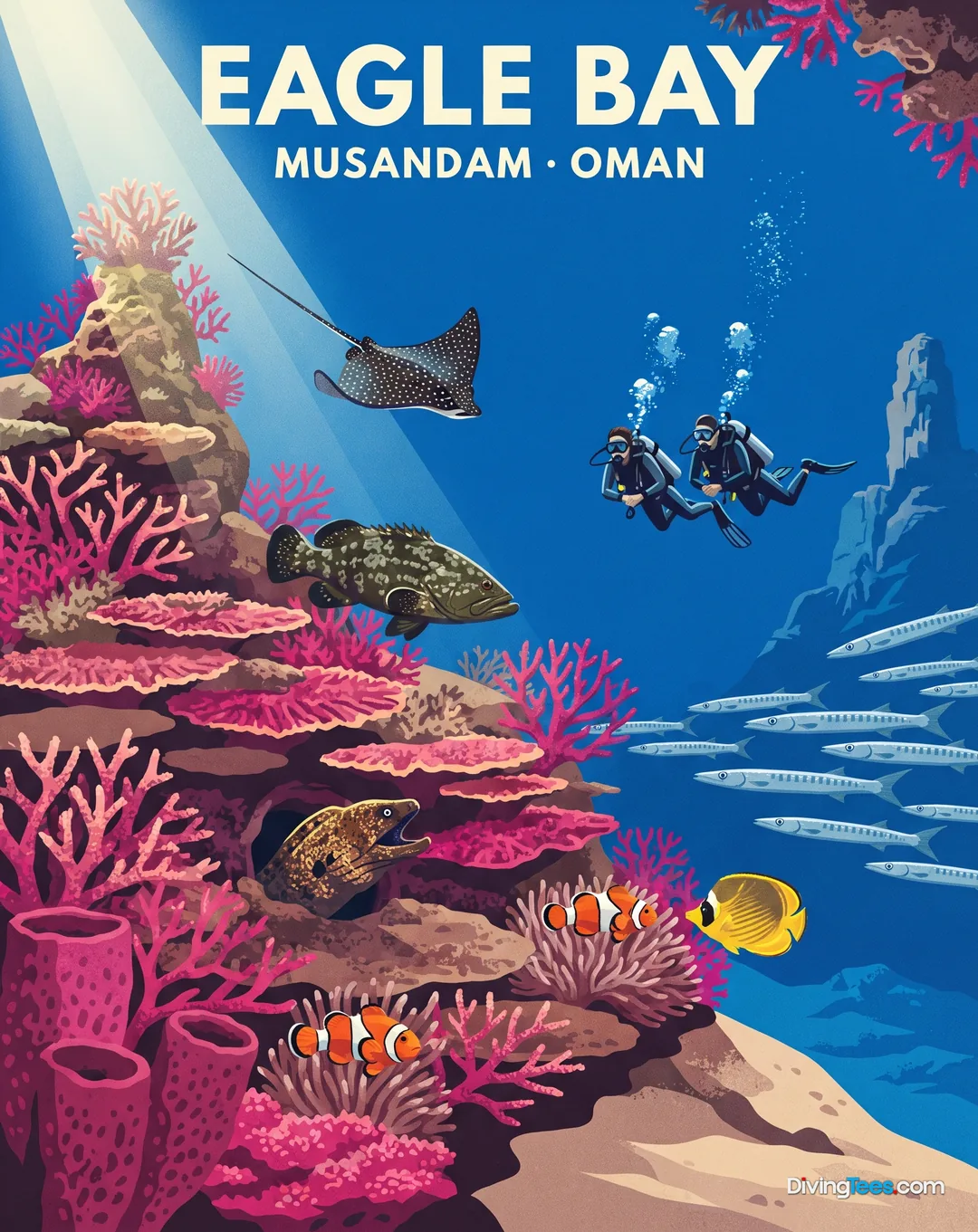
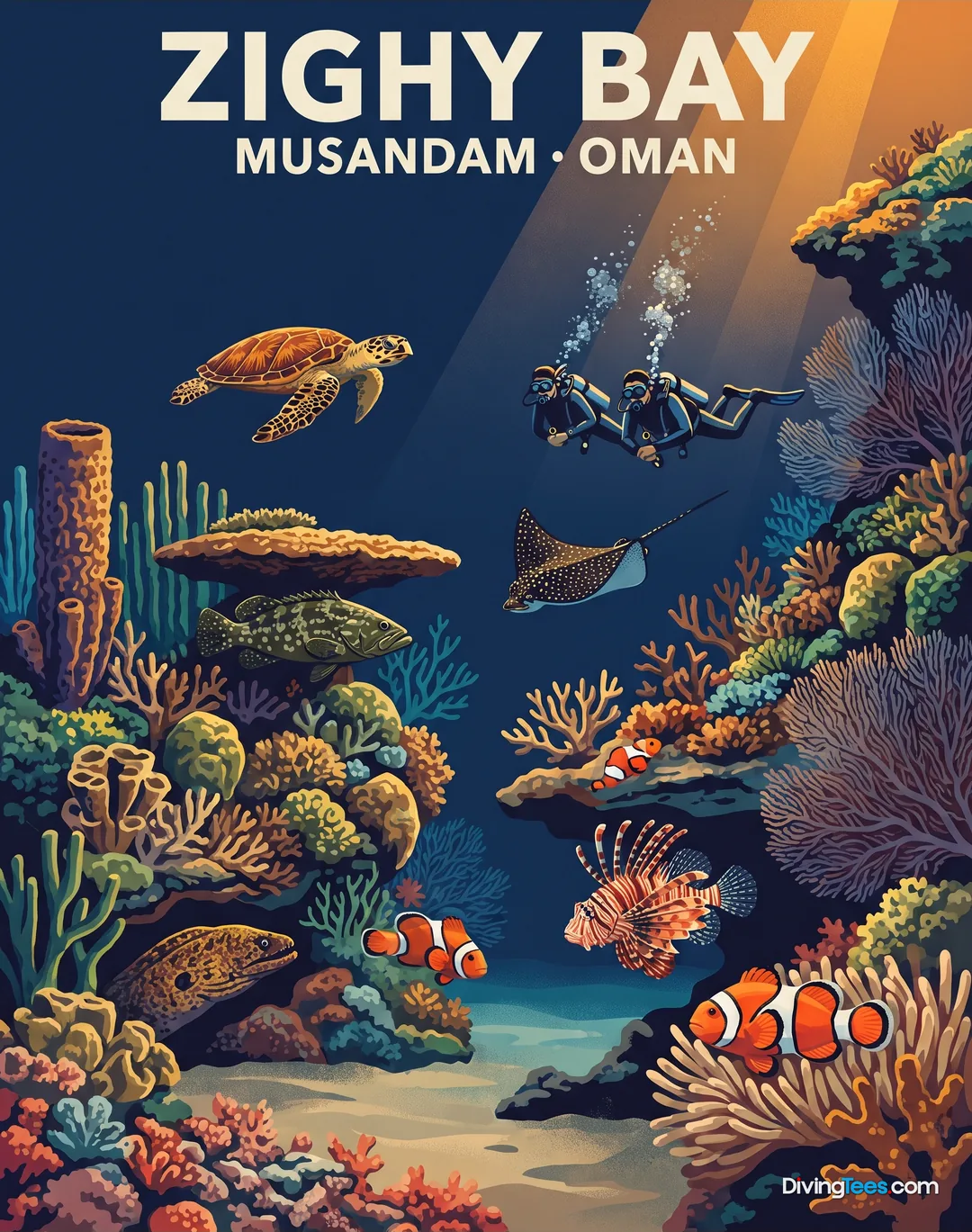
As you explore the deeper parts of Coral Garden, particularly around 20 metres, you'll encounter walls and slopes adorned with gorgonian sea fans and black corals. The site is notable for its vivid blue-purple gorgonians and yellow bushes of black coral, a colour combination characteristic of Musandam's reefs. These deeper sections offer a different perspective on the reef's structure and the life it supports, with cleaner shrimp and spiny lobsters often found tucked into crevices.
While exploring the coral formations, keep an eye out for the resident reef fish. Black-spotted butterflyfish and three-spot dascyllus are common sights, moving among the coral branches. Sordid sweetlips and groupers can be observed patrolling the reef, utilizing the complex structure for hunting and shelter. The overall impression is one of a harmonious ecosystem, where the health of the coral directly supports a wide array of marine species.
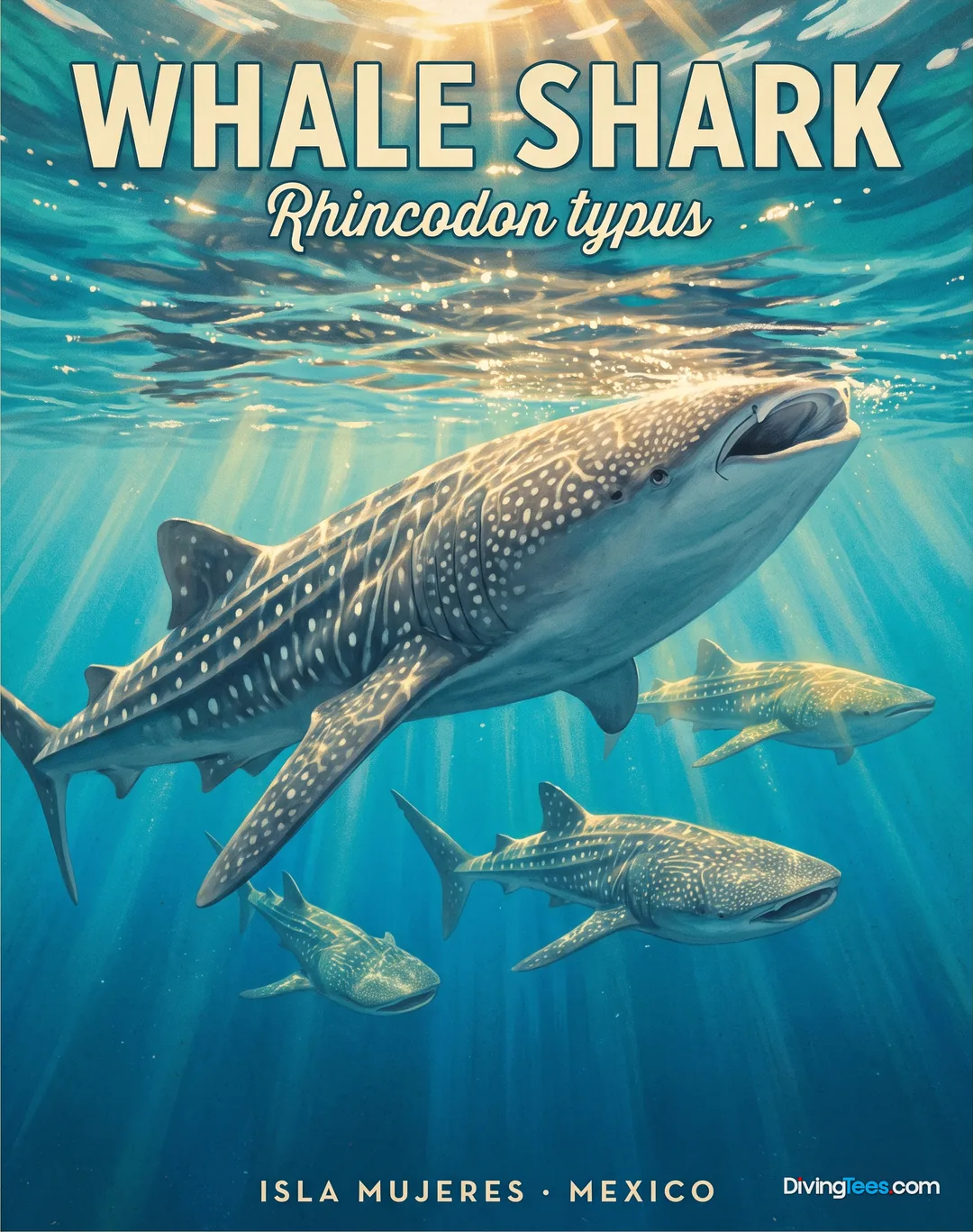
The site also offers opportunities for encounters with larger marine life. White-tip reef sharks are occasionally seen cruising along the reef edges, and leopard sharks have been documented here. While less common, whale sharks have also been reported in the area, particularly during certain seasons. These pelagic encounters add another dimension to the dive, reminding you of the broader oceanic environment surrounding Abu Sir Island.
Visibility at Coral Garden is generally good to very good, allowing for expansive views of the reef stretching out before you. This clear water enhances the immersive experience, enabling you to appreciate the scale and intricate details of the coral structures and the marine life within them. The gentle water movement often accentuates the sway of soft corals and anemones, contributing to the serene ambiance of the dive.
Currents at Coral Garden can be variable. While the site itself isn't explicitly known for extreme conditions, regional reports from nearby Musandam coral-garden sites describe strong, sometimes up- and down-currents, making drift-style diving common in the area. It's prudent to be prepared for potential current shifts, especially when planning your dive profile and ascent, and to discuss the day's conditions with your dive guide.
Coral Garden is accessible for diving between 5 metres and 20 metres. Due to potentially variable currents, often including up- and down-currents, this site is best suited for experienced divers. While an Advanced Open Water certification is a good baseline, divers should also have a solid understanding of drift diving techniques and experience in varied current conditions. Visibility is typically good to very good, offering clear views of the extensive reef system.
Whale sharks have been reported around Coral Garden, particularly during certain seasons, although encounters are less common. The site offers good to very good visibility, which helps you take in the reef and watch for larger marine life along its edges and in the surrounding ocean.
Coral Garden is suited to experienced divers because currents can vary and may include up-currents and down-currents. An Advanced Open Water certification is a useful baseline, but you should also understand drift diving techniques and have experience handling varied current conditions before exploring this reef.
Coral Garden extends from shallow gardens at five metres to deeper walls and slopes around twenty metres. Currents can shift and may be strong, including up-currents and down-currents, so you should plan your profile and ascent carefully, prepare for drift-style diving, and discuss the day's conditions with your guide.
You can explore extensive healthy coral formations, ancient Porites colonies, vivid blue-purple gorgonians, and yellow black corals. Marine life includes butterflyfish, three-spot dascyllus, sweetlips, groupers, cleaner shrimp, and spiny lobsters. White-tip reef sharks are occasionally seen, while leopard sharks and, less commonly, whale sharks have been documented.