

Drar Diving Center
Google 5/5 (772 reviews)
57 km away as the crow flies
Dubai · United Arab Emirates · Middle East
Max. depth · 23 mAn unusual upside-down barge offering sheltered voids and an inverted hull structure between 15 and 23 metres.
For subtitles in English: start the video firstthen click the gearat the top right of the video, select “Subtitles/CC”, then “Auto-translate” and choose “English”.
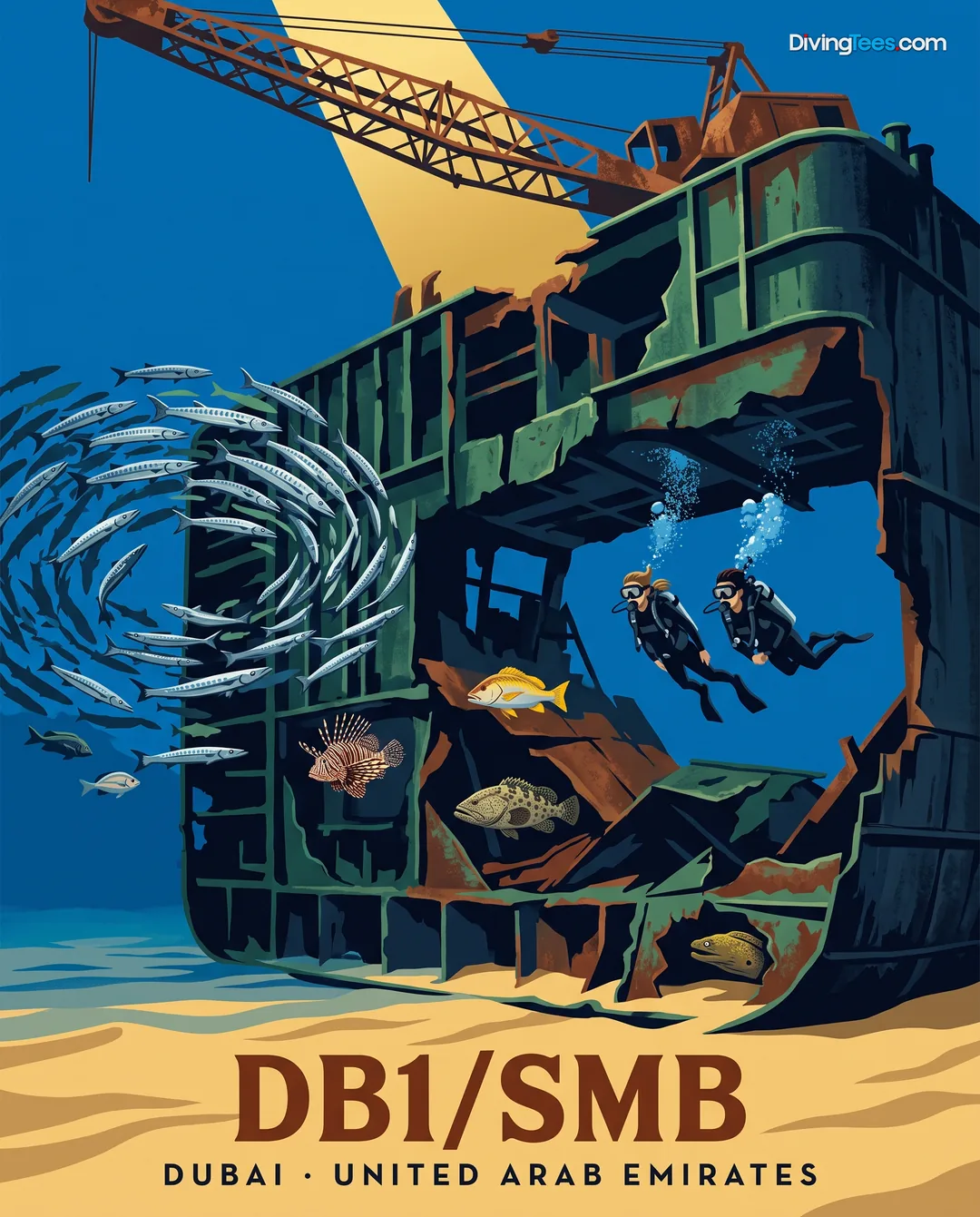
The Anchor Barge is a distinctive man-made wreck located offshore from Dubai, accessible only by boat. Unlike many regional wrecks that lie upright on the bottom, this barge flipped during its descent and now rests in an inverted orientation. This orientation creates a specific type of underwater topography where the hull roof forms the highest point of the structure. The resulting profile offers an unusual silhouette on the seabed, providing a different perspective than a standard vertical wreck descent.
The depth profile of the site is relatively compact, ranging from 15 to 23 metres. You will typically begin your exploration at the shallower upper sections, which sit around 15 metres, before descending toward the main mass of the structure. The primary hull and the seabed interface are found at the 21 to 23 metre mark. This depth range allows for a controlled profile, but the inverted shape means you are often swimming beneath the hull rather than over it.
The architecture of the wreck provides several sheltered voids and overhang-like spaces created by the inverted hull. These areas offer protected zones for divers to hover and observe the structure without being directly exposed to the open water column. The space between the seabed and the upturned hull allows for swim-around room, making the site interesting for those who enjoy navigating around large man-made objects. These sheltered pockets also serve as natural habitats for various marine organisms.
Marine life at the Anchor Barge is closely tied to the structure's physical form. You will often find cuttlefish moving around the edges of the hull, utilizing the shadows and crevices for cover. The presence of oysters and scallops on the various surfaces of the barge adds texture to the wreck and provides a micro-habitat for smaller organisms. These encrusting species have colonized the metal, turning the artificial structure into a permanent part of the local benthic environment.
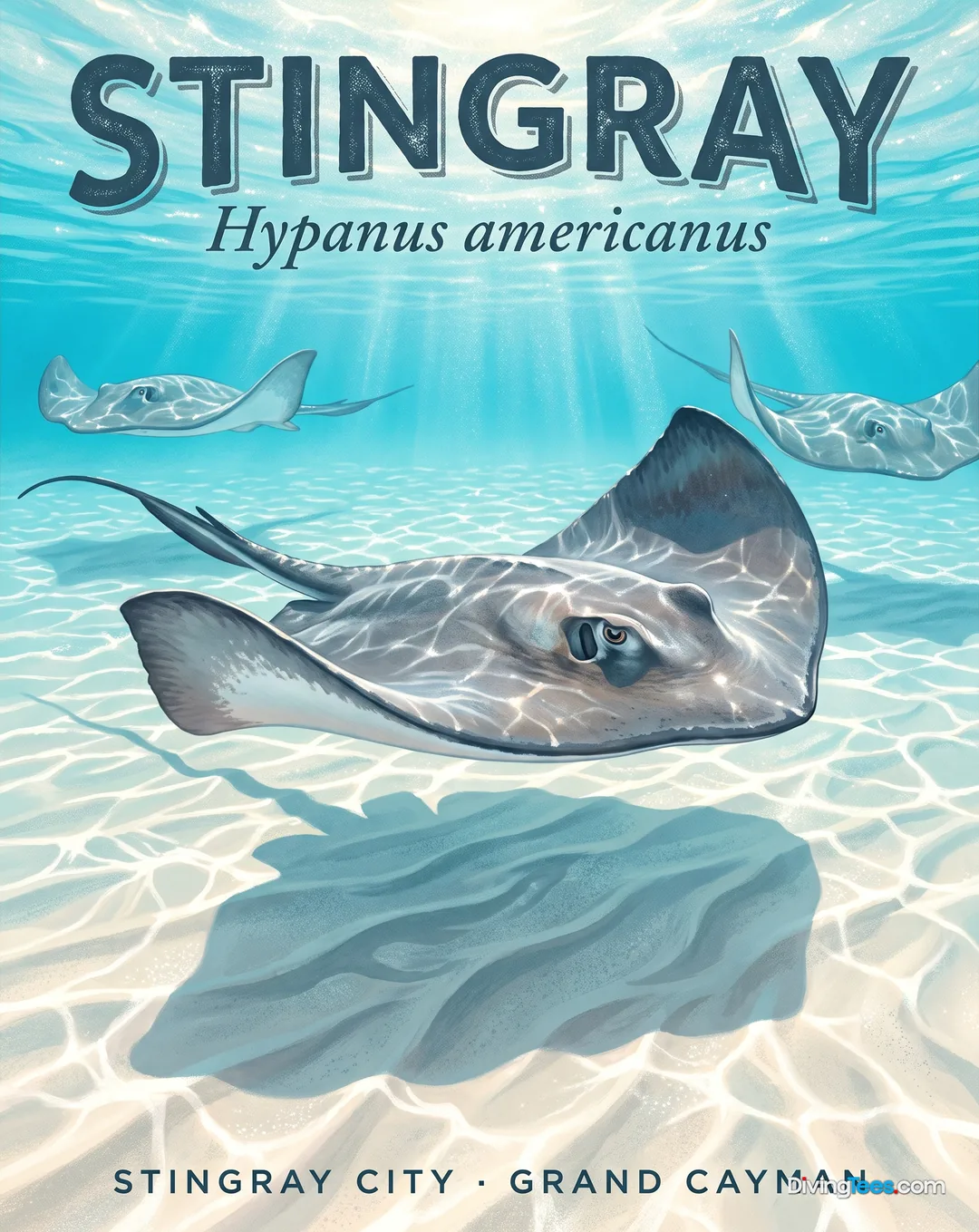
Larger species are also frequently encountered around the perimeter of the barge. Stingrays are known to frequent the sandy areas adjacent to the hull, often partially buried or gliding close to the seabed. You may also see barracuda patrolling the edges of the structure, where the transition from the wreck to the open water occurs. These predatory fish utilize the wreck as a vantage point to monitor the surrounding water column for potential prey.
Navigating the site requires a steady hand and good buoyancy control due to the proximity of the hull and the seabed. Because the barge is upside down, the traditional way of looking at a wreck—descending along a mast or a vertical line—is replaced by exploring the underside of the roof. This requires careful positioning to ensure you remain in the swim-around spaces without making contact with the structure. Managing your trim is essential when moving through the more confined areas beneath the overturned vessel.
The site's location further offshore means it can experience different conditions than the closer-to-shore reefs. While it is not a dedicated drift dive site, the movement of the water can vary depending on the tide and local wind conditions. Divers should be prepared for noticeable movement on the water surface and near the wreck, which can influence how you approach the structure. A planned descent and ascent that accounts for these variations will ensure a stable experience around the barge.
The dive depth ranges from 15 to 23 metres. An Advanced level of certification is required, along with demonstrated wreck-diving comfort and experience. Because the site is offshore, current can be variable; expect anything from mild to noticeable movement depending on the tide and sea state.
You need an Advanced certification to dive Anchor Barge, along with demonstrated comfort and experience in wreck diving. Good buoyancy control and steady positioning are important because the overturned hull creates sheltered voids and swim-around spaces close to both the structure and the seabed.
Anchor Barge ranges from 15 to 23 metres. You typically begin around the shallower upper sections at 15 metres, then descend toward the main hull and seabed interface at 21 to 23 metres. The compact depth profile lets you explore the inverted structure across a defined range.
Because Anchor Barge lies offshore, water movement can vary with the tide and sea state. You may encounter anything from mild to noticeable movement around the wreck. The site is not a dedicated drift dive, so plan your descent and ascent while allowing for changing conditions near the barge.
At Anchor Barge, you can explore an inverted barge with sheltered voids beneath its hull and swim-around spaces near the seabed. Cuttlefish may move around the structure, while oysters and scallops cover its surfaces. Stingrays frequent adjacent sandy areas, and barracuda patrol the wreck's edges.