
Drar Diving Center
Google 5/5 (772 reviews)
30 km away as the crow flies
Dubai · United Arab Emirates · Middle East
Max. depth · 25 mExplore the massive, upside-down steel structure of a 1962 derrick barge resting on the sandy floor at 25 metres.
For subtitles in English: start the video firstthen click the gearat the top right of the video, select “Subtitles/CC”, then “Auto-translate” and choose “English”.
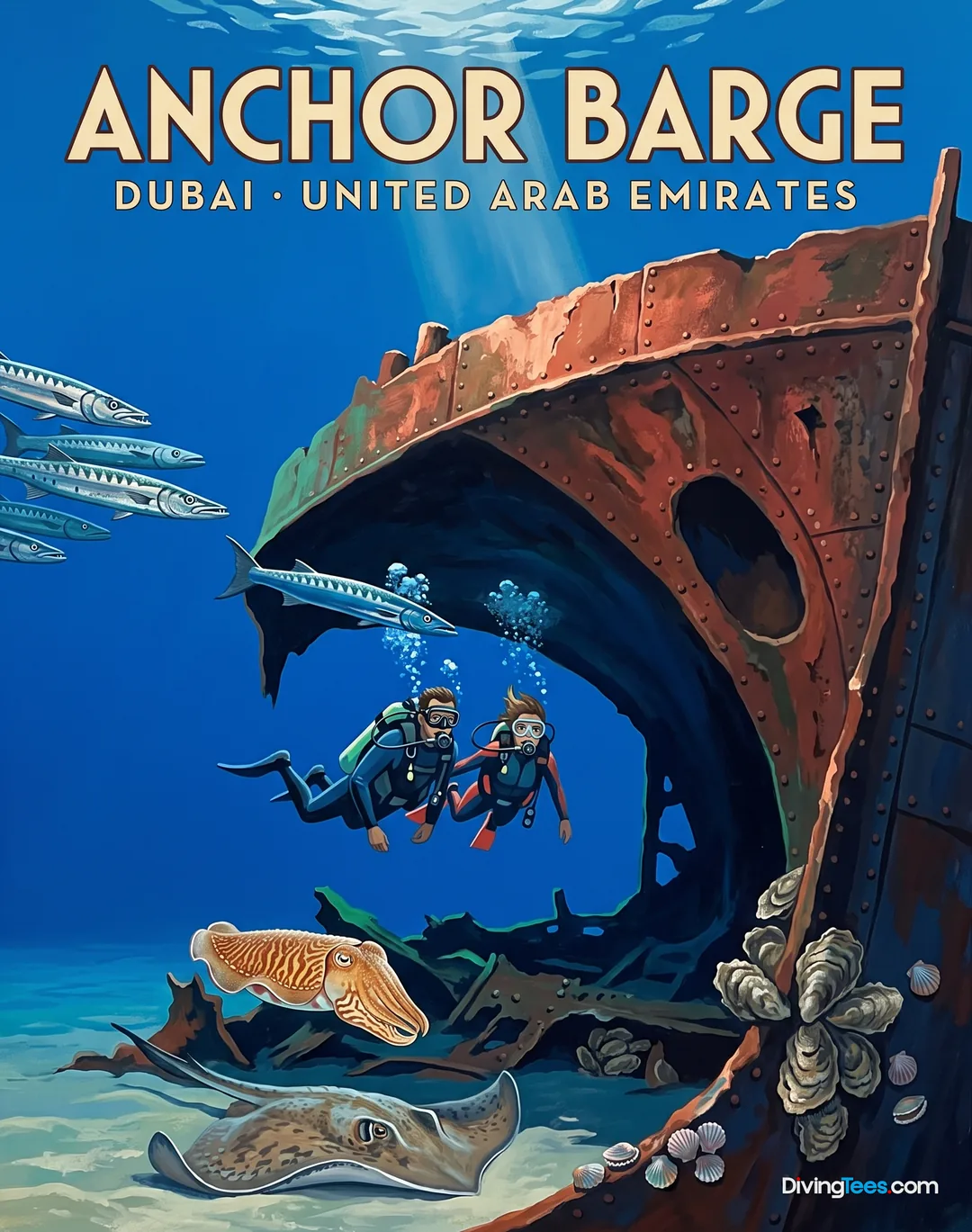
The DB1, often referred to as Sheikh Mohammed’s Barge, is a large steel derrick barge that was scuttled to serve as an artificial reef. Unlike many wrecks that lie upright, this vessel rests upside down on the flat, sandy seabed, which completely changes its profile and how you interact with it. The hull has broken into several distinct sections, creating a complex geometry of overhangs and jagged metal edges. These structural elements provide a variety of swim-throughs that allow you to move from the open sand into the sheltered spaces beneath the steel plating.
As you descend to the wreck, which sits in the mid-20s metre range, the scale of the structure becomes apparent. The most prominent feature is the large crane barge structure that remains largely intact despite being inverted. This massive piece of engineering has become the anchor for a localized ecosystem, attracting both resident species and passing schools. Because the wreck is positioned on an open seabed rather than a reef edge, the surrounding environment is relatively featureless sand, making the silhouette of the barge easy to locate once you arrive at the site.
The dive profile is relatively straightforward once you reach the wreck, as the depth remains consistent between 18 and 25 metres. Most of the exploration happens within this narrow depth band, allowing you to focus on the various compartments and collapsed sections of the hull. The way the steel has aged has created numerous nooks and crannies that serve as ideal hiding spots for smaller marine life. Navigating through the broken sections of the hull requires careful buoyancy control, especially when passing through the tighter swim-throughs created by the fallen debris.
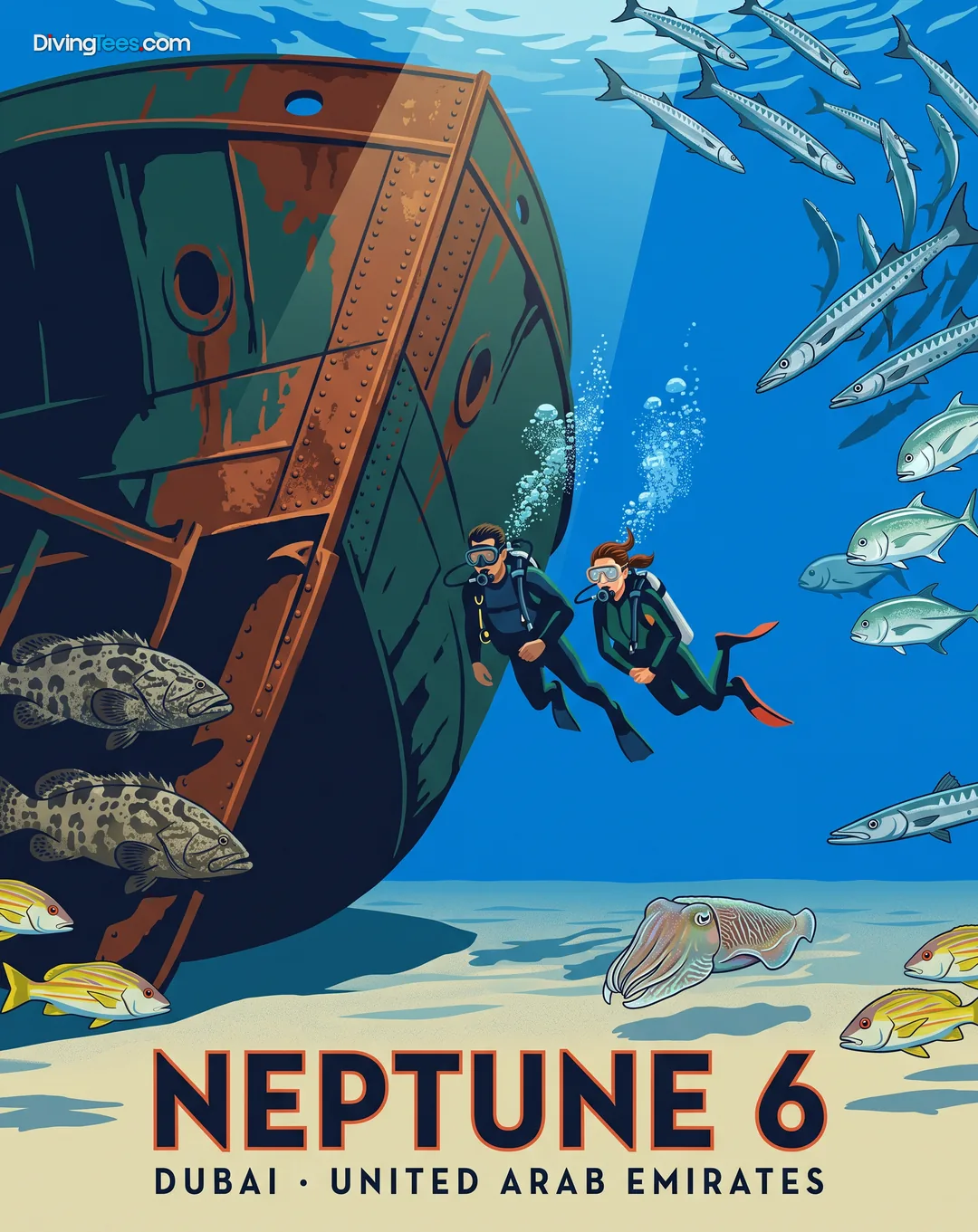
While visibility can vary significantly depending on the day, the site often hosts large, energetic schools of fish that make the dive dynamic. You will frequently encounter schooling barracuda circling the structure, adding movement to the heavy steel environment. These fish often use the protection of the barge to navigate the area. Other common residents include various species of snappers and groupers that patrol the perimeter of the wreck, taking advantage of the shelter provided by the overturned hull.
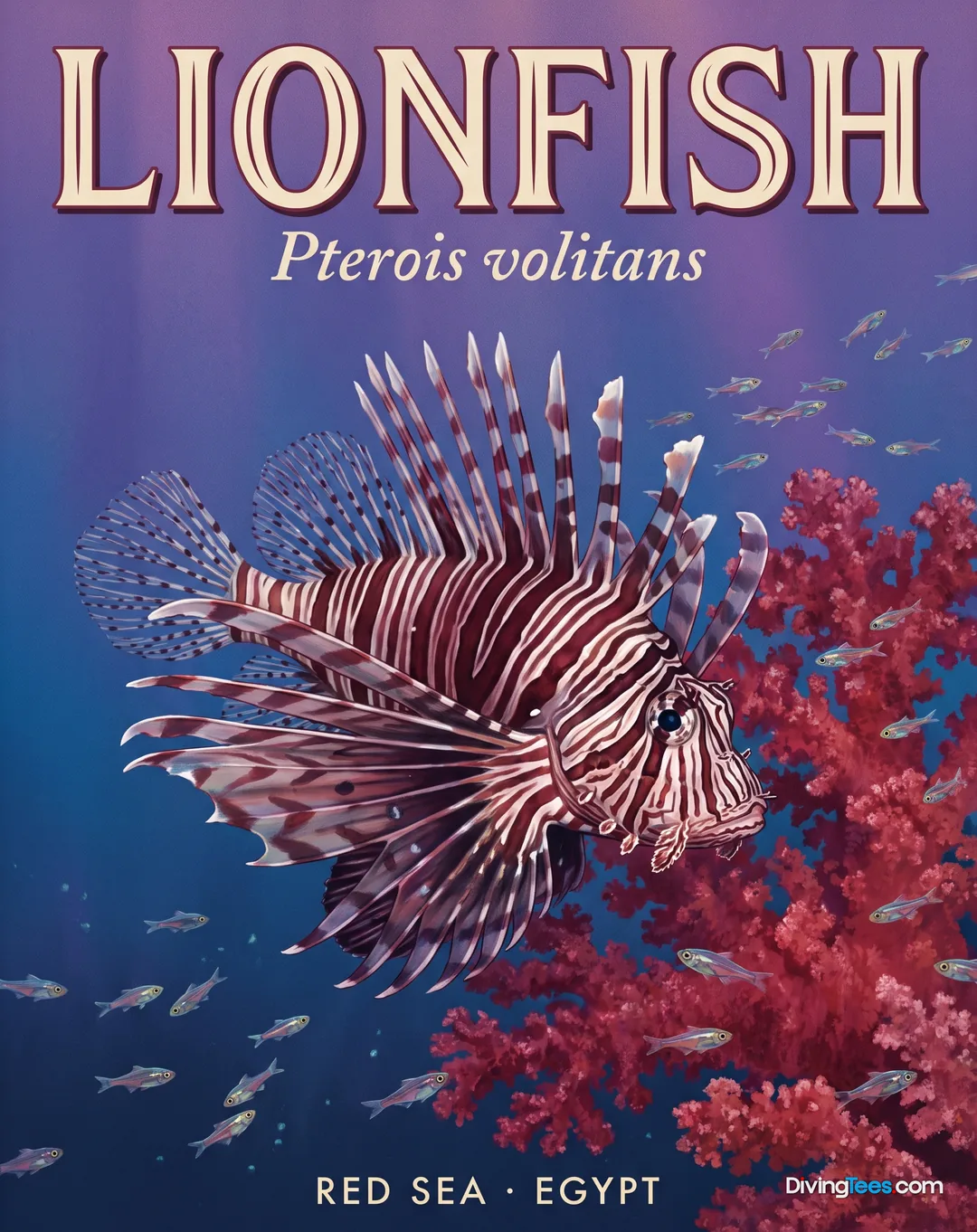
The artificial reef structure has successfully attracted a variety of reef-dwelling species that have colonised the metal surfaces. You can observe lionfish hovering near the edges of the wreckage and moray eels tucked into the crevices of the submerged steel. Batfish are also common, often found cruising just above the structure. The presence of trevally and various larger groupers adds to the sense of a thriving, established habitat that has developed steadily since the barge was first placed on the seabed.
Accessing the site is done via boat, typically using a speedboat from the Dubai marinas. A permanent marker buoy or a mooring line is usually positioned over the wreck to assist with navigation and descent. Once you are on site, the approach is direct, but you should be mindful of the sandy bottom and the potential for silt if you get too close to the seabed near the wreck. The layout of the debris around the main barge provides a wider area of interest than just the hull itself, as smaller pieces of wreckage form a secondary reef zone.
Planning your dive requires an understanding of the local conditions, as the site is subject to the typical offshore patterns of Dubai. While the current is generally described as light, the open nature of the sandy bottom means that visibility is the primary factor that will define your experience. On clear days, the visibility can reach significantly higher levels, allowing you to see the full extent of the crane structure from a distance. On other days, you may need to rely more on your compass and close-range observation of the wreck's immediate features.
The dive depth ranges from 18 to 25 metres. An Advanced Open Water certification is recommended, and you should be comfortable with limited visibility and basic wreck diving skills. The current is generally light, though it can vary with wind and tide. Visibility typically ranges from 2 to 7 metres, though it can reach 15 to 20 metres on the best days.
Db1/smb is recommended for divers with Advanced Open Water certification. You should be comfortable diving in limited visibility and have basic wreck diving skills. Careful buoyancy control is important when moving through the barge’s tighter swim-throughs, overhangs, collapsed sections, and jagged metal edges.
Db1/smb lies between 18 and 25 metres on a flat, sandy seabed. The depth stays relatively consistent across this narrow range, so most of your exploration focuses on the overturned crane barge, its compartments, collapsed hull sections, overhangs, swim-throughs, and nearby pieces of wreckage.
The current at Db1/smb is generally light, although wind and tide can cause variation. Visibility typically ranges from 2 to 7 metres, with 15 to 20 metres possible on the best days. You may need to rely on your compass and close-range observation when visibility is reduced.
At Db1/smb, you can explore a large overturned steel derrick barge with multiple swim-throughs, overhangs, and broken hull sections. Large schools of barracuda circle the structure, while snappers, groupers, lionfish, moray eels, batfish, and trevally use the artificial reef habitat and its sheltered crevices.