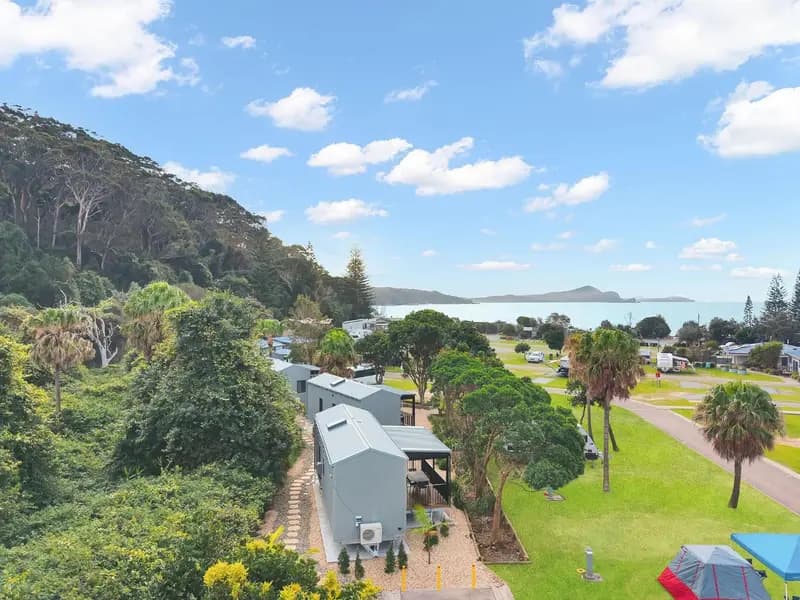
Reflections Seal Rocks Holiday Park
★ 9.3/10
Australia · Pacific
Grey nurse sharks, cave-cut reefs and forty-five-metre offshore dives give New South Wales a temperate character far removed from a standard tropical holiday.
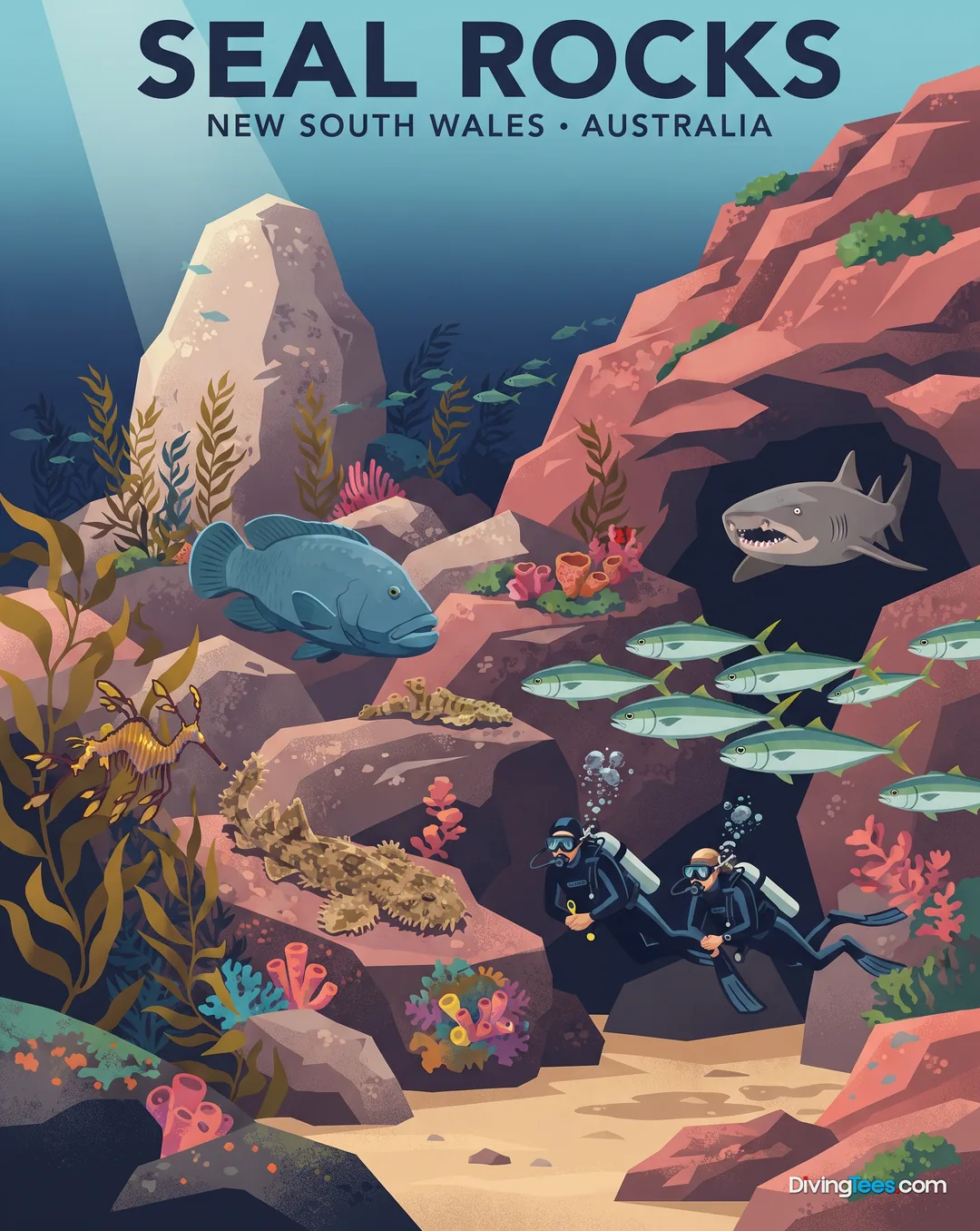
Seal Rocks brings gutters, caves and wall-like reef sections, with grey nurse sharks around the deeper offshore ground. Beyond that particular site, New South Wales links shore dives around Sydney with boat trips, temperate reefs, wrecks and exposed drop-offs along a long coastline. It suits divers who enjoy choosing the right site for the day rather than following a fixed itinerary. Sea conditions can alter the plan quickly, but that same variety makes a land-based stay rewarding.
The diving ranges from straightforward shore entries to boat-launched reefs and deeper wreck sites. At Seal Rocks, sheltered sections begin at about four metres, while the offshore reef falls to forty-five metres; most profiles sit between twelve and thirty metres. Gutters, caves and wall-like sections give the diver something to work around rather than a flat seabed, and careful buoyancy matters where the relief narrows. Currents are variable, with more demanding conditions on exposed ground. Visibility can be very good, and Seal Rocks is often described at twenty to thirty metres, but the wider coast is more changeable. Swell, wind, coastal run-off and plankton blooms can reduce it sharply. That makes local judgement more valuable than a rigid site plan: when an exposed launch is lost to the sea, a more sheltered shore or boat option may still work.
Grey nurse sharks are the defining encounter at Seal Rocks, where the reef acts as an aggregation point and sightings are considered consistent. They are encountered over the deeper offshore sections, with the reef’s gutters, caves and wall-like shapes providing the setting rather than a featureless blue-water descent. Other marine life is present around the temperate reef, although the character of each outing depends on the site, visibility and sea state. New South Wales also offers seasonal opportunities for pelagic wildlife, so timing can matter for a particular interest, but there is no single state-wide wildlife calendar to build the whole trip around. The sensible approach is to choose the coastal sector and dive plan around current conditions, then treat passing wildlife as part of the reward rather than a guarantee.
New South Wales is best approached with a flexible calendar rather than a single supposedly perfect month. Sea state, wind, swell, coastal run-off and plankton blooms can change diving conditions quickly, and the long coastline means that one sector may be workable while another is not. Temperate water also calls for more thermal protection than a tropical destination, particularly when surface waits follow a shore entry or boat transfer. A five-to-ten-day stay gives useful room to move outings around the weather, keep an exposed site for the right day and leave space for seasonal wildlife opportunities without making the entire journey depend on them.
The state accommodates all levels, particularly on suitable shore sites and calmer outings. Experience becomes more important when swell, current, exposed reef or deeper wreck profiles are involved. An Advanced Open Water qualification, or the equivalent BSAC experience, is useful for planning the deeper work; Drift and Wreck training also have a practical place here. Seal Rocks is best left to Advanced divers comfortable with currents, accurate buoyancy and the presence of sharks. Previous shark-diving experience is helpful, though not a substitute for sound judgement and a proper briefing.
From London Heathrow, Gatwick or Manchester, international flights to Sydney are available with airlines including Emirates, Qatar Airways, Singapore Airlines, Etihad Airways and Qantas. Sydney is the main gateway for the southern part of the state, followed by road travel to the chosen coastal sector. For regional diving, domestic flights can connect with Newcastle, Coffs Harbour, Port Macquarie or Ballina, depending on the area being targeted, followed by local road transport. Some dives begin directly from the coast; others require a boat departure. Around urban centres, accommodation may be within walking distance of a dive base, but a taxi or hire car is more practical elsewhere. Check the exact distance to the launch point before booking, especially outside Sydney.
Treat the sea state as the day’s main piece of dive planning. On this coast, a site that looks close on the map may be unusable once swell makes the entry or launch awkward, while a more sheltered alternative remains possible. Around Sydney, weekday outings and early starts can reduce traffic at busy shore sites and on boat departures. Staying close to the centre or slipway saves more time than expected, particularly when several dives are planned. Bring proper thermal protection for temperate diving and for delays at the surface. Camera housings and loose accessories should be secured carefully on regional boats, where movement and contact with the bottom are avoidable problems. Where a protected site offers moorings, use them rather than anchoring. Julian Rocks / Nguthungulli Nature Reserve and Jervis Bay Marine Park have their own local rules, so follow the briefing, do not touch or collect anything, and do not assume a tropical-reef approach applies here. Keep a land-based day before the flight rather than squeezing in a final dive.
A practical stay is land-based, using one coastal town as a base and mixing shore dives with boat outings. Five to ten days allows the programme to absorb a cancelled launch or a switch to a sheltered site, rather than turning every day into a gamble against the swell. Sydney adds beaches, coastal walks, parks and museums for non-divers, while regional sectors offer short hikes and sea views. The coast is too long for casual cross-state transfers, so combining nearby sectors works better than trying to cover everything.
Hello, I'm Marina, DivingDeal.com's AI assistant. I guide you through destinations, areas and countries.

Thinking about the whole trip and the flights? Talk it over with Edith →
Marina is an AI. Some links are affiliate links: DivingDeal may earn a commission, at no extra cost to you. Bookings are made with the partner.
Your last day stays dry: no diving in the 18-24 hours before a flight the perfect window to see the destination from another angle.
 Culture
⏱ 9 h · ★ 5.0 (17 reviews)
from €466
see on Viator ↗
 City
City⏱ 6 h · ★ 5.0 (10 reviews)
from €121
see on Viator ↗
 Culture
⏱ 1 h · ★ 5.0 (3 reviews)
from €9
see on Viator ↗
Ratings and reviews collected by Viator and Tripadvisor.