null
South West Rocks Dive Centre
Google 5/5 (293 reviews)
Australia · Pacific
Fish Rock’s 120-metre cave, grey nurse sharks, rocky walls and shifting currents define a shore-based Australian diving stay shaped by the open sea.
For subtitles in English: start the video firstthen click the gearat the top right of the video, select “Subtitles/CC”, then “Auto-translate” and choose “English”.
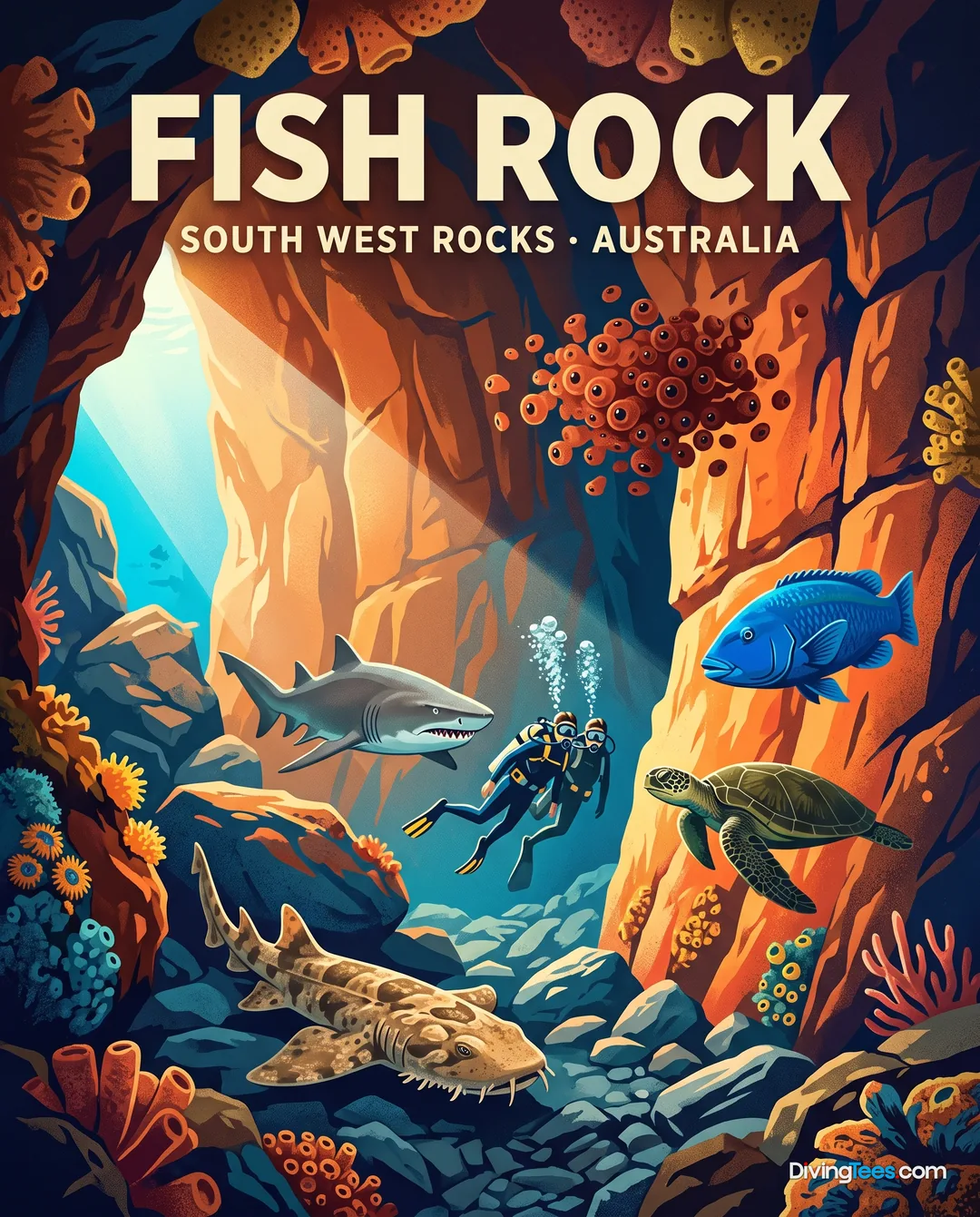
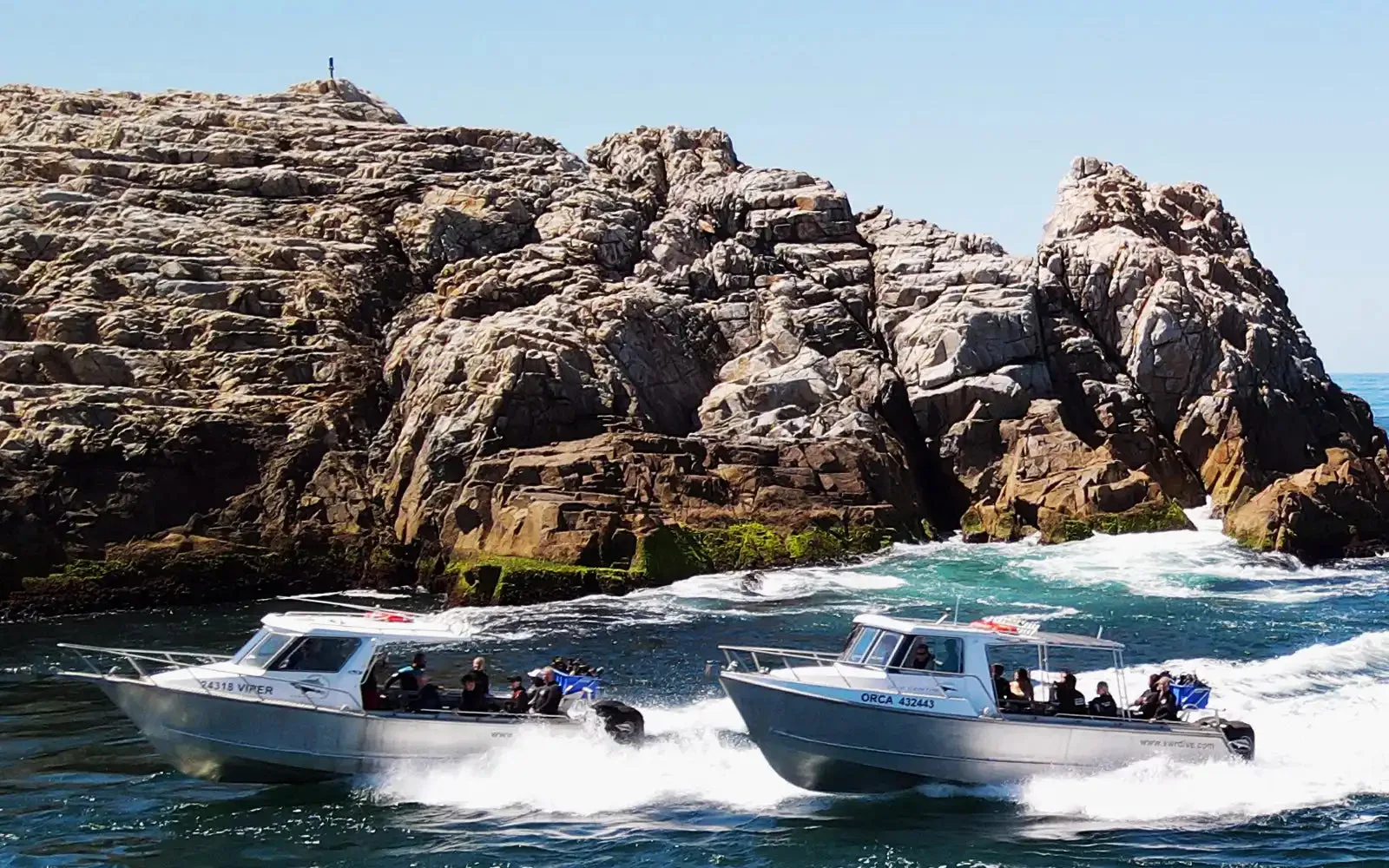
Fish Rock’s cave is the reason South West Rocks appears on experienced divers’ Australian itineraries. The 120-metre passage cuts through the island, with entrances, rocky walls and shark gutters creating a proper sense of place rather than a featureless reef dive. Beyond Fish Rock, local boat trips reach rock reefs, boulder fields and exposed passages. This is a small coastal town used as a land base, not a resort or a liveaboard destination, and the diving works best when the sea allows.
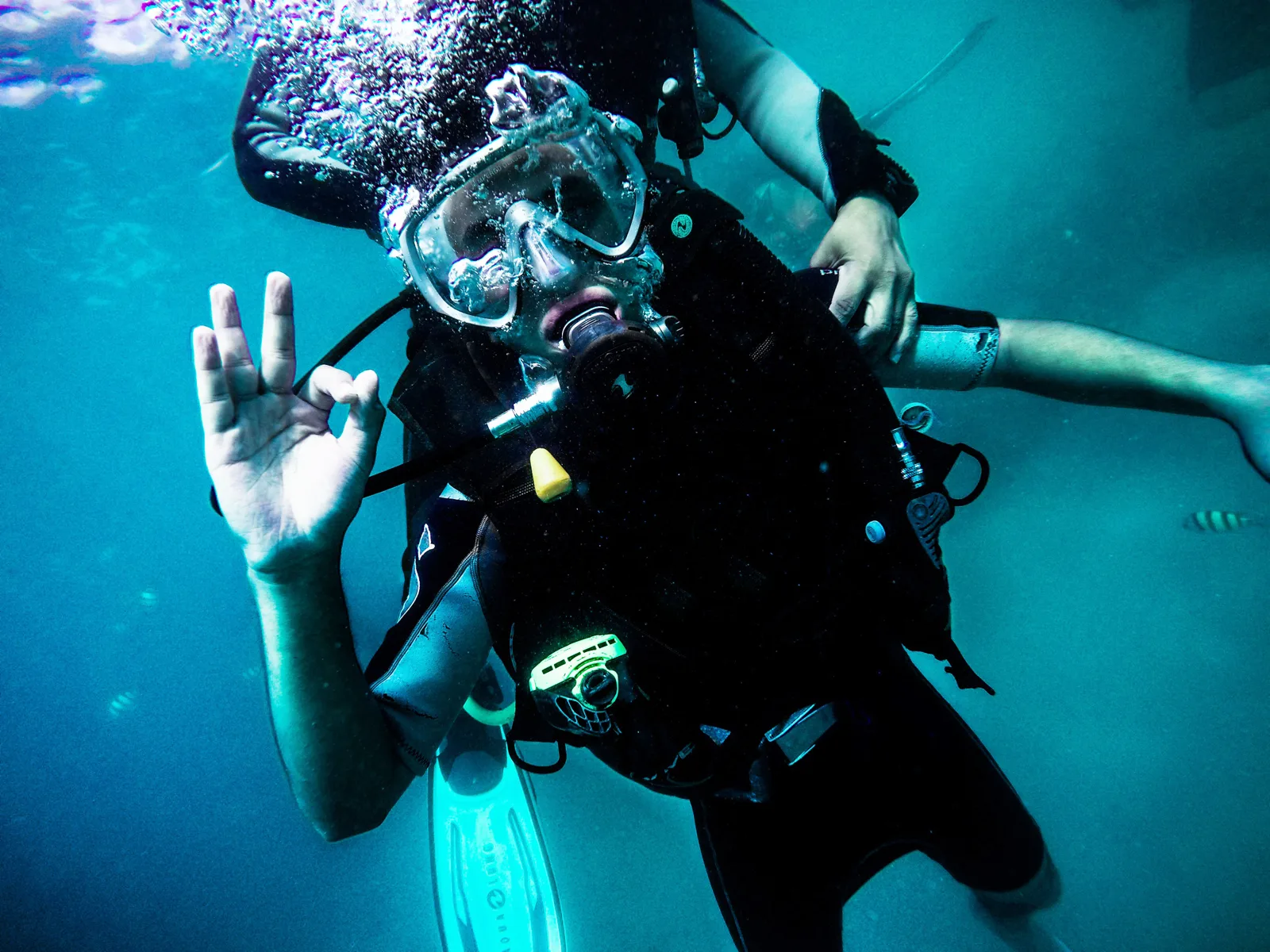
The diving is built around rock. At Fish Rock, the underwater cave runs through the island, with profiles from 8 to 24 metres and sections where divers need to manage an overhead environment rather than simply follow an open reef. Rocky walls, gutters and adjoining reefs give the site its character. Currents are variable and can be noticeable along the western fringe and walls, influenced by swell, tide and wind; drift diving may be required. Visibility is often quoted at 15 to 25 metres, but it is closely tied to sea state and local agitation. Other outings use small boats to reach exposed reefs, boulder areas and passages. The result is a mixture of sheltered-looking rock formations and genuinely oceanic conditions, with little point in forcing a particular site when the sea is running.
Fish Rock is associated with regular shark encounters, particularly grey nurse sharks around the gutters and rocky structure. Sand tiger sharks are also part of the area’s appeal, while rays and passing pelagic fish add movement when conditions bring them close to the rock. Fish Rock’s position also allows temperate and tropical marine species to appear in the same general diving area, so the wildlife is not limited to one reef community. Encounters are natural rather than guaranteed on every descent, and the quality of the experience depends on being able to hold position calmly in current and maintain a respectful distance. The protected status of Fish Rock Nature Reserve is important here: the animals and the rocky habitat are the attraction, not something to handle or collect.
March to May and September to November are the most sensible windows for a diving visit. Local guidance generally favours spring and autumn, when the sea is often more manageable while biological activity remains strong. Winter can still produce worthwhile encounters, including shark sightings, but repeated boat diving may feel less comfortable over several days. Summer is not automatically unusable, yet this coast is governed by swell, wind and agitation rather than by a guaranteed calendar. A four- to six-day stay gives the weather room to change and leaves time to repeat Fish Rock if a first attempt is compromised.
South West Rocks suits divers from all levels for the destination as a whole, but Fish Rock demands more judgement when current, swell or depth make the cave less forgiving. An Advanced qualification is useful for deeper or more exposed profiles; cave or overhead-environment experience matters for anyone entering the passage. BSAC, PADI and SSI divers should be comfortable with buoyancy, propulsion and drift procedures before tackling difficult conditions. Nitrox can make repeated local diving more comfortable, while wreck training is relevant only when a wreck outing is included.
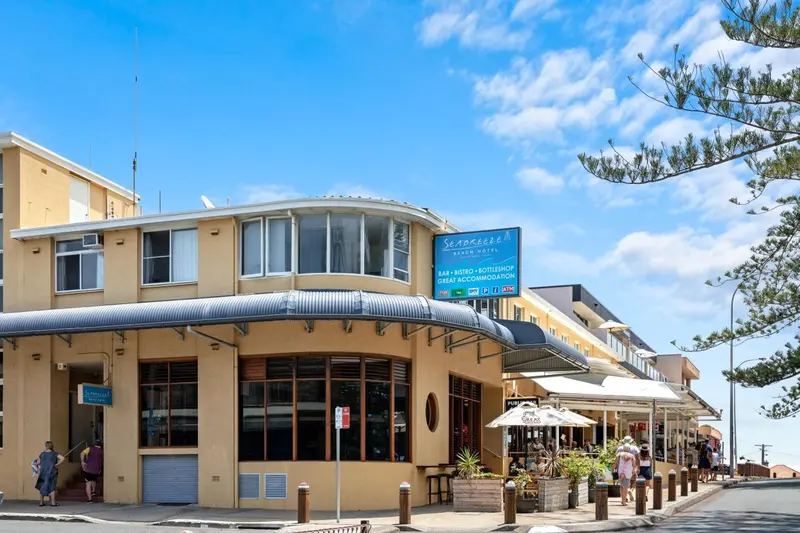
From London Heathrow, Gatwick or Manchester, South West Rocks is reached by travelling to Australia and then continuing overland from Sydney or Brisbane. The town has no commercial airport, so the final leg must be arranged by road, using a hire car, intercity bus or a road transfer from a suitable regional airport. This is not a destination where the last connection ends at a resort jetty: the journey finishes on the road, and the diving is organised from the town. Allow some flexibility between arrival and the first boat outing, particularly if a long road leg is involved or sea conditions have already disrupted the schedule. Once in South West Rocks, accommodation near the centre keeps the local base within walking distance, with a short drive or local shuttle covering anything farther away.
Keep at least one spare day in the itinerary for Fish Rock. A single fixed boat window is a poor match for a site governed by swell, wind and current, and a missed departure may not be recoverable without flexibility. Treat the cave and exposed rock as proper ocean diving, not as a flat tropical reef: controlled buoyancy, restrained finning and comfort in moving water make a noticeable difference. Divers who are uneasy in overhead spaces should discuss whether they will enter the passage or remain on the open-rock sections. Staying in the central part of town simplifies the days for a non-diving companion and avoids unnecessary transfers. Book the key outings early if the whole trip depends on Fish Rock, but do not build the schedule so tightly that there is no weather alternative. Finally, remember that Fish Rock Nature Reserve is no-take: leave the sharks, rays, rock and other marine life entirely alone.
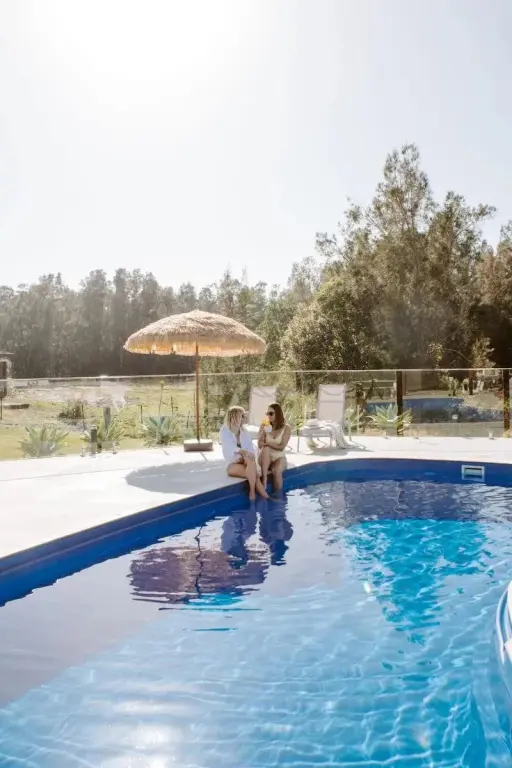
A practical stay lasts four to six days, with local boat outings arranged from South West Rocks and a weather margin built into the programme. The town is small enough for many divers to walk between central accommodation and the local base, while a short drive or shuttle covers less central locations. Non-divers have beaches, coastal walks, the Smoky Cape lighthouse and viewpoints to fill surface intervals or bad-weather days.
Hello, I'm Marina, DivingDeal.com's AI assistant. I guide you through destinations, areas and countries.
Thinking about the whole trip and the flights? Talk it over with Edith →
Marina is an AI. Some links are affiliate links: DivingDeal may earn a commission, at no extra cost to you. Bookings are made with the partner.
Your last day stays dry: no diving in the 18-24 hours before a flight, the perfect window to see the destination from another angle.
Ratings and reviews collected by Viator and Tripadvisor.
Plan a diving visit for spring or autumn, particularly March to May or September to November, when seas are often more manageable and biological activity remains strong. Winter can still bring worthwhile shark encounters, while summer remains possible but is governed by swell, wind and agitation rather than a dependable seasonal pattern.
South West Rocks suits divers of varied experience overall, but Fish Rock requires sound judgement when current, swell or depth increase the challenge. An Advanced qualification helps with deeper or exposed profiles, while cave or overhead-environment experience matters for entering the passage. You should also be comfortable with buoyancy, propulsion and drift procedures.
At South West Rocks, you can explore Fish Rock’s underwater cave, rocky walls and shark gutters, along with exposed reefs, boulder areas and passages reached by boat. Grey nurse sharks and sand tiger sharks are associated with the area, while rays, pelagic fish, and temperate and tropical species may also appear.
Plan a four- to six-day stay from the town, with at least one spare day for Fish Rock because swell, wind and current can disrupt departures. Travel overland from Sydney or Brisbane, arrange local boat outings, and stay near the centre for easier access. Keep arrival flexible before your first boat trip.