Pacific
Australia: a country of separate diving coasts
From Cairns and the Daintree to Exmouth’s Ningaloo Reef and Sydney’s Opera House, Australia rewards careful choices rather than rushed coast-hopping.
What makes this country unique
- Cairns and the tropical Queensland coast
- Exmouth beside Ningaloo Reef and Cape Range
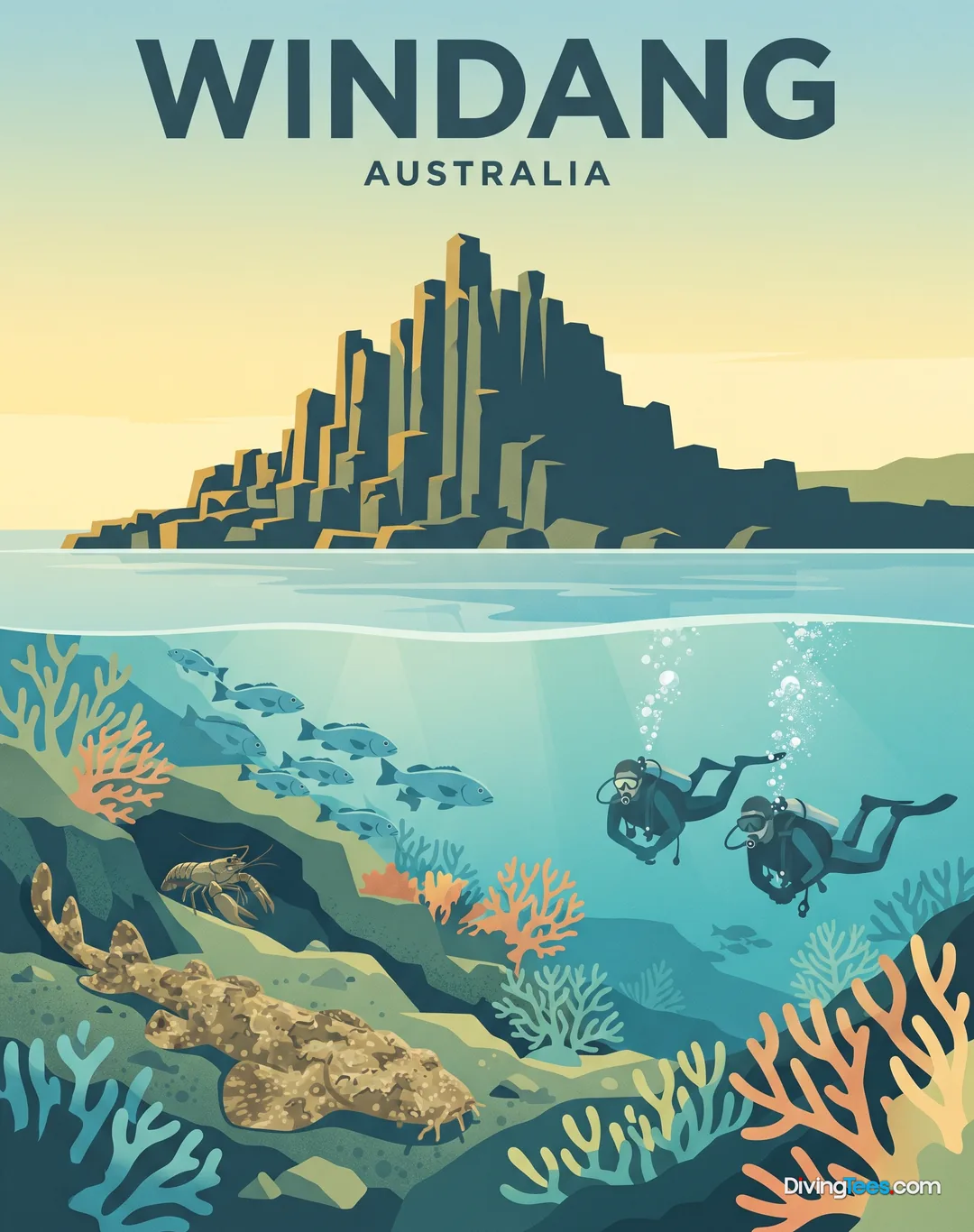
- Windang on the New South Wales coast
- January to March links all three diving areas
- Ningaloo whale sharks, humpback whales and turtles
- Meat pie, barramundi and chicken parmigiana
- Daintree National Park beyond Cairns
For subtitles in English: start the video firstthen click the gearat the top right of the video, select “Subtitles/CC”, then “Auto-translate” and choose “English”.
This country for a diver
Australia is not one compact diving destination but a country-continent where Cairns, Exmouth and Windang belong to very different coastal journeys. Its common thread is the need to plan around seasonal windows, marine-park rules, variable current and serious internal distances. Cairns brings boat-based access to the Great Barrier Reef; Exmouth combines Ningaloo Reef with an isolated, park-centred landscape; Windang sits within the more temperate, urban-linked New South Wales coast. The appeal is this contrast, but it also means choosing a coast rather than trying to collect the whole country.
How the country divides
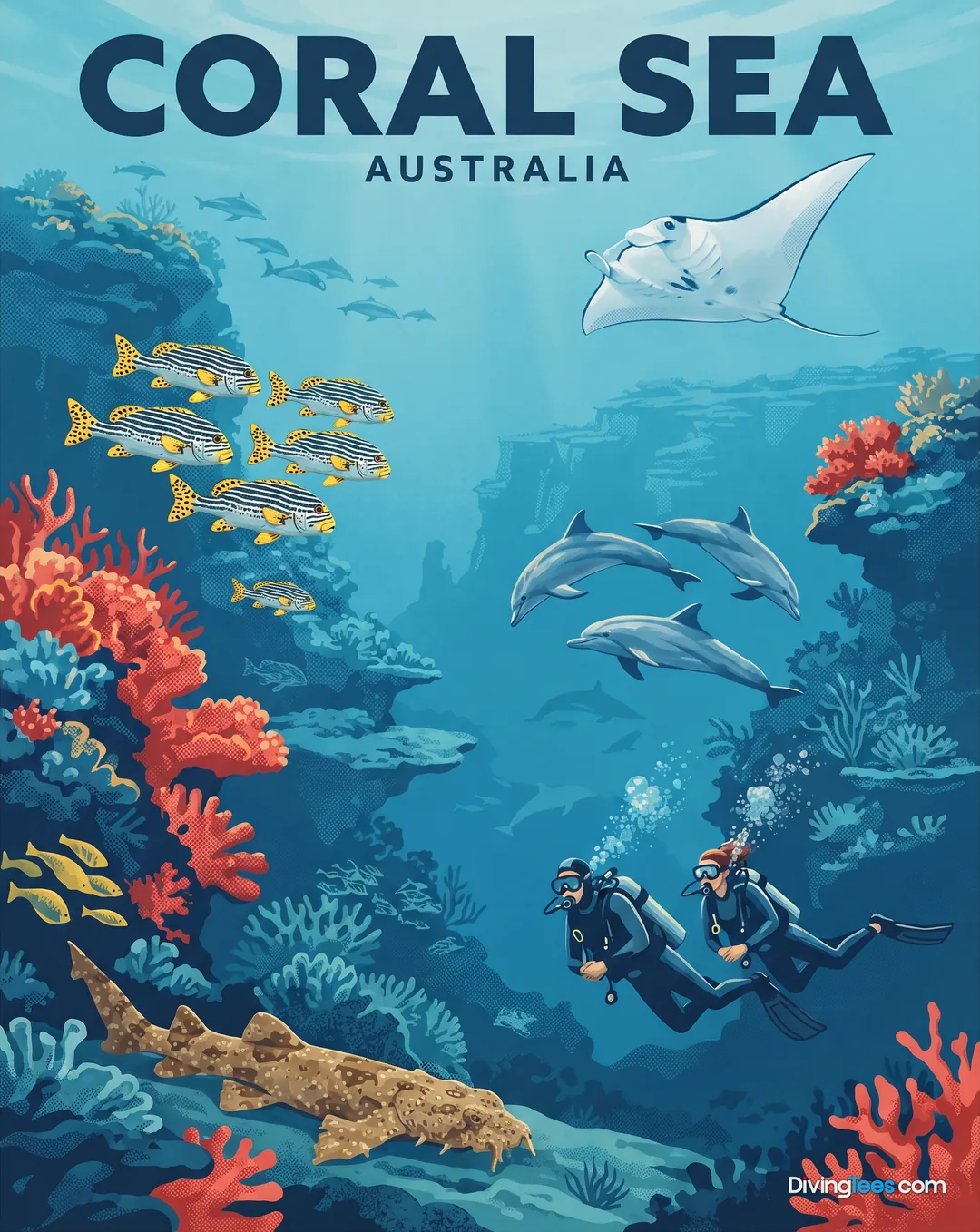
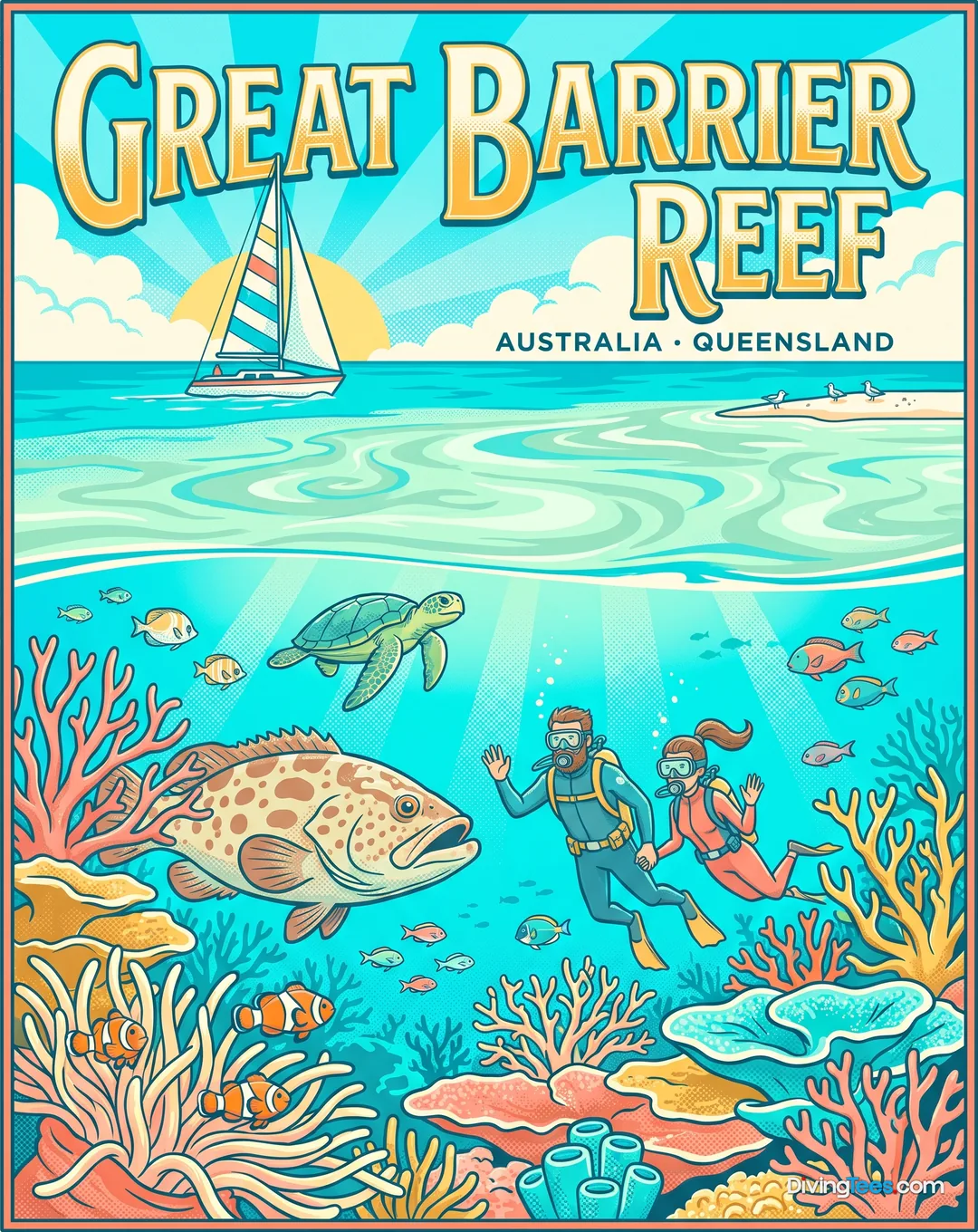
Australia’s diving map divides naturally into three coastal choices. Cairns represents tropical Queensland: a working base for Great Barrier Reef boat trips, with Townsville, Magnetic Island, Kuranda and the Daintree forming a coherent eastern travel axis. It suits divers who want reef days alongside rainforest and established tourist infrastructure. Exmouth is the opposite in feel: a small, isolated base on the North West Cape, where Ningaloo Reef, Turquoise Bay and Cape Range National Park belong to one land-and-sea landscape. It suits travellers comfortable with driving, limited urban scale and a wildlife-focused itinerary. Windang belongs to coastal New South Wales, within reach of Sydney and the Royal National Park, and offers a more temperate setting with towns, beaches and stronger links to the south-east urban network. These are not interchangeable versions of Australia; they are different styles of journey.
Diving destinations
Dive centres



Hotels


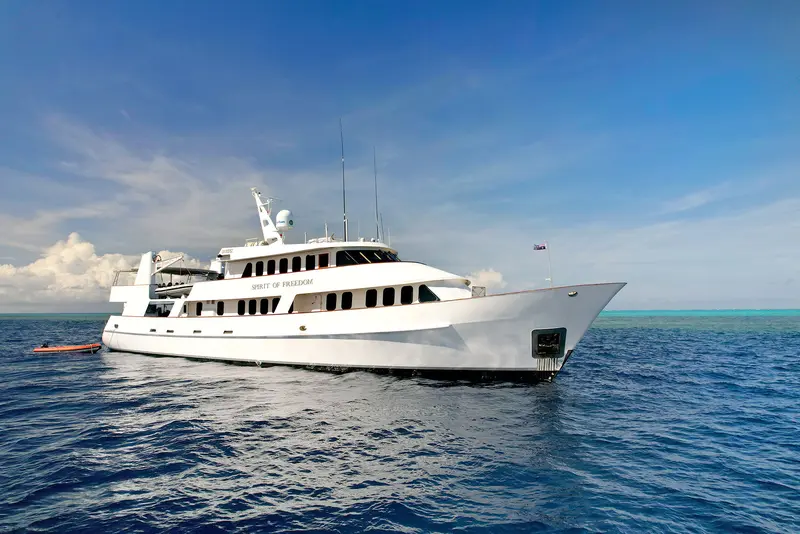
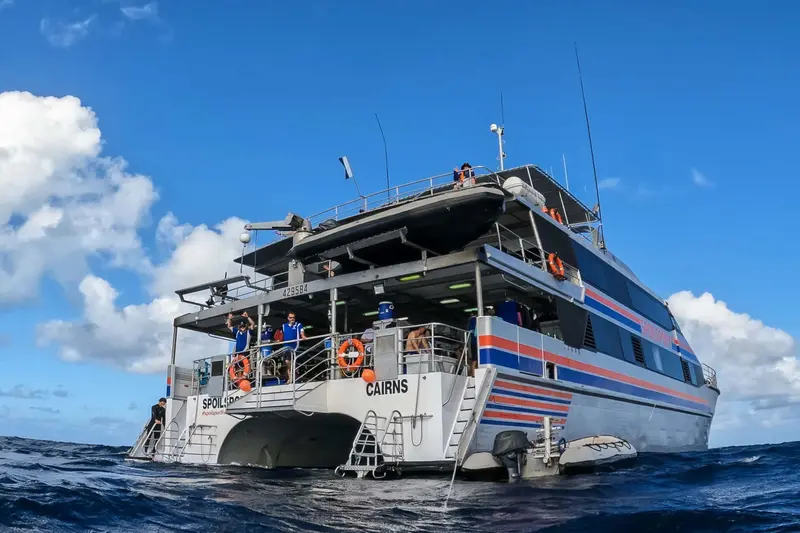
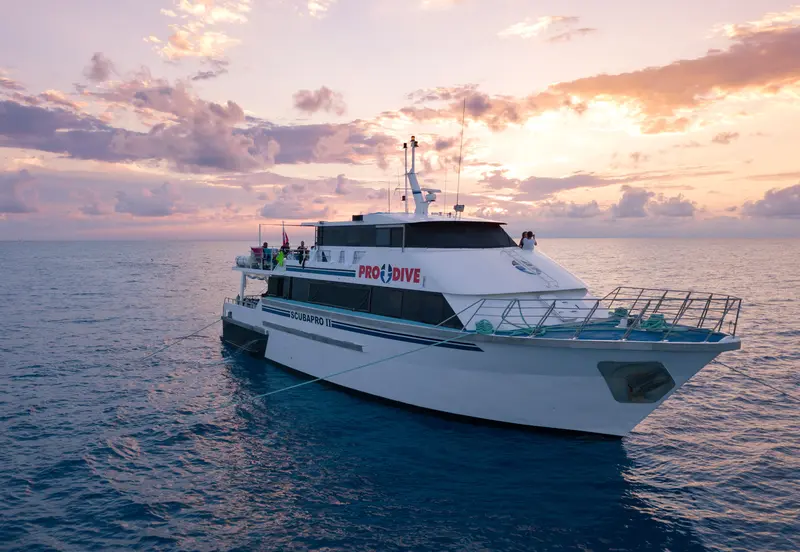
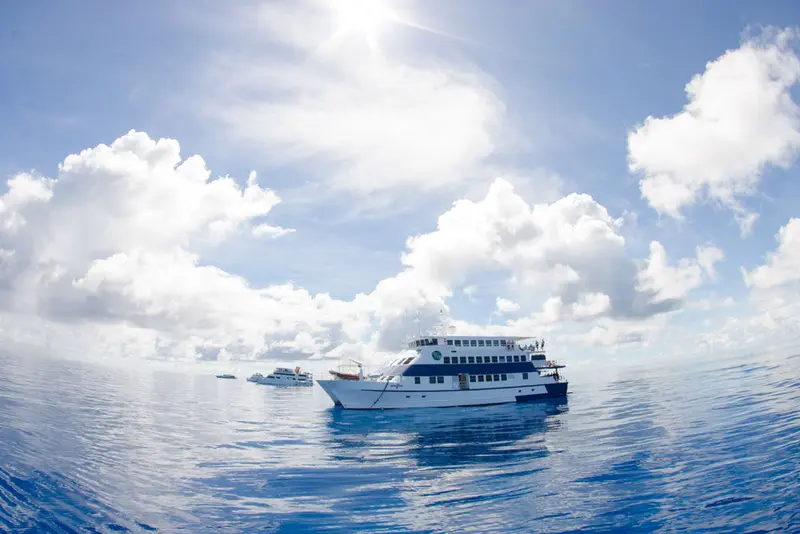
Liveaboards
When to go, and where by month
January, February and March are the broadest months for combining Australia’s listed diving areas: Cairns, Exmouth and Windang are all in season. In April and May, the practical choice shifts west and south, with Exmouth and Windang remaining open while Cairns falls outside its stated window. June through September offers no listed area in season. October belongs to Cairns alone, before Exmouth joins it in November. December again brings all three together. The pattern is not an opposite-season pairing in the formal sense, but it reflects different coastal conditions: Cairns runs from October to March, Exmouth from November to May, and Windang from December to May. For a costly long-haul trip, that makes January to March the simplest period for choice, while October or November favour a Queensland-led plan and April or May favour Exmouth with New South Wales.
Marine life, coast by coast
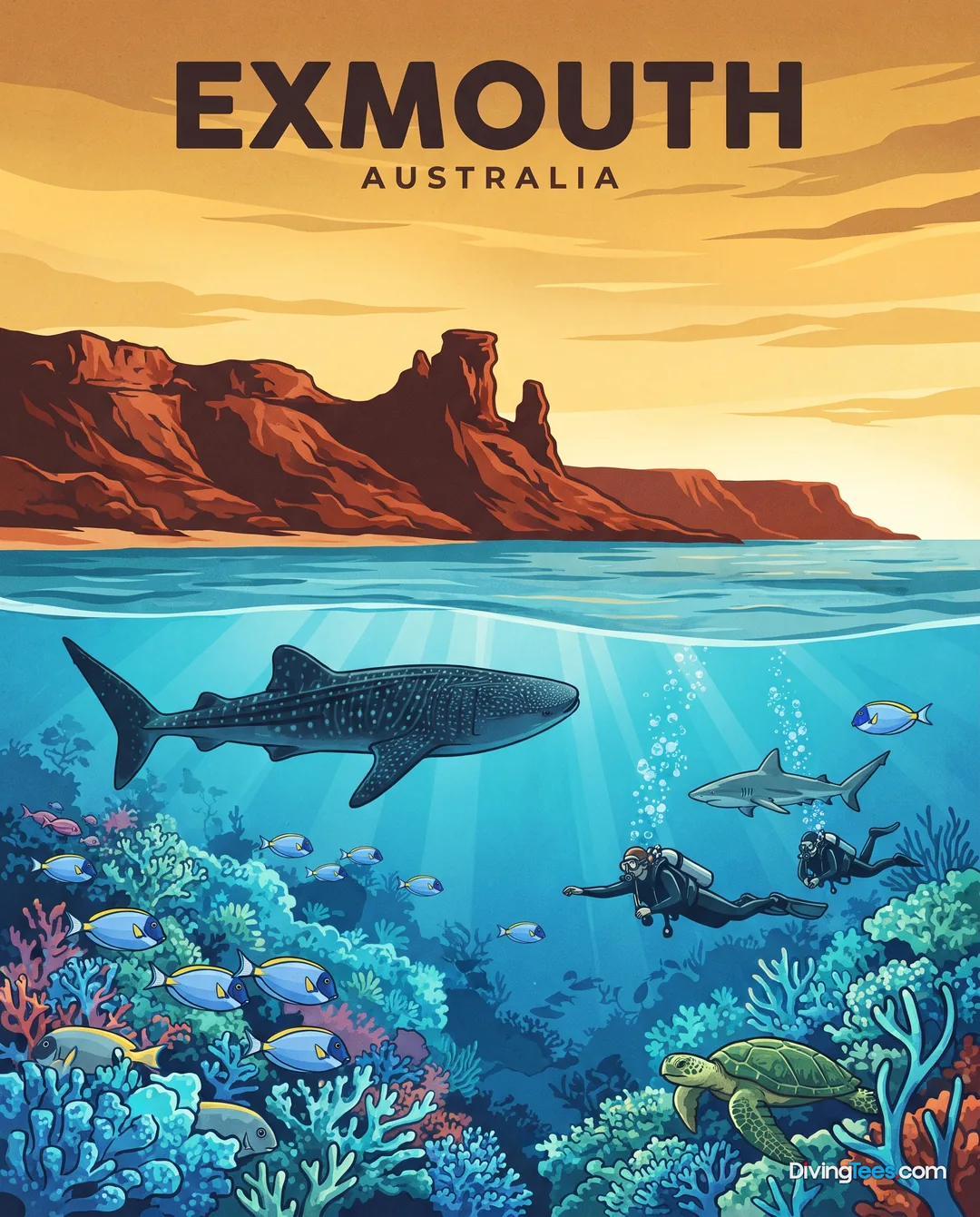
Wildlife planning in Australia is strongly coast-specific. Ningaloo Reef and the waters around Exmouth are the clearest choice for a marine-life itinerary built around whale sharks, humpback whales and turtles, with the Jurabi Turtle Centre providing context for the turtles’ coastal cycle. Vlamingh Head Lighthouse is also associated with watching whales offshore in season. The Cairns material points instead to a reef-and-rainforest setting, linking the Great Barrier Reef with the Daintree and Magnetic Island rather than naming a country-wide signature animal. Windang belongs to a different, more temperate New South Wales landscape. In practical terms, choose Exmouth when large-animal encounters and Ningaloo’s conservation story shape the trip; choose Cairns or Windang for their broader coastal and land-based character.
Getting between the areas
Australia’s diving areas do not combine casually. Cairns and Windang are about 2,023 kilometres apart, while Cairns and Exmouth are roughly 3,358 kilometres apart, so an itinerary linking them needs internal flights and usually a hire car at one or both ends. Exmouth and Windang are about 3,837 kilometres apart, making a direct road connection a project rather than a transfer. Cairns can sensibly be paired with Townsville and a section of the New South Wales coast over two weeks, using flights and local driving. Exmouth works better as a self-contained Coral Coast journey. The east coast offers trains and long-distance buses, but Brisbane–Cairns already takes more than a day by road or rail. Indian Pacific and The Ghan are multi-day journeys in their own right, not shortcuts between dive areas.
Take off your mask
Away from the water, Australia changes character quickly. Around Cairns, the Daintree National Park offers ancient wet forest, dark waterways and the meeting of forest and sea, while the Kuranda Scenic Railway climbs through Barron gorges to Kuranda’s markets, galleries and forest setting. From Townsville, Magnetic Island adds walking tracks, coves and bay views. Exmouth combines Ningaloo Reef with the red gorges of Cape Range National Park, Yardie Creek, Charles Knife Canyon, Turquoise Bay and the viewpoint at Vlamingh Head Lighthouse. In Sydney, the Sydney Opera House and Circular Quay give the trip a distinctly urban centre, while the Royal National Park supplies a coastal counterpoint. Food is equally regional in habit rather than exotic: meat pies and chicken parmigiana are pub staples, barramundi appears widely in Queensland, and fish and chips suit the waterfronts of Exmouth and Windang. Cafés serve flat whites, avocado toast and lamingtons; evening kitchens may close around eight or nine.
What holds true everywhere here
Across Australia’s diving coasts, the marine park is part of the experience rather than background scenery. Ningaloo and the Great Barrier Reef demand strict no-contact, no-collection behaviour, and local briefings commonly make buoyancy and reef awareness explicit. Current is variable, so a proper briefing matters even when a site looks straightforward. Build a weather buffer around any single wildlife or reef day, particularly when an organised boat outing carries much of the trip’s value. Nitrox can be useful during repeated, relatively shallow reef diving, but it does not remove the need for sensible profiles. The country’s distances also favour several local outings from one base over ambitious transfers between coasts. In Exmouth especially, reserve enough time for the road, the park and the sea rather than treating each as a quick stop.
Frequently asked questions about Australia
When is Australia a good choice for connecting its main diving areas?
January to March links Cairns and the tropical Queensland coast, Exmouth beside Ningaloo Reef, and Windang on the New South Wales coast. This period suits a trip connecting all three diving areas. Wildlife planning remains coast-specific, so your timing should follow the regions you want to include rather than treating Australia as one uniform dive destination.
What can you see while diving in Australia’s different coastal regions?
Around Exmouth, Ningaloo Reef is associated with whale sharks, humpback whales and turtles. Cairns offers a reef-and-rainforest setting linked with the Great Barrier Reef, Daintree and Magnetic Island. Windang belongs to a different, more temperate New South Wales landscape. Your wildlife expectations should therefore match the coast you select.
How should you plan a diving stay in Australia?
Choose Exmouth when whale sharks, humpback whales, turtles and Ningaloo’s conservation story shape your itinerary. Choose Cairns for connections between the Great Barrier Reef, Daintree and Magnetic Island, or Windang for a temperate New South Wales setting. You can also add the Jurabi Turtle Centre or Vlamingh Head Lighthouse to an Exmouth-focused visit.
How do the coastal settings in Australia differ for divers?
Cairns combines tropical Queensland coast diving with the Daintree and a reef-and-rainforest setting. Exmouth sits beside Ningaloo Reef and Cape Range, with marine-life planning focused on whale sharks, humpback whales and turtles. Windang offers a separate, more temperate New South Wales landscape, while land-based highlights include the Opera House and Daintree National Park.