Reflections Seal Rocks Holiday Park
★ 9.3/10
New South Wales · Australia · Pacific
Max. depth · 45 mDescend into a complex reef system marked by deep gutters and overhangs, where dozens of grey nurse sharks aggregate against a backdrop of dramatic rock formations.
Seal Rocks is less a single dive site and more a complex of offshore reefs, offering varied profiles across areas like Big Seal Rock and the Eastern and Western Gutters. The topography here is intricate, defined by a series of rocky structures that form deep gutters, extensive overhangs, and bommies that rise from the seafloor. While shallow sections can be found around 4 metres, the primary dive areas typically run between 12 and 30 metres, with some zones dropping to 45 metres, allowing for both shallower exploration and deeper, more exposed traverses.
Approaching the main sections often involves anchoring, giving you the chance to descend onto broad rock ledges or directly into the gutters. Once down, you'll find yourself navigating through a network of fissures and caves. The movement of the water here can vary; while some sections offer relative calm, exposed areas, particularly those facing the open ocean, can feel the push of the East Australian Current. This current, running predominantly north to south, can dictate your dive plan, turning some drifts into exhilarating rides past walls and through channels.
The undeniable draw of Seal Rocks is its reputation as a significant aggregation site for grey nurse sharks (Carcharias taurus). You won't just see one or two; reports frequently speak of dozens, sometimes over 40 individuals, congregating within the main gutters. These sharks often cruise slowly, allowing for close observation as they patrol their preferred territories. This consistent presence, combined with the dramatic rocky structure, makes for a dynamic interaction between predator and environment, a unique experience beyond simply spotting a shark in open water.
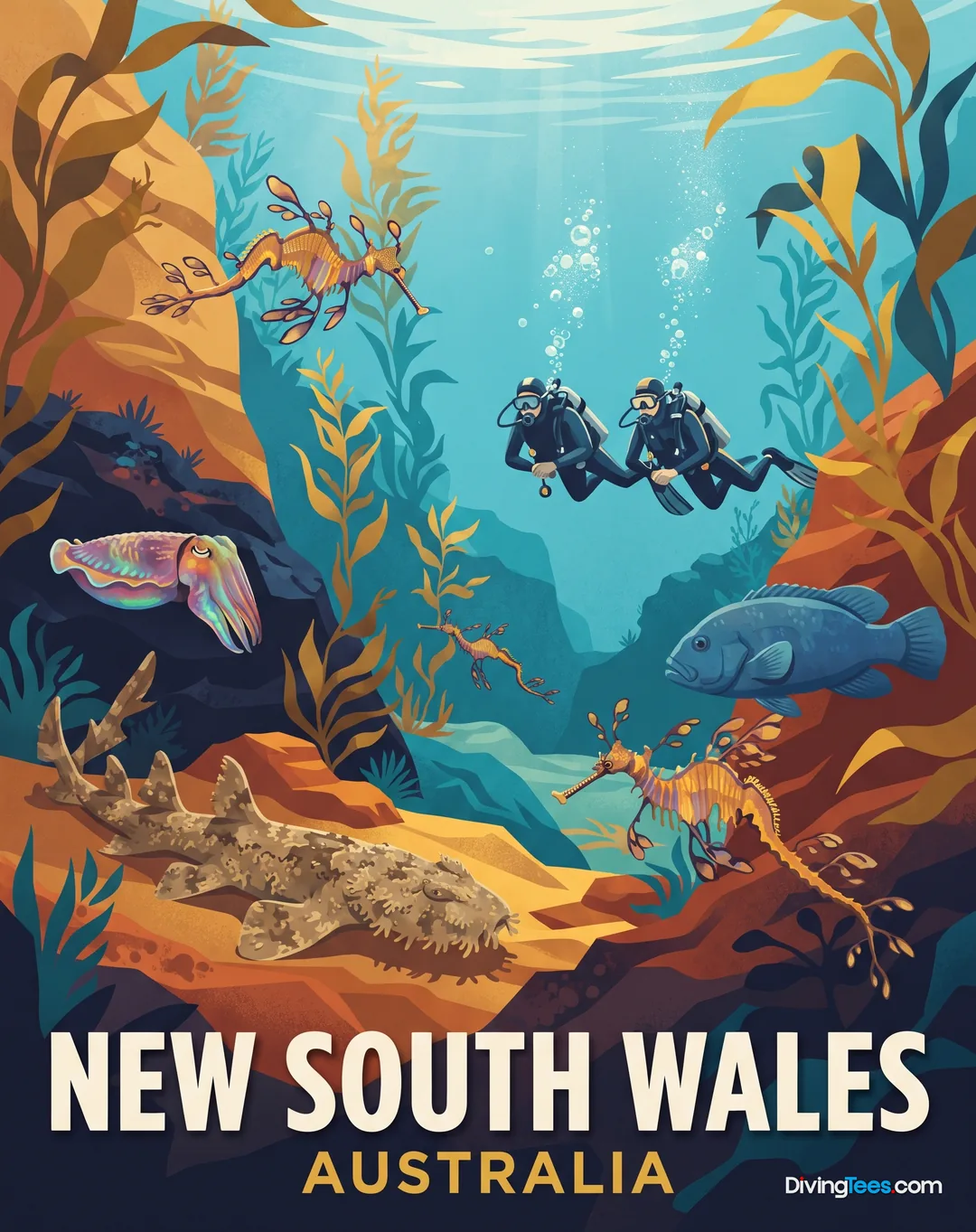
Beyond the grey nurse sharks, the reef is home to a robust community of resident marine life. Wobbegong sharks are commonly found tucked into crevices, their camouflage blending perfectly with the rock. You'll encounter large schools of kingfish and trevally, moving in unison through the channels, and drum fish often patrol the rock ledges. Keep an eye out for green turtles and loggerhead turtles, which frequently navigate the reef's complex contours, alongside less common sightings of dolphins and Australian fur seals.
Exploring the shallower sections and around the bommies reveals stingrays and eagle rays gliding across the sandy patches between rocky outcrops. Port Jackson sharks are also a common sight, particularly in the cooler months, often resting on the seabed. You might also spot bronze whaler sharks moving through the deeper, more exposed areas. The diversity extends to the macro life, with giant lobsters hiding in the cracks and snapper and cod forming part of the reef's permanent population, often found in the shelter of overhangs.
The conditions at Seal Rocks are largely shaped by its exposure to the open ocean and the prevailing East Australian Current. While visibility often remains excellent, typically ranging from 20 to 30 metres, the current can shift. It's a site that demands attention to your surroundings, particularly when navigating the gutters and deeper sections. The structural complexity means you're constantly finding new paths, new angles, and new marine encounters, making each dive different, even in the same general area.
The sheer number of grey nurse sharks, coupled with the varied and dramatic underwater topography, is what sets Seal Rocks apart. It's not just a flat reef with a few interesting features; it's a labyrinthine system that supports a vibrant and specific ecosystem. The interplay of deep gutters, the possibility of strong currents, and the guaranteed presence of large pelagics makes it a dive that requires both good buoyancy control and a solid understanding of current diving techniques.
The aggregations of grey nurse sharks are reported year-round, but you'll often find higher numbers from late summer through winter, with some peak periods noted between February and May. This seasonal pattern influences how many sharks you might encounter, but even outside these peaks, the site consistently delivers on its promise of shark encounters. This continuous presence provides a reliable opportunity to observe these sharks in their natural aggregation habitat, making Seal Rocks a cornerstone for shark diving in New South Wales.
This site is best suited for Advanced Open Water divers, with experience in managing currents and demonstrating precise buoyancy control. Due to the consistent presence of sharks, prior shark-diving experience is an asset. Depths range from 4 metres in sheltered areas to 45 metres in the deeper offshore sections, though most dives focus between 12 and 30 metres. Visibility is often 20 to 30 metres. Current can be moderate, particularly with the East Australian Current, so plan accordingly. Grey nurse sharks are present year-round, with peak numbers generally seen from late summer through winter.