
Ring Gold Divers
Google 4.8/5 (72 reviews)
Fiji · Pacific
Coral gardens, pinacles, walls and drifting reef sharks meet the nutrient-rich currents of Bligh Water off Rakiraki’s north coast.
Rakiraki is a land-based gateway to the reefs of northern Viti Levu, where boat trips run from the coast towards Bligh Water and Vatu-i-Ra. The attraction is the change of scenery underwater: sheltered coral gardens close to shore give way to pinacles, walls, canyons, tunnels and arches farther out. Nutrient-rich current brings movement to the reef, with schools of fish, barracuda and reef sharks part of the picture. It suits divers who prefer several days exploring one region rather than a tightly packaged liveaboard itinerary.
Diving is mainly by boat, with the day’s choice shaped by wind, sea state and current. Nearer the coast, expect coral gardens and less exposed reef; farther into Bligh Water, the scenery becomes more dramatic, with pinacles, walls, canyons, tunnels and arches. Currents are not an occasional complication here. They are what feed the passage, concentrate fish and make a drift dive attractive, while also requiring a proper briefing on the entry, the downcurrent line and the exit. Visibility can be very different between coastal, intermediate and passage sites, commonly ranging from 15 to 30 metres in the more favourable months. A site that looks ordinary close to the base should not be taken as a verdict on Vatu-i-Ra. The exposed reefs can feel like a different day’s diving altogether.
Bligh Water’s moving water brings the main wildlife interest. Schools of reef fish gather around the pinacles and walls, with trevally and barracuda adding speed and shape to the scene. Reef sharks are regular enough to be part of the destination’s character, particularly on sites where current runs over the reef, although no encounter is automatic. Manta rays and marine turtles are occasional visitors rather than a seasonal guarantee. The coral itself is a reason to look closely: hard and soft corals are described across the area, but density and visibility vary from one sector to another. Vatu-i-Ra and the wider conservation area matter because keeping these habitats intact supports both the reef communities and the larger fish drawn to the passage.
May to October is generally the more comfortable window for Rakiraki. The austral dry season usually brings lighter winds and more manageable seas, with the clearest chance of making the longer runs towards Bligh Water and Vatu-i-Ra. From November to April, the rainy season and monsoon-influenced weather can bring more wind, swell and interruptions, and visibility may be less settled after rain or rough conditions. Diving remains possible throughout the year, but the drier months give a better margin for choosing between sheltered coastal reefs and exposed passage sites. They also make a five- to seven-day stay easier to use well, rather than losing planned boat days to the weather.
Some local, shallow reefs can suit newer divers, including those qualified through PADI, SSI or BSAC. The passage sites are a different proposition. A diver should be comfortable with live current, controlled ascents and a clear safety stop, and should follow the guide’s decision on whether conditions suit the group. Advanced Open Water is useful for deeper or more exposed dives, while a drift-diving qualification helps with the mechanics of moving water. Experience matters more than simply holding the minimum certification.
From London Heathrow, Gatwick or Manchester, the journey continues to Fiji and then overland on Viti Levu. Rakiraki is reached from Nadi by the Kings Road, usually allowing roughly two and a half to three hours by road, depending on the coastal base and road conditions. There is no structurally compulsory ferry crossing for this route. An alternative through Nausori still requires a road journey to Rakiraki, so it does not remove the final land transfer. Build connections with room for the long drive rather than treating the arrival as an immediate boat-diving day. Once at the coast, diving is organised from the accommodation area and the reefs are reached by boat.
Ask specifically whether the plan is for a coastal reef, an intermediate site or the passage. Visibility can differ sharply between them on the same day, and a disappointing nearshore dive says little about Vatu-i-Ra. Keep the schedule flexible so the boat can use sheltered reefs when wind or swell closes the more exposed sites. For Bligh Water, expect current to be central to the briefing, not an afterthought: check the entry, exit, likely downcurrent direction and how the boat will recover divers. Bring a computer that handles repetitive profiles and drift dives, as specialised equipment should not be assumed to be available locally. Do not put a tight flight connection after the final dive. The road back towards Viti Levu’s airports is a substantial part of the journey, so keep a no-diving day before flying. Several diving days are worth booking, because conditions may decide which part of Rakiraki you actually reach.
A practical Rakiraki stay is based on the coast, with daily boat trips to nearby reefs and, when conditions allow, the wider Bligh Water and Vatu-i-Ra area. Five to seven days gives room to vary the sites and absorb a weather change without turning every morning into a gamble. Non-divers have some scope for coastal activities, snorkelling around Nananu-i-Ra and excursions along the Sun Coast or into rural Viti Levu. Keep the final day for a beach or light-water activity before the journey onwards.
Hello, I'm Marina, DivingDeal.com's AI assistant. I guide you through destinations, areas and countries.
Thinking about the whole trip and the flights? Talk it over with Edith →
Marina is an AI. Some links are affiliate links: DivingDeal may earn a commission, at no extra cost to you. Bookings are made with the partner.
Choose May to October for lighter winds, more manageable seas and the clearest chance of reaching Bligh Water and Vatu-i-Ra. Diving remains possible throughout the year, but November to April can bring rain, swell, interruptions and less settled visibility. The drier months make it easier to use several boat-diving days well.
Newer divers may find some local shallow reefs suitable, including divers qualified through PADI, SSI or BSAC. Passage sites require comfort with live current, controlled ascents and a clear safety stop. Advanced Open Water is useful for deeper or exposed dives, while drift-diving training helps with moving water. Experience matters beyond minimum certification.
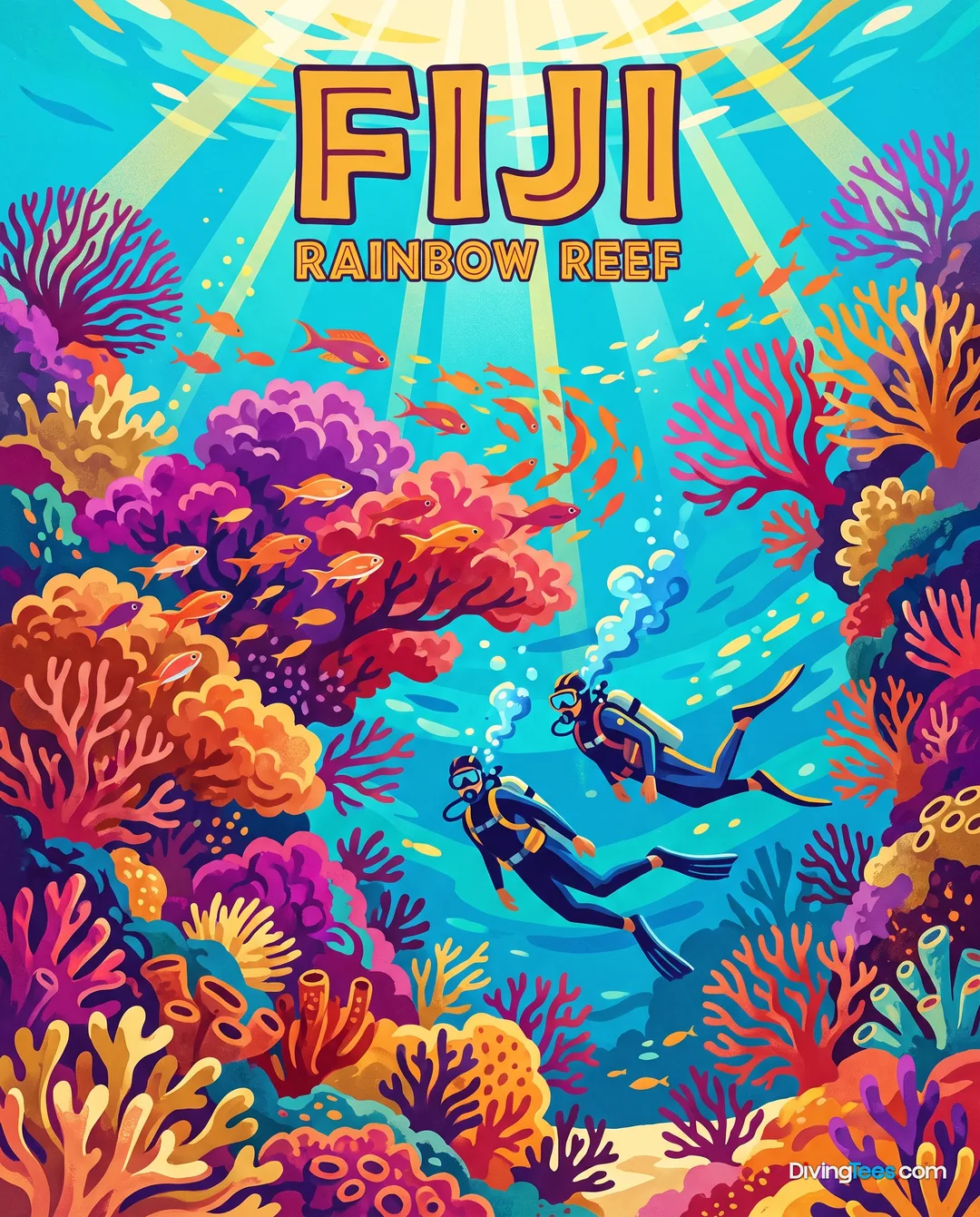
You can explore sheltered coral gardens near shore, then reach pinacles, walls, canyons, tunnels and arches farther into Bligh Water. Currents draw schools of reef fish, trevally and barracuda around the reefs, while reef sharks are regular on some passage sites. Manta rays and marine turtles appear occasionally, and hard and soft corals vary by sector.
Base yourself on the coast, where boat trips reach nearby reefs and, when conditions allow, Bligh Water and Vatu-i-Ra. Keep your schedule flexible between sheltered, intermediate and passage sites, and allow time for current briefings. Plan several diving days, leave a no-diving day before flying, and allow room for the substantial road journey to Fiji’s airports.