
Dive Now
Google 4.9/5 (302 reviews)
47 km away as the crow flies
Whangarei · New Zealand · Pacific
Dive into the world-renowned Poor Knights Islands, a pristine marine reserve celebrated by Jacques Cousteau for its unique volcanic topography and vibrant marine life.
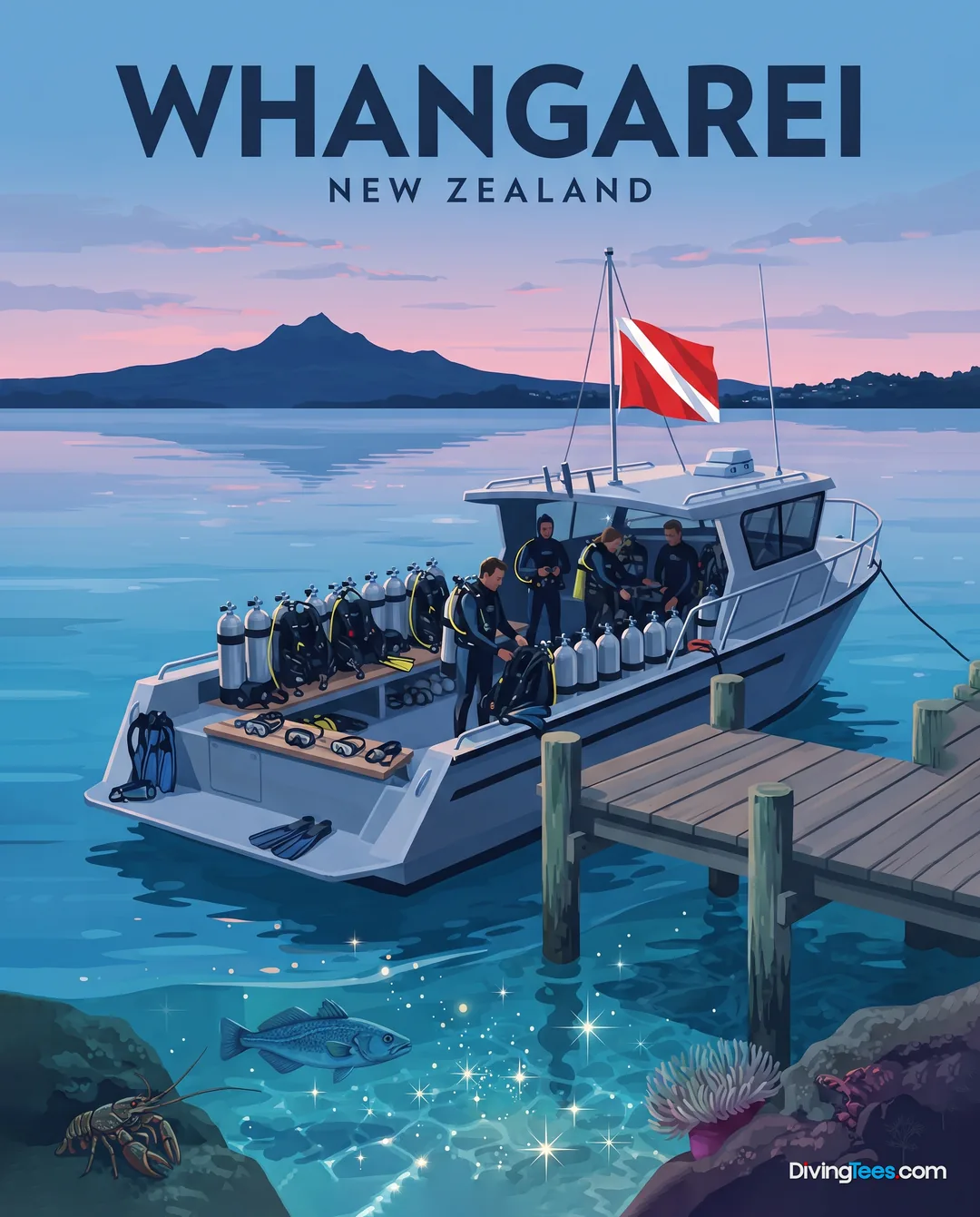
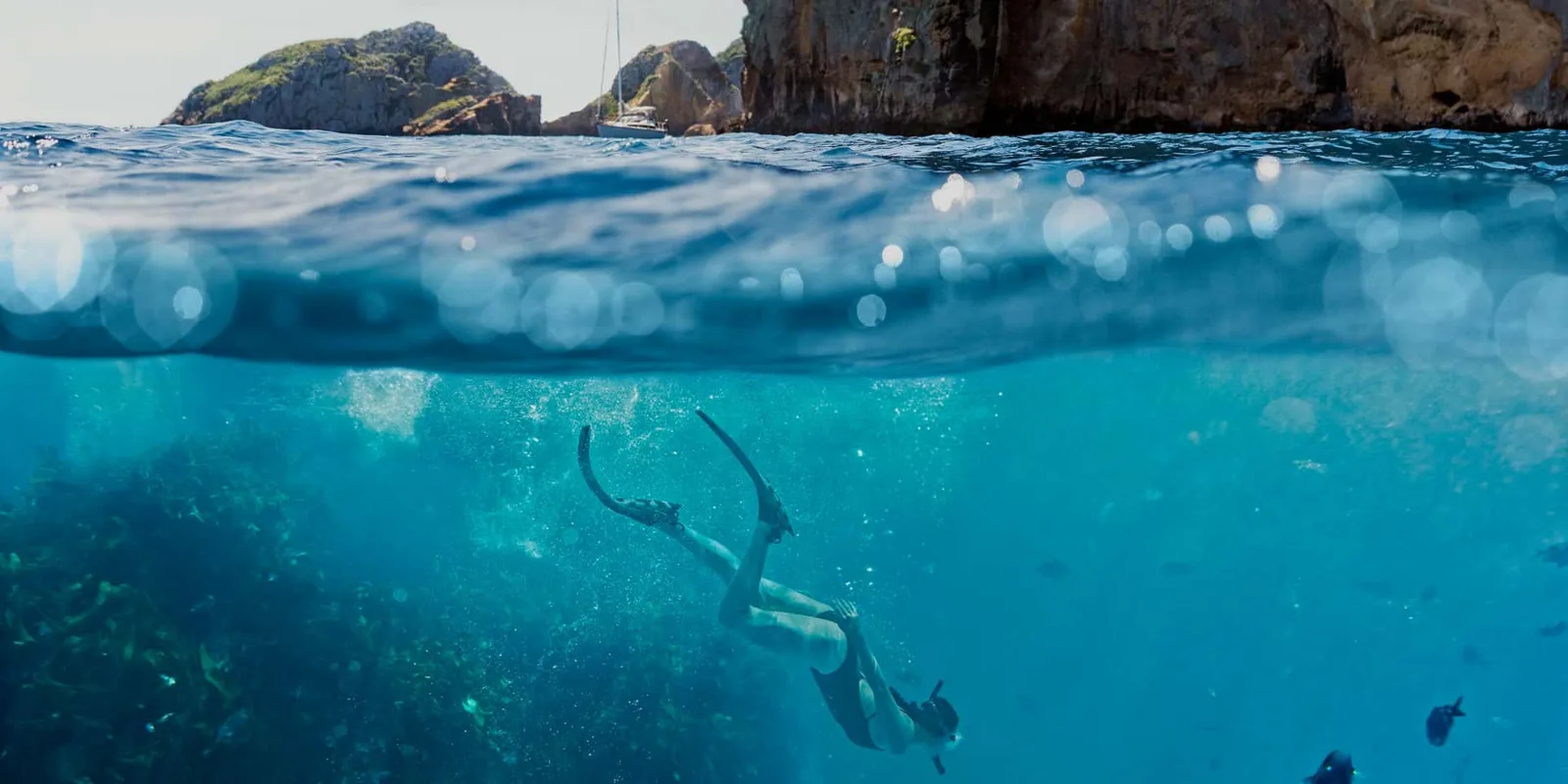
Diving the Poor Knights Islands means entering a fully protected marine and natural reserve, located approximately 23 to 24 kilometers (12 nautical miles) offshore from Whangarei, on the East Coast of New Zealand's North Island. The site's reputation speaks for itself, having been recognized as a world-class diving destination by Jacques Cousteau himself. The uninhabited volcanic islands, Tawhiti Rahi and Aorangi, emerge starkly from the ocean, hinting at the dramatic underwater topography that awaits. Land access to the islands is prohibited, emphasizing the pristine nature of the underwater environment.
Beneath the surface, divers enter a realm sculpted by ancient volcanic forces. The landscape is defined by vast cave systems and majestic stone arches, creating complex swim-throughs and sheltered havens for marine life. A highlight is the world's largest underwater cave, inviting exploration into its expansive chambers where light plays tricks on the eye and the echoes of bubbles are the only sound. These geological features are not merely scenic; they shape the entire dive experience, providing structure and shelter.
The warm, nutrient-rich currents sweeping through these islands are the lifeblood of this vibrant underwater world, fostering an incredible density and diversity of marine species. As you navigate the arches and caverns, shimmering schools of blue maomao (Scorpis violacea) move in unison, while inquisitive groupers (Epinephelus spp.) watch from their rocky perches. Keep your eyes peeled for resident moray eels (Muraenidae), their heads peeking from hidden cracks, and camouflaged scorpionfish (Scorpaenidae) blending perfectly with the encrusted volcanic rock. For those with an eye for the intricate, a closer look at the reef provides a kaleidoscope of nudibranchs (Nudibranchia), their vibrant colors contrasting with the subdued tones of their surroundings. You'll encounter a wide variety of fish, sharks, and rays moving through the currents, often around the reef structures. Nudibranchs are a common sight, adding small, vibrant details to the reef.
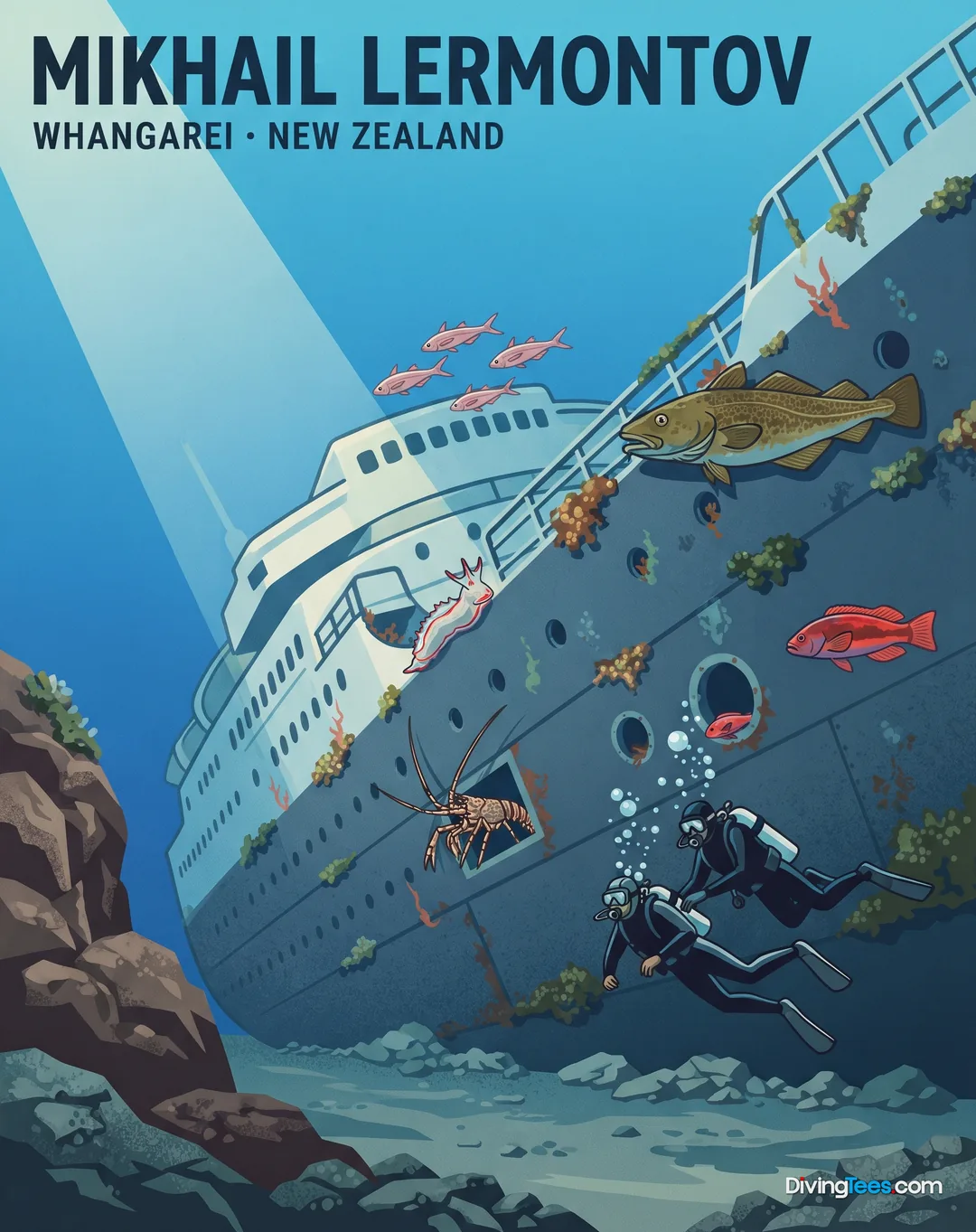
While schools of fish are prevalent from September to December, the warmer months of January to April bring in larger pelagic species, offering dynamic encounters. From May to August, you might observe jewel anemones spawning, a phenomenon that accompanies cooler, clearer water. The underwater world here is an active ecosystem where varied species interact with the diverse structures, from the smallest invertebrates to larger fish. Each dive provides a window into this vibrant subtropical community, showcasing the benefits of a well-managed marine reserve. The site offers opportunities for night dives and deeper explorations, providing different perspectives on the same incredible marine landscape. Beyond the natural architecture, the Poor Knight Islands also serve as the gateway to significant historical sites, with the wrecks of the Tui and Waikato nearby.
The Poor Knights Islands are best suited for intermediate to experienced divers, with an Advanced diver certification or higher recommended, including a Deep Adventure Dive specialization for deeper sections. While dive sites are chosen based on the day's conditions, currents can vary, so practical experience beyond certification is beneficial. Visibility here typically ranges from 8 meters in the spring (September-December) to a consistent 20 meters during summer and autumn (January-April, May-August), with optimal visibility sometimes reaching 30 meters between May and September when waters tend to be calmer. Water temperatures are warmest, between 20 to 23°C, from late January to early April.
You can expect seasonal differences at Poor Knights Islands. Visibility is lower in spring and consistent through summer and autumn, with the clearest conditions sometimes occurring from May to September when waters are calmer. Water is warmest from late January to early April, while fish and pelagic encounters vary by season.
Poor Knights Islands are suited to intermediate and experienced divers. Advanced certification or higher is recommended, while deeper sections require a Deep Adventure Dive specialization. Because sites are selected according to the day’s conditions and currents can vary, practical experience beyond certification is beneficial for managing the dive comfortably.
At Poor Knights Islands, warm, nutrient-rich currents support a dense and varied marine community, but their strength and direction can vary. Dive sites are chosen according to the day’s conditions, so practical experience beyond certification is beneficial. You should be prepared to manage changing water movement around volcanic arches, caves, and reef structures.
At Poor Knights Islands, you can explore volcanic arches, caves, swim-throughs, and a vast underwater cave while seeing blue maomao, groupers, moray eels, scorpionfish, sharks, rays, and colorful nudibranchs. Seasonal encounters include schools of fish, larger pelagic species, and jewel anemones spawning, with night dives also available.