Pacific
Papua New Guinea: reefs, islands and living cultures
Papua New Guinea joins Kimbe Bay’s reef country to Milne Bay’s maritime culture, with Port Moresby, Rabaul history and village life adding substance above the surface.
What makes this country unique
- Kimbe Bay reefs opening from October to December
- Milne Bay in November, December and spring months
- Port Moresby’s National Museum and Art Gallery
- Rabaul’s Yamamoto bunker and wartime tunnels
- Milne Bay’s manta rays and mimic octopus
- mumu, kokoda and coffee from the Highlands
- Goroka Show’s feathers, paint and tribal dances
For subtitles in English: start the video firstthen click the gearat the top right of the video, select “Subtitles/CC”, then “Auto-translate” and choose “English”.
This country for a diver
Papua New Guinea is not a single resort coastline but an island country whose diving bases sit far apart, from West New Britain to Milne Bay and the capital. Reefs, pinnacles, muck sites and historic wrecks share the wider picture, with hammerhead sharks encountered across the country. Currents are variable, conditions suit all levels when properly briefed, and the diving mixes reef, wall, pelagic and occasional wreck experiences. Low tourist pressure and limited infrastructure are part of the character, not minor inconveniences to be edited out.
How the country divides
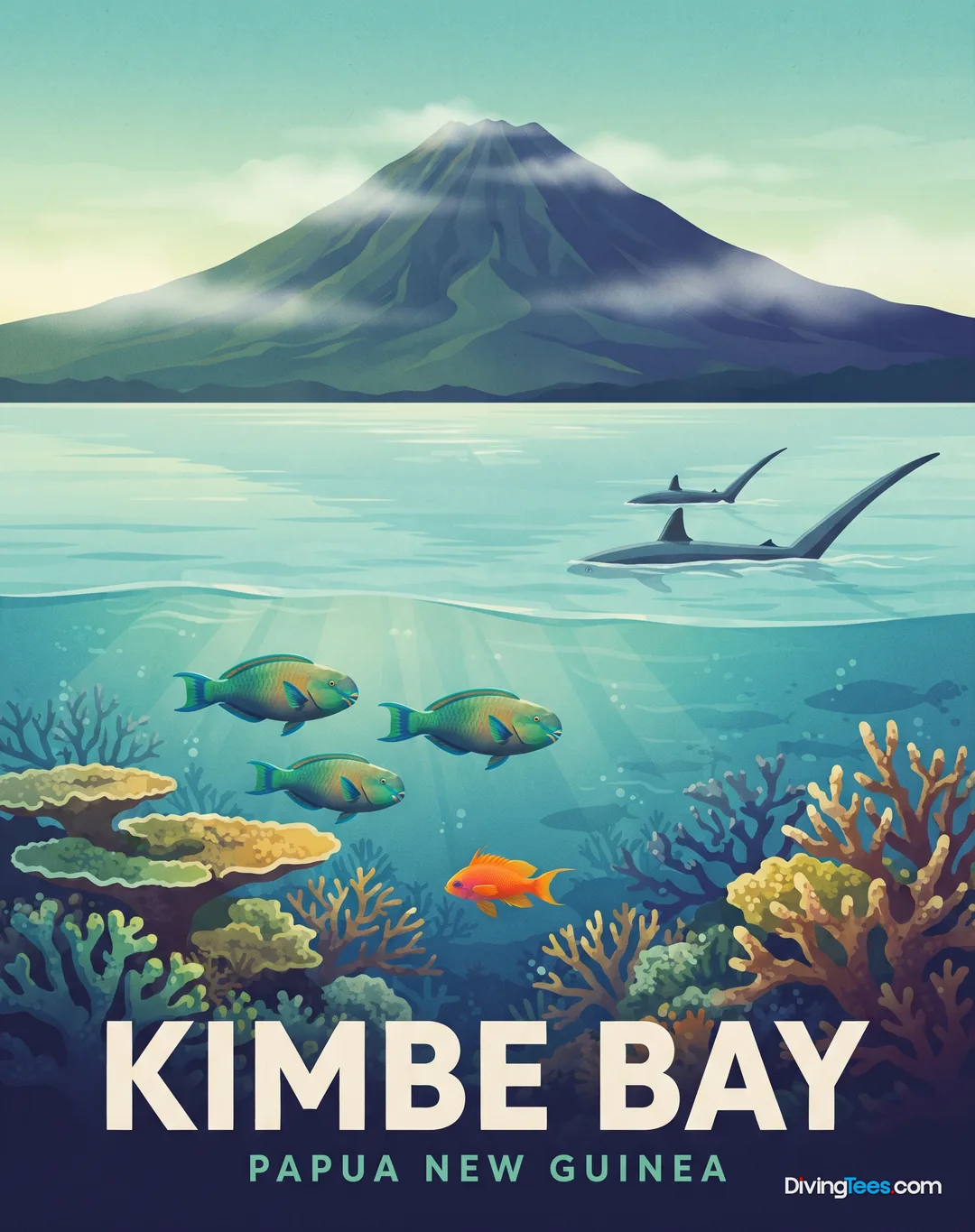
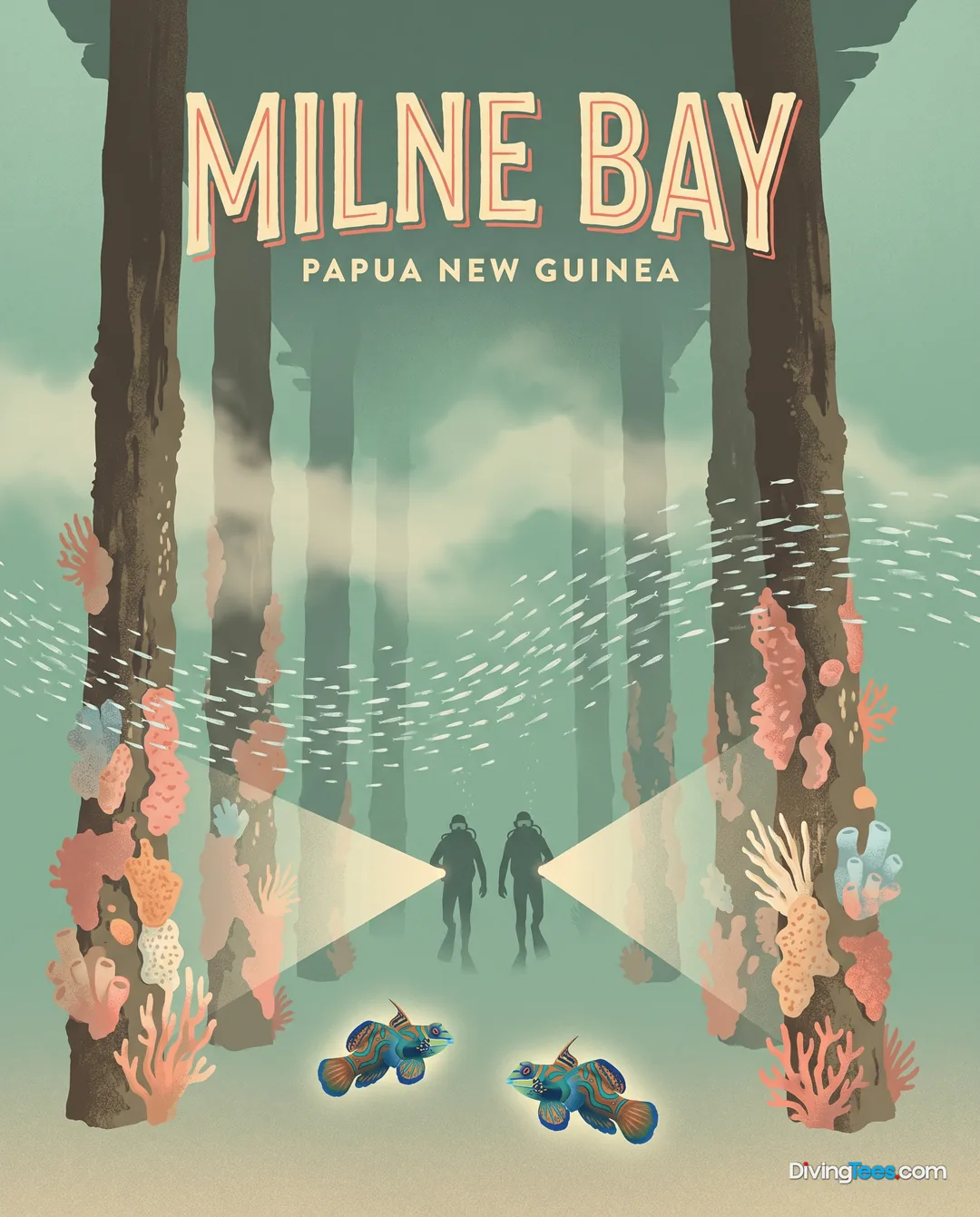
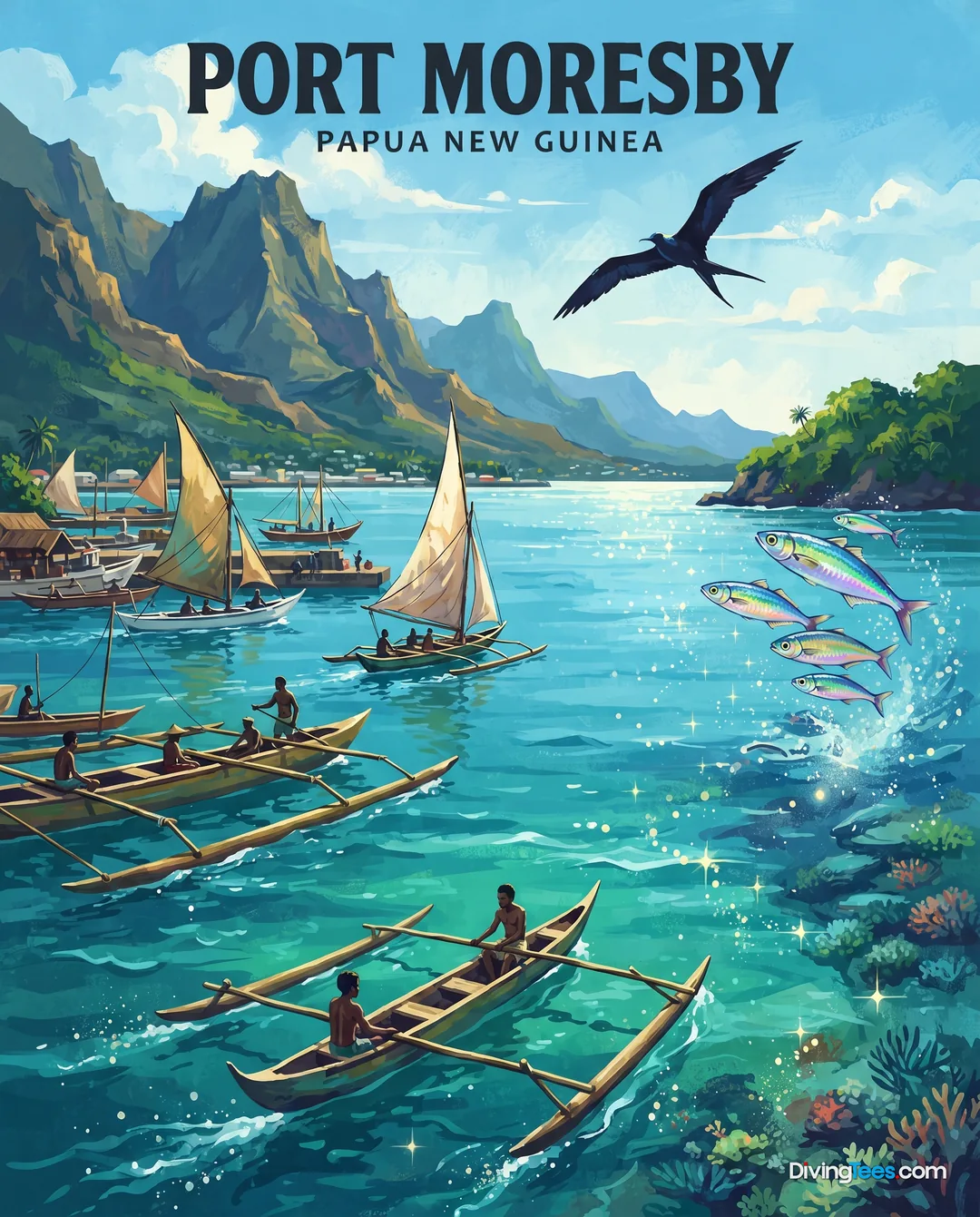
The country’s diving divides into three quite different travel choices. Milne Bay is the maritime, southeastern option, reached through Alotau and associated with Tawali, village visits and the Massim world; Deacon’s Reef is one of the names that anchors this corner. Port Moresby is the capital-based choice, pairing local boat diving with museums, markets and national institutions, including sites such as Loloata Island Jetty. Kimbe Bay belongs to West New Britain, reached through Hoskins for Walindi Plantation Resort and suited to a more isolated reef holiday; Agu Reef is one of its named anchors. These are not interchangeable day-trip bases. Milne Bay and Port Moresby offer the most natural pairing for travellers wanting capital and southeastern island culture, while Kimbe Bay stands apart as a western island stay. Cruise diving is possible, but the practical choice remains one principal region rather than a rushed tour of the country.
Diving destinations
Dive centres

Hotels
Liveaboards
When to go, and where by month
The seasonal pattern is regional rather than national. Milne Bay and Port Moresby share a window from November through April, so January, February, March and April suit both areas, as do November and December. Kimbe Bay opens earlier, from October through December, making October its distinct month and November and December the useful overlap with the southeastern bases. From May through September, the calendar presents no comparable regional window for these three diving areas. The reason to think geographically is that Kimbe Bay sits in West New Britain, while Milne Bay and Port Moresby belong to the country’s southeastern and capital orbit; their operating seasons do not move as one block. November and December therefore give the broadest choice between western island reefs and southeastern diving, whereas October points specifically towards Kimbe Bay. January to April shifts the emphasis back to Milne Bay or Port Moresby.
Marine life, coast by coast
Hammerhead sharks provide a country-wide thread, while the regional wildlife changes the character of an itinerary. Milne Bay is the place associated with mimic octopus, manta rays, whale sharks, rhinopias, pygmy seahorses, leafy ghost pipefish, crinoids and Spanish dancers. Port Moresby brings a broad reef-and-pelagic mix, including Napoleon wrasse, eagle rays, mobula rays, reef sharks, soft and hard corals, red-lined anthias and Tubastraea. Kimbe Bay shifts towards garden eels, dogtooth tuna, bigeye trevally, reef sharks, clownfish, anemonefish and long-nose hawkfish. The point is not simply species variety: choosing the base changes whether the trip leans towards small, unusual subjects, capital-coast reef life or open-water action around island reefs.
Getting between the areas
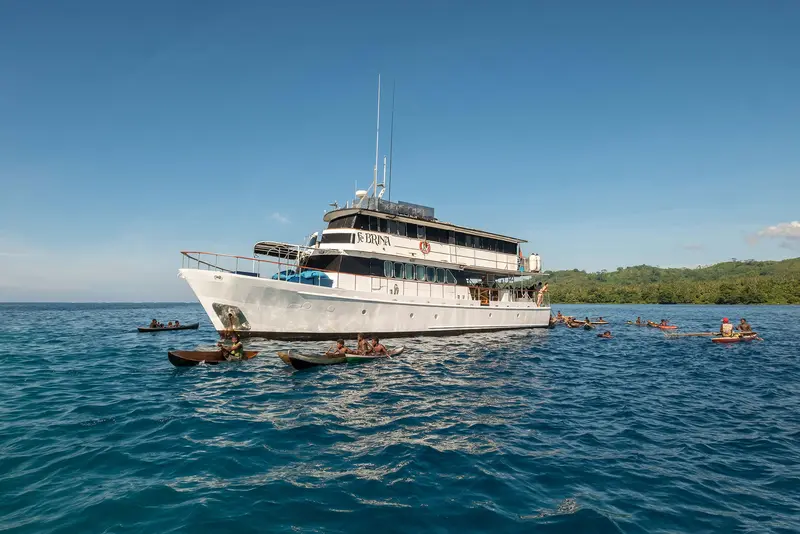
These areas should be treated as separate journeys. Milne Bay and Port Moresby are 391 kilometres apart, but the practical link is an internal flight rather than a straightforward road transfer. Kimbe Bay is 543 kilometres from Milne Bay and 548 kilometres from Port Moresby, placing West New Britain firmly outside a casual add-on. Flights from Port Moresby reach Alotau and Hoskins in roughly an hour, with longer sectors to Rabaul, Goroka and Lae; delays are common enough to require generous margins around a liveaboard or resort stay. Roads, PMVs and ferries do not create a dependable national network. Boats handle local island movements in Milne Bay, while Walindi and MV FeBrina handle Kimbe Bay diving. On a fortnight, Port Moresby plus one principal diving region is realistic; adding Kimbe Bay, Milne Bay, Rabaul and the Highlands makes the itinerary fragile.
Take off your mask
Above the water, Papua New Guinea divides into strong cultural landscapes. In Port Moresby, the Papua New Guinea National Museum and Art Gallery in Waigani brings together masks, Sepik carvings and Highlands artefacts beside the Parliament, whose design recalls Sepik spirit houses. Gateway Night Markets at Jackson’s Carpark add local food, craft and music without requiring a long evening excursion. Around Alotau, the Massim Cultural Centre, Alotau Market and Alotau War Memorial Park explain maritime exchange, daily trading and the Battle of Milne Bay; Dalai Heights gives a view over the bay. East New Britain turns towards wartime history at Kokopo War Museum, the bunker of Admiral Yamamoto, Japanese Underground Hospital and Bitapaka War Cemetery. Food is concrete and unfussy: mumu combines pork, kaukau, taro and vegetables; kokoda brings fish, lime and coconut; PNG-style fried fish suits Milne Bay and Port Moresby. Highlands coffee, pitpit, kumu and saksak broaden the table, while SP Lager and fresh mango, pineapple or papaya juice appear in towns and markets. Goroka Show and the National Mask and Warwagira Festival bring feathers, painted faces, masks, dancing and craft into the streets.
What holds true everywhere here
The practical rhythm of Papua New Guinea rewards conservative planning. Repetitive days on reefs and pinnacles make Nitrox worthwhile, particularly when the programme includes several moderate-depth boat dives, but it does not remove the need for a proper safety stop. Good trim matters on living reefs: a misplaced fin or rushed descent can turn a close inspection into contact with the substrate. Currents are variable, so briefings should explain the drift-dive plan, the downcurrent risk and the boat procedure rather than treating every site alike. Internal flights and local transfers need breathing space at both ends, especially before a cruise. Lodges commonly serve dinner around six or seven, and filtered or bottled water is the sensible default.
Frequently asked questions about Papua New Guinea
When should you visit Papua New Guinea for diving?
Kimbe Bay’s reefs open from October to December, while Milne Bay is associated with November, December and spring months. Your timing can therefore shape the regional choice. Consider Kimbe Bay for its opening season, or Milne Bay when its seasonal window aligns with the wildlife and reef experiences you want.
What can you see while diving in Papua New Guinea?
Your base changes the character of the diving. Milne Bay is associated with manta rays, mimic octopus, whale sharks, rhinopias, pygmy seahorses and leafy ghost pipefish. Port Moresby offers reef and pelagic life, while Kimbe Bay brings garden eels, tuna, trevally, reef sharks, clownfish and anemonefish.
How should you plan a Papua New Guinea diving stay?
Choose your base according to the kind of itinerary you want. Milne Bay suits small, unusual subjects and manta rays, Port Moresby combines capital access with reef and pelagic life, and Kimbe Bay focuses on island reefs and open-water action. You can add Rabaul, village life or cultural experiences above the surface.
What can you do beyond diving in Papua New Guinea?
Plan time for Port Moresby’s National Museum and Art Gallery, or explore Rabaul’s Yamamoto bunker and wartime tunnels. You can also experience mumu, kokoda and Highlands coffee, with village life adding cultural depth. The Goroka Show features feathers, paint and tribal dances, giving your stay substance beyond the reefs.