
Pro Dive - Plettenberg Bay
Google 4.8/5 (522 reviews)
South Africa · Africa
Rocky reefs, shallow Cape fur seal dives, shysharks and passing whales give Plettenberg Bay a distinctly South African coastal character.
For subtitles in English: start the video firstthen click the gearat the top right of the video, select “Subtitles/CC”, then “Auto-translate” and choose “English”.
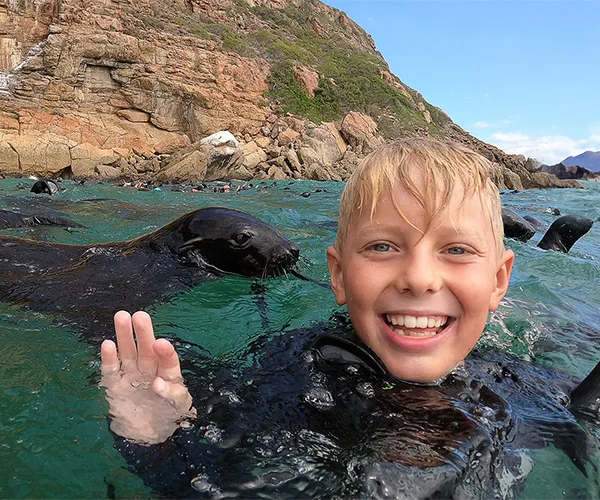
Cape fur seals twist through shallow water around Robberg, while rocky reefs, walls and pinnacles offer a different sort of dive beyond the bay. Plettenberg Bay suits divers who want a coastal South African base rather than a tightly programmed liveaboard trip. There are shore dives, boat outings and manageable seal dives, with whales, dolphins and the Garden Route providing a reason to stay topside. It is a place where a cancelled launch can become a day at Robberg or Tsitsikamma, not simply lost time.
Underwater, Plettenberg Bay is built around rock. Local reefs include shallow coastal formations, deeper sections between reefs, walls and pinnacles, with boat dives launched directly from the beach through the surf. That launch is part of the experience, and it is also the main operational constraint: a lively sea can change or cancel the plan. Currents are variable and generally need to be judged locally, rather than treated as a permanent downcurrent or drift dive destination. Visibility can range from four to twenty metres, with the clearest conditions linked to calmer seas. The diving mixes shore entries, boat trips, shallow seal encounters and reef exploration. Look closely rather than simply covering ground: anemones, sponges and rock cracks may hold nudibranchs, cuttlefish, octopuses, sea spiders and scorpionfish.
The reef life rewards a slow search. Cuttlefish and octopuses work the rocky ground, nudibranchs sit among sponges and anemones, and sea spiders and scorpionfish can disappear into the texture of the reef. Shysharks are a regular possibility year-round. Cape fur seals are also present around Robberg throughout the year, but their shallow, lively dives should not be mistaken for ordinary reef dives. Austral summer brings more juvenile fish in nursery areas and possible encounters with ragged-tooth sharks, as well as occasional Indian Ocean humpback dolphins. From June to November, southern right whales regularly use the bay, while humpback whales are seen from July into December. Those cetacean encounters belong mainly to the surface interval and boat journey, not to any promised underwater sighting.
June to November is the most appealing window for a first visit because the austral winter and spring usually bring calmer seas and better clarity, while southern right whales and humpback whales pass through the bay. June to August is particularly associated with the clearest visibility, although conditions remain changeable. Summer has its own draw: fish numbers rise, nursery reefs become interesting and ragged-tooth sharks may be encountered. The trade-off is a greater chance of less favourable sea conditions for the surf launch and boat work. Rather than treating any month as impossible, allow enough days to move dives around the weather.
Beginners can start with shallow coastal reefs or a seal dive, provided they are comfortable with local conditions and the entry arrangement. Divers with more experience will have more options among the deeper reefs, walls and pinnacles, where variable currents and changing visibility matter more. No specialist certification is singled out for the area, so BSAC, PADI and SSI divers can work within their normal training limits. The important experience is practical rather than formal: confidence in a boat launched through surf, sensible gas planning and the judgement to accept a changed site.
From London Heathrow, Gatwick or Manchester, plan the journey around reaching Plettenberg Bay by road along the Garden Route. The destination is not one to treat as a simple airport-and-transfer stop, so allow time for the international and regional connections that precede the road journey. Once in the area, local dive departures are made from beaches or the harbour-side sector, with some meeting points near Central Beach and others around Beacon Isle. Depending on where you stay, a departure may be walkable or require a short local taxi ride. Confirm the meeting point and transport arrangement before setting out, particularly when the boat will be launched through the surf.
Keep several weather windows free. At Plettenberg Bay, the surf launch can decide the day, so booking every dive against one fixed date is a poor fit. If an open-water boat trip is stopped by the swell, ask about a shallow shore option rather than abandoning the day. Make room for both experiences: a seal dive is shallow and active, while a reef dive offers a slower search among anemones, sponges, nudibranchs, cuttlefish, octopuses, sea spiders and scorpionfish. Do not judge the destination only by its deeper sites. In summer, leave time for juvenile fish on nursery reefs and possible ragged-tooth sharks. In winter, calmer water, clearer conditions and whale activity favour a different rhythm. Keep Robberg and Tsitsikamma available as alternatives, especially when the sea closes the launch. Tsitsikamma is about an hour away by road and brings a protected rocky coast into the plan.
Stay in Plettenberg Bay and organise the diving around the sea rather than around a rigid daily sequence. Local departures are close to Central Beach or in the Beacon Isle area, so some accommodation works on foot and some needs a short local transfer. Five to seven days gives room to move boat dives around the weather and still visit Robberg, watch whales or dolphins, meet the seals and explore Tsitsikamma. Non-divers have plenty to do, from sea kayaking and coastal walks to wildlife excursions.
Hello, I'm Marina, DivingDeal.com's AI assistant. I guide you through destinations, areas and countries.
Thinking about the whole trip and the flights? Talk it over with Edith →
Marina is an AI. Some links are affiliate links: DivingDeal may earn a commission, at no extra cost to you. Bookings are made with the partner.
June to November is an appealing period because winter and spring usually bring calmer seas and clearer water, while southern right whales and humpback whales pass through the bay. June to August is associated with clearer visibility. Summer brings more juvenile fish and possible ragged-tooth sharks, but surf launches and boat trips may face less favourable conditions.
Beginners can start with shallow coastal reefs or a seal dive if they are comfortable with local conditions and the entry arrangement. More experienced divers can explore deeper reefs, walls and pinnacles, where variable currents and changing visibility matter more. Confidence with surf boat launches, sensible gas planning and accepting site changes are useful.
Plettenberg Bay offers rocky reefs, walls, pinnacles and shallow Cape fur seal encounters around Robberg. Look among anemones, sponges and rock cracks for shysharks, cuttlefish, octopuses, nudibranchs, sea spiders and scorpionfish. Southern right and humpback whales are mainly seen from the surface or boat, while summer may bring ragged-tooth sharks and juvenile fish.
Stay in Plettenberg Bay and keep several weather windows available, since surf conditions can change or cancel boat departures. Arrange meeting points and local transport before diving, especially for beach launches. Balance seal and reef dives with Robberg or Tsitsikamma alternatives, and leave time for coastal walks, kayaking, wildlife excursions, whales and dolphins.