
Shark Cage Diving KZN
Google 4.7/5 (298 reviews)
South Africa · Africa
Bull sharks, ragged-tooth sharks and the 119-metre wreck The Produce define boat dives over Protea Banks’ current-swept reef, with depths reaching 40 metres.
For subtitles in English: start the video firstthen click the gearat the top right of the video, select “Subtitles/CC”, then “Auto-translate” and choose “English”.
Protea Banks is a boat-diving destination off the KwaZulu-Natal South Coast, reached from the Margate and Marina Beach area. Its appeal lies in exposed offshore reef, moving water and sharks rather than sheltered sightseeing. The Produce, a broken 119-metre cargo wreck, adds a substantial wreck dive to the programme, while Cathedral Reef brings caves, plateaus and a circular opening where ragged-tooth sharks gather seasonally. This is a serious warm-water trip, not a gentle shore-diving base.
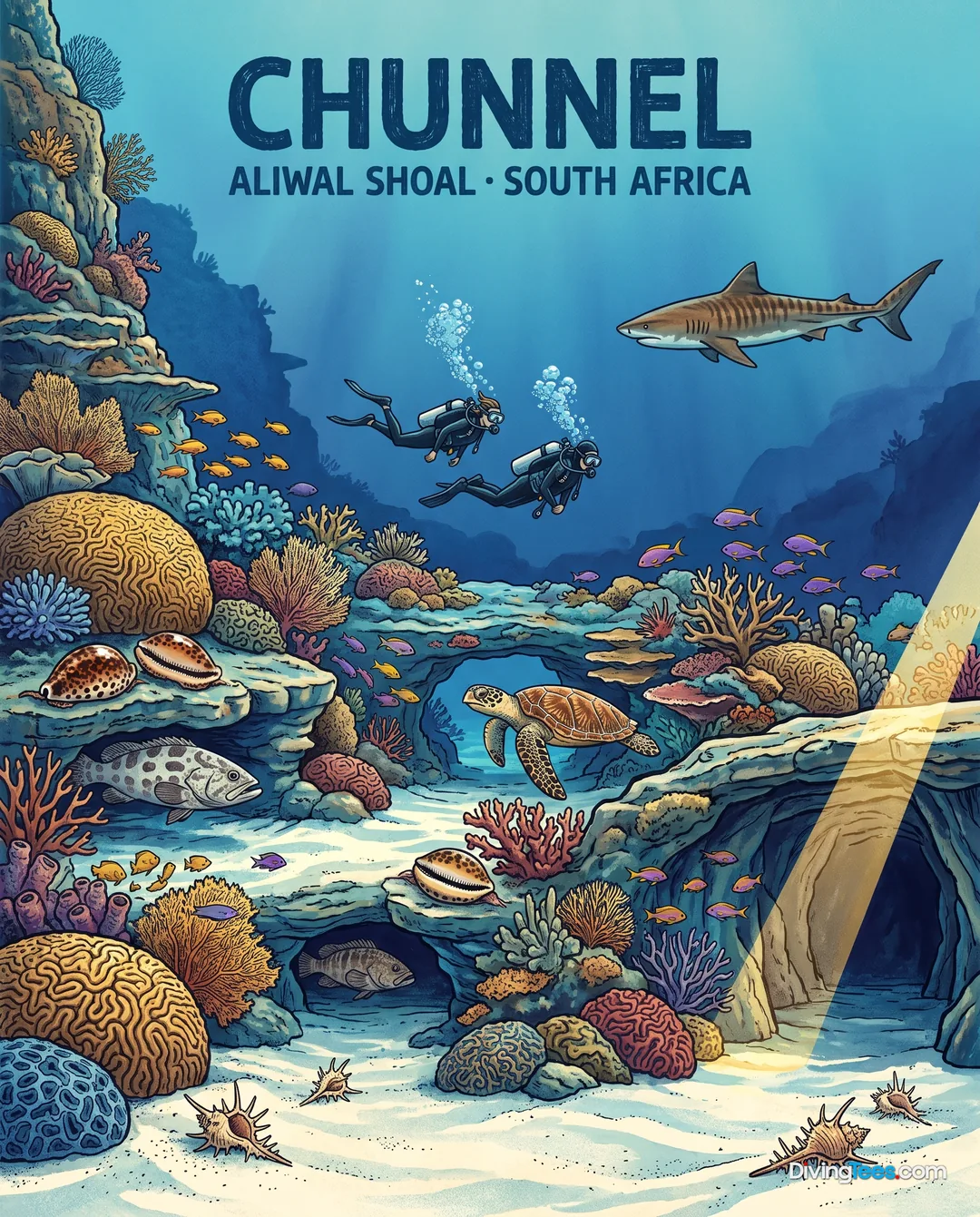
Most dives take place from a boat over exposed reef structure, with current and swell shaping the day. The terrain ranges from caves, corridors and overhangs at Chunnel to the deeper ridges and plateaus around Cathedral Reef. Chunnel runs between 11 and 20 metres, while The Produce lies between 16 and 33 metres and can carry a moderate north-to-south current. The Bull Ring reaches 30 metres and is deliberately current-rich, with drift-diving skills central to the experience. Visibility across the area is commonly reported between 8 and 30 metres, although the Sardine Run can extend that range to 40 metres. Descents, pickups and ascents are made offshore, so divers must be comfortable in blue water and able to follow a boat plan rather than relying on a protected entry point. North Sands is a shallower option, but even there currents can influence the dive.
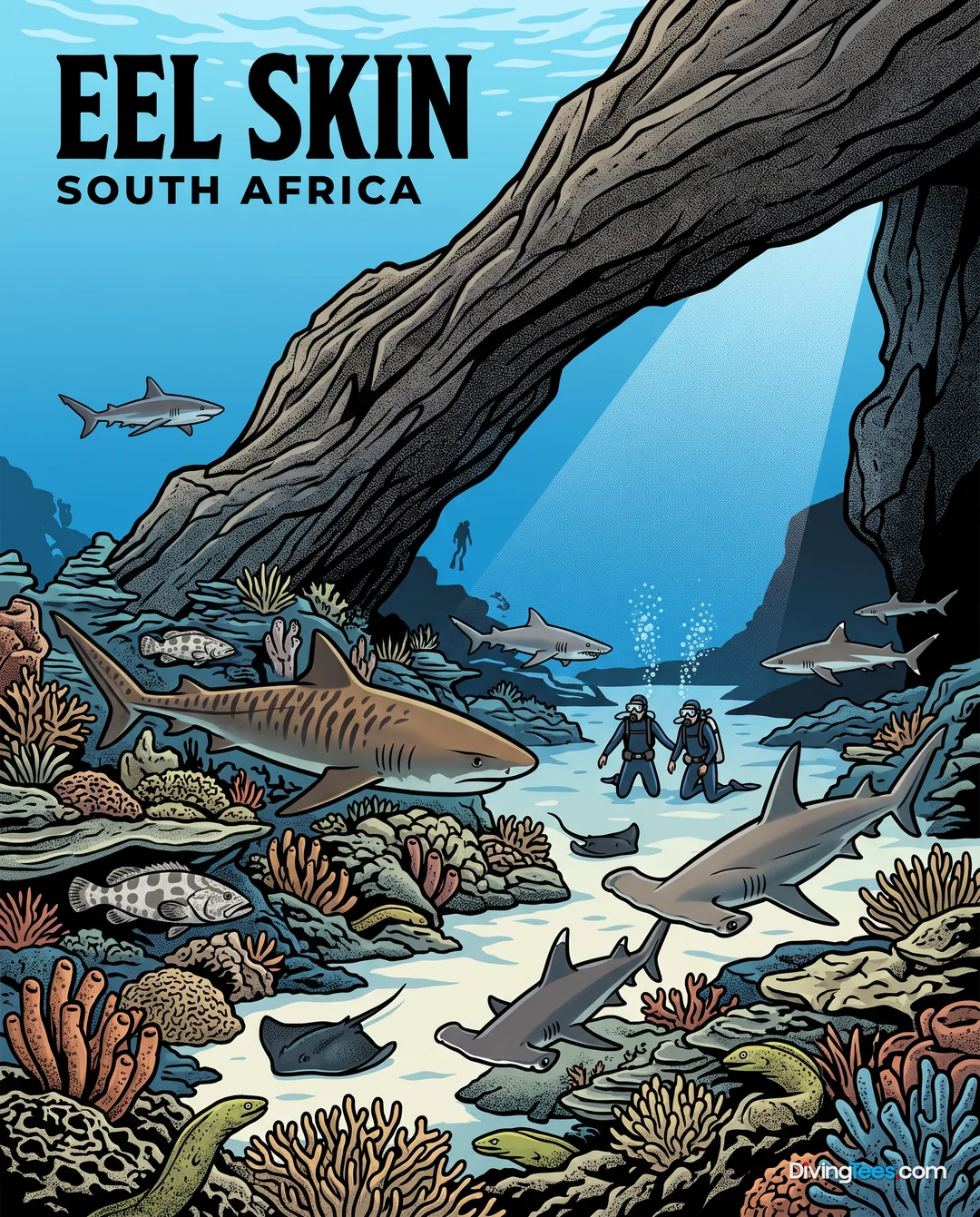
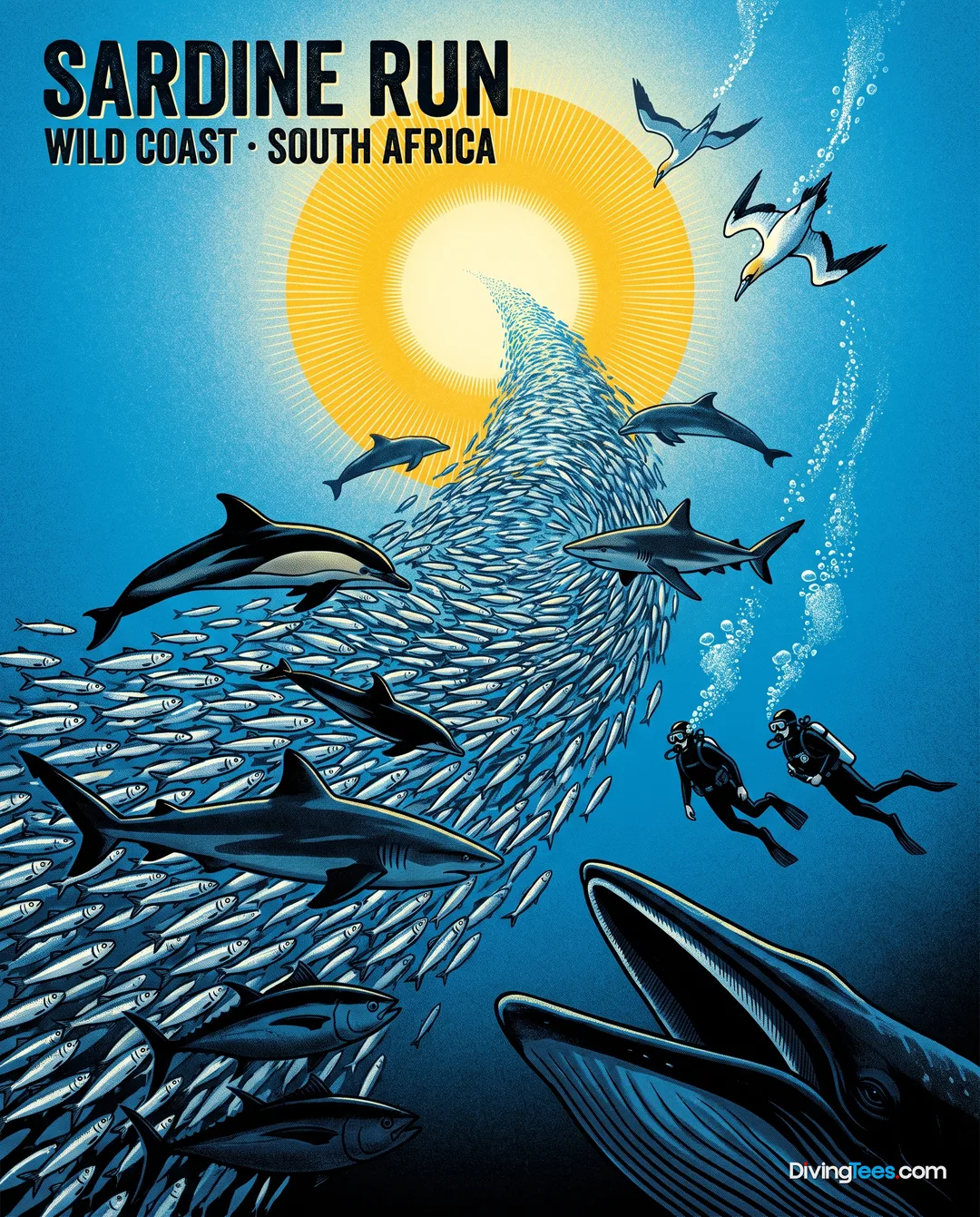
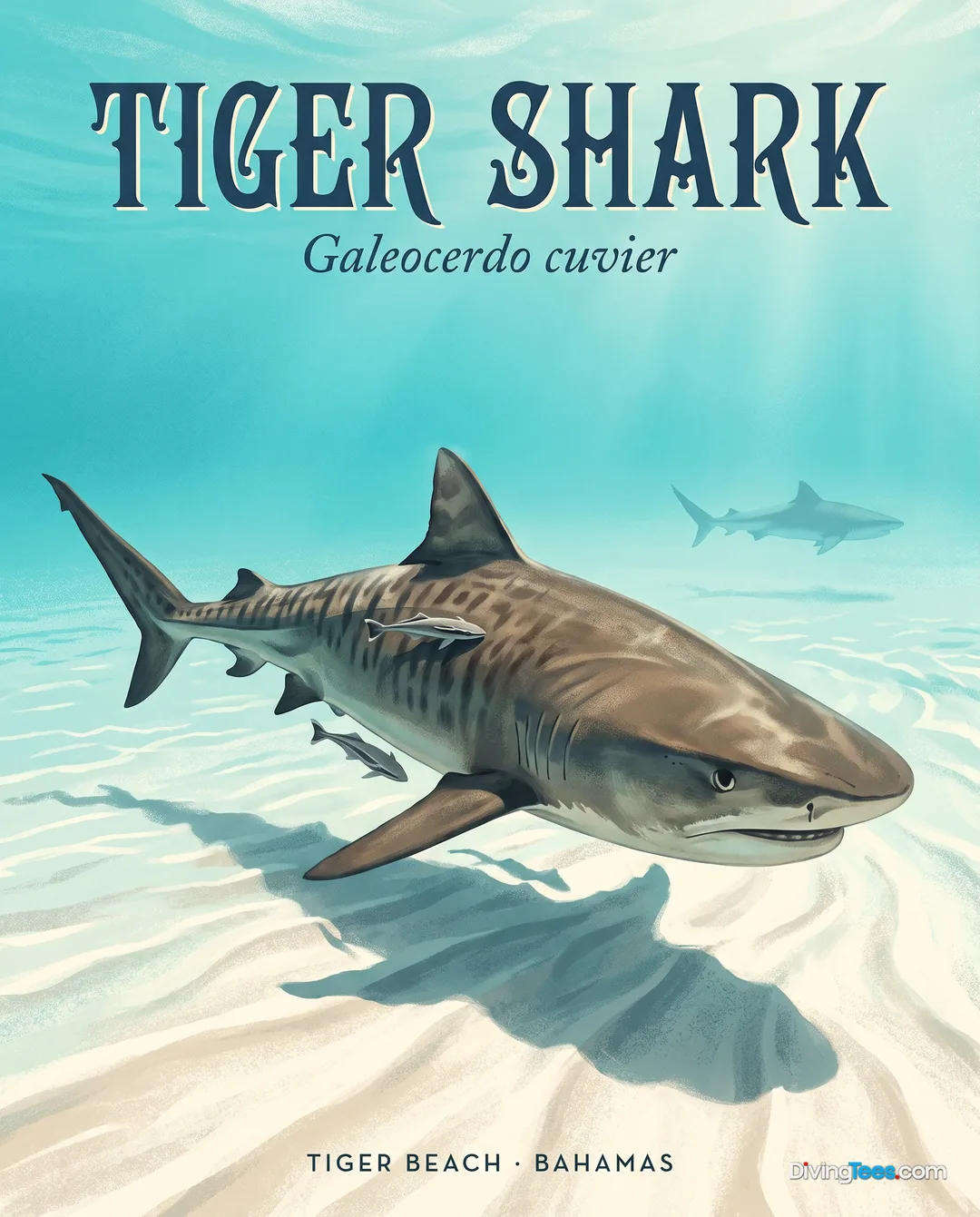
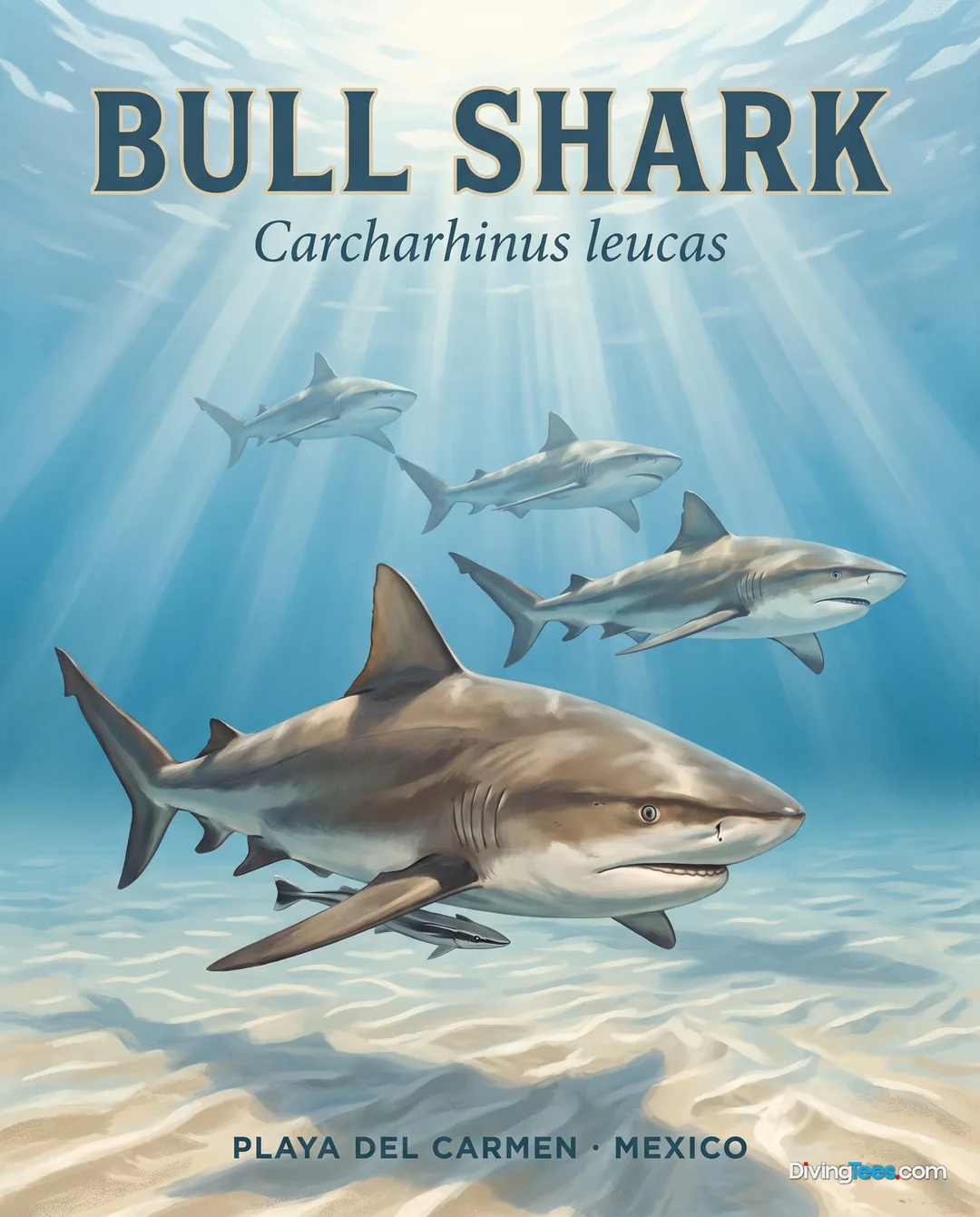
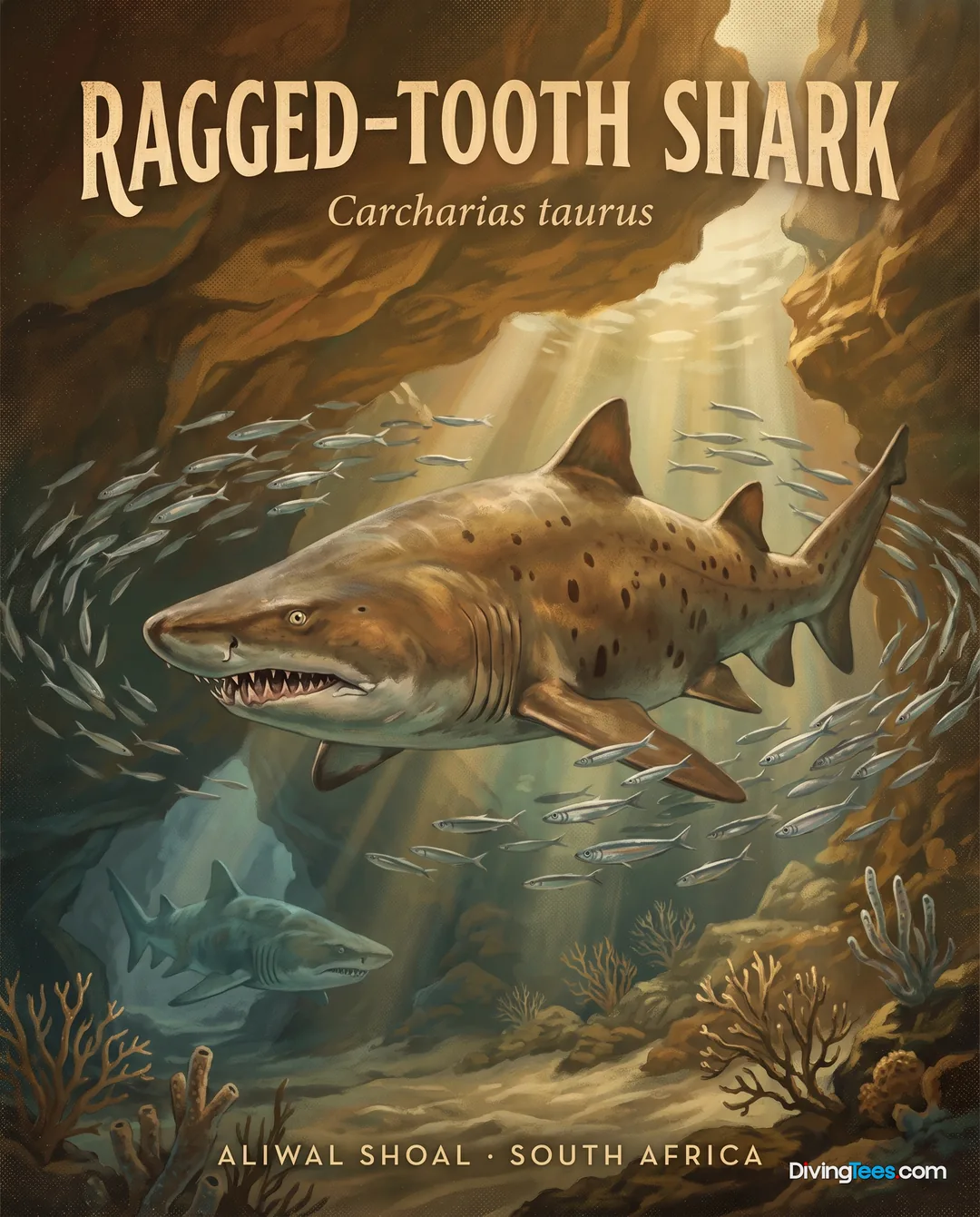
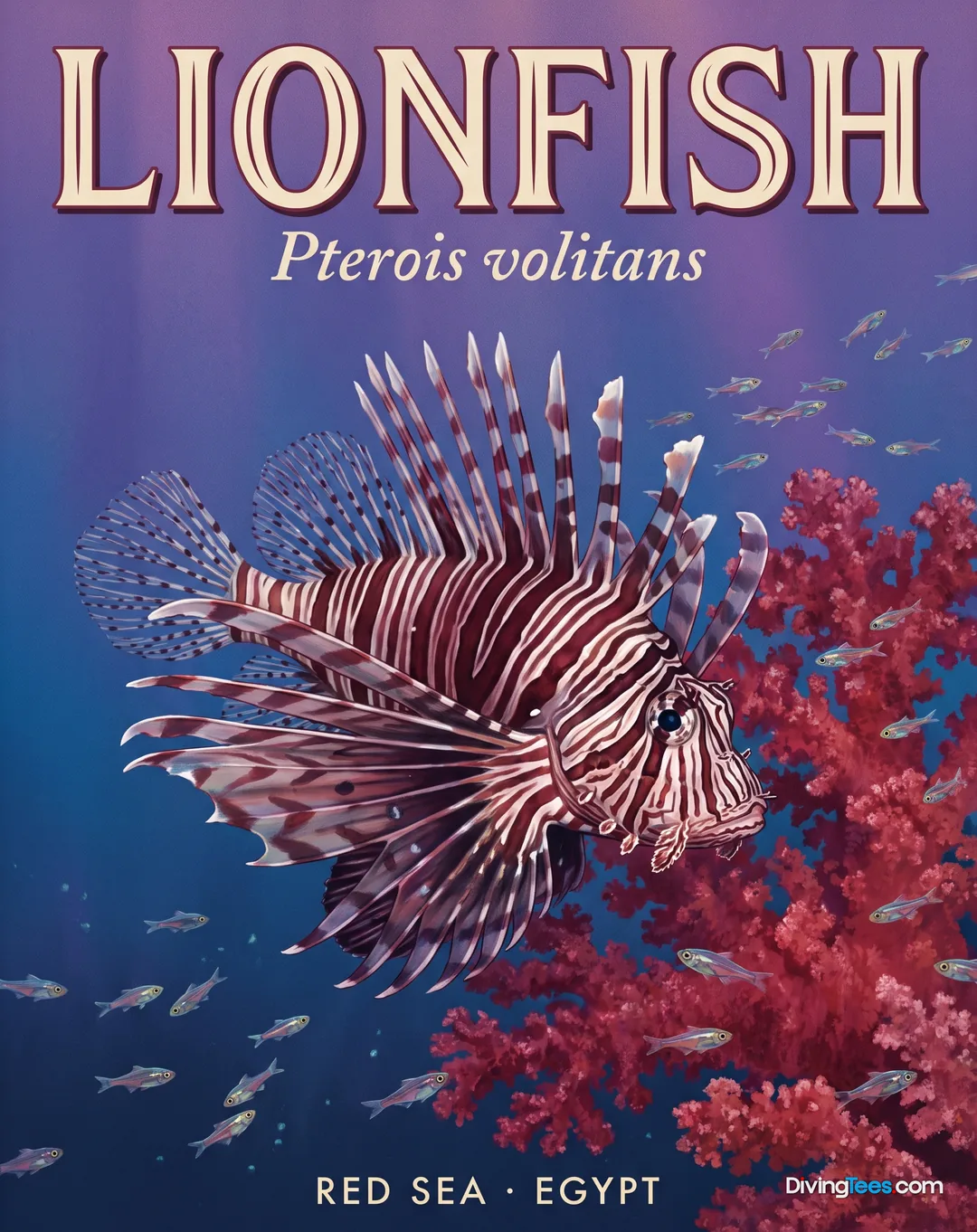
Sharks are the reason most divers come. Bull sharks are the main summer attraction at The Bull Ring, particularly from December to April, while ragged-tooth sharks are associated with Cathedral Reef from May to November and with Eel Skin from July to January. The Sardine Run can bring a far less predictable cast of predators, with advanced divers and snorkellers watching the action in open water. The reef itself supports potato grouper, brindle groupers, giant groupers, moray eel, lionfish, scorpionfish, rays, sea turtle, predatory fish, harlequin damselfish, harlequin goldies and harlequin sweetlips. Manta ray and tiger shark sightings add to the pelagic interest, but the attraction is the encounter with moving wildlife, not a guaranteed sequence of animals.
The measured diving window runs from December to May, while the lowest rainfall is recorded from May to August. December to April makes sense for divers putting bull sharks first, and May keeps the main window open as attention shifts towards ragged-tooth sharks. From May to November, Cathedral Reef is particularly relevant for those hoping to see larger gatherings, with the breeding period falling from July to November. The practical reason to allow several days is that Protea Banks is offshore: sea state can cancel a boat day even when the calendar looks ideal. The destination rewards flexibility more than a tightly packed itinerary.
Protea Banks is aimed at experienced divers who can manage current, swell, blue-water descents and an offshore pickup. Advanced Open Water is useful, and Nitrox earns its place on a repetitive boat-diving schedule. The Bull Ring and Cathedral Reef demand confidence in drift diving, while The Produce is deeper and structurally more complex. The Sardine Run requires at least Advanced Open Water, solid open-ocean experience and good physical fitness. BSAC divers should assess their readiness by those skills and conditions rather than by agency name.
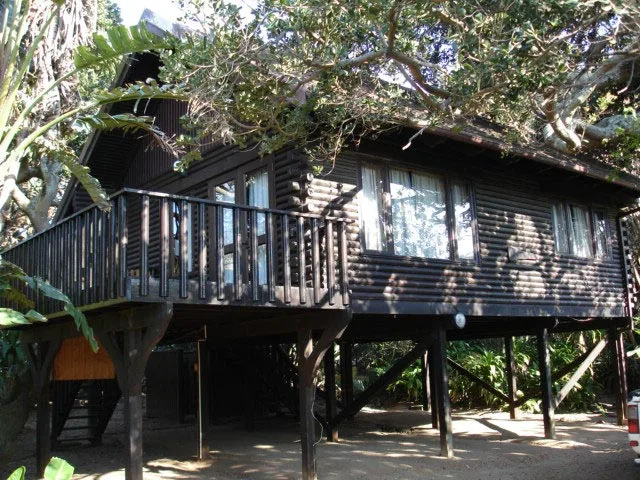
From London, the practical route is to fly from Heathrow or Gatwick to Durban, or to travel from Manchester to Durban using the available flight connections, then continue by road to the Margate or Marina Beach area. The South Coast road transfer is part of the journey, not a minor final hop. Once based there, diving is by boat from the local coast; there is no shore-based route to Protea Banks. Accommodation is normally linked to the dive centre or launch point by a short local transfer, shuttle or taxi. The trip therefore works best when the accommodation and boat departure arrangements are considered together, with enough slack for the road transfer on arrival and the boat schedule once in place.
Book Protea Banks for sharks and exposed reef, not for calm, beginner-style reef sightseeing. That single expectation prevents the most common disappointment. Keep a non-diving day available: boats depend heavily on sea state, and forcing a tight run of dives makes little sense when the reef is offshore. Pack for open-water boat work, including surface-signalling equipment if required for the planned pickup. Nitrox is genuinely useful when several boat dives are scheduled, rather than being an optional extra with little practical value. Ask before the day starts whether the plan is for the more exposed reef sections or a less demanding part of the system if current and blue-water descents are a concern. Treat The Produce as a proper advanced wreck, not merely a photo stop, and approach the Sardine Run as an extended open-ocean outing requiring fitness and drift-diving confidence. There is no meaningful shore-diving substitute if the boat does not run.
A sensible stay is land-based, with four to six days allowing for weather-dependent boat diving and repeated attempts at the main shark encounters. Accommodation on the KwaZulu-Natal South Coast is usually connected to the launch point by a short transfer, shuttle or taxi. Non-divers can use the coast for beach days and relaxation, while road excursions in the surrounding South Coast region fill a cancelled boat day. The rhythm is therefore simple: boat diving when conditions allow, coastal time when they do not.
Hello, I'm Marina, DivingDeal.com's AI assistant. I guide you through destinations, areas and countries.
Thinking about the whole trip and the flights? Talk it over with Edith →
Marina is an AI. Some links are affiliate links: DivingDeal may earn a commission, at no extra cost to you. Bookings are made with the partner.
The measured diving window runs from December to May. Choose December to April if bull sharks at The Bull Ring are your priority. May keeps the main window open while attention shifts towards ragged-tooth sharks at Cathedral Reef, which is particularly relevant from May to November. Sea conditions can still cancel boat dives.
Protea Banks suits experienced divers who can manage current, swell, blue-water descents and offshore pickups. Advanced Open Water is useful, while The Bull Ring and Cathedral Reef require confidence in drift diving. The Produce is deeper and structurally complex, and the Sardine Run requires Advanced Open Water, open-ocean experience and good fitness.
You can encounter bull sharks at The Bull Ring, ragged-tooth sharks at Cathedral Reef and Eel Skin, and the broken cargo wreck The Produce. Reefs support groupers, moray eels, lionfish, rays, turtles and predatory fish. Offshore encounters may include manta rays, tiger sharks and dusky sharks, while the Sardine Run brings unpredictable open-water action.
Plan a land-based stay with several days available for weather-dependent boat diving and repeated attempts at shark encounters. Fly to Durban, continue by road to the Margate or Marina Beach area, and arrange accommodation with the launch point in mind. Keep a non-diving day available for coastal time or regional road excursions.