Shark Cage Diving Gansbaai | White Shark Projects™
Google 4.8/5 (539 reviews)
South Africa · Africa
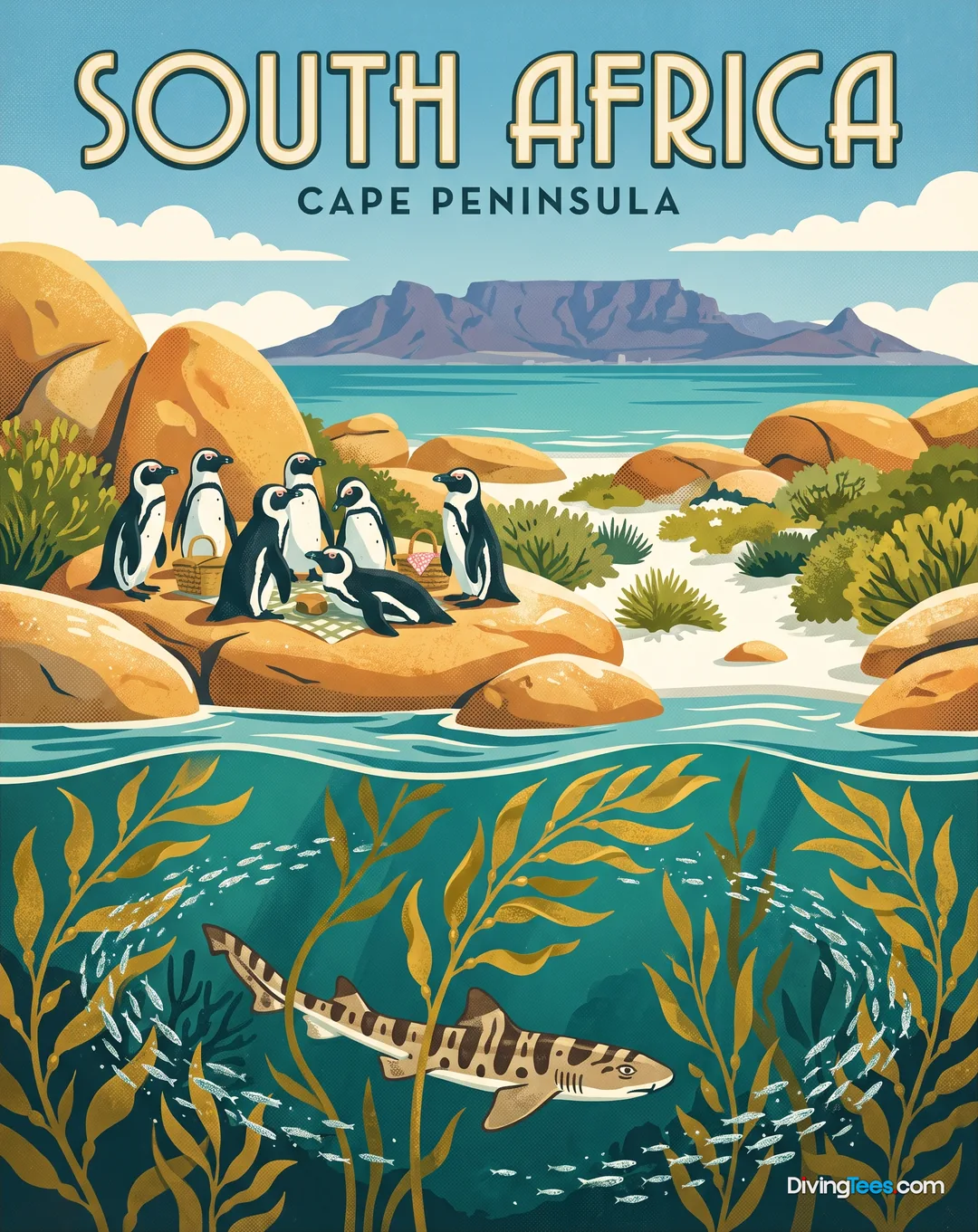
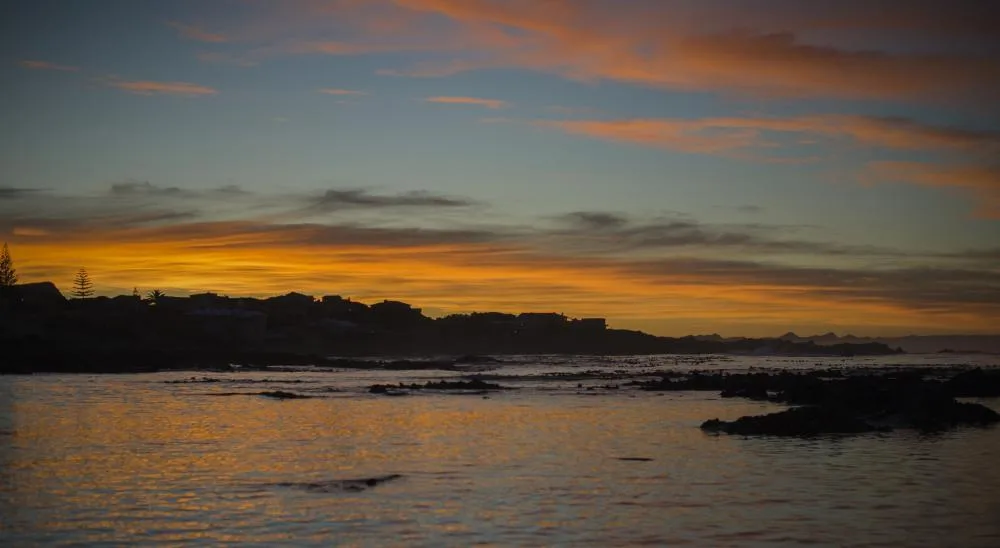
Rocky reefs, swaying kelp, Cape fur seals and the shallow waters around Dyer Island shape Gansbaai’s weather-dependent diving days.
For subtitles in English: start the video firstthen click the gearat the top right of the video, select “Subtitles/CC”, then “Auto-translate” and choose “English”.
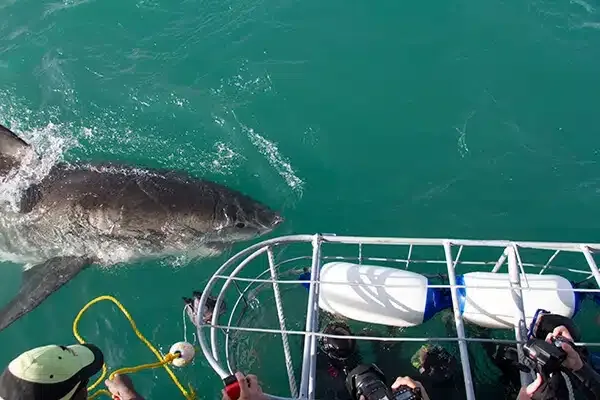
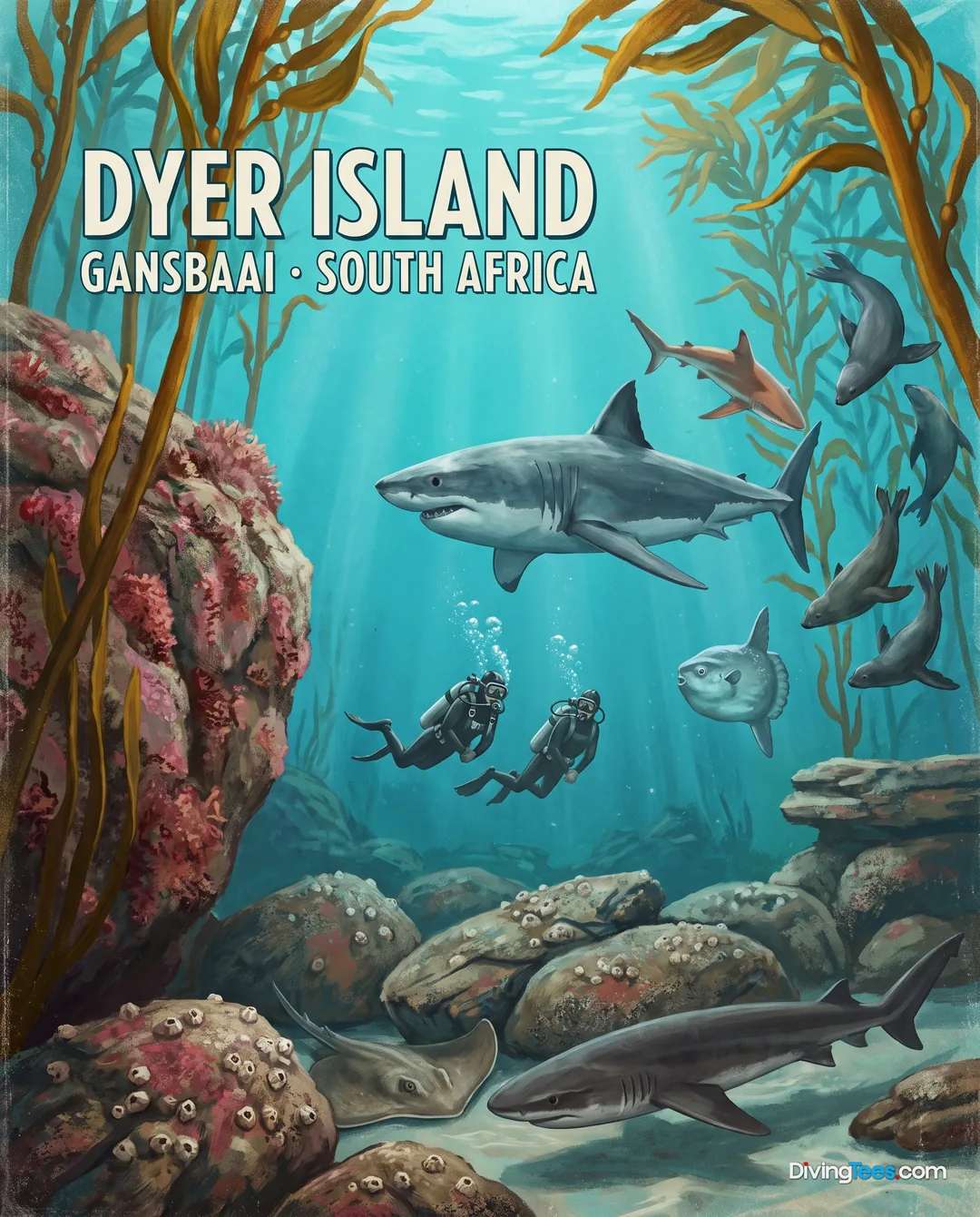
Gansbaai is a shore-based diving destination built around boat trips, rocky reefs, drop-offs and kelp rather than one single signature dive. The setting is open, exposed and closely tied to the Atlantic weather. Shark Alley brings a Cape fur seal colony into view, while Dyer Island is associated with shallow in-water shark encounters, including great white sharks. It suits divers who enjoy marine wildlife and changing coastal conditions, provided they allow time for the sea to dictate the programme.
Most dives leave by boat for rocky reefs, reliefs and areas of kelp. The underwater scenery is therefore shaped by natural rock and swaying kelp rather than tropical coral gardens, and the surroundings can feel very different from one outing to the next. Currents are variable and may become strong around Dyer Island as weather conditions change. Swell and shifting visibility are the more important practical tests than any constant current pattern. Shark Alley is a dynamic passage beside a substantial Cape fur seal colony; Dyer Island’s in-water activities are very shallow, typically no more than two metres, and are primarily associated with surface cage encounters rather than conventional deep scuba diving. Elsewhere, the diving is suitable for all levels in principle, but comfort in swell, controlled finning and calm responses in kelp matter more than a long list of qualifications.
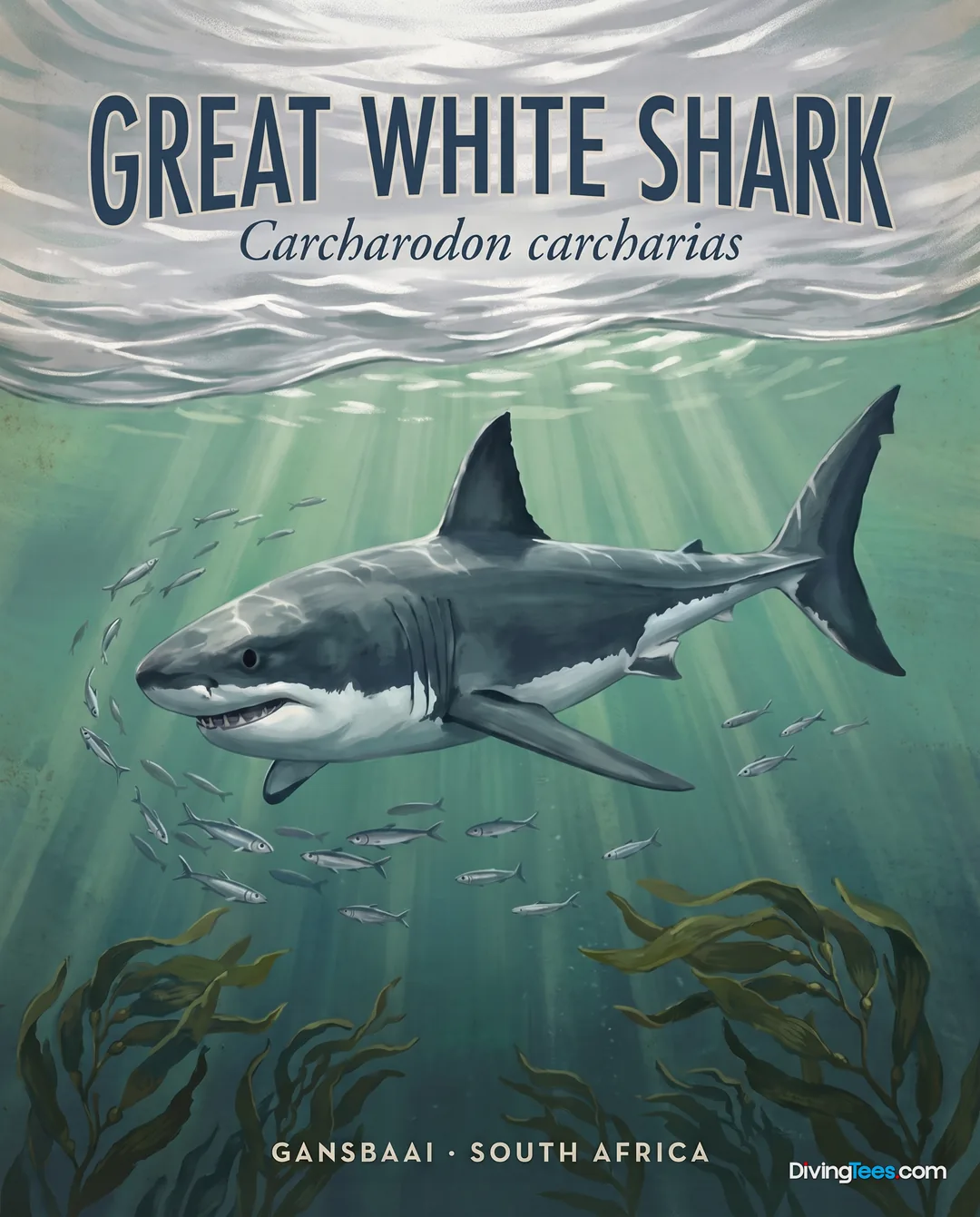
The wildlife focus is clear at Shark Alley, where the Cape fur seal colony is the immediate attraction and a reason large predators are present in the area. Great white sharks are closely associated with Gansbaai and Dyer Island, while bronze whalers and broadnose sevengills are also linked with the island’s marine environment. Shark Alley’s seal activity is particularly worth considering between May and November. Dyer Island offers wildlife encounters throughout the year, although the actual outing remains dependent on sea state and changing weather. The experience is not a guarantee of a particular animal: it is a chance to spend time in a working marine ecosystem, watching seals and looking into shallow water where shark activity may develop.
October to April is the clearest practical window for a Gansbaai diving stay, because the sea is measured as calmest during these months. Rainfall is also lower from October to March, which makes the wider coastal programme easier to arrange. This does not remove the need for flexibility: boat trips remain governed by the day’s swell and local weather. Shark Alley’s seal activity is highlighted from May to November, so the choice is a balance between calmer operating conditions and the seasonal character of that wildlife encounter. A short visit should therefore include spare days rather than rely on one fixed departure.
Gansbaai is open to divers of all levels, and the area can work for newcomers as well as experienced BSAC, PADI or SSI divers. The qualification itself is less decisive than the ability to remain composed in swell, manage buoyancy over rock and fin carefully through kelp. Dyer Island’s surface cage activities are shallow and do not require a scuba qualification, making them possible for non-divers too. Divers accustomed only to sheltered tropical water should expect a more changeable and physically exposed style of outing.
From London Heathrow, London Gatwick or Manchester, the journey starts with travel to Cape Town and continues by road to Gansbaai. There is no local airport to simplify the final leg, and no compulsory sea crossing: the essential transfer is terrestrial. The overall journey commonly takes around fourteen to eighteen hours, depending on the international connection and the final road transfer. Once in Gansbaai, the move from accommodation to the dive centre or embarkation point is generally a short local journey by car, taxi or shuttle. The important planning point is the handover between the Cape Town arrival and the road leg. A tightly timed arrival leaves little room for delays, and a late start can be awkward when the sea has already determined the day’s boat schedule.
Build the trip around a weather margin, not around a single booked diving day. If swell closes the boat window, the sensible answer is to move the outing to the following day; a three- to five-day stay makes that possible. Keep a land-based plan available as well, because Gansbaai’s marine wildlife and coastline can fill a day when diving cannot. Bring buoyancy that is already reliable before arriving. Rocky bottoms and kelp leave little room for careless fin strokes, and a diver who is constantly adjusting position will get less from the site and disturb the underwater scene. Check what cold-water equipment is supplied before travelling. Divers used to Mediterranean kit may find that a more substantial thermal set-up is the practical difference between watching the dive properly and ending it early. Finally, do not arrive expecting calm tropical reef diving: the Atlantic swell, variable visibility and boat dependence are part of the destination, not an occasional inconvenience.
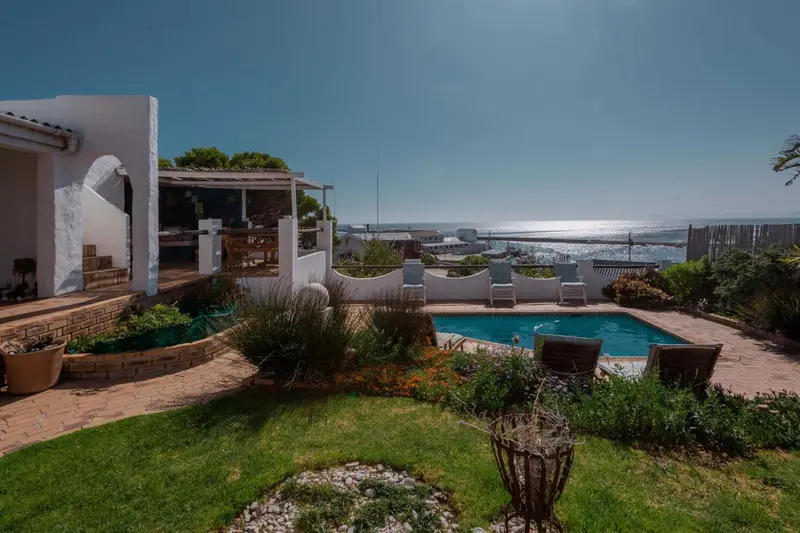
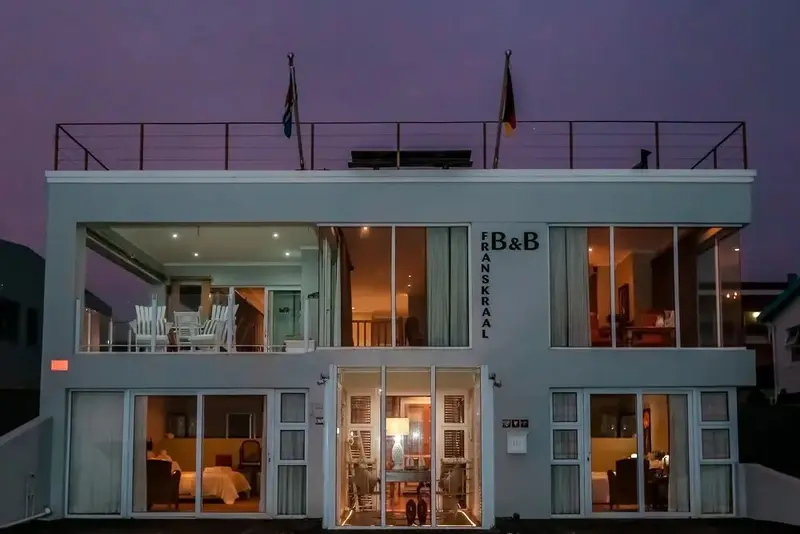
Gansbaai works best as a three- to five-day land-based stay, with diving arranged around the conditions each morning. The non-diving day is not wasted: the area offers marine wildlife watching, coastal outings and the rocky beaches of Overstrand and Walker Bay. That makes the destination workable for a non-diving companion, while leaving enough flexibility to move a boat trip when the sea closes the original plan.
Hello, I'm Marina, DivingDeal.com's AI assistant. I guide you through destinations, areas and countries.
Thinking about the whole trip and the flights? Talk it over with Edith →
Marina is an AI. Some links are affiliate links: DivingDeal may earn a commission, at no extra cost to you. Bookings are made with the partner.
October to April brings the calmest sea conditions, while rainfall is lower from October to March, making the wider coastal programme easier to arrange. Shark Alley’s Cape fur seal activity is highlighted from May to November. Whichever season you choose, keep spare days available because swell and weather govern boat departures.
Gansbaai is open to divers of all levels, including newcomers and experienced BSAC, PADI or SSI divers. Your qualification matters less than staying composed in swell, managing buoyancy over rocky bottoms and finning carefully through kelp. Divers used to sheltered tropical water should expect a more exposed, changeable outing.
Gansbaai offers rocky reefs, drop-offs and swaying kelp rather than tropical coral gardens. Shark Alley brings Cape fur seals, while Dyer Island is associated with shallow great white shark encounters. Bronze whalers and broadnose sevengills are also linked with the island’s marine environment, although no particular animal is assured.
Plan a land-based stay with flexibility for changing sea conditions, rather than relying on one fixed boat departure. Travel through Cape Town and continue by road to Gansbaai, allowing time for that transfer. Check cold-water equipment, keep a land-based alternative available, and arrange diving around the morning’s weather and swell.