

Spanish Dancer Divers
Google 4.9/5 (795 reviews)
Zanzibar · Tanzania · Africa
Max. depth · 40 mDescend into Shaab Said Canyon, where a teeming coral garden meets an exhilarating wall dive, bringing you face-to-face with schooling fish and cruising reef sharks.
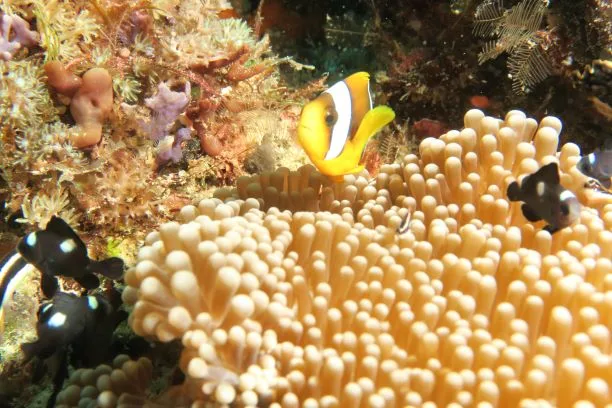
Shaab Said Canyon presents a dynamic underwater landscape, starting with a main reef that gracefully divides into a distinct canyon and a flourishing coral garden. As you drop into the site, the eastern side of the reef plunges towards depths beyond 40 metres, revealing a sprawling coral ecosystem that pulses with life. The topography here creates a natural amphitheater, where the interaction of light and shadow plays across the varied hard and soft coral formations.
The northern flank of Shaab Said reveals a dramatic wall, a focal point for much of the site's larger marine encounters. Hugging this vertical drop, you'll find yourself amidst vast schools of fish, their synchronized movements creating shimmering, fluid patterns against the blue. This is also a prime location for encountering some of Zanzibar's more iconic residents, including the graceful turtles that glide effortlessly past.
Keep a keen eye on the blue during your dive along the wall, as this area is regularly patrolled by various shark species. White-tip reef sharks (Triaenodon obesus) are a common sight, often seen resting on sandy ledges or cruising cautiously. Grey reef sharks (Carcharhinus amblyrhynchos), with their powerful, sleek bodies, also make appearances, adding an element of pelagic excitement to the dive. Their presence underscores the health and vitality of this particular reef system.
Navigating the main reef of Shaab Said, whether through the confines of its canyon or over the expansive coral garden, offers a constant spectacle of activity. The complex structure of the reef provides countless nooks and crannies for smaller reef inhabitants, while the open water above teems with the larger schools. It's a dive that rewards careful observation as much as appreciation for the grander scale of marine life.
The journey through Shaab Said Canyon deepens towards its maximum recorded depth of 40 metres on the eastern side, exposing you to the more robust coral growth adapted to these deeper, potentially current-swept environments. This depth allows for an extended exploration of the canyon's intricate formations, where light penetration diminishes and the colours become more muted, revealing a different kind of beauty and resilience.
Shaab Said Canyon is reserved for advanced divers due to its depth profile, which reaches up to 40 metres. Optimal conditions are crucial, as the dive requires good weather and calm sea states to ensure a safe and enjoyable experience. While visibility can be excellent, the specific visibility at this site is not consistently documented. There is no specific best period for this site, but the regional diving season generally runs from November to March.
Shaab Said Canyon has no specific best period listed. You can consider it during Zanzibar’s regional diving season, which generally runs from November to March. Planning should still account for the site’s requirement for good weather and calm sea states, as conditions are important for a safe, enjoyable dive.
Shaab Said Canyon is reserved for advanced divers because of its depth profile. The eastern side reaches beyond 40 metres, while the site’s maximum recorded depth is 40 metres. This deeper terrain includes the canyon’s intricate formations and coral growth adapted to deeper environments.
Shaab Said Canyon requires good weather and calm sea states for a safe and enjoyable experience. The deeper eastern sections can be potentially current-swept, adding to the demands of the dive. Visibility can be excellent, although its conditions are not consistently documented for this site.
At Shaab Said Canyon, you can explore a distinct canyon, coral gardens, and a dramatic wall supporting vast schools of fish. Turtles may glide along the reef, while white-tip reef sharks and grey reef sharks can appear near the wall. Hard and soft corals add detail to the landscape.