
Sunchaser Scuba
Google 4.9/5 (193 reviews)
Peter Island · British Virgin Islands · Caribbean
Max. depth · 15 mDescend into the heart of a unique lava tube cave at Lee Bay, a geological marvel teeming with striped coral shrimp and glassy sweepers.
For subtitles in English: start the video firstthen click the gearat the top right of the video, select “Subtitles/CC”, then “Auto-translate” and choose “English”.
Dropping into Lee Bay on the south side of Great Camanoe, the immediate impression is one of gentle exploration, an invitation to a sheltered world. The dive begins with a clear visual line towards the island, where the most distinctive feature of this site, a lava-formed 'grotte', awaits. This underwater cave is not merely a recess but a geological window, offering insight into the volcanic past that sculpted these islands and now provides a unique habitat for a variety of marine life.
As you approach the entrance of the cave, situated at a comfortable 6 meters, the light plays on the volcanic rock formations. This entrance acts as a natural beacon, guiding you into a darker, yet equally vibrant, interior where the true residents of this unique structure reveal themselves. The transition from the open reef to the cave interior is subtle, requiring a mindful adjustment to the shifting ambient light and the confined space, enhancing the sense of discovery as you penetrate deeper.
Within the protected confines of this subterranean world, life thrives on the cave walls and ceiling. Here, you'll encounter numerous lobsters, often tucked into crevices, their antennae waving tentatively from their hidden perches. The striped coral shrimp (Stenopus hispidus) are particularly prominent, their distinctive patterns making them easy to spot as they meticulously clean the rocks, offering a moment of quiet observation as they go about their relentless work.
Further inside, or sometimes just at the entrance, you'll be enveloped by shimmering schools of glassy sweepers (Pempheris schomburgkii). These fish congregate in dense formations, their bodies reflecting the limited light, creating a mesmerising, living curtain that parts and closes with your passage. Their presence adds a dynamic element to the cave, transforming it from a static geological feature into a bustling, vibrant ecosystem, alive with constant motion and subtle interactions.
The maximum depth achievable at Lee Bay is 15 meters, keeping the dive well within the scope of a relaxed exploration, even for newer divers. The gentle slope of the bay combined with the structured environment of the cave provides an ideal setting for honing buoyancy control while observing the intricate details of a specific microhabitat. This depth range ensures ample bottom time to truly absorb the distinct atmosphere and biological richness of this unique lava formation.
This site is recognized as suitable for novice divers, with a maximum depth of 15 meters. The dive is centered around a lava cave, with an entrance situated at approximately 6 meters.
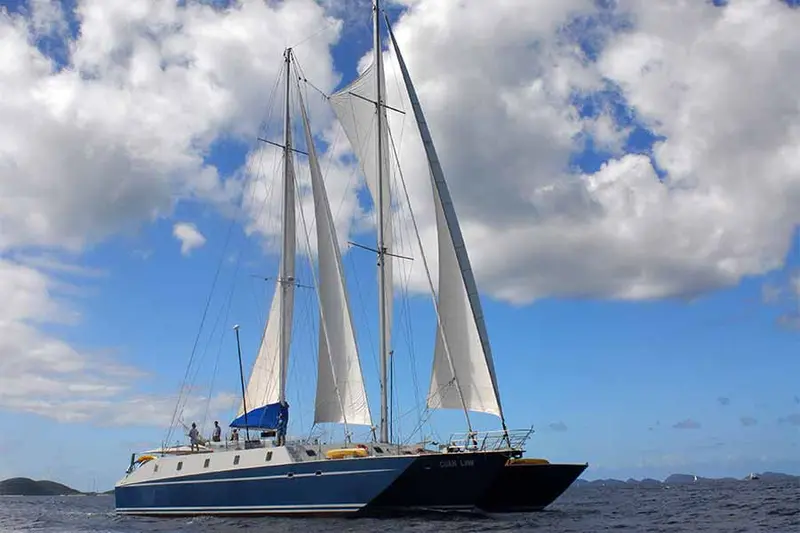
One liveaboard runs trips to Peter Island.
Lee Bay is recognized as suitable for novice divers. You can explore a gentle slope in the bay and practice buoyancy control around a structured lava cave environment. The site offers a relaxed exploration within a maximum depth of 15 meters, while the cave provides a distinctive setting for observing marine life.
Lee Bay reaches a maximum depth of 15 meters. The lava cave entrance is situated at approximately 6 meters, creating a transition from the open reef into the darker interior. This depth range keeps the dive within a relaxed exploration setting and allows you to observe the site’s geological and marine features.
At Lee Bay, you can explore a lava-formed underwater grotte on the south side of Great Camanoe. Its entrance is situated at approximately 6 meters, where volcanic rock formations lead into a darker interior. The cave provides insight into the volcanic past of the islands and creates a habitat for marine life.
At Lee Bay, you can observe lobsters tucked into cave crevices, striped coral shrimp, Stenopus hispidus, cleaning the rocks, and schools of glassy sweepers, Pempheris schomburgkii. The sweepers may gather at the cave entrance or farther inside, forming shimmering groups within the limited light of the lava-formed grotte.