
Sunchaser Scuba
Google 4.9/5 (193 reviews)
19 km away as the crow flies
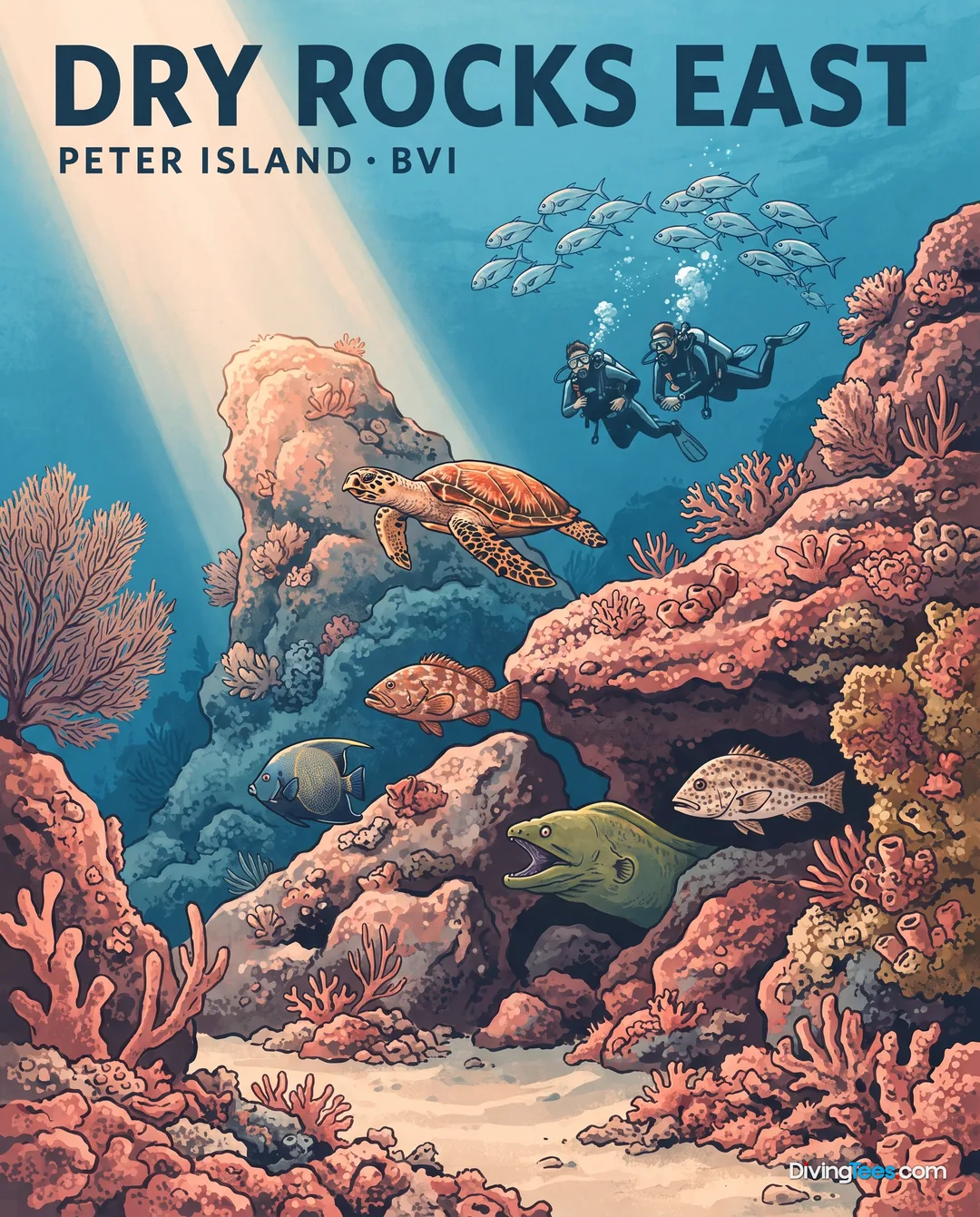
Peter Island · British Virgin Islands · Caribbean
Max. depth · 26 mDescend into the remarkably preserved sections of the RMS Rhone, a 19th-century mail steamship resting off Salt Island, offering a tangible link to a bygone era.
For subtitles in English: start the video firstthen click the gearat the top right of the video, select “Subtitles/CC”, then “Auto-translate” and choose “English”.
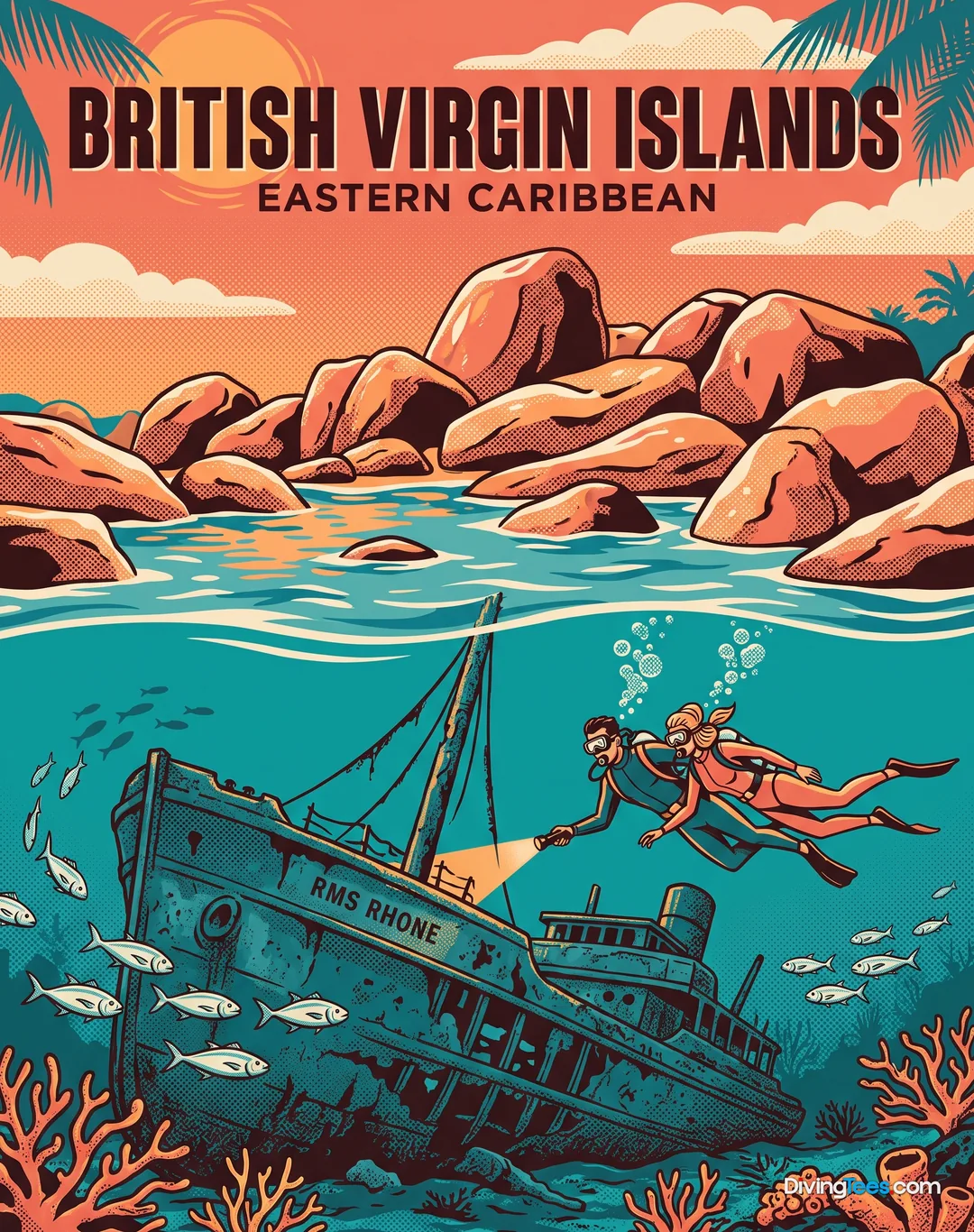
The RMS Rhone, a Royal Mail Ship built in 1865, met its end in 1867 during a hurricane off Salt Island. What remains is an iconic wreck, revered as the British Virgin Islands' premier sub-aquatic historical site. The vessel lies broken into two main sections, a testament to the powerful storm that claimed it, creating distinct diving experiences between the shallower stern and deeper bow. This dive offers a direct connection to a 19th-century maritime tragedy, with the ship's structure still largely recognisable.
Your descent reveals the sprawling form of the Rhone, a testament to the iron and wood that once plied these waters. The wreck is scattered across the seabed, with the stern section relatively shallow, parts around 5 to 11 metres, while the bow section is deeper, reaching about 24 to 26 metres. Between these two main sections, debris and structural elements are spread, allowing for an exploration that feels both archaeological and deeply personal as you navigate its remnants.
The stern section offers a more intact experience, featuring the massive propeller and rudder, still largely in place. Here, the hull is broken but largely open, allowing for extensive coral encrustation and large swim-through areas rather than tight penetration. As you move through this shallower part, you can discern the ship's original layout, imagining the vessel's life before its dramatic sinking. The overall relief is moderate, rising several metres off the seabed, providing clear visual landmarks.
Moving towards the deeper bow section, the wreck becomes more broken, yet equally intriguing. Recognisable features such as masts, davits, and boilers are still present, offering insights into the ship's engineering. Penetrating deeper into the more open sections, where natural light filters unevenly, you observe the sheer size of components like the drive shaft. Each rivet and plate tells a silent story of its 19th-century construction and its final moments.
The environment around the RMS Rhone is surprisingly vibrant, with the wreck itself acting as a sprawling artificial reef. Coral formations have taken hold across the structure, softening the edges of the iron and creating intricate habitats. While navigating inside some of the more open sections, you'll encounter a variety of reef fish darting between the metal beams. The ship's structure offers shelter and sustenance, making it a focal point for resident marine life.
Among the resident marine life, you will commonly find parrotfish, angelfish, grunts, and snappers taking shelter within the wreck's framework. Barracuda are often seen patrolling the perimeter, while lobsters, moray eels, and octopus hide within the crevices. Damselfish, sergeant major, and wrasse add to the constant activity around the coral-encrusted hull, creating a dynamic interplay between history and nature.
The ambiance of the Rhone changes throughout the day, offering different perspectives with each dive. During the day, abundant light allows for clear views of the wreck's structure and its inhabitants, accentuating the details of its historical components. Night dives unveil a completely different character, transforming the wreck into a stage for nocturnal life, illuminated only by your torch beams, revealing creatures that remain hidden during daylight hours.
This site is one of the Caribbean’s most famous wreck dives, widely cited for its combination of dramatic history, intact structural features, and prolific marine life. Lying within a designated national park, you can see notable artifacts such as the foremast, crow’s nest, signaling cannon, and the massive bronze propeller. The Rhone’s story, including its connection to the 1867 hurricane and local lore, adds a strong historical and emotional context to every dive.
The RMS Rhone offers diving depths from 5 metres on the shallower stern section down to 26 metres on the deeper bow. This site is generally considered an advanced dive due to its depth and the frequent presence of strong currents, particularly on the deeper bow section. While calmer days occur, conditions can change with weather and tides, so dives are typically guided. Visibility ranges from 15 to 30 metres, and water temperature remains consistently warm, around 27°C.
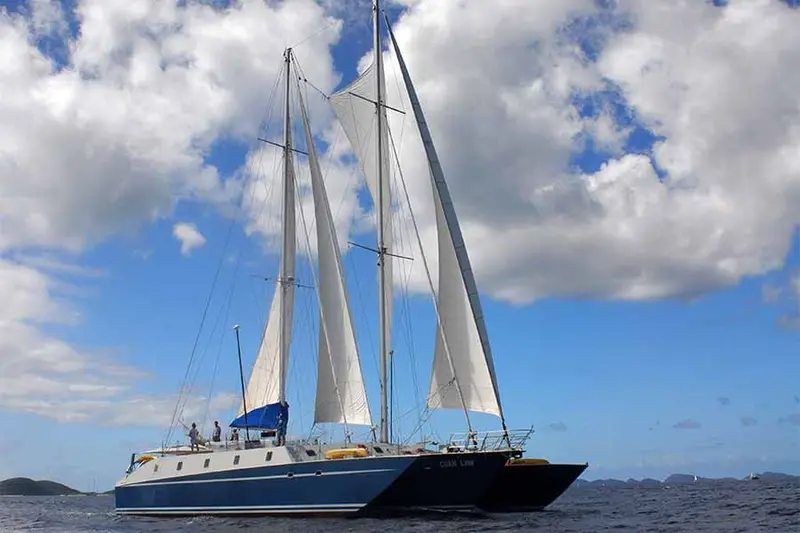
One liveaboard runs trips to Peter Island.
RMS Rhone offers both day and night dives. During daylight, abundant light helps you view the wreck’s structure and marine life clearly. At night, torch beams reveal a different atmosphere and nocturnal creatures hidden during the day. Water temperature remains consistently warm, around 27°C, while visibility ranges from 15 to 30 metres.
RMS Rhone is generally considered an advanced dive because of its depth and frequent strong currents. You can explore the shallower stern from around 5 to 11 metres, while the deeper bow reaches about 24 to 26 metres. The site includes open swim-through areas and preserved wreck sections, with dives typically guided.
At RMS Rhone, strong currents are frequently present, particularly around the deeper bow section. Calmer days also occur, but weather and tides can change conditions. Because of this variability, dives are typically guided. Visibility ranges from 15 to 30 metres, and the water remains consistently warm at around 27°C.
At RMS Rhone, you can explore the intact stern propeller and rudder, preserved wreck sections, coral-covered iron hull, masts, davits, boilers, drive shaft, and signaling cannon. Marine life includes barracuda, moray eels, octopus, parrotfish, angelfish, grunts, snappers, lobsters, damselfish, sergeant major, and wrasse around the structure.