
Sunchaser Scuba
Google 4.9/5 (193 reviews)
43 km away as the crow flies
Peter Island · British Virgin Islands · Caribbean
Max. depth · 21 mFeel the pull of the open ocean currents at Carvel Rock, a prominent offshore pinnacle at Peter Island, known for its active pelagic life.
For subtitles in English: start the video firstthen click the gearat the top right of the video, select “Subtitles/CC”, then “Auto-translate” and choose “English”.
Carvel Rock rises dramatically from the seabed off Peter Island, a formidable sentinel directly facing the open ocean. This exposure dictates the dive experience, as strong currents often sweep across its rocky face. As you descend, you immediately feel this energy, a consistent moderate to strong flow that carries nutrients and attracts larger marine inhabitants, making every dive an engaging drift, even when holding your position to observe the passing scene. The rock itself is a vibrant canvas, covered in a rich tapestry of corals and sponges, teeming with smaller reef fish sheltering from the flow.
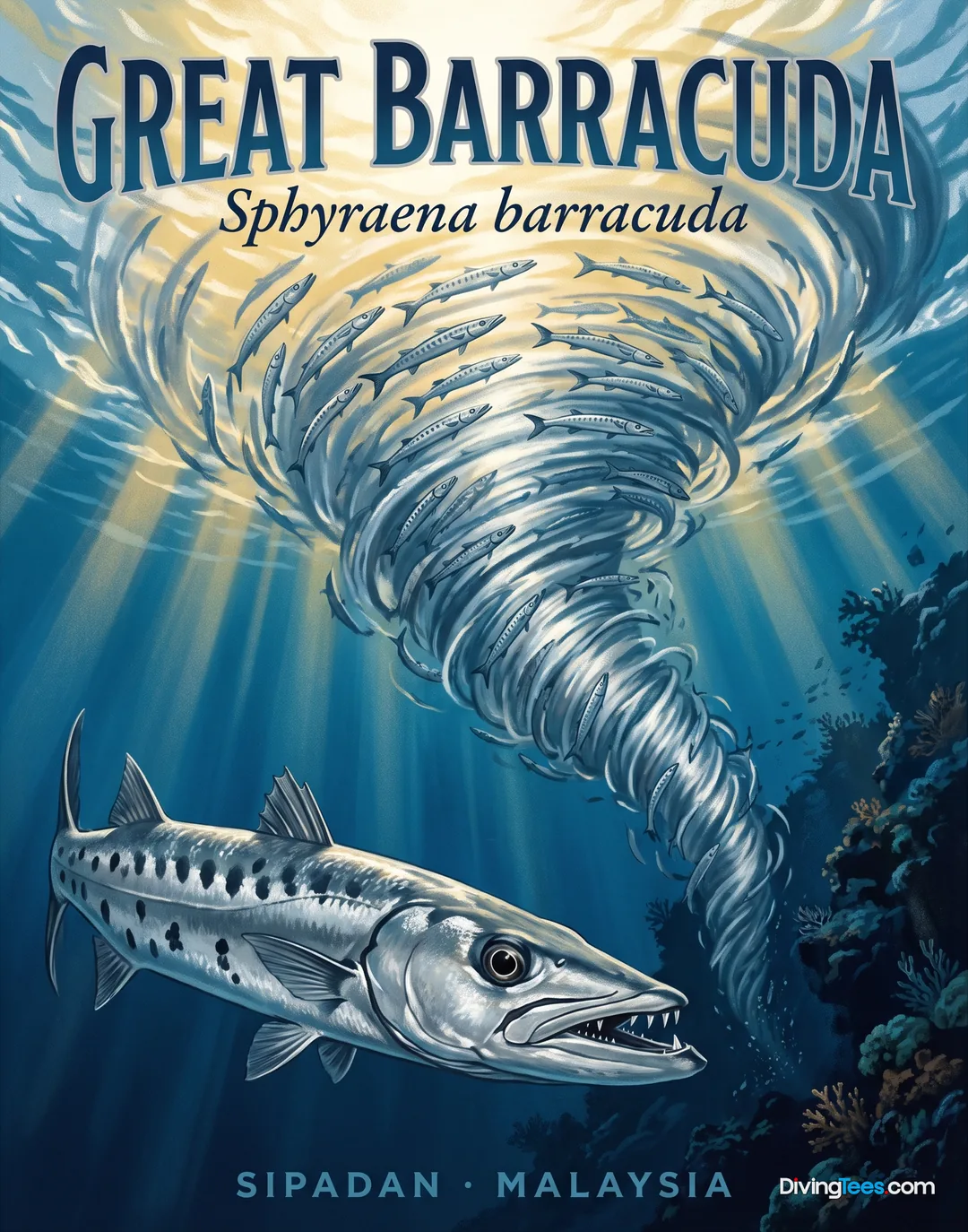
The dive profile at Carvel Rock typically involves exploring the various facets of this substantial rock formation. From a minimum depth of 12 metres, you can trace the contours of the rock, watching for the resident schools of sennet (Sphyraena barracuda) that hold their position against the current, their silver bodies a shimmering wall. As you push deeper, towards the maximum depth of 21 metres, the rocky features become more pronounced, offering crevices and overhangs that provide respite and hiding spots for smaller critters, while the main event often plays out in the blue.
What truly sets Carvel Rock apart is its reputation as a magnet for larger pelagics, drawn by the nutrient-rich currents. Keep your eyes peeled beyond the reef structure; this is prime territory to spot reef sharks (Carcharhinus perezi) cruising effortlessly through the blue, their presence a confirmation of the site's healthy ecosystem. Barracuda (Sphyraena barracuda) often patrol the deeper edges, their solitary forms or small groups perfectly camouflaged against the open water, ever watchful for a passing meal. The dynamic nature of the currents here means that each dive can unveil entirely new encounters.
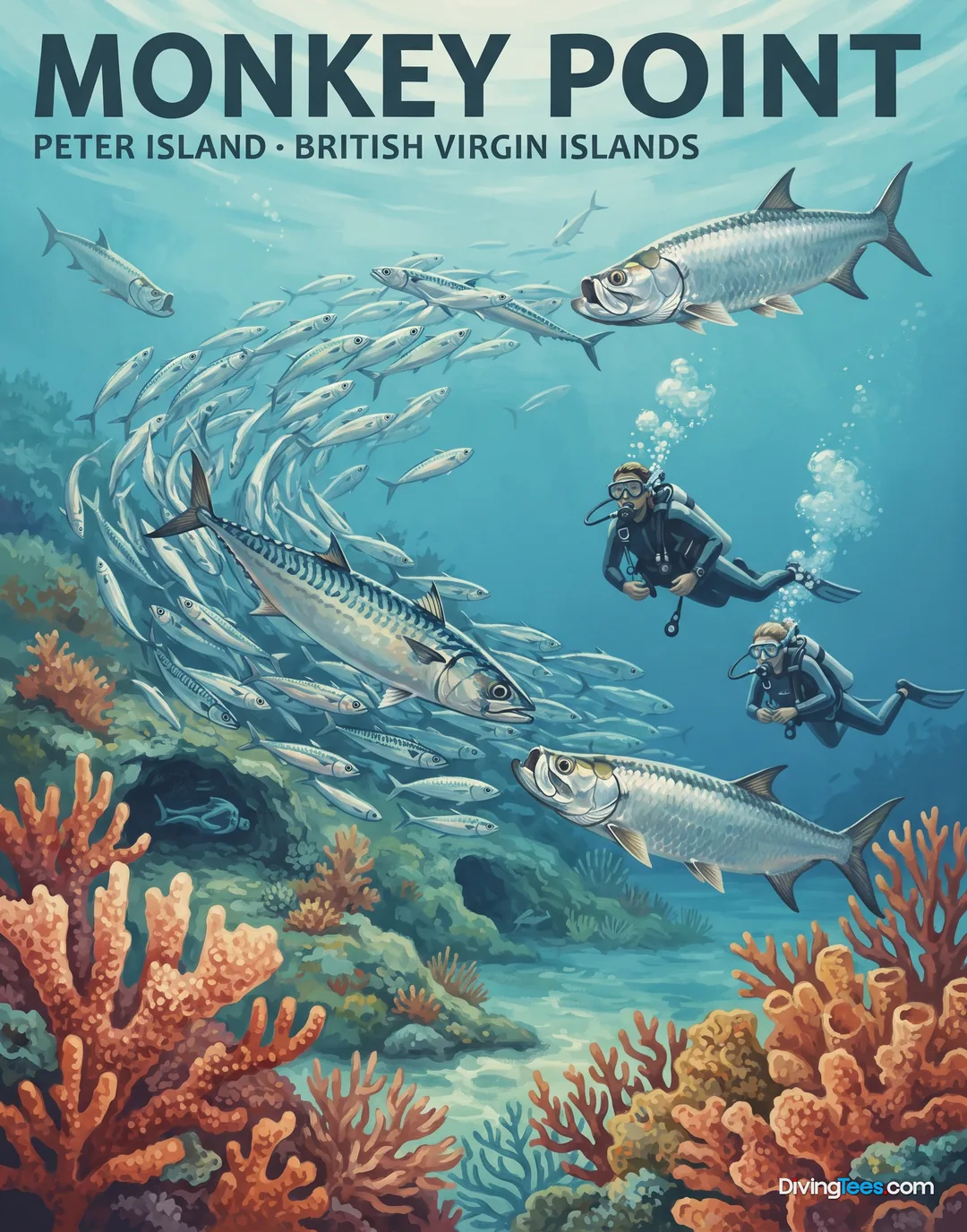
The exposed nature of Carvel Rock ensures a consistent flow, which, while requiring attention to current management, also guarantees a dynamic environment rich in marine action. Large mackerel (family Scombridae) are frequently sighted, often appearing suddenly from the deeper waters, their sleek, powerful forms a fleeting glimpse for the attentive diver. The interplay of light and shadow on the rock face, combined with the constant movement of the water, creates a continually evolving underwater landscape, rewarding keen observation and offering a distinct departure from more sheltered reef dives within the BVI.
Diving at Carvel Rock is considered an Advanced level dive, due to the open-ocean exposure and the prevalence of moderate to strong currents. Depths for exploration range from a comfortable 12 metres down to 21 metres, allowing for good bottom time in this active environment. Divers should be proficient in current diving techniques and comfortable with varying conditions.
One liveaboard runs trips to Peter Island.
Carvel Rock is considered an advanced-level dive because it faces the open ocean and commonly has moderate to strong currents. You should be proficient in current-diving techniques and comfortable with changing conditions while exploring the rock formation and managing your position in the flow.
At Carvel Rock, you can explore from 12 metres down to 21 metres. The shallower sections let you trace the contours of the large offshore rock, while deeper areas reveal more pronounced rocky features, crevices and overhangs that provide shelter for smaller marine life.
Carvel Rock is exposed directly to the open ocean, so moderate to strong currents often sweep across its rocky face. You may experience a consistent flow and an engaging drift, while holding your position to observe the reef. Attention to current management is important throughout the dive.
At Carvel Rock, you can see corals, sponges and smaller reef fish around the rock formation, along with schools of sennet. Look into the blue for reef sharks and mackerel, while barracuda often patrol the deeper edges. Nutrient-rich currents also attract frequent pelagic encounters.