
Bigorno Diving Center
Google 5/5 (558 reviews)
Trou aux biches · Mauritius · Indian Ocean
Max. depth · 36 mDescend into the dramatic canyons of Hidden Reef, where massive rock formations provide intricate cover for diverse marine life and serve as a highway for pelagic visitors.
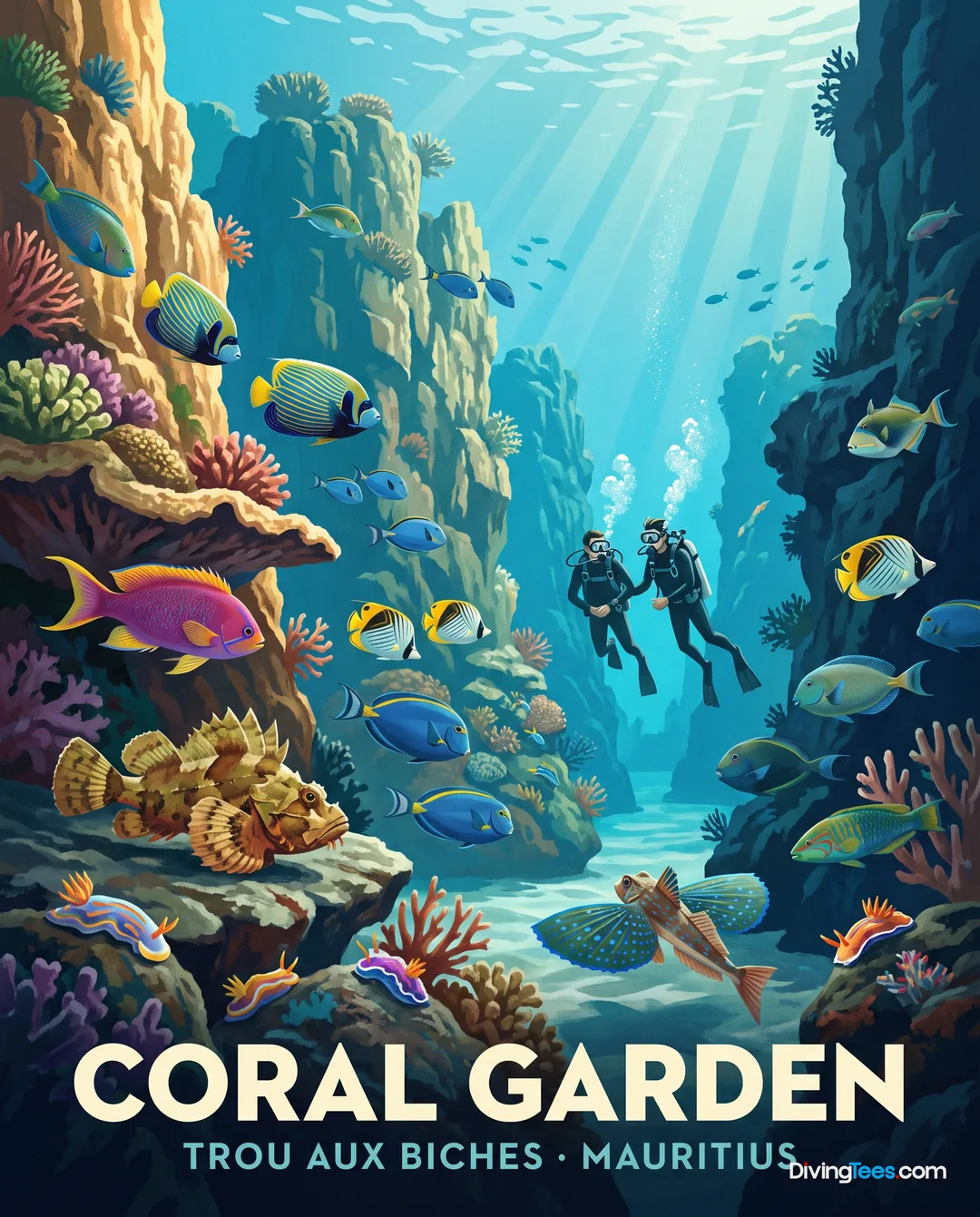
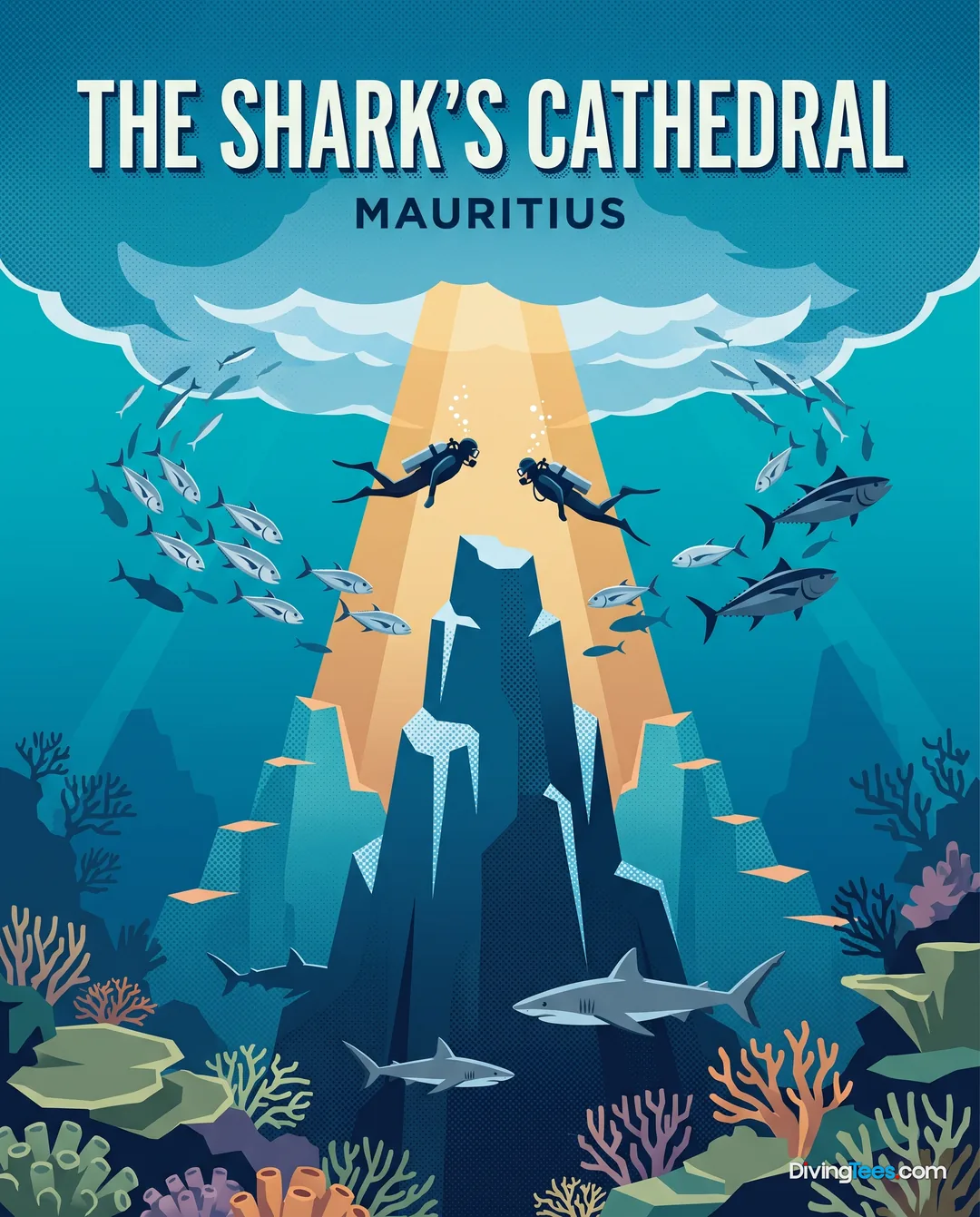
Dropping into Hidden Reef, you immediately encounter a landscape dominated by colossal rock formations, earning it the moniker Whale Rock. These ancient structures are not merely scattered boulders but form a complex network of canyons and overhangs, creating a three-dimensional maze that divers can explore. The light plays dramatically through these crevices, particularly in the shallower sections, illuminating coral growth and revealing countless nooks and crannies.
The topography here is a compelling feature, quite distinct from typical reefscapes. As you navigate deeper, following the natural contours of the rocks, the canyons become more pronounced, offering a sense of exploration into an underwater labyrinth. This intricate structure acts as both shelter and hunting ground, attracting a variety of reef fish that thrive within its protective folds, moving with ease through the natural passageways.
The site's position at the tip of Cap des Canonniers places it squarely in a dynamic oceanic environment, making it a natural corridor for larger marine life. While specific species of larger fish are not named, the prevalence of "Gros poissons" points to encounters with pelagic species traversing these waters. These larger visitors often patrol the deeper edges of the canyons or glide silently above the main rock formations, benefiting from the rich ecosystem below and the proximity to the open ocean.
Currents at Hidden Reef can be a significant factor, often reaching strong intensities, which means many dives here turn into exciting drift experiences. This water movement, while demanding of diver attention, is precisely what contributes to the site's vitality, sweeping nutrients through the canyons and encouraging the presence of filter feeders and the predators that follow them. It's an energetic dive, where paying attention to your buoyancy and position relative to the rocks is key.
Exploring the depths of these canyons, from the shallower sections around 14 metres down to the maximum depth of 36 metres, unveils a micro-habitat within the larger rock formations. Within these shelter areas, you might find an array of smaller reef inhabitants, from moray eels peeking out of their retreats to parrotfish grazing on algae. The density of hiding spots ensures that each pass can reveal new discoveries, requiring a keen eye and patient approach.
The very nature of these canyons ensures a vibrant ecosystem. The protection offered by the large rocks from stronger currents in certain sections allows delicate coral polyps to flourish, providing further habitat. Meanwhile, the more exposed areas attract schooling fish that feed on plankton brought in by the flow, creating a constantly shifting tableau of underwater life that makes each dive unique.
What sets Hidden Reef apart is this combination of dramatic geological structure and its role as a transit point. It's not just a collection of rocks; it's a living, breathing underwater landscape shaped by eons of oceanic forces. The feeling of being amidst these towering formations, knowing that larger species use them as a pathway, creates a sense of both awe and anticipation throughout the dive.
Hidden Reef is accessible to divers of all levels, with depths ranging from a minimum of 14 metres down to a maximum of 36 metres. Be prepared for strong currents at times; these conditions can make the site challenging but also contribute to its rich marine activity. This dive will often be a drift, so appropriate planning and execution are essential.
Hidden Reef - Canyons is accessible to divers of all levels. Its underwater landscape includes massive rock formations, canyons, overhangs and hiding places, while the site can also experience strong currents. You should consider your ability to manage these conditions, particularly when the dive becomes a drift through the canyon system.
Hidden Reef - Canyons offers a profile from 14 metres to 36 metres. The shallower sections reveal light through the rock crevices, coral growth and sheltered spaces, while deeper areas contain more pronounced canyons and edges where larger fish may pass. You can follow the natural contours of the formations through different depths.
Hidden Reef - Canyons can have strong currents, and many dives become drift dives. These conditions require appropriate planning, careful execution, and attention to your buoyancy and position around the rocks. The flow moves nutrients through the canyons, supporting filter feeders, schooling fish and predators, while making the dive energetic.
At Hidden Reef - Canyons, you can explore massive rock formations shaped into natural canyons, overhangs and passageways. Fish use the many hiding places, while moray eels and parrotfish may appear among reef life. The site also serves as a transit point for larger fish, with coral and schooling fish adding to the scene.