IANTD
Manta
Google 4.8/5 (119 reviews)
Croatia · Mediterranean
From Komiža, dives reach Second World War aircraft wrecks, dark caves, sheer rock walls and the clear, exposed waters around Vis and Biševo.
For subtitles in English: start the video firstthen click the gearat the top right of the video, select “Subtitles/CC”, then “Auto-translate” and choose “English”.
Second World War aircraft wrecks set the tone around Komiža, but they are only part of the reason to come. From this small harbour on Vis, boats head towards historic ships, rock walls, caves and the islands around Biševo. The result is a proper diving holiday rather than a shore-diving stopover: plan several boat days, accept that wind can change the programme, and leave room for both accessible reefs and deeper, qualification-dependent wrecks.
The diving is predominantly from boats, with Komiža used as a base for Vis, Biševo and nearby islets. Underwater, expect rocky reefs, steep walls, cave entrances, historic aircraft and shipwrecks rather than coral gardens. Depths range from shallow sites suitable for beginners to wrecks well beyond the limits of a first recreational dive. Currents are variable, so the same site may feel straightforward one day and require a more careful briefing the next. Visibility is commonly between 15 and 35 metres from June to October, usually best once spring blooms have faded and the sea has settled. The practical rhythm is a day on the water, often visiting exposed sites that can be lost when wind and sea state deteriorate, followed by a reserve day rather than a rushed substitute.
Marine life here is encountered against rock, wreck metal and cave walls, with the surroundings providing as much interest as any single animal sighting. Rocky reefs and steep faces give you changing textures to examine as the boat moves between Vis and Biševo, while wrecks create sheltered surfaces and shadowed spaces. Caves alter the light and the way life is seen, especially near their entrances. There is no fixed seasonal wildlife encounter on which to base the trip. Instead, June to October offers the clearest conditions for looking closely, while spring blooms can reduce visibility. After autumn winds, poorer clarity may make the underwater landscape less rewarding even when a site remains technically accessible.
The useful season runs from June through October, with the most dependable combination of settled sea and good visibility generally after the spring blooms have gone. July and August bring the greatest pressure from excursion boats, particularly around Biševo and the Blue Cave. September and October are often more comfortable for divers who prefer fewer boats and a quieter village, although autumn wind can still close exposed sites. November to March is a poor fit for a planned diving holiday: winter seas make boat trips harder and local centres generally close. The ferry and road journey also make a weather-shortened day more costly than at a mainland base.
Komiža suits all levels, provided the itinerary is matched to the diver rather than the destination name. Beginners can use shallow reefs and introductory sites, while deeper wrecks call for Advanced Open Water or an equivalent qualification. Wreck penetration, where permitted and planned, requires suitable wreck training and experience. Ask about depth, current and penetration before committing to a particular boat trip. Divers returning after a long break should not assume that an historic wreck is automatically a straightforward recreational dive.
From London Heathrow, London Gatwick or Manchester, travel begins with a flight to Split. The journey then depends on a ferry or fast service from Split to Vis, a crossing of about two and a half hours depending on the sailing, followed by the road journey to Komiža. The ferry connection is structural, so arrival time in Split must allow for the correct departure point and any transfer between terminals. Fast services and conventional ferries do not necessarily use the same place. At Vis port, Komiža is roughly 20 minutes away by bus. There is no commercial airport on Vis, and the final approach is by sea and road rather than by air.
Build in several diving days, not a single attempt at a named wreck. Wind can close the exposed sites around Vis, so keeping the final day free is particularly useful if an aircraft, shipwreck or outer islet is the main objective. Programme popular sites early in the day, or travel outside July and August, when excursion traffic is heavier. Treat the Blue Cave on Biševo as a surface excursion: scuba diving there is prohibited, and boat traffic makes the idea especially ill-judged. Before booking a wreck, check its depth, the required qualification and whether penetration is planned or allowed. If you need specialist technical or photographic equipment, take what matters to you rather than assuming it will be available locally. Finally, check whether your Split to Vis sailing is a fast service or a conventional ferry, and allow the road transfer to Komiža accordingly.
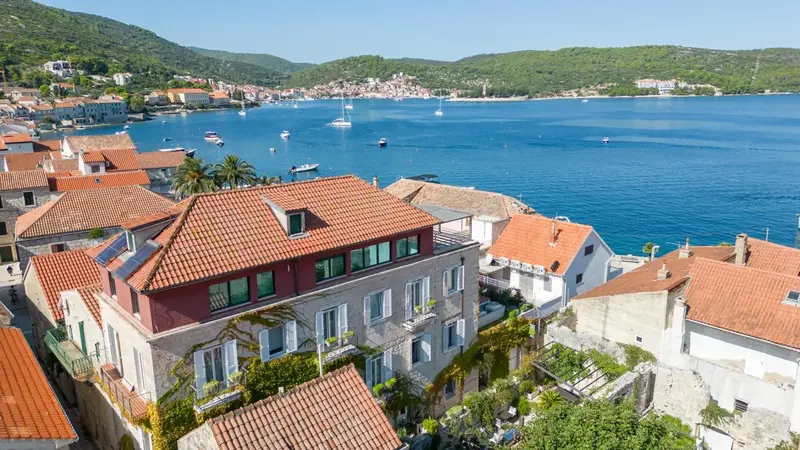
Komiža works best as a five- to seven-day shore-based diving stay. Centres and boat departures are concentrated around the waterfront, so many divers can walk from their accommodation to the harbour, depending on where they are staying. Days are organised around boat trips to Vis, Biševo and the western sites, with surface intervals and the return journey built into the outing. Keep a day or two for weather, and use non-diving days for Vis town, coves, walks, snorkelling or the Blue Cave excursion.
Hello, I'm Marina, DivingDeal.com's AI assistant. I guide you through destinations, areas and countries.
Thinking about the whole trip and the flights? Talk it over with Edith →
Marina is an AI. Some links are affiliate links: DivingDeal may earn a commission, at no extra cost to you. Bookings are made with the partner.
Plan your Komiža diving trip from June through October, when visibility commonly reaches 15 to 35 metres and the sea is generally more settled after spring blooms fade. September and October bring fewer excursion boats and a quieter village, although autumn winds can still close exposed sites. July and August are busier around Biševo.
Komiža accommodates different experience levels when you match the itinerary to your training. Beginners can use shallow reefs and introductory sites, while deeper wrecks require Advanced Open Water or equivalent certification. Wreck penetration requires suitable training and experience where permitted. Always confirm depth, current and penetration plans before joining a boat trip.
Diving from Komiža takes you to Second World War aircraft, historic shipwrecks, rocky reefs, sheer walls, cave entrances and underwater passages around Vis, Biševo and nearby islets. Expect marine life against rock, wreck metal and cave walls, with changing textures, shadows and light. The Blue Cave itself is a surface excursion because scuba diving is prohibited.
Plan a five- to seven-day shore-based stay with several boat-diving days and a reserve day or two for wind. Travel from Split by ferry or fast service to Vis, then continue by road to Komiža. Keep the final day free for a key wreck or exposed site, and use non-diving days for walks, snorkelling or excursions.