
Diving Center Zlatna Luka
Google 4.6/5 (133 reviews)
Croatia · Mediterranean
Arid islands, sheer cliffs, rocky reefs and narrow channels make the Kornati a boat-diving destination shaped as much by the landscape as by the sea.
For subtitles in English: start the video firstthen click the gearat the top right of the video, select “Subtitles/CC”, then “Auto-translate” and choose “English”.
The Kornati are best understood as a chain of boat dives through an arid island landscape, not as a shore-diving resort. Above the water, pale rock, cliffs and narrow channels set the rhythm of the day. Below it, the scenery continues as walls, rocky reefs and shoals, with occasional wrecks or submerged structures in the wider area. The national park gives the destination its character and its constraints: diving is organised, permission is required, and the choice of underwater ground is regulated.
Expect dives from a boat, with the route shaped by islands, channels and the condition of the water on the day. The underwater relief is predominantly rocky: walls drop away from the island edges, reefs and shoals interrupt the open seabed, and the wider area includes some wrecks or submerged structures. Currents are variable, so a calm-looking surface does not remove the need for a proper briefing. A dive may involve following a wall, crossing a rocky rise or adjusting the route around a shoal before returning to the boat. In the national park, the boat must use an authorised diving area and the maximum permitted depth is 40 metres. This is not a place for wandering off independently to find a new line on the reef. It is a day of planned boat movement between separated pieces of underwater terrain.
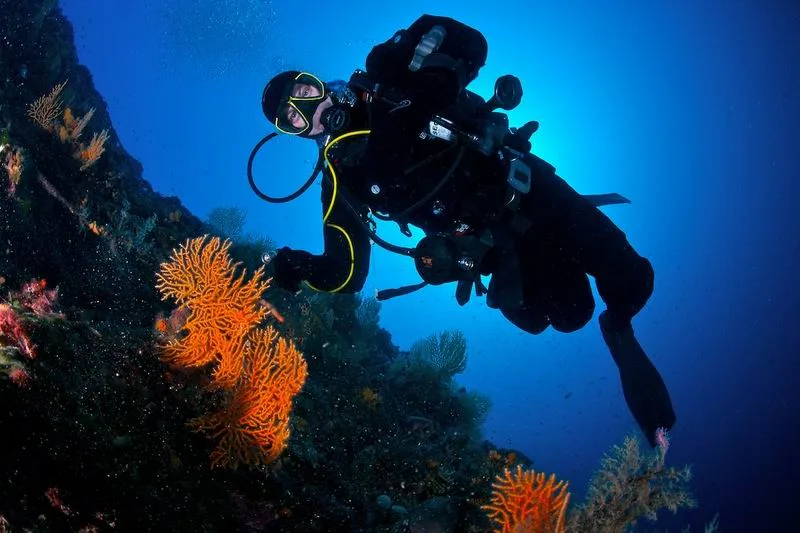
Marine life here is encountered against rock rather than across a broad sandy plain. Walls, ledges, reefs and shoals provide the surfaces and shelter where organisms live, while the changing relief keeps the view close and three-dimensional. Small fish and other marine life are part of the scene, but the lasting impression is the combination of attached life and stark karst rock. There is no particular seasonal animal encounter around which to build the trip. Instead, the interest lies in seeing how life occupies each face of the reef, from exposed wall to sheltered crease and shallow rise. The protected setting supports careful diving.
The most practical time to go is outside the busiest part of the summer, when boat traffic and popular sites are generally less crowded. The Kornati are a weather-and-boats destination, so quieter shoulder-season travel can make the day feel less hurried and simplify movement between separated areas. High summer remains workable, but expect more excursion boats sharing the channels and sites. There is no strong seasonal wildlife calendar to dictate the choice. Plan around the operating period of authorised organisers, the route they can run, and the sea conditions forecast for the day rather than around a promised animal sighting.
The Kornati suit divers from novice level upwards, provided they are comfortable diving from a boat and following a planned route. A PADI, SSI or BSAC qualification can form the basis for the outing, while experience with variable current is useful. The park’s 40-metre limit applies regardless of what your certification permits, and independent scuba diving is not allowed there. The real requirement is not an advanced card, but the ability to manage an ascent and safety stop in a changing boat-diving environment.
From London Heathrow or Gatwick, or from Manchester, first reach the Dalmatian coast, then continue by organised excursion, charter or private boat from places including Murter, Sali, Zadar or Šibenik. There is no regular public ferry serving the Kornati themselves, so the final approach is always by boat. For a base on Dugi Otok, the structural link is the ferry from Zadar-Gaženica to Brbinj, a crossing of a little over an hour, followed by the road to Zaglav. From there, check whether the diving boat leaves directly or requires a transfer to another harbour. Allow time between ferry, road and boat connections rather than treating the Kornati as a simple coastal transfer.
Arrange the park diving before travelling and confirm that the organiser is authorised to obtain the required permission. Ask for the exact itinerary and check that the planned sites lie within an authorised diving zone, because the whole park is not available to divers. Carry a copy of your certification and check which documents are needed before boarding. Do not arrive expecting to dive alone, and do not assume a private boat removes the park rules. Keep the 40-metre ceiling in view even if your training allows deeper dives. Night diving in the park is prohibited between 19:00 and 07:00, so an evening boat plan will not turn into a night dive. Also separate the Kornati arrangements from those for Dugi Otok and Telašćica, where the access rules can differ. Finally, do not enter strictly protected areas or anchor there without specific permission.
A shore-based stay on Dugi Otok or the nearby coast works best when the day is built around a full boat outing. Zaglav is a practical base, with the sea and departure point close to some accommodation, although other lodgings may need a local transfer. Sali and the coastal ports offer alternatives, while a charter or liveaboard-style trip can reduce road travel and string together different parts of the archipelago. Non-divers have plenty to do on the same day, including boat trips, swimming, walking to viewpoints and visiting coastal villages.
Hello, I'm Marina, DivingDeal.com's AI assistant. I guide you through destinations, areas and countries.
Thinking about the whole trip and the flights? Talk it over with Edith →
Marina is an AI. Some links are affiliate links: DivingDeal may earn a commission, at no extra cost to you. Bookings are made with the partner.
Choose a quieter shoulder season if you want less hurried boat movement and fewer excursion boats around channels and sites. High summer is still workable, but expect more traffic. Plan around authorised organisers’ operating period, their available route and the forecast sea conditions, rather than a seasonal wildlife encounter.
Kornati suit novice divers and above if you are comfortable entering from a boat and following a planned route. A recognised qualification can support the outing, while experience with variable current is useful. You must manage an ascent and safety stop in changing boat conditions, and independent scuba diving is not allowed.
You can explore rocky walls, ledges, reefs and shoals beneath an arid island landscape of cliffs and narrow channels. Small fish and other marine life live among the rock, creating a close, three-dimensional view. Wider-area outings may also include wrecks or submerged structures, while currents can shape the route.
Arrange authorised boat diving before travelling and confirm the itinerary, permission and diving zone. Dugi Otok, with Zaglav as a practical base, supports outings, while Sali and coastal ports offer alternatives. Allow time for ferry, road and boat connections, and keep arrangements for Telašćica separate because access rules can differ.