



H2O Diving Center, Dare to Explore
Google 5/5 (637 reviews)
Greece · Mediterranean
Rocky bays at Kalithea, caves beneath Lindos, barracuda over Mediterranean reefs, and boat trips to wrecks and the Rhodes Marine Park shape a week underwater.
For subtitles in English: start the video firstthen click the gearat the top right of the video, select “Subtitles/CC”, then “Auto-translate” and choose “English”.
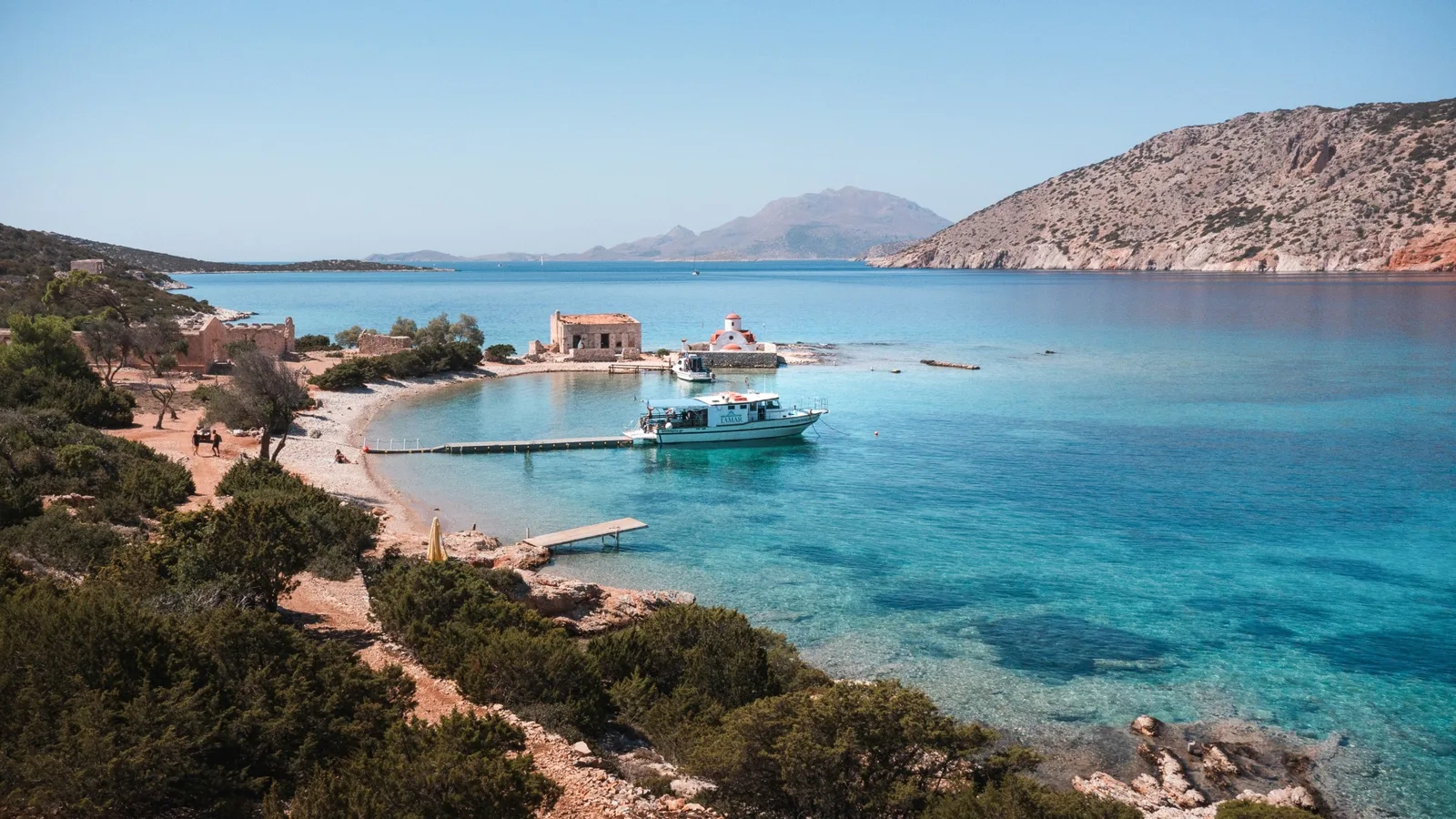
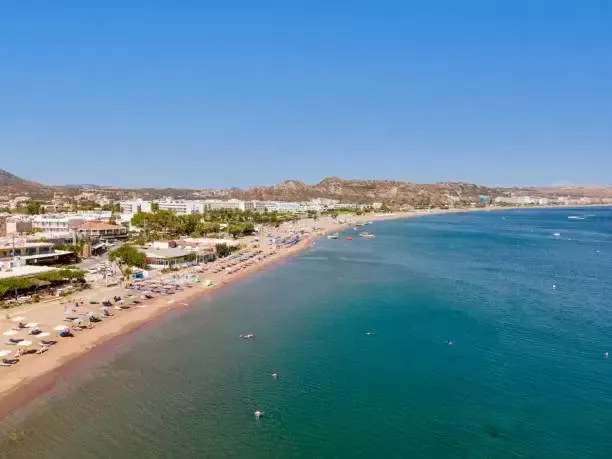
Rhodes suits divers who like variety without living aboard a boat. Start from the shore in Kalithea’s rocky bays, move south towards Lindos for caves and underwater relief, then use a boat for wrecks and the Rhodes Marine Park. The island works for a mixed group too, with gentle coastal dives for newer divers and more demanding walls, caves and deeper profiles for experienced members. Above water, medieval Rhodes, Lindos and the east coast give non-divers plenty to do.
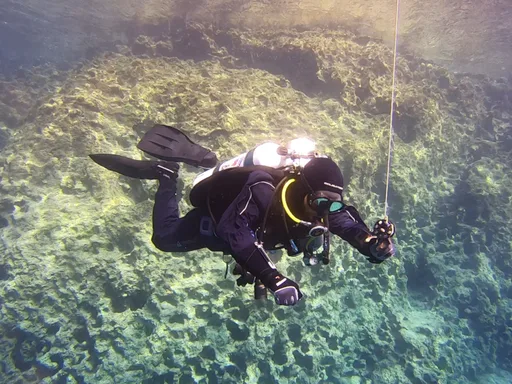
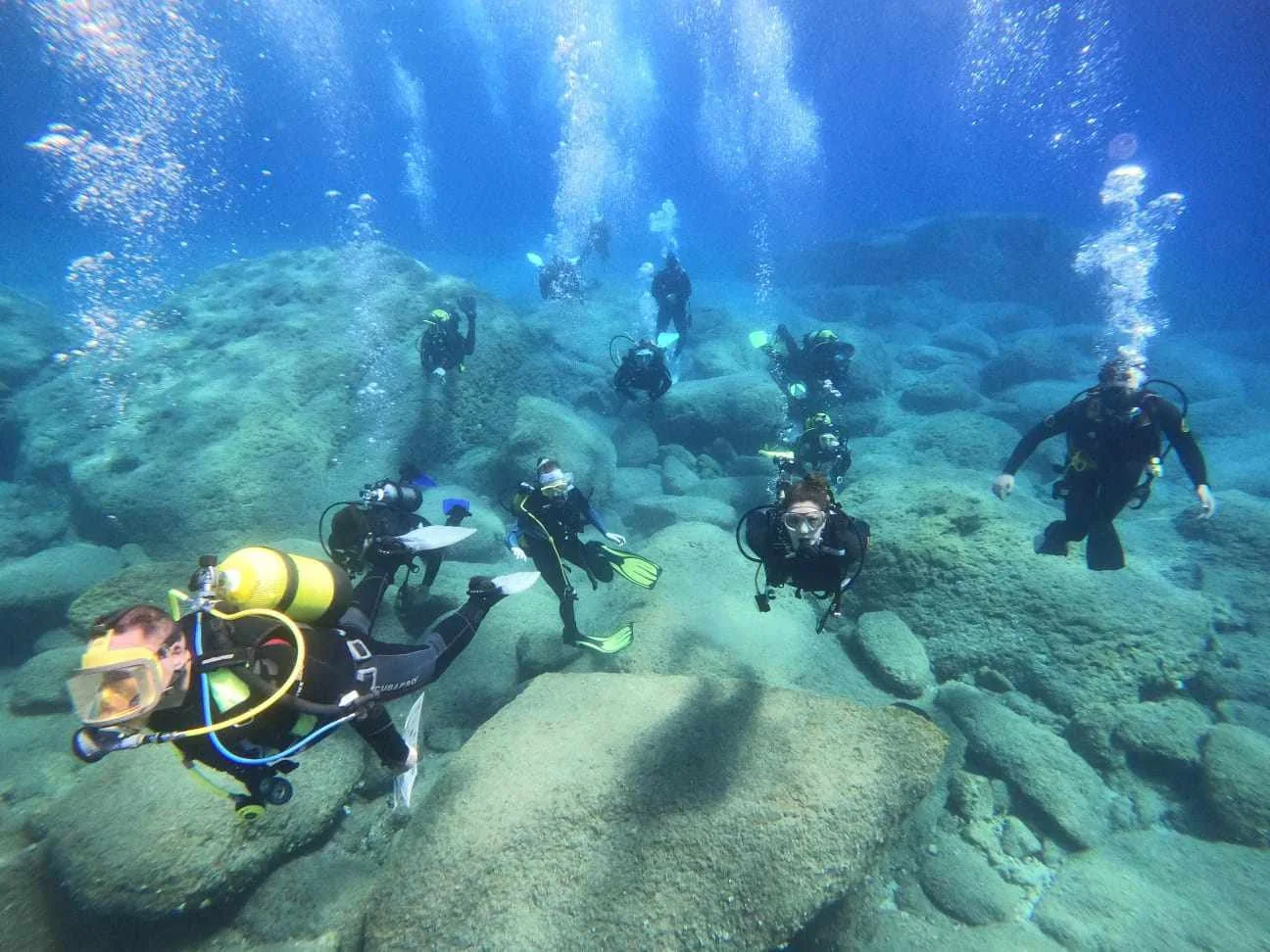
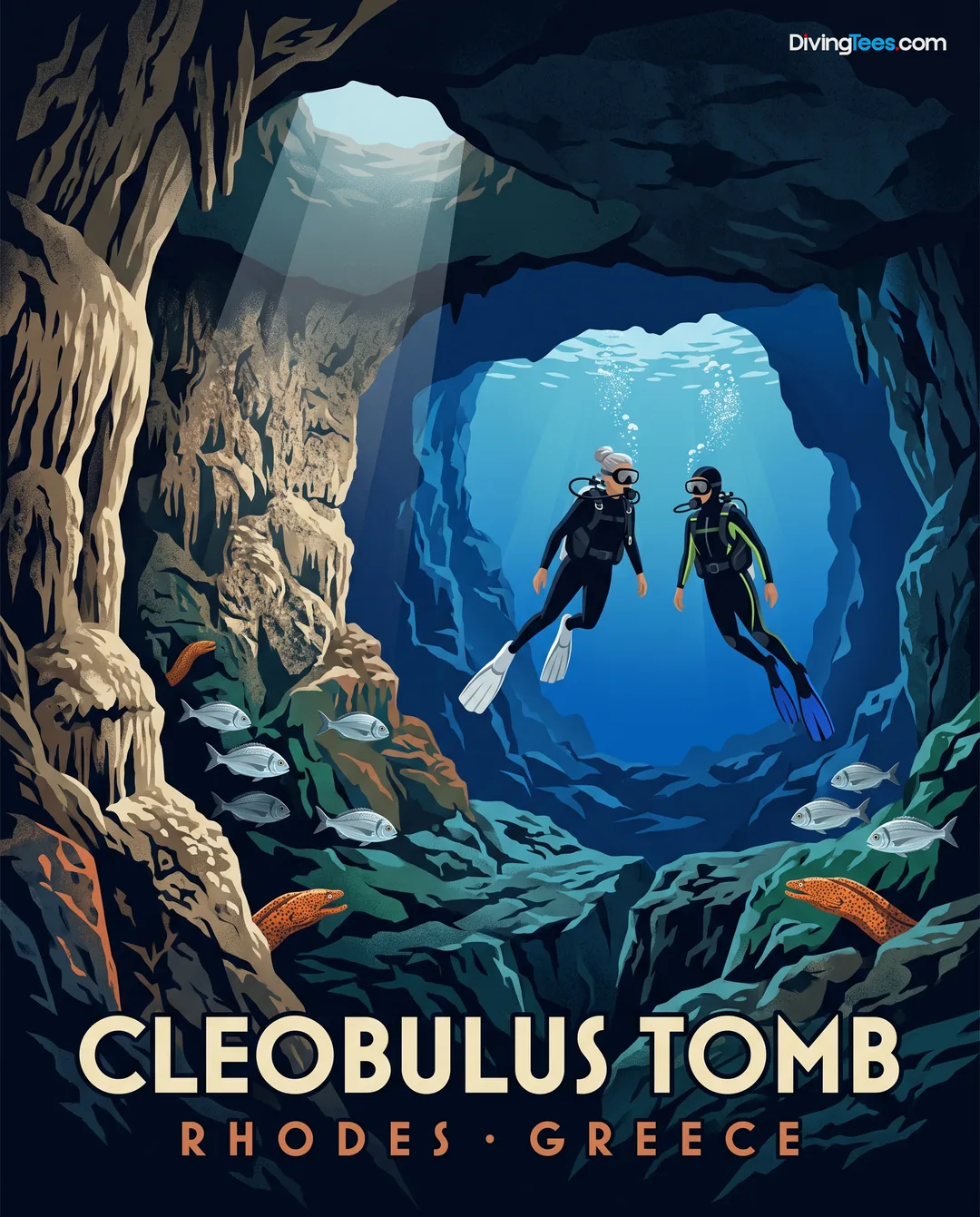
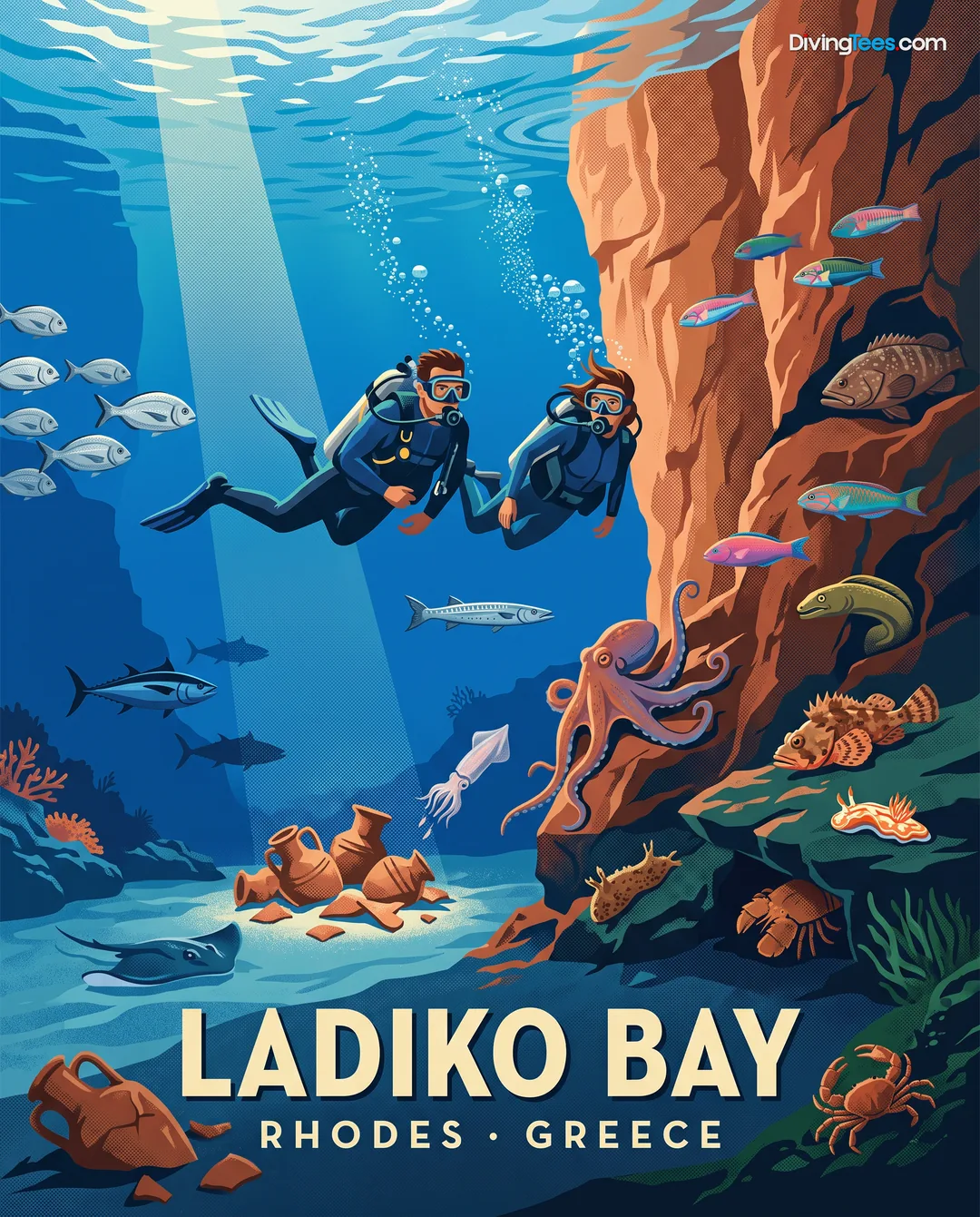
The underwater scenery is Mediterranean rather than coral tropical: rocky shelves, cavities, walls, seagrass, sponges, gorgonians and broken relief. Kalithea is the natural starting point, with sheltered bays and formations that make sense for a first dive or a relaxed shore day. Lindos adds caves and more pronounced underwater contours. Most east-coast sites have light or infrequent currents, although exposure can change the plan, particularly when the sea is running. Shore diving is central to the Rhodes experience, while boat trips open the way to wrecks, more distant sites and the Rhodes Marine Park. Visibility is commonly between ten and thirty metres, but it follows the local swell, particles and weather rather than an island-wide timetable. It is a place for careful exploration, not a destination built around strong drift dive conditions.
Groupers are a regular sight, as are octopuses and moray eels tucked into cracks in the rock. Mediterranean barracuda are regular from May to October, and the open water may occasionally bring tuna and bonito. Summer into early autumn offers occasional encounters with loggerhead turtles, while dolphins remain a rare bonus at any time of year. Nudibranchs and shrimps appear occasionally for divers who slow down and search the smaller recesses. The Rhodes Marine Park boat trips are aimed at the larger picture, with groupers, barracuda and, on fortunate days, tuna among the reasons to leave the familiar bays. The wildlife is Mediterranean and understated, rewarding observation rather than a guarantee of constant spectacle.
May, June, September and October are the most sensible months for diving Rhodes. Spring brings regular diving before the busiest holiday period, while September and October retain workable sea conditions with fewer people in the bays and on boats. July and August can offer good diving, but popular shore sites and departures are busier, especially around the easiest access points. Visibility is generally at its most useful between May and October, though swell and particles still matter. Winter brings less diving activity and less predictable maritime weather, so it is a poor match for a trip built around several boat days.
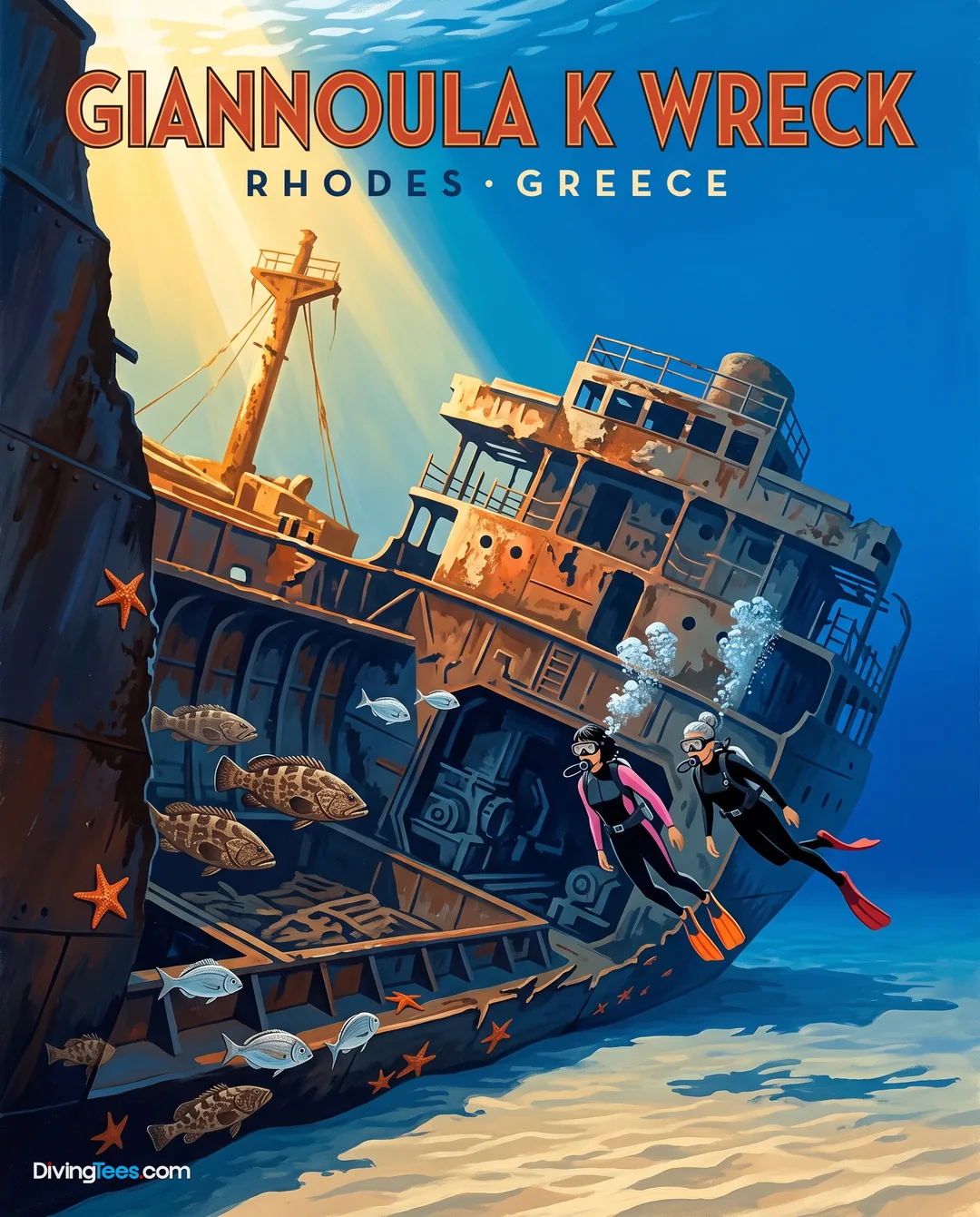
Rhodes genuinely covers all levels. Sheltered bays and guided shore dives suit beginners, including those making their first Mediterranean dives. Advanced Open Water is useful for walls and deeper profiles, while a Wreck qualification is sensible for anyone intending to explore wrecks rather than view them from outside. Caves need particular judgement: an illuminated cavity is not automatically an invitation to penetrate it. Divers should be comfortable with their buoyancy, navigation and gas planning before moving beyond the easy bays.
From London Heathrow, London Gatwick or Manchester, travel is normally by air to Rhodes International Airport. Direct links from Britain are largely seasonal and vary by departure airport, so a connection may be needed. Via Athens, the domestic flight to Rhodes is generally about an hour, apart from airport procedures and the connecting time. There is no compulsory ferry crossing to reach the island. Ferries do connect Rhodes with the other Dodecanese islands and the Piraeus, but they are a choice for a wider Greek itinerary rather than the normal arrival route. Once on Rhodes, a car is useful for combining Kalithea, Rhodes Town, Lindos, Pefkos and the south-east. Taxis or an organised shuttle work when the base and diving area are close, while some local centres can be reached on foot.
Choose the base around the diving you actually want. Kalithea or Rhodes Town keeps north-east shore sites within reach; Lindos, Pefkos and the south-east make more sense for southern caves and relief. A car becomes increasingly worthwhile when the itinerary crosses between those areas, and daily road transfers can quietly take time from the diving day. Book boat places for wrecks and the Rhodes Marine Park ahead during July and August, then keep a spare day for weather. Do not build the whole holiday around one boat departure. Popular Kalithea sites are quieter early in the day, or in May, June, September and October. Ask which bay is most sheltered on the day, because the east coast is often kinder than exposed areas but is not immune to swell. Treat every cave honestly: a light-filled entrance is not a safe underground penetration without the training, equipment and procedures for it. Visibility at one bay says little about the next.
Rhodes works best as a seven-day land-based holiday, with shore diving threaded between boat days and weather flexibility. Alternate Kalithea or Lindos with a wreck or Rhodes Marine Park trip rather than repeating one bay. Keep time for Rhodes medieval old town, the fortifications, Lindos Acropolis, villages and coastal walks. A non-diving companion can fill the same week with beaches, boat excursions, snorkelling and surface activities. Leave the final day for land-based plans or a non-immersive outing before flying.
Hello, I'm Marina, DivingDeal.com's AI assistant. I guide you through destinations, areas and countries.
Thinking about the whole trip and the flights? Talk it over with Edith →
Marina is an AI. Some links are affiliate links: DivingDeal may earn a commission, at no extra cost to you. Bookings are made with the partner.
Your last day stays dry: no diving in the 18-24 hours before a flight, the perfect window to see the destination from another angle.
 Nature
⏱ 5 h · ★ 5.0 (49 reviews)
from £40$54€48
see on Viator ↗

⏱ 1 h · ★ 5.0 (24 reviews)
from £251$336€300
see on Viator ↗
 City
⏱ 5 h · ★ 5.0 (22 reviews)
from £285$381€340
see on Viator ↗
 Culture
⏱ 6 h · ★ 5.0 (21 reviews)
from £59$78€70
see on Viator ↗
Ratings and reviews collected by Viator and Tripadvisor.
A practical diving period in Rhodes is May through October, with May, June, September and October offering a useful balance of regular diving and fewer people. July and August can still provide good conditions but are busier. Winter has less activity and less predictable maritime weather, especially for boat plans.
Rhodes suits every experience level. Beginners can start with sheltered bays and guided shore dives, while experienced divers can choose walls, caves and deeper profiles. Advanced Open Water is useful for deeper relief, and a Wreck qualification is sensible for wreck exploration. Cave penetration requires appropriate training, equipment, procedures, buoyancy, navigation and gas planning.
Underwater Rhodes offers rocky shelves, cavities, walls, seagrass, sponges, gorgonians and broken relief rather than coral scenery. You may encounter groupers, octopuses and moray eels year-round, barracuda from May through October, and loggerhead turtles in summer into early autumn. Boat trips can add wrecks and the Rhodes Marine Park.
Plan Rhodes as a land-based stay, choosing Kalithea or Rhodes Town for north-east sites, or Lindos, Pefkos and the south-east for southern caves and relief. A car helps when combining areas. Reserve boat places during busy summer, keep a weather buffer, ask about shelter, and leave time for Rhodes medieval old town, Lindos Acropolis and coastal walks.