

Santorini Scuba Academy
Google 5/5 (610 reviews)
Greece · Mediterranean
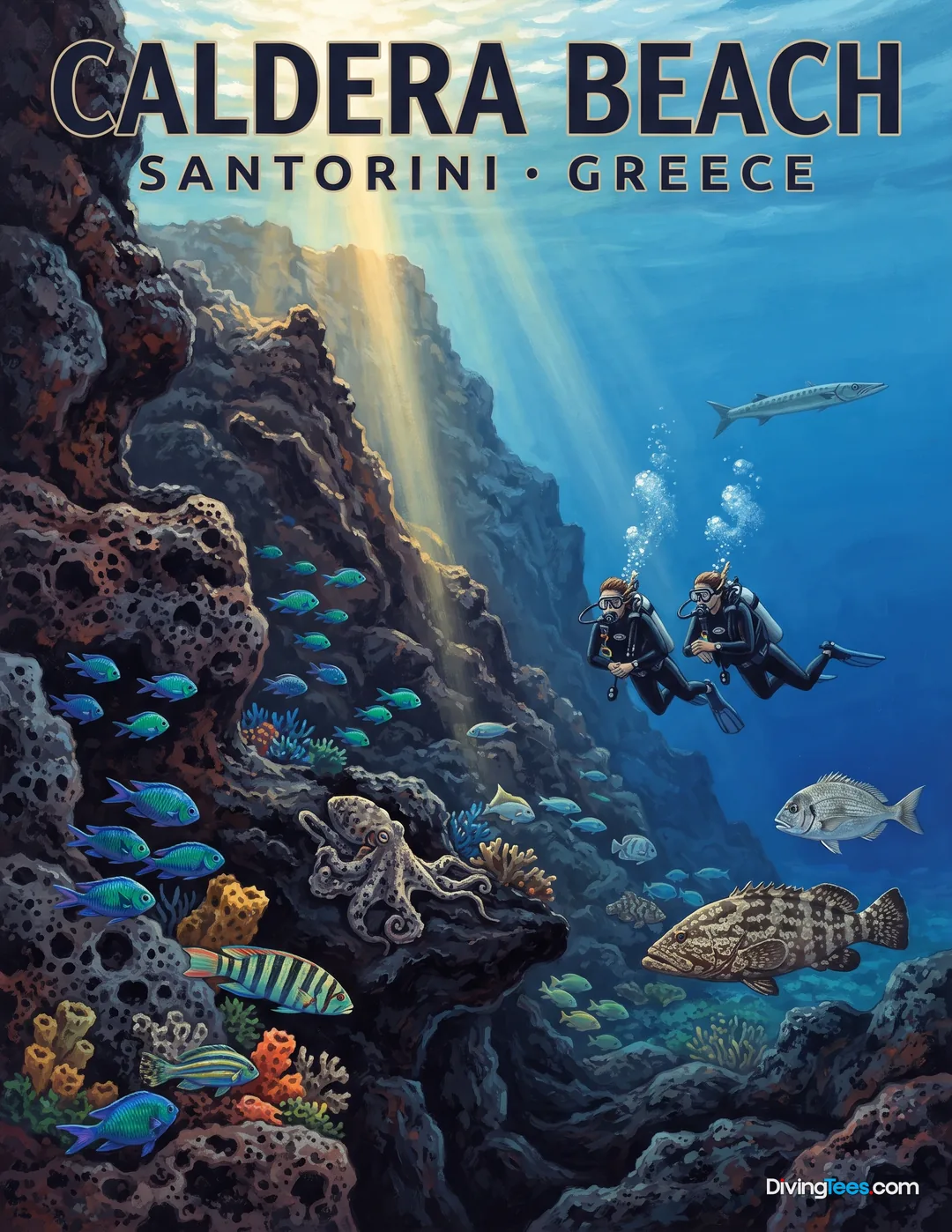
Steep caldera walls dropping into deep blue, intricate lava tubes, and dark volcanic rock formations define this geological landscape.
For subtitles in English: start the video firstthen click the gearat the top right of the video, select “Subtitles/CC”, then “Auto-translate” and choose “English”.
Santorini is a destination defined by its dramatic volcanic history. Instead of coral gardens, you dive alongside massive, sheer caldera walls and through labyrinthine lava tubes. It is a place where the geology is the main event, offering a striking underwater landscape of dark volcanic rock and deep blue water. For those looking to explore the aftermath of a massive eruption, the underwater terrain provides a direct link to the island's famous volcanic origins.
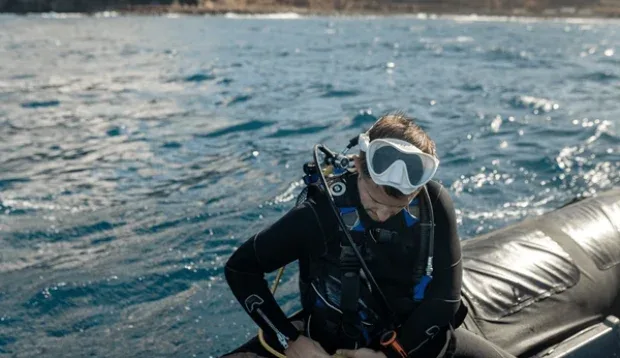
Diving here focuses on boat trips exploring the flooded caldera and the outer coast. You will encounter steep drops and complex topography, from the massive walls of the caldera to smaller, more sheltered rocky reefs. Visibility is typically excellent, often reaching 30 metres, though it can shift with seasonal plankton. Currents are generally light, making for relaxed sessions, although the surge can be felt near rocky outcrops on windy days. The environment is a mix of deep wall profiles and shallower cavernous structures, offering everything from easy recreational dives to more demanding technical explorations of lava tubes.
The marine life reflects the Mediterranean nature of the Aegean. You can expect to encounter Octopus, Moray eel, and various species of Wrasse. Larger pelagic visitors like Barracuda appear regularly from June to September, while Amberjack may be spotted during the summer months. Tuna are a rarer sight, usually appearing in the transition from summer to early autumn. Rather than dense tropical schools, the focus is on spotting these individual inhabitants amongst the sponges and rocky crevices.
The best time to dive is between May and October, when the Aegean waters are warm and the weather remains dry. From April through October, sea conditions are generally calm, providing the stability needed for comfortable boat dives. While the peak tourism months of June to August offer the warmest water, they also bring more crowded boats. For a quieter experience with slightly cooler water, the shoulder months of May, June, September, and October are excellent choices.
The destination caters to all levels, from Open Water divers to advanced technical divers. Many sites are highly accessible due to light currents and calm entry conditions from boats. However, the presence of lava caverns and steep walls means that Advanced Open Water and Deep Diver certifications are highly beneficial. For those interested in the cavernous side of the island, advanced buoyancy control and navigation skills are essential for navigating the overhead environments safely.
Reaching Santorini is straightforward via domestic flights from Athens or high-speed ferries from Piraeus or Rafina, typically taking 5 to 8 hours depending on the vessel. Once on the island, most divers stay in coastal villages like Akrotiri, Perissa, or Kamari. These hubs serve as the main departure points for dive boats, allowing for easy access to the caldera and the southern coast. The island can become very busy in summer, so arranging transport in advance is advisable.
To get the most out of your trip, plan to experience both the caldera walls and the southern coast's lava caverns; they offer completely different perspectives of the volcanic landscape. If you are looking for wrecks, communicate your preference early, as they range from shallow sites to deeper profiles around 30 metres. For photographers, focus on wide-angle lenses to capture the massive volcanic relief and light play within the caverns rather than macro subjects. Be mindful of the weather; strong Meltemi winds can affect ferry schedules and sea conditions. If you plan to dive the caldera, aim for the early morning to avoid the heavy traffic of sightseeing cruise boats. Always carry a surface marker buoy and a torch, as the lighting inside the lava tubes and along the dark volcanic walls is crucial for visibility. Finally, prepare for a Mediterranean experience—this is about striking topography and clarity, not tropical coral biomass.
A stay of 5 to 7 days is ideal. This allows enough time to explore the caldera, the volcanic islets, and the southern coast while leaving room for non-diving days. This duration also provides the flexibility needed to balance diving with exploring the island's famous wineries or archaeological sites like Akrotiri.
Hello, I'm Marina, DivingDeal.com's AI assistant. I guide you through destinations, areas and countries.
Thinking about the whole trip and the flights? Talk it over with Edith →
Marina is an AI. Some links are affiliate links: DivingDeal may earn a commission, at no extra cost to you. Bookings are made with the partner.
Your last day stays dry: no diving in the 18-24 hours before a flight, the perfect window to see the destination from another angle.
 Culture
⏱ 2 h · ★ 5.0 (272 reviews)
from £54$72€64
see on Viator ↗
 Culture
⏱ 6 h · ★ 5.0 (238 reviews)
from £167$224€200
see on Viator ↗
 City
City⏱ 5 h · ★ 5.0 (192 reviews)
from £100$134€120
see on Viator ↗
 Nature
⏱ 6 h · ★ 5.0 (58 reviews)
from £117$157€140
see on Viator ↗
Ratings and reviews collected by Viator and Tripadvisor.
Santorini is best dived from May to October, when the Aegean is warmer and weather is dry. Sea conditions are generally calm from April through October. June to August brings warm water but busier boats, while May, September, and October offer quieter diving with slightly cooler water. Meltemi winds can affect conditions and ferries.
Santorini suits Open Water divers through advanced technical divers. Light currents and calm boat entries make many sites accessible, but steep walls and lava caverns add complexity. Advanced Open Water and Deep Diver training is beneficial, while cavern diving requires strong buoyancy control and navigation skills for overhead environments.
At Santorini, expect steep volcanic caldera walls, dark rock formations, lava-tube caverns, and clear deep blue water rather than coral gardens. Marine life includes octopus, moray eels, wrasse, and sometimes barracuda, amberjack, or tuna. The focus is individual animals among sponges and rocky crevices, with wide-angle scenery.
Plan a Santorini stay around boat trips from Akrotiri, Perissa, or Kamari, with time for both the caldera walls and southern coast lava caverns. Domestic flights from Athens and high-speed ferries from Piraeus or Rafina provide access. Arrange summer transport ahead, consider early-morning caldera dives, and bring a torch and surface marker buoy.