


Poseidon Diving Center
Google 5/5 (201 reviews)
Greece · Mediterranean
Rocky walls, shadowed caverns, posidonia meadows and accessible wrecks shape Corfu’s diving, with morays, octopuses and groupers appearing through the warmer season.
For subtitles in English: start the video firstthen click the gearat the top right of the video, select “Subtitles/CC”, then “Auto-translate” and choose “English”.
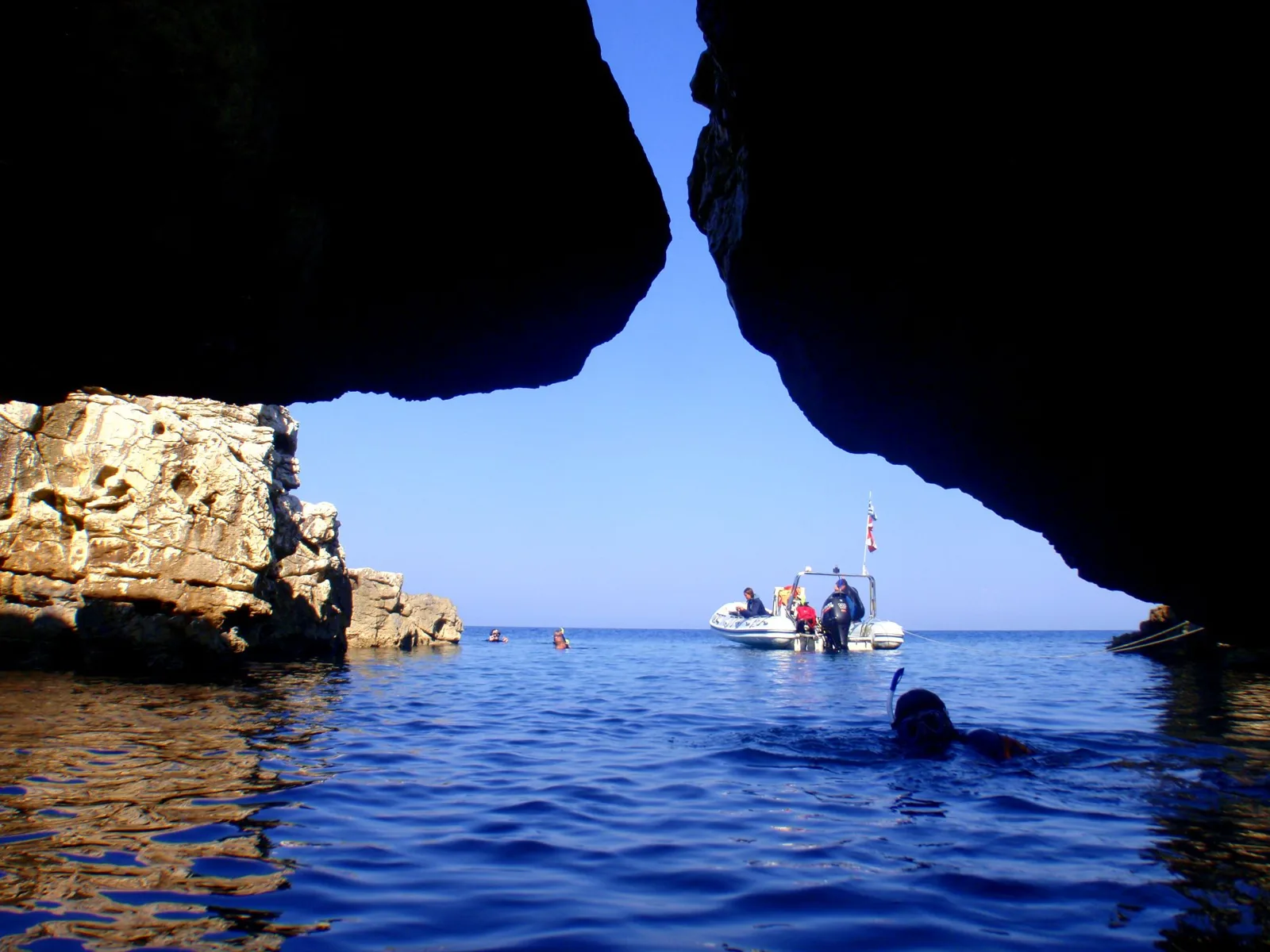
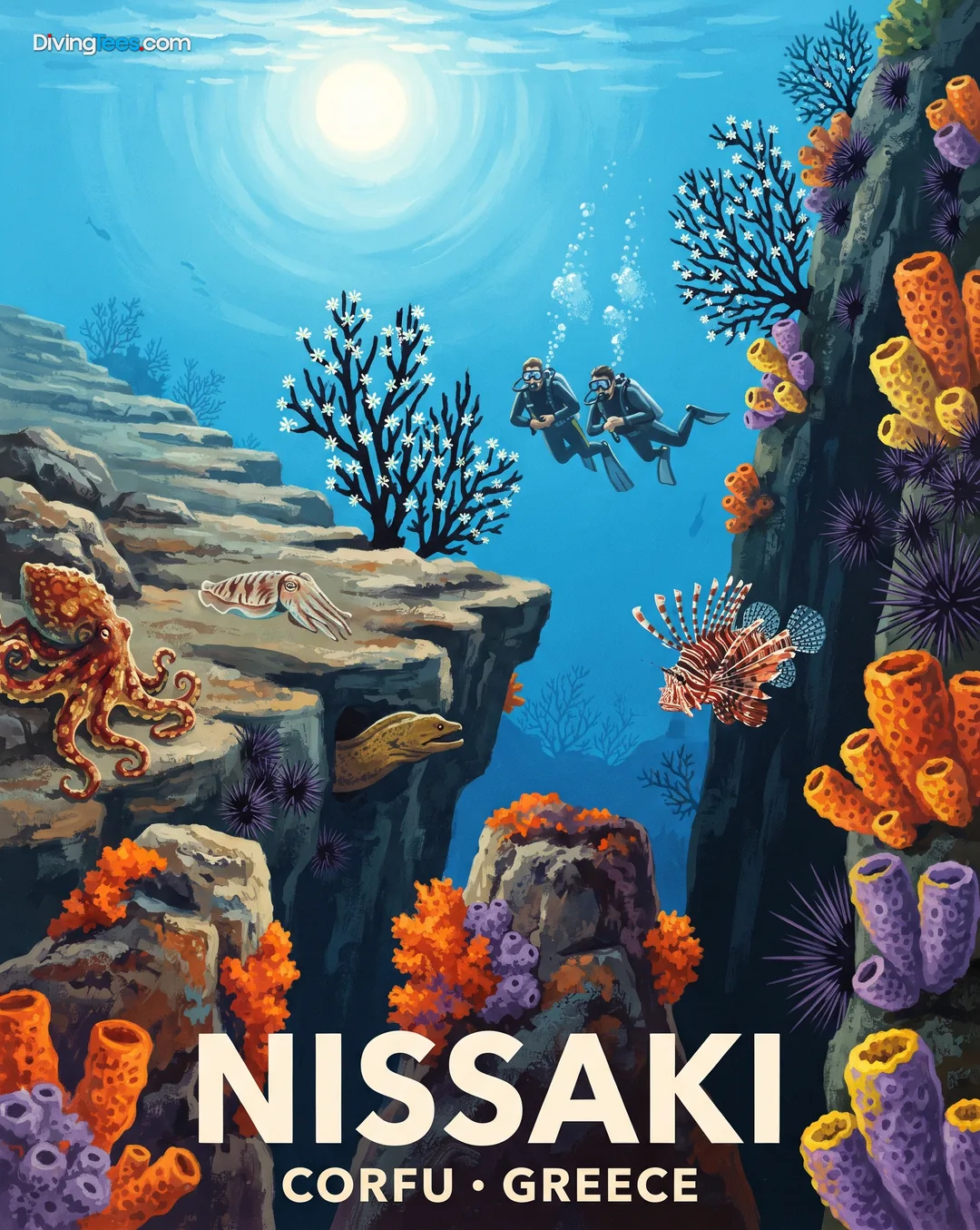
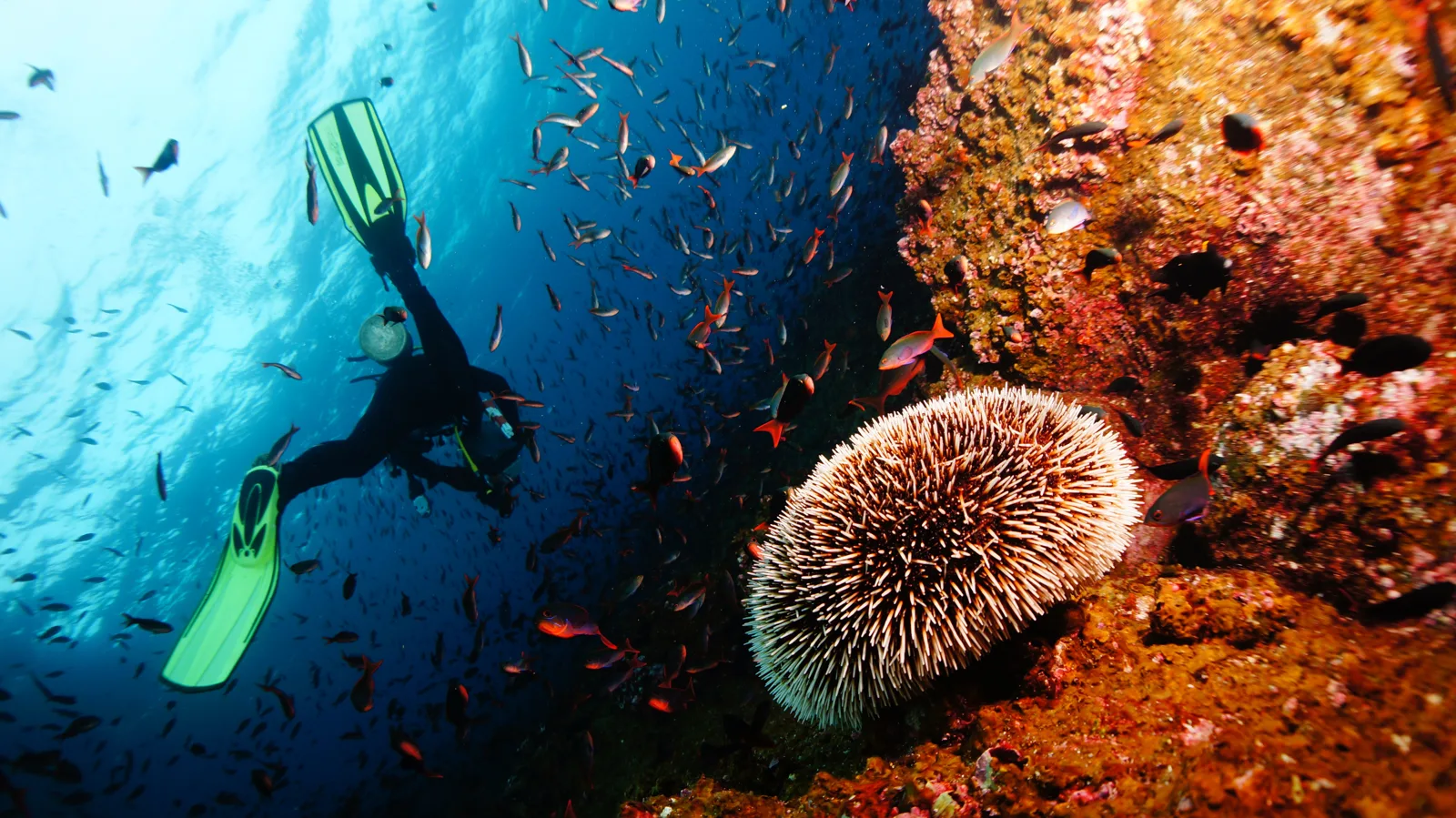
Paleokastritsa puts rocky walls, arches and caverns directly into the picture, while the north-east coast adds reefs, blocks and deeper drop-offs. Around Gouvia, boat trips bring accessible wrecks into the mix. Corfu suits a holiday built around diving rather than a liveaboard routine, with coastal launches, sheltered bays and enough beaches, villages, fortifications and walking to keep non-divers occupied. It is Mediterranean diving with genuine variety in the shape of the seabed, not a coral-reef destination.
The underwater landscape is predominantly rock: coastal reefs, walls, boulders, arches and caverns, with posidonia meadows on gentler ground. Paleokastritsa is the obvious place to look for enclosed rocky relief, while the north-east bases around Kassiopi, Kalami, Nissaki and Barbati provide boat access to walls and offshore reefs. Gouvia is useful for central sectors and wreck outings. Currents are generally light, so most dives are not demanding drift dives, although exposed sites depend on the state of the sea. Visibility is commonly around 15 to 30 metres from June to September, and can be better on particular reefs, but it is not a promise for the whole island. Expect a mixture of shore entries and day boats, with easy bay dives alongside deeper routes, caverns and wrecks that require more planning.
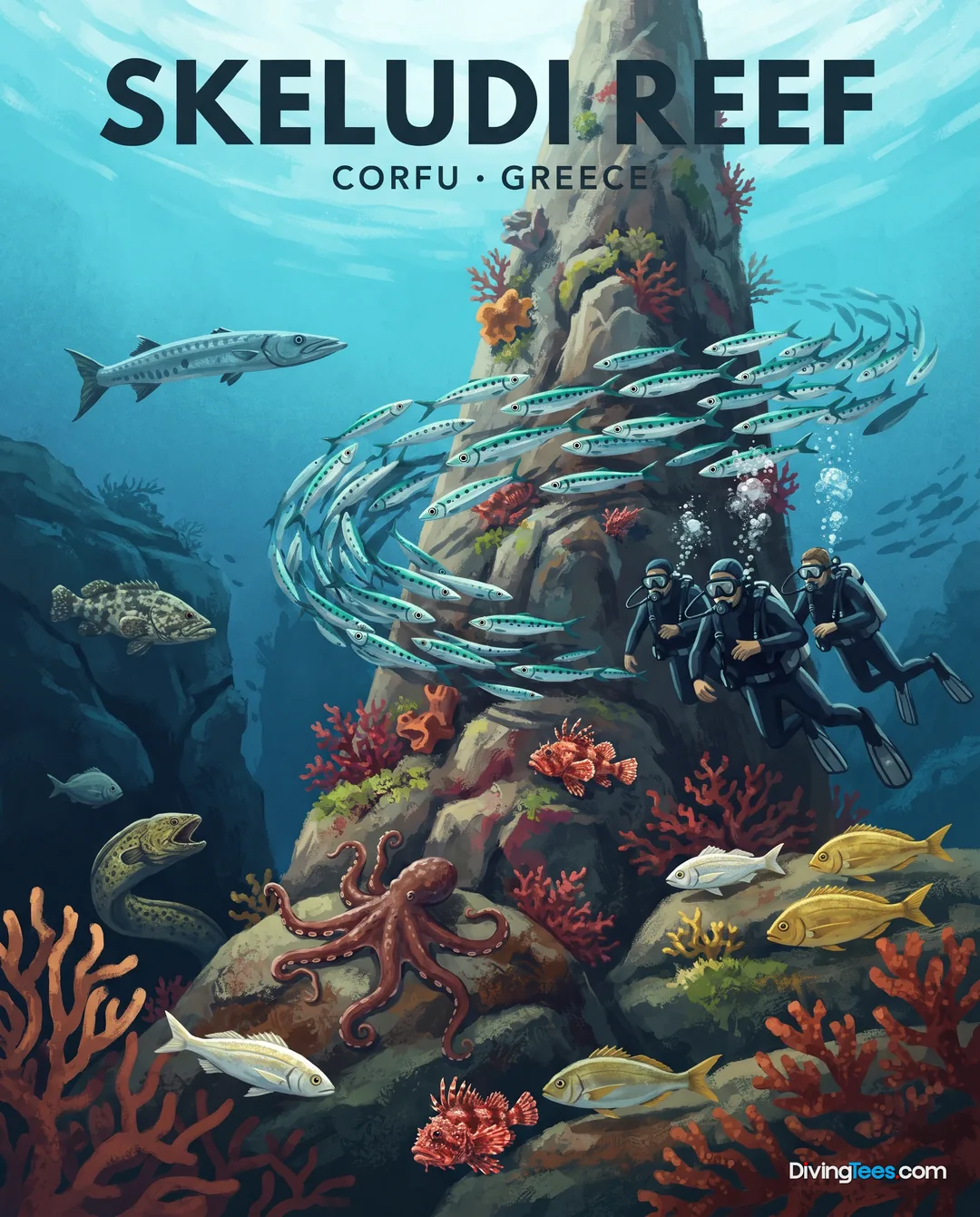
Groupers and comber, morays and octopuses are regular encounters from May to October, particularly around rocky cover where a careful look into cracks and cavities pays off. Sponges and other fixed organisms cover sections of the walls throughout the year, adding colour and texture even when larger animals keep out of sight. Gorgonians are an occasional sight rather than a dependable feature of every dive. Posidonia meadows bring a different background from the bare rock and blocks, especially on shallower coastal routes. The most reliable wildlife period is the main diving season, while the character of each encounter still depends on the bay, the recent sea conditions and how much shelter the terrain provides.
The practical diving season runs from May to October, with June to September offering the most dependable visibility and the best odds for offshore boat plans. July and August are the busiest months around the tourist stations and easier launch sites. May, June, September and early October are quieter, but the shoulder season can be less reliable for exposed reefs and longer boat runs. A full 5 mm wetsuit covers most of the season. In May and October, a thicker suit may be more comfortable, particularly on repeated dives. Winter brings much less tourist diving and is a poor fit for a dedicated trip.
Corfu works for beginners, with shallow bays and straightforward coastal dives suitable for training, try-dives and early qualification work. PADI, SSI and BSAC divers can all find appropriate outings, provided the planned profile is discussed clearly. Advanced Open Water or an equivalent qualification is useful for deeper walls and more exposed relief. A wreck qualification is appropriate for wreck dives. Do not assume that an easy bay dive represents the requirements of every boat trip, especially where depth, caverns or open-water exposure are involved.
From London or Manchester, seasonal direct flights reach Corfu’s international airport, although connections may be needed outside the main summer schedule. Allow more time when travelling with a connection. The island can also be reached by ferry from mainland Greece, with the crossing taking roughly one and a half to two hours, or by ferry from Italian ports including Bari and Brindisi. This is the practical option for bringing a vehicle. From the airport or harbour, the diving areas are reached by road, using a hire car, taxi or arranged transfer. A car is particularly useful if the itinerary combines the north-east coast, Paleokastritsa and Gouvia rather than staying beside one base.
Choose the accommodation area around the coast you actually want to dive. Kassiopi, Kalami, Nissaki, Barbati, Paleokastritsa and Gouvia are not interchangeable bases, and road transfers can eat into a diving day. Before booking, ask whether the planned outing is a shallow bay dive, a deep wall, a cavern, an offshore reef or a wreck. Keep a spare day for boat trips, especially those heading towards exposed reefs or the Diapontia Islands, and do not put that outing on the final day. July and August bring more traffic on the popular launches, so the shoulder months are worth considering. Bring your own computer, mask, snorkel and fins, and wetsuit if sizing is difficult or thermal comfort matters. Do not treat visibility reported for Colovri or individual reefs as an island-wide guarantee.
A seven- to ten-day stay gives room to combine the north-east coast, Paleokastritsa and Gouvia without turning every day into a road transfer. Base yourself close to the centre and use a car, taxi or arranged transfer when changing sector. Keep non-diving days for Corfu’s old town and fortifications, inland walks, villages and coves, or boat trips and kayaking in sheltered bays. Conditions permitting, the Diapontia Islands and Paxos make natural additions to a shore-based holiday.
Hello, I'm Marina, DivingDeal.com's AI assistant. I guide you through destinations, areas and countries.
Thinking about the whole trip and the flights? Talk it over with Edith →
Marina is an AI. Some links are affiliate links: DivingDeal may earn a commission, at no extra cost to you. Bookings are made with the partner.
Your last day stays dry: no diving in the 18-24 hours before a flight, the perfect window to see the destination from another angle.
 Nature
⏱ 5 h · ★ 5.0 (43 reviews)
from £356$476€425
see on Viator ↗

⏱ 1 h · ★ 5.0 (37 reviews)
from £27$36€32
see on Viator ↗
 Culture
⏱ 4 h · ★ 5.0 (31 reviews)
from £121$162€145
see on Viator ↗
 Nature
⏱ 4 h · ★ 5.0 (14 reviews)
from £117$157€140
see on Viator ↗
Ratings and reviews collected by Viator and Tripadvisor.
The practical diving season in Corfu runs from May to October. June through September generally offers the most dependable visibility and better odds for offshore boat plans. July and August are busier around tourist stations, while May, June, September and early October are quieter but can be less reliable for exposed sites.
Corfu suits beginners, with shallow bays and straightforward coastal dives for training, try-dives and early qualification work. Advanced Open Water or an equivalent qualification is useful for deeper walls and exposed relief. Wreck dives require appropriate training, and cavern or open-water routes need more planning than sheltered bay dives.
Diving in Corfu features rocky walls, boulders, arches, caverns, coastal reefs and posidonia meadows. Around Gouvia, accessible wrecks add variety, while the north-east coast offers walls and offshore reefs. From May to October, you may encounter groupers, comber, morays and octopuses, with sponges adding colour to the rock.
Choose a base near the coast you want to dive, such as Paleokastritsa, Gouvia or the north-east villages, because transfers can take time. A car helps when combining sectors. Keep a spare day for exposed boat trips, ask about each route’s profile, and consider a stay long enough for varied diving and non-diving activities.