

Atlantis Diving Center
Google 4.9/5 (694 reviews)
less than 1 km away as the crow flies
Gozo · Malta · Mediterranean
Max. depth · 6 mA sheltered, shallow bay perfect for entry practice and exploring Neptune grass meadows.
For subtitles in English: start the video firstthen click the gearat the top right of the video, select “Subtitles/CC”, then “Auto-translate” and choose “English”.
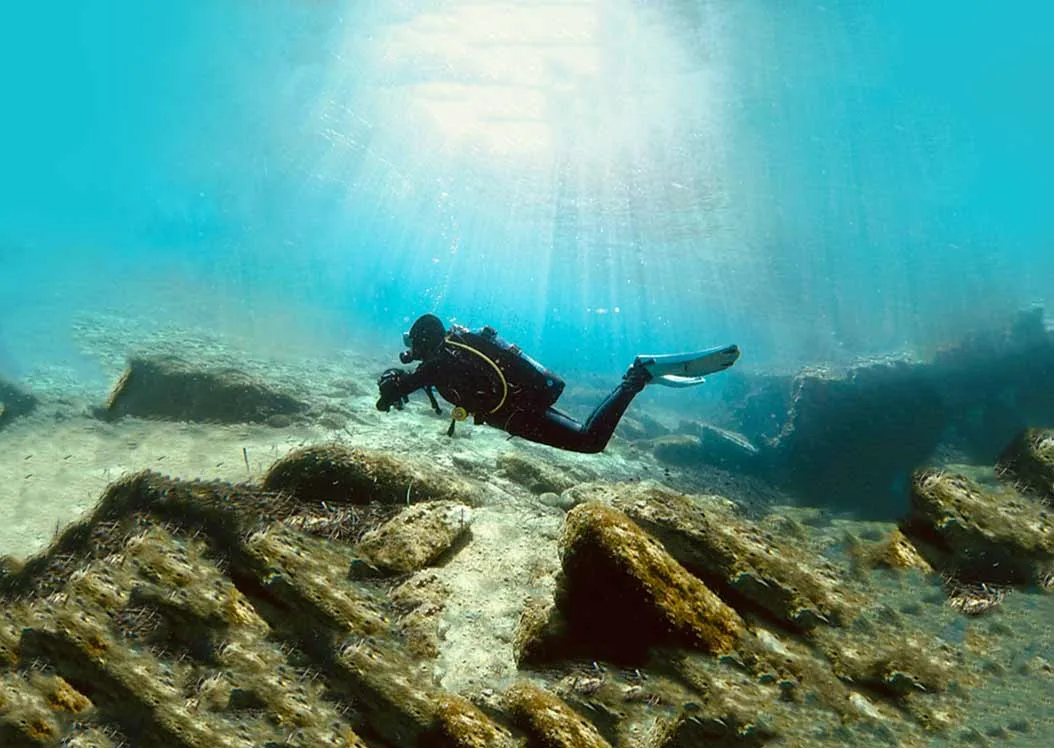
Qbajjar Bay offers a very shallow profile that distinguishes it from the deeper, more technical wall dives found elsewhere around Gozo. The topography is primarily a coastal bay with a seabed composed of rocky sections interspersed with sandy patches. You will find that the environment is dominated by large, healthy meadows of Neptune grass (Posidonia oceanica) that stretch across the bottom. This provides a consistent landscape for those looking to practice buoyancy or conduct introductory training sessions in a controlled setting.
The approach to the site is straightforward, as it is a shore dive requiring an entry from the coastline. You will need to navigate through rocky and pebbly areas to reach the water, so sturdy footwear is a practical necessity before you even get wet. Once you are in the water, the transition from the shore to the seabed is immediate due to the minimal depth. There are no major underwater reliefs or significant structures to navigate, making the site's layout predictable and easy to manage for any diver.
Because the maximum depth reaches only 6 metres, the light penetration remains high throughout the water column. This creates a bright environment where you can easily observe the textures of the rocky bottom and the movement of the seagrass. The lack of significant depth means you won't encounter the pressure changes or gas consumption issues typical of deeper Gozo sites. Instead, the focus remains on the immediate surroundings and the interaction with the shallow-water ecosystem.
The seabed composition is a mix of rock and sand that supports the vast seagrass beds. These meadows are the defining feature of the bay's underwater geography, offering a different kind of visual interest than a vertical wall or a wreck. For those practicing skills, the sandy areas between the rocks and grass provide clear markers for depth control and positioning. The site's simplicity is its primary characteristic, offering a calm alternative to the more demanding maritime conditions found in the open sea.
Conditions within the bay are generally stable, as the sheltered nature of the coastal inlet protects it from significant swell. While the surface can be affected by the state of the sea, the underwater environment remains largely calm. This makes it an ideal location for those who are just starting their diving journey or for instructors looking for a reliable spot for training. The absence of heavy currents allows for a relaxed pace and easy monitoring of your air supply and buddy.
The accessibility of the site makes it a frequent choice for entry-level divers and those undergoing certification. Unlike the deep dives that require precise nitrogen management, the shallow profile here allows for longer bottom times with minimal risk of decompression requirements. You can focus entirely on your breathing and movement within the water. The site serves as a functional, low-stress environment for building the fundamental skills necessary for more advanced diving in the Mediterranean.
Maximum depth is 6 metres. The site is accessible from Open Water Diver level and is often used for training. Current is described as none, though surface conditions can vary with the sea state. Expected visibility ranges between 20 and 30 metres. The site can be visited year-round, provided sea conditions allow for a safe shore entry.
You can visit Qbajjar Bay year-round, provided sea conditions allow a safe shore entry. The bay is sheltered, so underwater conditions are generally calm, although surface conditions can vary with the sea state. Entry is from the coastline, with rocky and pebbly areas to cross before reaching the water.
Qbajjar Bay is accessible from Open Water Diver level and is often used for training and skill practice. Its shallow profile, easy shore access, predictable layout, and calm underwater environment allow you to focus on buoyancy, breathing, movement, and other fundamental skills in a controlled setting.
Qbajjar Bay reaches a maximum depth of 6 metres, with a seabed combining rocky sections and sandy patches. The current is described as none, while surface conditions can vary with the sea state. Its sheltered setting generally keeps the underwater environment calm and supports a relaxed pace.
At Qbajjar Bay, you can see extensive Neptune grass meadows spread across a seabed of rock and sand. The shallow water provides high visibility between 20 and 30 metres, with strong light reaching the bottom. You can observe the textures of the rocks and the movement of the seagrass.