
Utina Diving
Google 5/5 (294 reviews)
5.5 km away as the crow flies
Gozo · Malta · Mediterranean
Max. depth · 50 mA solitary circular rock pillar rising from the seabed to 15 metres, offering vertical walls and deep swim-throughs.
For subtitles in English: start the video firstthen click the gearat the top right of the video, select “Subtitles/CC”, then “Auto-translate” and choose “English”.
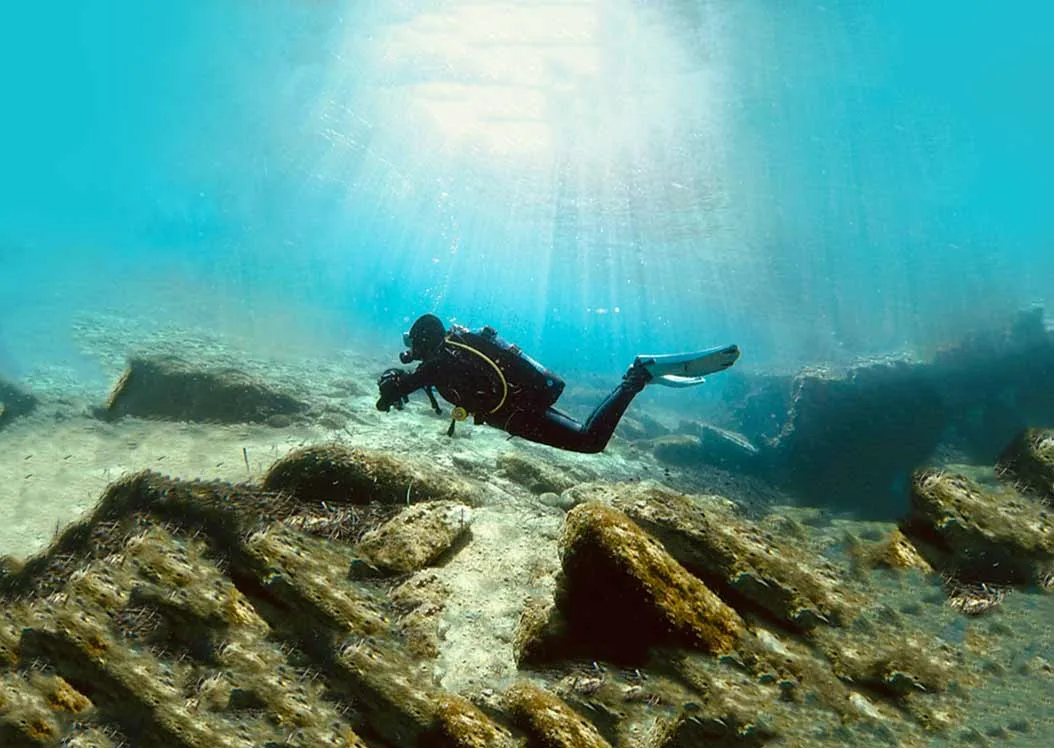
Fessej Rock, also known as Black Rock or Skoll tal-Fessej, stands as a distinct geological feature in the waters south of Gozo. Unlike the continuous reef systems found in other parts of the Maltese islands, this site is an isolated, near-vertical circular pillar that rises from the depths to within 15 metres of the surface. The topography is defined by its massive, upright structure, which serves as a primary focal point for divers navigating the area. Because it is a standalone pinnacle, the site offers a sense of scale and isolation that is rare in the surrounding coastal dives. Approaching the rock typically requires a boat descent to position the group around its perimeter.
The dive profile begins on the upper sections of the rock where the structure reaches its shallowest points. As you descend along the vertical face, the topography transitions from a relatively smooth wall into a more complex environment of large rock blocks and crevices. These formations at the base of the pinnacle create a series of swim-throughs and narrow passages that allow for a more technical exploration of the site. A common dive pattern involves circling the rock in a spiral, gradually increasing depth as you move from the upper plateau toward the deeper sections. This method allows you to manage your gas consumption while systematically observing the changing vertical zones.
The depth of the site ranges from 15 metres at the upper reaches to 50 metres at the base. This depth gradient means the site is divided into distinct biological zones, with the upper sections being more light-rich and the deeper areas transitioning into a more shadowed, vertical wall environment. For those diving the deeper sections, the focus shifts to the sheer limestone walls and the accumulation of large boulders at the bottom. The presence of these boulders provides essential habitat for various benthic species, creating pockets of shelter within the current. Navigating these deeper contours requires precise buoyancy control to maintain a steady distance from the wall.
Visibility at Fessej Rock is generally consistent, typically ranging between 20 and 30 metres. This clarity allows the scale of the pinnacle to become apparent even from a distance, making it easy to orient yourself relative to the rock. The light penetration on the upper plateau is excellent, highlighting the textures of the limestone, while the deeper wall sections take on a more monochromatic, dramatic appearance. The clarity is a key factor in how you perceive the depth and the distance between the rock and the surrounding open water. Maintaining a visual reference on the rock is essential for buoyancy and navigation throughout the dive.
The marine life at this site is heavily influenced by the verticality of the structure and the presence of passing pelagic species. You can frequently encounter large groupers, such as the dusky grouper, patrolling the crevices of the wall. Larger predatory fish like dentex, barracuda, and amberjack are common, often hovering in the mid-water column near the rock face. These species are drawn to the concentrated biomass that the pinnacle provides in an otherwise open marine environment. Observing their movement requires patience, as they often appear as shadows against the blue before moving into clearer view.
Further down the wall or within the sheltered cracks of the limestone, the biodiversity shifts toward smaller, more sedentary organisms. You will find various types of tube worms and squat lobsters inhabiting the smaller openings in the rock. For those looking closer at the reef structure, seahorses and different species of lobster can sometimes be spotted among the crevices. The presence of octopus and various picarel adds to the complexity of the reef ecosystem. These species utilize the rock's complex geometry to hide, requiring a slow and observant approach to locate them successfully.
Current conditions at Fessej Rock can be variable depending on the time of day and the tidal state. Because the rock is an isolated feature located in open water, it is exposed to the movements of the surrounding sea, which can lead to sudden shifts in water flow. While the site can remain calm, the topography can occasionally funnel water around the pillar, creating localized currents. It is important to plan your ascent and descent with these potential changes in mind, ensuring you remain close to the rock for stability. Being aware of your position relative to the rock's structure is your best defense against being drifted away.
What distinguishes Fessej Rock from other sites in Gozo is its singular, pillar-like morphology. Most local dives are part of a continuous seabed or a closer coastal reef, but here you are diving a specific, isolated object in the water column. This creates a unique spatial experience, where the verticality is the defining characteristic of the dive. Whether you are navigating the shallow swim-throughs or following the wall down to 50 metres, the site offers a structured, predictable environment for advanced divers to test their skills. The combination of deep water, vertical relief, and resident large fish makes it a staple for experienced divers in the region.
The dive depth ranges from 15 to 50 metres. This site is recommended for Advanced Open Water divers or those with significant experience in deep wall diving, particularly those comfortable with depths of 30 metres or more. Visibility is typically between 20 and 30 metres. Current can be variable due to the site's exposed location in open water.
Fessej Rock can remain calm, but conditions may change with the time of day and tidal state. Its exposed position in open water means water flow can shift around the isolated pinnacle. Plan your descent and ascent with these possible changes in mind, and stay close to the rock for stability during the dive.
Fessej Rock ranges from 15 to 50 metres, with a vertical limestone wall descending from its upper sections to deeper boulders and rock formations. The site is recommended for Advanced Open Water divers or divers with significant deep wall experience, especially those comfortable at depths of 30 metres or more.
At Fessej Rock, current can be variable because the pinnacle is exposed to open water. Flow may shift suddenly and can be funnelled around the pillar, creating localized currents. Stay aware of your position relative to the rock, remain close to its structure for stability, and consider these changes when planning your ascent and descent.
At Fessej Rock, you can explore a large vertical limestone pinnacle, rock formations, crevices, and swim-throughs. Frequent sightings include dentex, barracuda, dusky grouper, and amberjack. You may also find octopus, picarel, tube worms, squat lobsters, seahorses, and other lobster species among the sheltered cracks and boulders.