
Atlantis Diving Center
Google 4.9/5 (694 reviews)
1 km away as the crow flies
Gozo · Malta · Mediterranean
Max. depth · 34 mA vertical wall drop-off featuring two narrow fissures that lead into a massive cavern and a natural arch.
For subtitles in English: start the video firstthen click the gearat the top right of the video, select “Subtitles/CC”, then “Auto-translate” and choose “English”.
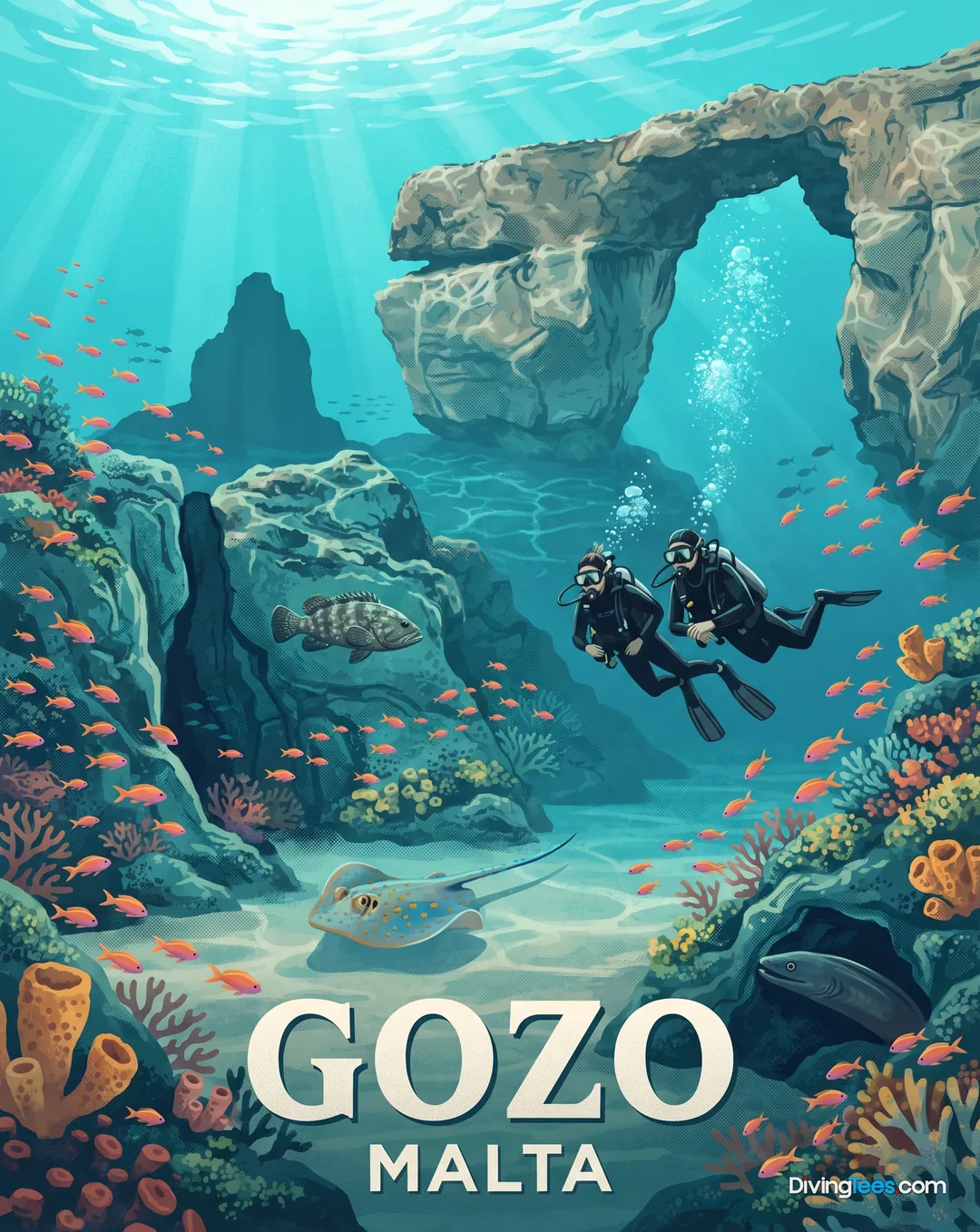
Triple Arch Reef sits at the edge of a significant underwater drop-off, serving as a direct extension of the coastal promontory. The topography is defined by a steep vertical wall that descends from the plateau. This structure is not a simple slope but a complex terrain featuring two distinct horizontal fissures. These openings, located at 21 m and between 30 m and 32 m, act as gateways to a larger subterranean system. The architecture of the site is the result of historical vault collapses, creating a series of openings known as Triple Arch.
Navigating the site requires precision, as the topography transitions from the open wall into a massive cavern. This cavern system provides a unique environment where light behaves differently than on the open reef face. As you move through the narrow entrance fissures, you enter a large cavern that exceeds 30 m in size. The cave eventually opens out toward a natural arch, providing a sense of scale and a change in lighting as you move through the structure. This combination of verticality and cave-like passages makes the site distinct from the standard wall dives in the area.
The dive profile typically begins on the upper plateau before descending along the vertical wall. You will encounter the first entrance to the cave system at 21 m, where the terrain begins to fold inward. As you descend further toward the 30-32 m depth mark, a second, deeper fissure offers access to the main cavern. This layering of depths and openings requires careful buoyancy control to manage the transition between the open water and the confined spaces. The verticality of the site ensures that the experience changes significantly with every few metres of depth.
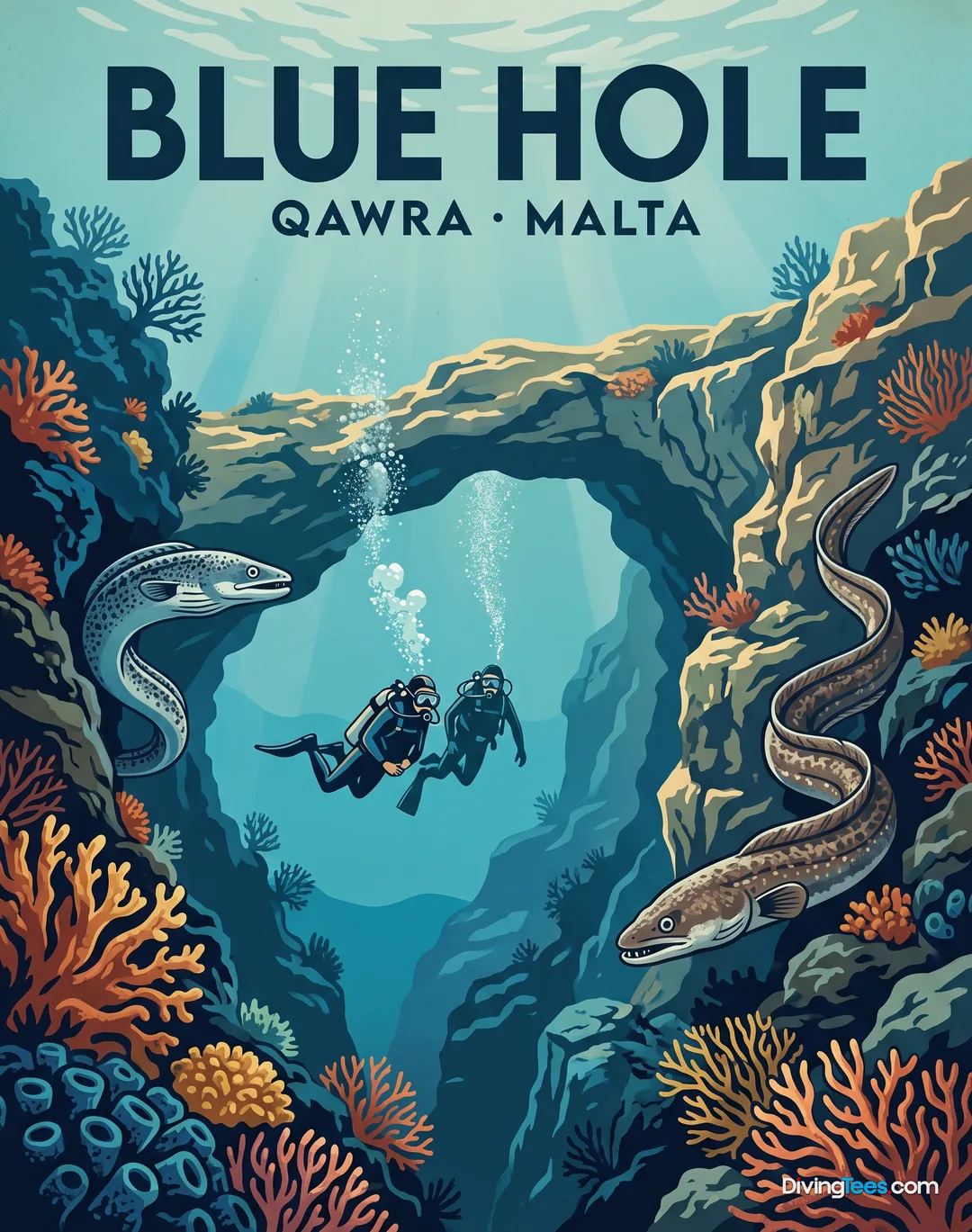
The marine life at Triple Arch is centered around the rocky crevices and the shelter provided by the cavern walls. You can often find scorpionfish and moray eels tucked into the shadows of the fissures. The reef structure also supports various residents such as the common octopus (Octopus vulgaris) and different types of starfish. Mediterranean damselfish are frequently seen swimming closer to the reef structure, while saddled bream move along the wall. These species utilize the complex topography of the cracks and crevices for protection and hunting.
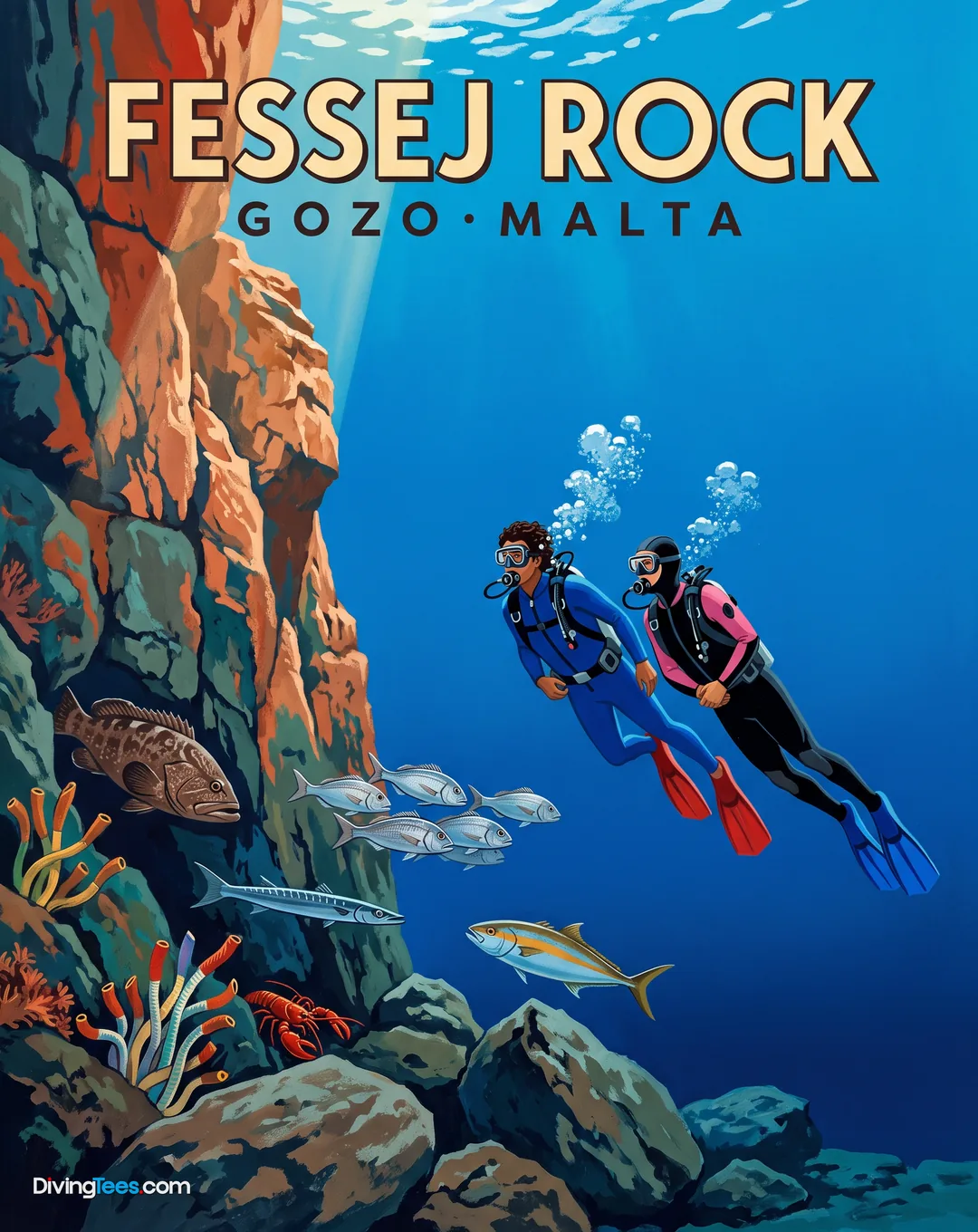
In the deeper sections of the wall and near the cavern openings, larger predatory species are common. You might observe amberjack and tuna patrolling the currents along the cliff face. The dusky grouper is a frequent resident of these deeper rock formations, often found hovering near the vertical drop-off. These larger fish rely on the structural complexity of the reef to navigate the transition between the wall and the open sea. Their presence is a key feature for divers monitoring the mid-depth zones of the site.
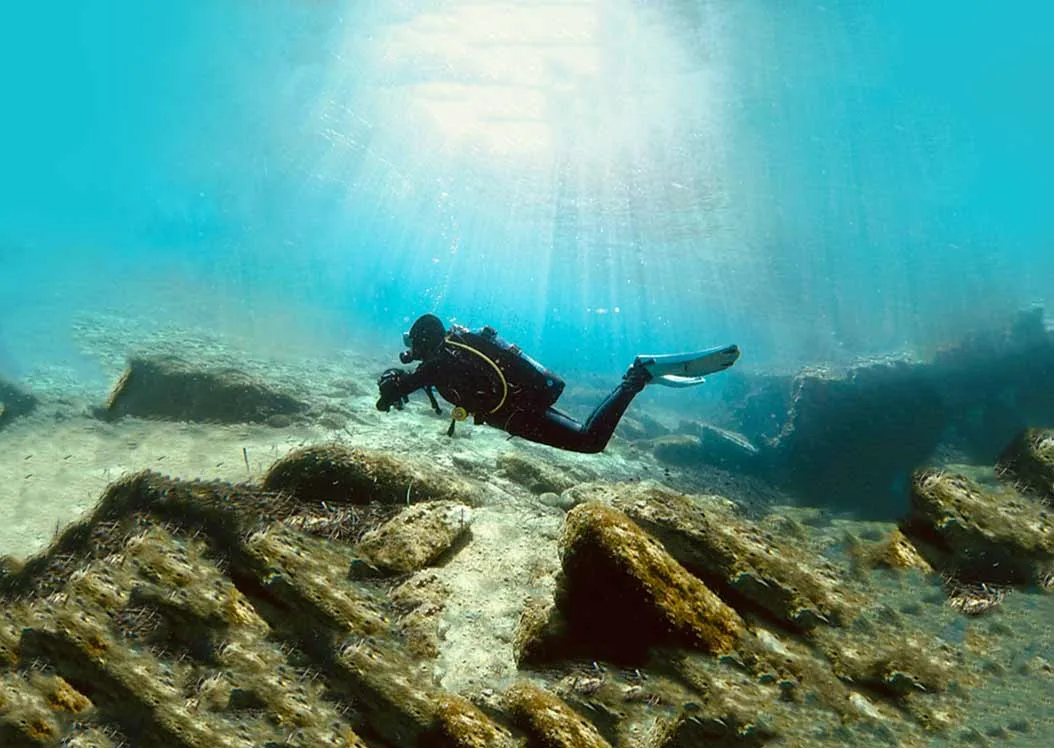
Visibility at Triple Arch can vary significantly, typically ranging from 10 m to 40 m depending on local conditions. When visibility is at its best, the light filtering through the cavern openings and the natural arch creates a high-contrast environment. However, the depth and the vertical nature of the wall mean that light levels drop noticeably as you descend toward the 34 m mark. Understanding the interaction between the light and the cave openings is essential for navigating the site effectively. Clear conditions allow for a clear view of the transition from the plateau to the deep wall.
The site is accessed primarily by boat, located approximately 100 m offshore from Xwejni Bay. While the bay provides a coastal access point for nearby sites like Double Arch, the technical layout of Triple Arch makes a boat approach more practical for most divers. This allows for a more controlled descent onto the plateau before beginning the transition into the fissures. The position of the site north of Marsalforn Tower places it in a location where the underwater topography is most pronounced and complex.
Depth ranges from 21 m to 34 m. This site requires an Advanced level of certification and significant experience with overhead environments and cavern passages. Currents are variable and depend on local exposure. Visibility ranges from 10 m to 40 m.
Triple Arch requires an Advanced level of certification and significant experience with overhead environments and cavern passages. You will need precise navigation and careful buoyancy control when moving from the open vertical wall into narrow fissures, a large cavern, and the natural arch.
Triple Arch ranges from 21 m to 34 m. The first entrance fissure is at 21 m, while a deeper fissure lies between 30 m and 32 m and leads toward the main cavern. The wall continues into deeper sections, reaching 34 m.
At Triple Arch, currents are variable and depend on local exposure. Visibility typically ranges from 10 m to 40 m. Conditions can change the view across the vertical wall, while light levels decrease noticeably as you descend toward the deeper sections and cavern openings.
At Triple Arch, you can explore a vertical wall, two entrance fissures, a large cavern, and a natural arch formed by historic vault collapses. Scorpionfish and moray eels shelter in the shadows, while octopus, starfish, damselfish, saddled bream, amberjack, tuna, and dusky grouper may also appear.