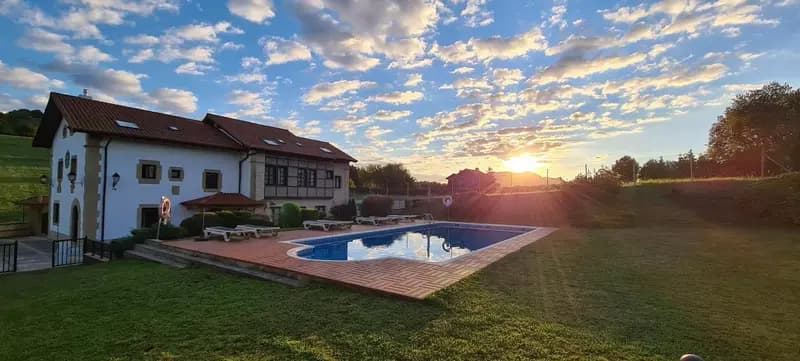
Posada Casona de la Ventilla
★★★
★ 9/10 (261 reviews)
2.3 km away as the crow flies
Dive centre · Laredo · Spain
4.659 Google reviewsExplore the historical wrecks and rocky reefs of the Santoña Bay aboard the Valiant PT750 semi-rigid boats.
For subtitles in English: start the video firstthen click the gearat the top right of the video, select “Subtitles/CC”, then “Auto-translate” and choose “English”.
Mundo Submarino is situated in the heart of Laredo, Cantabria, within the historic fishing guild buildings adjacent to the new port. The centre sits on the edge of the Santoña Bay, a protected natural area known as the Costa Esmeralda, which offers a unique environment for diving.
The area is defined by its varied underwater topography, ranging from shallow, sheltered sandy bottoms to significant historical wrecks and deep rocky reefs. It is a region where the Cantabrian Sea's character meets a rich marine ecosystem, making it a versatile destination for all levels of experience.
The centre is run by a professional team of SSI instructors, including specialists in both recreational and technical diving. Many members of the team also work at a professional level for national diving organisations, bringing a high level of expertise to their instruction.
Operating with a foundation built on twenty years of local experience, the team manages a dual-module facility. One module serves as the social and educational hub, containing the shop, classroom, and changing rooms, while the second module is dedicated entirely to the technical requirements of the dive station.
Mundo Submarino offers a comprehensive SSI course catalogue. For those beginning their journey, training starts with Try Scuba Diving and progresses through to Open Water Diver and Advanced Adventurer.
For more experienced divers, the centre provides specialised training in areas such as Enriched Air Nitrox, Deep Diving, Navigation, Wreck Diving, and Dry Suit Diving. The technical curriculum is extensive, covering Equipment Techniques, Extended Range Nitrox, Extended Range, Hypoxic Trimix, and Technical Extended Range.
The centre operates two Valiant PT750 semi-rigid boats to transport divers to the various sites around the bay. One vessel is powered by a Volvo 220 engine, while the second is equipped with a Yamaha 150.
Both boats are well-equipped for navigation and safety, featuring GPS, plotters, and sonar. These vessels allow the team to reach a wide variety of locations, from the sheltered natural pools of La Ballena to the deeper offshore wrecks.
The shore-based facilities are designed to support both recreational and technical divers. The charging station is powered by an L&W 450 SILENT compressor, capable of providing fills at 220 bar and 300 bar. For those requiring precise gas blends, the station includes a booster with a blender for Nitrox, Trimix, and Heliox.
A full range of rental kit is available, including regulators, BCDs, wetsuits, and fins. For technical divers, the centre stocks various cylinder sizes, including 12, 15, and 18-litre cylinders, as well as twinsets (2x10L and 2x12L) and stage cylinders such as S40, S60, and S80. Divers can also hire dive computers and scooters for extended exploration.
The Acorazado España is a significant technical wreck resting at 75 metres. This 140-metre long battleship lies on its side and offers a profound historical dive for those with the appropriate technical certifications.
Santa María Salomé is a more accessible wreck located at approximately 10 metres. This 22-metre wooden fishing boat rests near the Orión cliffs and has become a thriving habitat for local marine life.
Culebras is a rocky reef site known for its high density of life. Divers can find various species including lobster, conger eels, and scorpionfish among the rocks at a depth of around 22 metres.
La Ballena offers a versatile environment suitable for various levels. The site features a sheltered natural pool for calm, shallow dives between 6 and 10 metres, as well as deeper rocky passages reaching 23 metres.
And some of the dive sites the centre runs.
The reefs and rocky outcrops of the Santoña Bay are home to a diverse range of species. You will frequently encounter conger eels, scorpionfish, and various species of octopus and lobster. The rocky crevices also provide excellent habitats for moray eels and various species of rockfish.
For those interested in macro photography, the area is particularly rewarding. The reefs host a significant presence of nudibranchs and other small invertebrates that inhabit the various cracks and crevices of the underwater topography.
During the summer months, specifically in July and August, large schools of fish can be seen passing through the area. In deeper sections, you may also encounter ocean sunfish near the rocky structures.
The diving in the Santoña Bay is influenced by its position within a protected natural reserve. The area includes several sheltered zones, such as the natural pool at La Ballena, which provides calm conditions and good visibility for beginners even when the sea is more active elsewhere.
The topography varies from sandy bottoms to high rocky peaks and deep canyons, meaning that site selection can be adjusted based on the prevailing swell and sea state.
Hello, I'm Marina, DivingDeal.com's AI assistant. I answer in detail about hotels, dive centres and liveaboards.

Thinking about the whole trip and the flights? Talk it over with Edith →
Marina is an AI. Some links are affiliate links: DivingDeal may earn a commission, at no extra cost to you. Bookings are made with the partner.