
Open Water Diving Center La Herradura
Google 4.9/5 (1,034 reviews)
Spain · Mediterranean
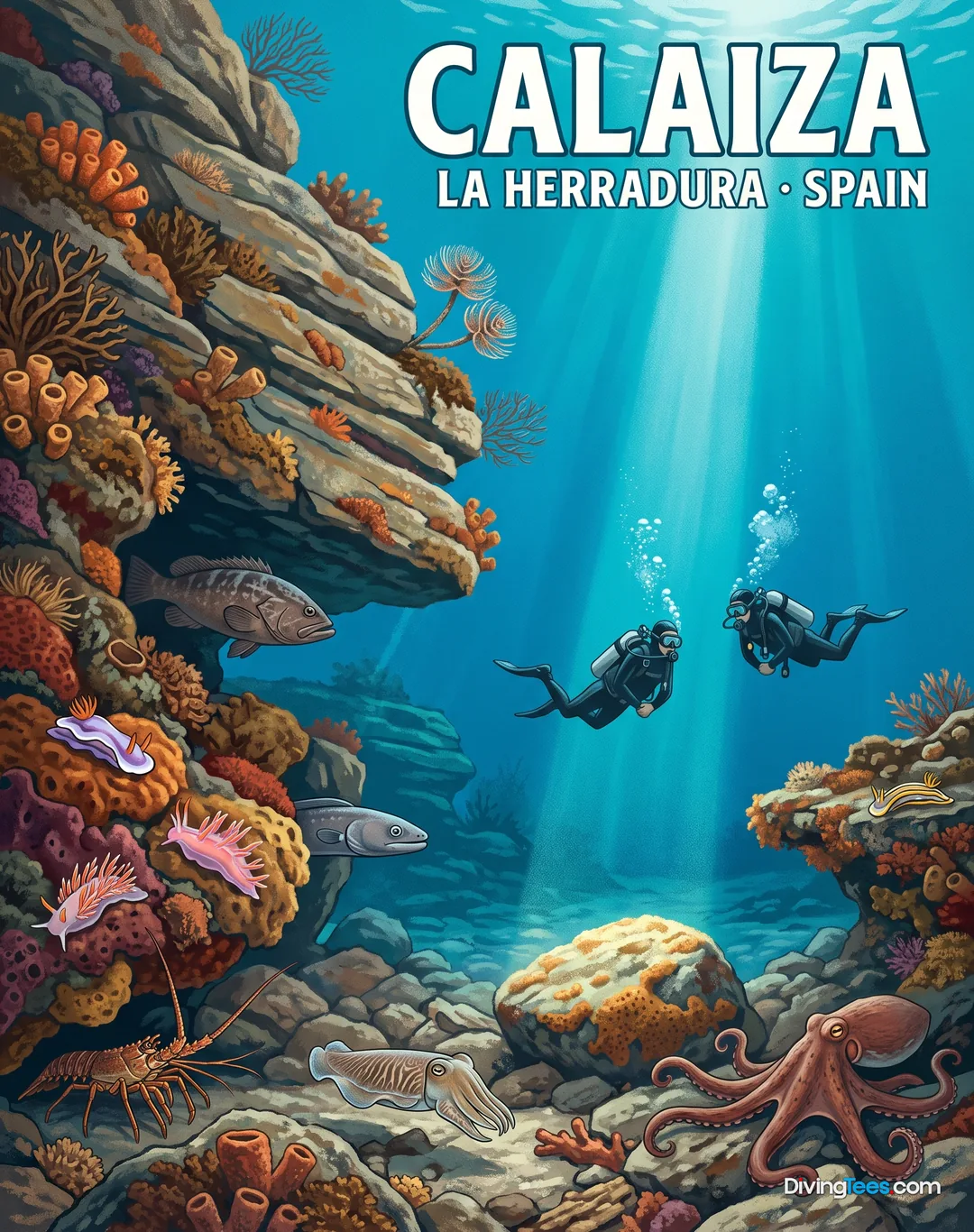
Sand, rock formations and nudibranchs shape Calaiza, with diving from 10 to 22 metres and visibility that can reach 30 metres when conditions settle.
For subtitles in English: start the video firstthen click the gearat the top right of the video, select “Subtitles/CC”, then “Auto-translate” and choose “English”.
Almuñécar is a practical base for Mediterranean diving along Spain’s Costa Tropical. The underwater scenery is built around rock, sand and local relief rather than tropical reef or a liveaboard itinerary. Calaiza gives the clearest picture of the area: a 10-to-22-metre dive where rocky formations rise from sandy ground and nudibranchs reward a slow search. Diving can be arranged from the coast or by local boat, making this a sensible short- to medium-stay destination.
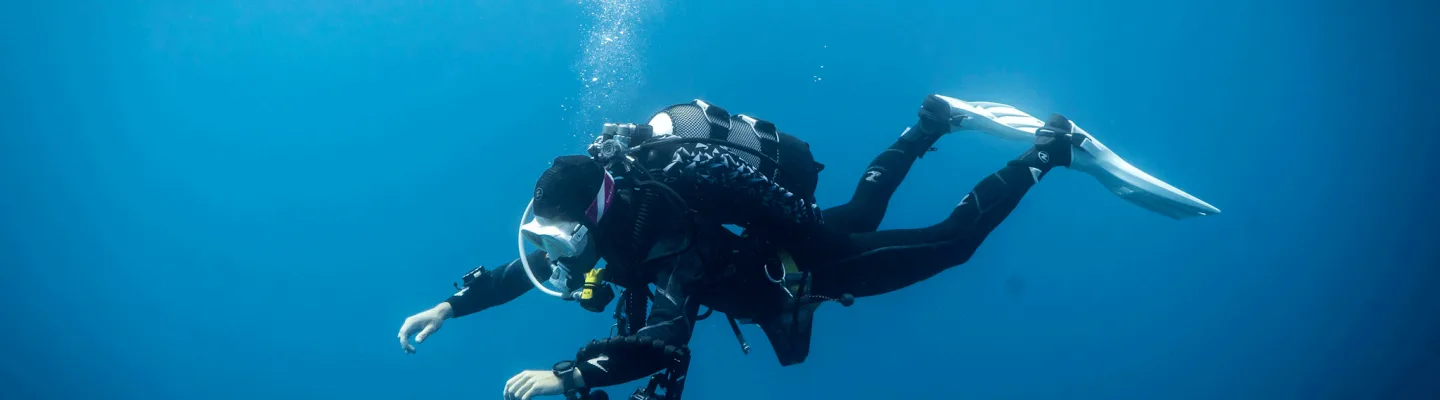
The diving around Almuñécar is shaped by Mediterranean rock and sand, with rocky outcrops, cracks and changes in relief providing the detail. At Calaiza, the route moves between sandy areas and rock formations from 10 to 22 metres, so the dive suits a measured pace rather than a fast sightseeing circuit. Open Water divers can make the depth comfortably, while experienced divers have room to refine buoyancy and observation. Visibility can reach 30 metres, although it should be treated as a condition rather than a daily guarantee. Current is variable and may become moderate when wind affects the site. The important practical point is the return: swimming against the current can make the final part of the dive harder, so the profile and gas plan need to account for the way back to the entry point. Calaiza is diveable throughout the year, with outings made from the coast or by local boat.
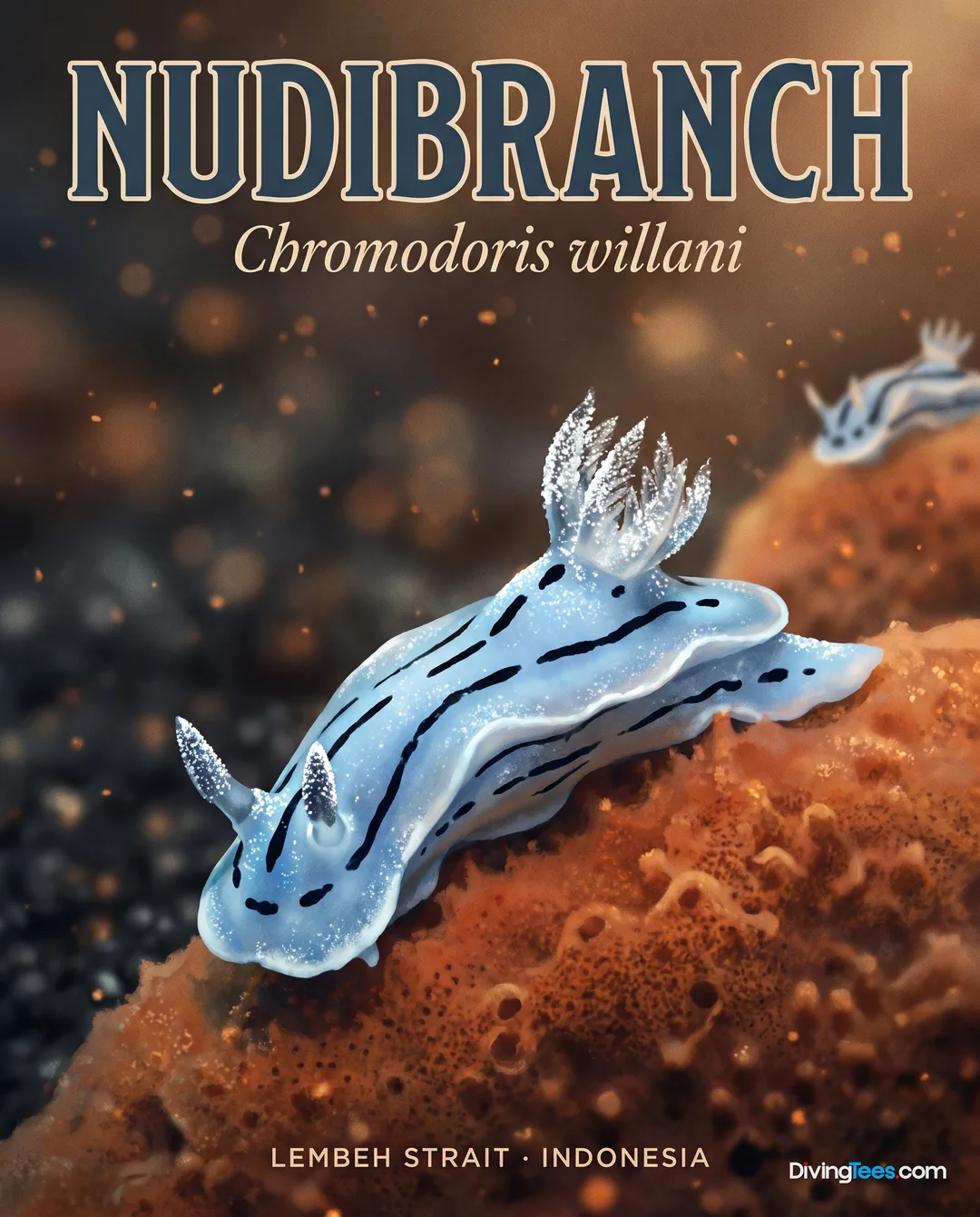
Calaiza’s most distinctive named encounters are nudibranchs, found by looking carefully around cracks, crevices and the edges of its rocky formations. The sand-and-rock layout also provides shelter for smaller, less conspicuous marine life, so this is a site where a slow scan pays more than covering distance. The underwater interest lies close to the rock rather than in a promise of large passing animals. May to December offers the calmest sea conditions, which can make searching easier and reduce the interruption caused by wind-driven current. The site remains diveable from January to December. Divers should therefore come for the relief, nudibranchs and hidden creatures in the cracks, not for a particular migration calendar.
May to December is the most useful window for Almuñécar because the sea is measured as at its calmest during these months. That matters at Calaiza, where wind can influence a moderate current and make the return to the entry point more demanding. April to September also brings the lowest rainfall, which is convenient when several coastal days are being planned. Diving remains possible throughout the year, so winter is not automatically ruled out; it simply offers less of the calm-water margin that makes a relaxed search among the rocks easier.
Almuñécar suits all levels, with Calaiza’s 10-to-22-metre range accessible to Open Water divers. A comparable BSAC qualification, or an equivalent PADI or SSI certification, is appropriate for the site. No advanced qualification is identified as necessary. Experience with variable current is useful, however, particularly when wind affects the water and the dive finishes with a swim back towards the entry point. Less experienced divers should keep the profile conservative and avoid turning the return into the hardest part of the dive.
For British travellers, the journey begins from London Heathrow, London Gatwick or Manchester, followed by the road approach along the Costa Tropical. Almuñécar does not depend on a compulsory ferry or a liveaboard transfer: the area is reached overland, with diving then arranged from the coast or through local boat outings. The useful planning distinction is between reaching the town and reaching a particular dive. Once in Almuñécar, the final meeting point and any boat departure need to be matched to the day’s arrangement rather than assumed to be at the accommodation. A road-based stay also makes it possible to combine diving around the town with nearby coastal departures without changing base.
Treat Calaiza’s current as a return journey, not merely an outward condition. Wind can strengthen it, and swimming against it on the way back to the entry point is where a comfortable dive can become tiring. Set the profile and gas plan with that return in mind rather than spending the dive’s easiest minutes covering ground. The 10-to-22-metre depth range allows a straightforward Open Water profile, but the site rewards stopping beside cracks and crevices instead of rushing across the sand. Visibility can reach 30 metres, yet close observation remains the point: long sightlines do not make nudibranchs easier to find. May to December gives the best margin for calm water, while the site is diveable year-round. Plan the trip as a flexible coastal stay with local boat options, not as a fixed liveaboard schedule or a tropical big-animal expedition.
A stay in Almuñécar works best as a land-based diving break, with daily outings from the town or along the nearby Costa Tropical. Keep the itinerary flexible enough to use Calaiza when the sea is calmer and the wind is less troublesome. The town’s coastal setting also suits travelling companions who do not dive, although the diving itself remains the reason to base the trip here. There is no need to organise the holiday around a liveaboard timetable.
Hello, I'm Marina, DivingDeal.com's AI assistant. I guide you through destinations, areas and countries.
Thinking about the whole trip and the flights? Talk it over with Edith →
Marina is an AI. Some links are affiliate links: DivingDeal may earn a commission, at no extra cost to you. Bookings are made with the partner.
Your last day stays dry: no diving in the 18-24 hours before a flight, the perfect window to see the destination from another angle.
 Adventure
⏱ 5 h · ★ 5.0 (7 reviews)
from £80$106€95
see on Viator ↗
 Adventure
⏱ 2 h · ★ 4.9 (76 reviews)
from £116$156€139
see on Viator ↗
 Culture
⏱ 2 h · ★ 5.0 (3 reviews)
from £63$84€75
see on Viator ↗
 Culture
⏱ 2 h
from £12$16€14
see on Viator ↗
Ratings and reviews collected by Viator and Tripadvisor.
You can dive in Almuñécar throughout the year, but May to December generally brings calmer sea conditions. This can make searching around Calaiza’s rocks easier and reduce wind-driven current. April to September has the lowest rainfall, which is convenient for planning several coastal days, while winter remains possible with less calm-water margin.
Almuñécar suits divers of all levels, and Open Water divers can manage Calaiza’s depth range. A comparable BSAC qualification, or an equivalent PADI or SSI certification, is appropriate. Experience with variable current helps, especially when wind affects the site. Keep your profile conservative and plan the return to the entry point carefully.
Almuñécar offers Mediterranean rock, sand and changing relief rather than tropical reef scenery. At Calaiza, rocky formations rise from sandy ground, with nudibranchs sheltering in cracks and crevices. Smaller, less conspicuous marine life hides around the rocks. A slow search close to the formations is more rewarding than covering distance quickly.
Plan Almuñécar as a land-based coastal break, arranging dives from the coast or through local boat outings. Keep days flexible so you can use Calaiza when wind and sea conditions are more manageable. Reach the town overland, then confirm the meeting point or boat departure for each dive rather than assuming it is at your accommodation.