


Diving with Nic
Google 4.9/5 (466 reviews)
Spain · Mediterranean
Rocky formations, sandy sculpture gardens, octopus and conger eel encounters: Malaga offers practical day diving beside an Andalusian city.
For subtitles in English: start the video firstthen click the gearat the top right of the video, select “Subtitles/CC”, then “Auto-translate” and choose “English”.
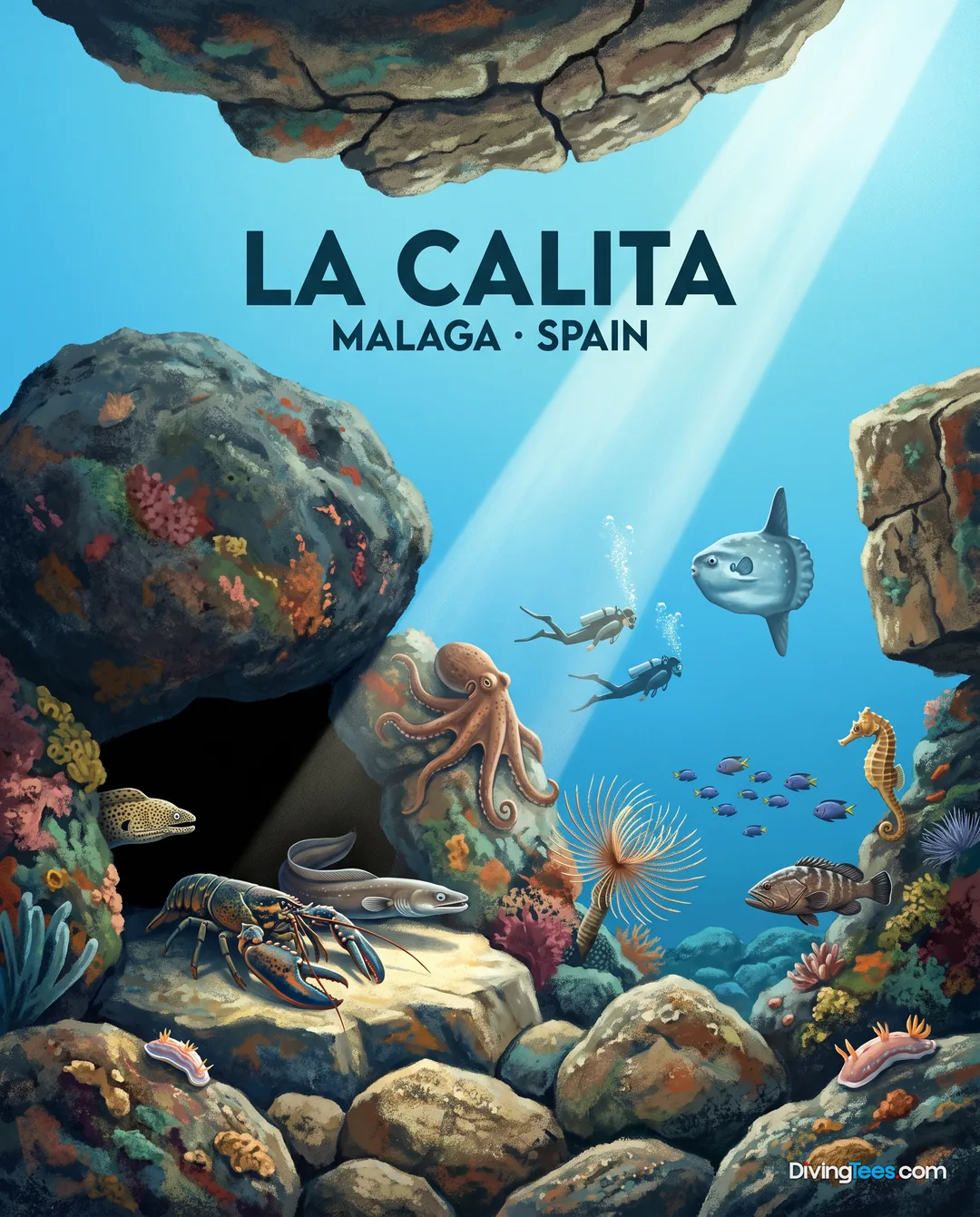
La Calita gives a useful introduction to Malaga’s underwater character: shallow ground leads towards deeper rocky formations, scattered blocks and sandy areas marked by sculptures. Elsewhere, the coastline combines shore dives, boat trips, rocky sites and wrecks rather than one single reef system. Malaga works best as a land-based diving break, with the city and Costa del Sol close at hand for non-divers and for days when the sea does not suit the planned outing.
The diving is mainly Mediterranean coastal diving, with rocky ground, cracks, grottos, scattered blocks and occasional wrecks. At La Calita, a substantial part of the profile sits around 25 metres, while the deeper formations reach 36 metres. The shallower sections suit a straightforward Open Water outing, but the deeper route asks more of buoyancy control, gas planning and comfort at depth. Conditions are not fixed: currents can be moderate and vary with local weather, so the same site may feel quite different from one day to the next. Most sites are reached by boat, although some centres also run shore dives. The practical rhythm is therefore a day outing rather than a liveaboard schedule, with the boat, departure port and sea state shaping the dive more than a fixed itinerary.
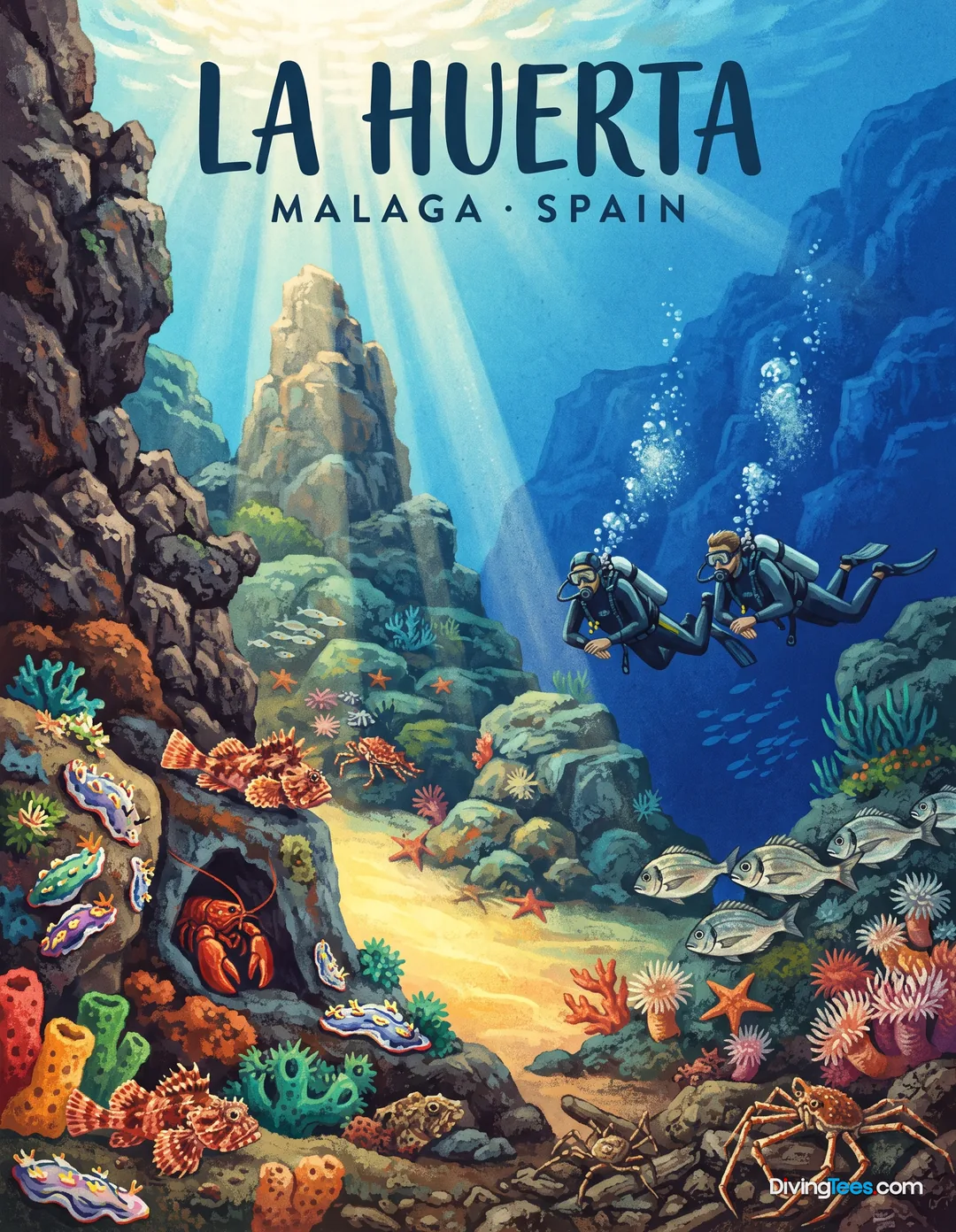
La Calita’s cracks and grottos are the place to slow down and inspect rather than simply swim across the rock. Octopus can be found among the formations, while conger eel occupy darker recesses. Moray eel are another possible encounter around the rocky ground. Nudibranchs add smaller detail, rewarding a careful pace and a good torch, particularly around the holes and broken rock. Sandy sections bring a change of texture, with underwater sculptures providing something to examine between the natural formations. The available site information does not establish a separate seasonal arrival pattern for these animals, so encounters are best treated as part of the resident coastal life rather than a timed migration. The calmer May-to-December period may simply make patient searching more comfortable when conditions allow.
May through December is the measured window for the calmest sea conditions, making it the most sensible period for arranging several boat and coastal outings. Rainfall is lowest from April to September, which can make the land-based part of a trip easier to organise as well. The longer calm-season window matters here because variable weather can bring moderate currents and alter the feel of a site such as La Calita. The most settled plan is to allow some flexibility between diving days, rather than building the whole stay around one precise boat departure.
Malaga suits all levels, provided the dive is matched to the profile. Open Water divers can use the shallower sections of La Calita, while its average depth of about 25 metres and maximum of 36 metres are more appropriate for Advanced Open Water experience. A wreck qualification is useful for wreck-focused outings, whether held through PADI, SSI or BSAC training. Divers should be comfortable controlling buoyancy over rock and sand, especially where a moderate current may develop.
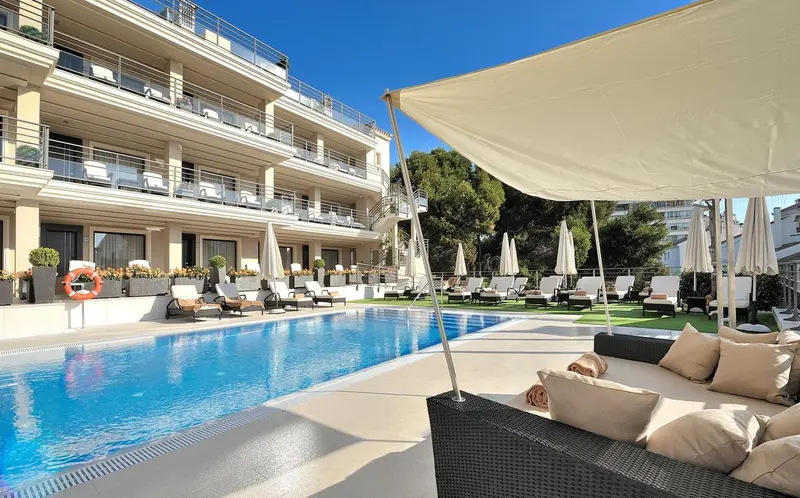
From London Heathrow, Gatwick or Manchester, the journey begins with a flight to Malaga. Once there, the diving area is reached by road, with the final leg usually a boat departure from a local port; selected sites may instead be reached from the shore. This is not a destination built around a compulsory ferry crossing, an internal flight or an isolated island transfer. Staying in Malaga itself or on the nearby coast keeps the land journey to the diving centre manageable. Walking or a taxi can work for a convenient base, while some centres arrange transfers. Before committing to accommodation, it is worth checking where the day’s boat leaves, since the port used can change the practical shape of the morning.
The first question to settle is whether the planned days are mainly shore dives or boat trips. That distinction affects transfers, departure times and how much flexibility remains when local weather changes. Ask specifically whether the outing is centred on rocky formations, wrecks or shallower coastal ground; Malaga is not one uniform underwater landscape. La Calita can be enjoyed at Open Water depth, but a route towards its deeper formations is a different proposition, with around 25 metres common on a substantial part of the dive and 36 metres at the limit. Wreck plans deserve appropriate training and previous experience rather than being treated as an easy variation on a reef dive. A base in Malaga or on the nearby seafront reduces unnecessary ground transfers. Do not arrive expecting tropical coral: the interest lies in Mediterranean rock, grottos, sandy sculpture areas and animal life. On protected or sensitive sectors, check the local access and conduct rules before the boat leaves; restrictions can differ along the coast.
Three to five days gives enough time to combine coastal and boat outings without repeating the same type of profile throughout the stay. A typical day can pair a morning dive with an unhurried afternoon in Malaga, while a second day may be set aside for deeper rock or wreck interests if conditions and experience fit. The city provides museums, food and coastal walks for a non-diving companion, making this a practical shared holiday rather than a trip organised around diving alone.
Hello, I'm Marina, DivingDeal.com's AI assistant. I guide you through destinations, areas and countries.
Thinking about the whole trip and the flights? Talk it over with Edith →
Marina is an AI. Some links are affiliate links: DivingDeal may earn a commission, at no extra cost to you. Bookings are made with the partner.
Your last day stays dry: no diving in the 18-24 hours before a flight, the perfect window to see the destination from another angle.
 Culture
⏱ 8 h · ★ 5.0 (50 reviews)
from £128$171€153
see on Viator ↗
 Culture
⏱ 2 h · ★ 5.0 (47 reviews)
from £100$134€120
see on Viator ↗
 Nature
⏱ 2 h · ★ 5.0 (18 reviews)
from £57$76€68
see on Viator ↗
 Nature
⏱ 3 h · ★ 5.0 (17 reviews)
from £46$62€55
see on Viator ↗
Ratings and reviews collected by Viator and Tripadvisor.
Plan diving in Malaga from May through December, when sea conditions are generally calmer for coastal and boat outings. Rainfall is lowest from April through September, which can help with the land-based part of your trip. Keep flexibility between diving days because local weather can affect currents and departures.
Malaga suits different experience levels when you match the dive to the profile. Open Water divers can use the shallower sections of La Calita. Deeper routes require more comfort at depth, buoyancy control and gas planning, while wreck-focused outings call for suitable wreck training and previous experience.
Diving in Malaga brings Mediterranean rocky ground, cracks, grottos, scattered blocks and sandy areas marked by underwater sculptures. Look carefully for octopus, conger eel and moray eel around darker recesses and rock formations. Nudibranchs reward a slow search with a torch, especially around holes and broken rock.
Use Malaga as a land-based diving base and decide whether your plans focus on shore dives, boat trips, rocky sites or wrecks. Check the departure port before booking accommodation, since it shapes transfers and mornings. Leave flexibility for weather, and combine diving with the city, museums, food or coastal walks.